
This review list is intended to educate you about this document and to aid you in its preparation. This Demand for Additional Collateral can benefit both the creditor and the debtor by enhancing the creditor’s security position and giving the debtor additional time to repay the loan. This can significantly boost the creditor’s collection percentage as well. We strongly advise pursuing this route following the occurrence of payment difficulties but before to the filing of any additional court documents.
- Make several copies. Send one to the debtor by mail, another via fax, and maintain copies in the creditor’s relevant files.
- In future settlement and/or court proceedings, this good faith step will be weighed in favor of the creditor for attempting to operate reasonably and in good faith. Similarly, it can be employed by the debtor to avoid additional damages awards (in places such as Massachusetts that provide for them on occasion under statutes such as their 93A clause) by their good faith provision of collateral additions. Nonetheless, this is unquestionably a document that best suits the creditor’s interests.
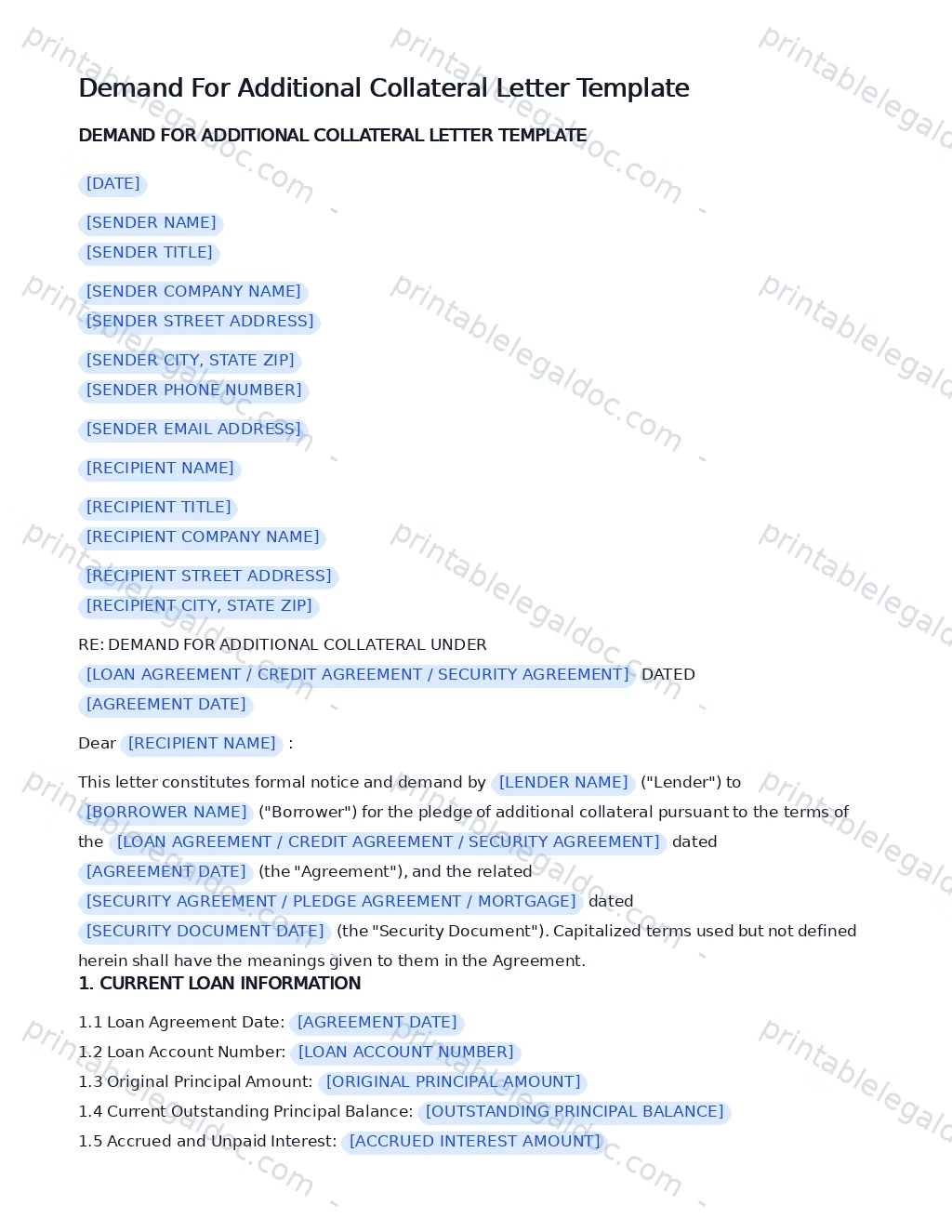
Demand For Additional Collateral Letter Template
Need to ask a borrower for more security? This demand for additional collateral letter template gives you clear wording for that request. It states the shortfall. It names the extra assets required. It sets a firm deadline for a response. The letter protects your position while keeping the tone professional. Use it when a loan-to-value ratio slips or a guarantor weakens. Fill in the blanks with your details. Send it promptly. Keep a copy for your records. The template saves time and reduces errors. It helps you stay consistent across every request.
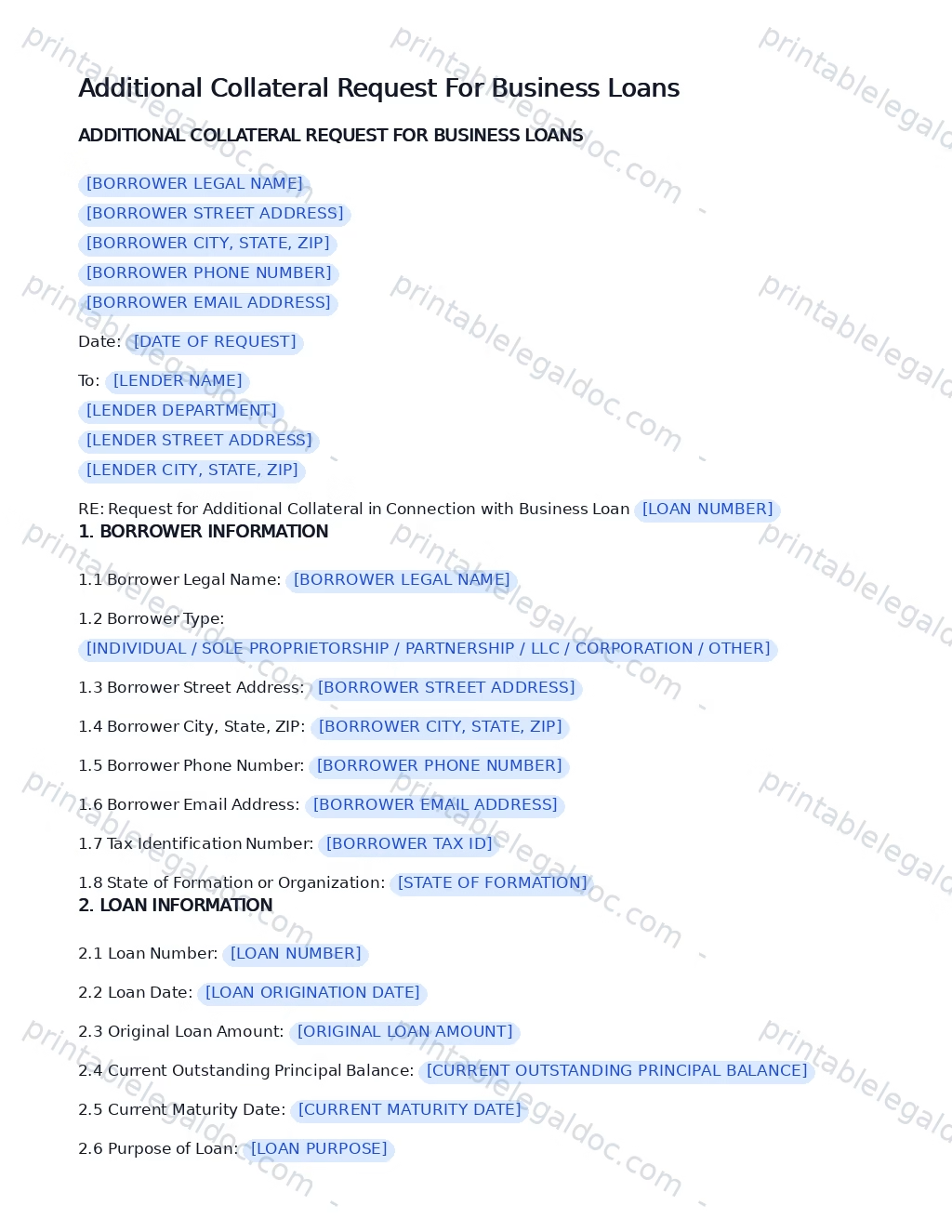
Additional Collateral Request For Business Loans
When a lender asks for more collateral, they want extra security for the loan. This request often comes up if your business profile changes. Or if the lender sees more risk in your file. You may need to pledge assets like equipment, inventory, or property. The goal is simple. Reduce the lender's risk and keep your loan moving. A collateral request is not a sign of failure. It is a normal part of lending. Review your assets before you respond. Ask what the lender needs and why. Then offer the strongest option you have. Clear records help here. So does an honest talk with your loan officer. Act fast and stay organized. That keeps your funding on track.
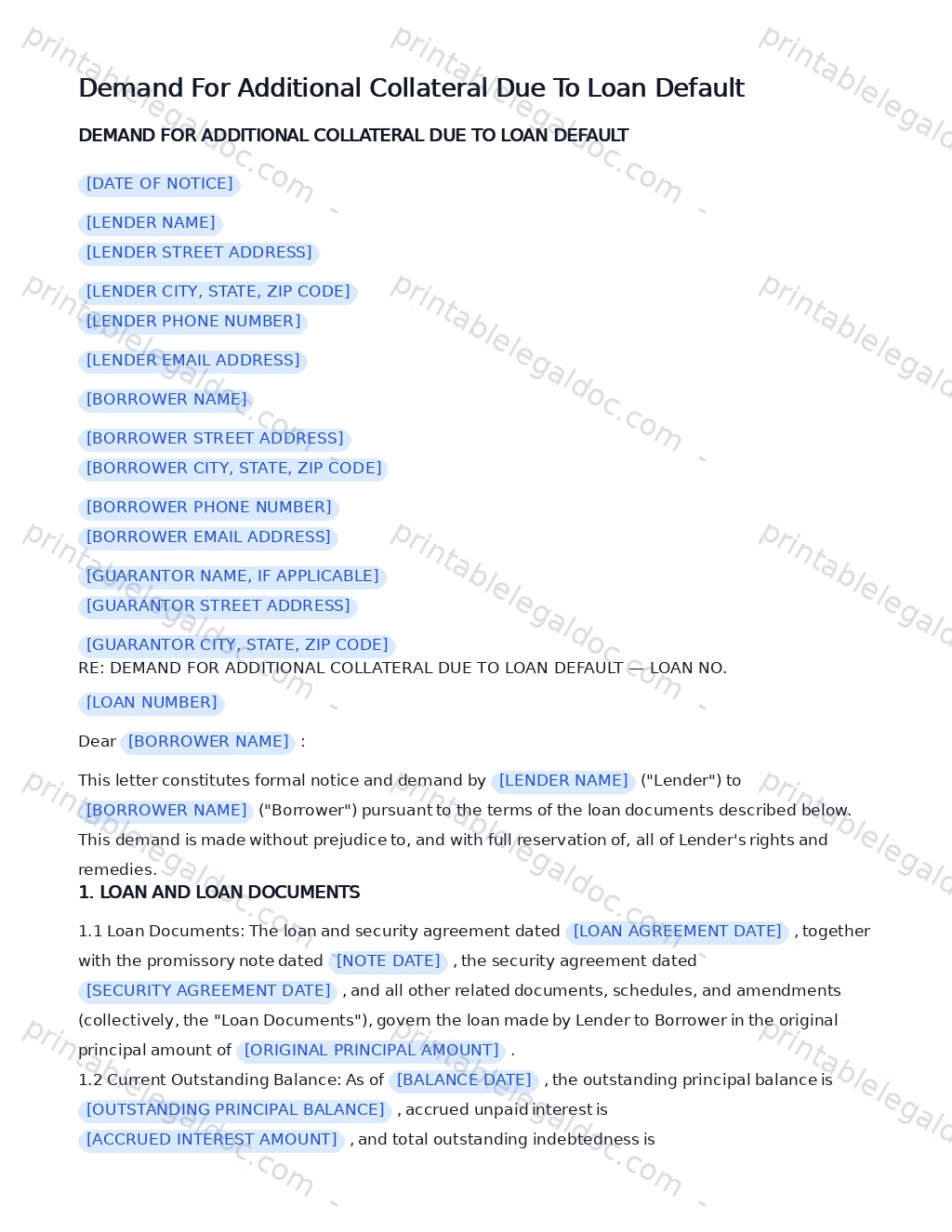
Demand For Additional Collateral Due To Loan Default
When a borrower misses payments, a lender may ask for more security. This demand for additional collateral protects the lender's money. It also lowers the lender's risk. The request often comes after a loan default or a sign of financial trouble. Lenders want extra assets to cover the unpaid balance. Borrowers may need to pledge property, savings, or equipment. This step can feel stressful. Yet it gives both sides a path forward. A borrower who meets the request may keep the loan alive. Clear communication helps here. Ask why the demand was made. Then review your options with care.
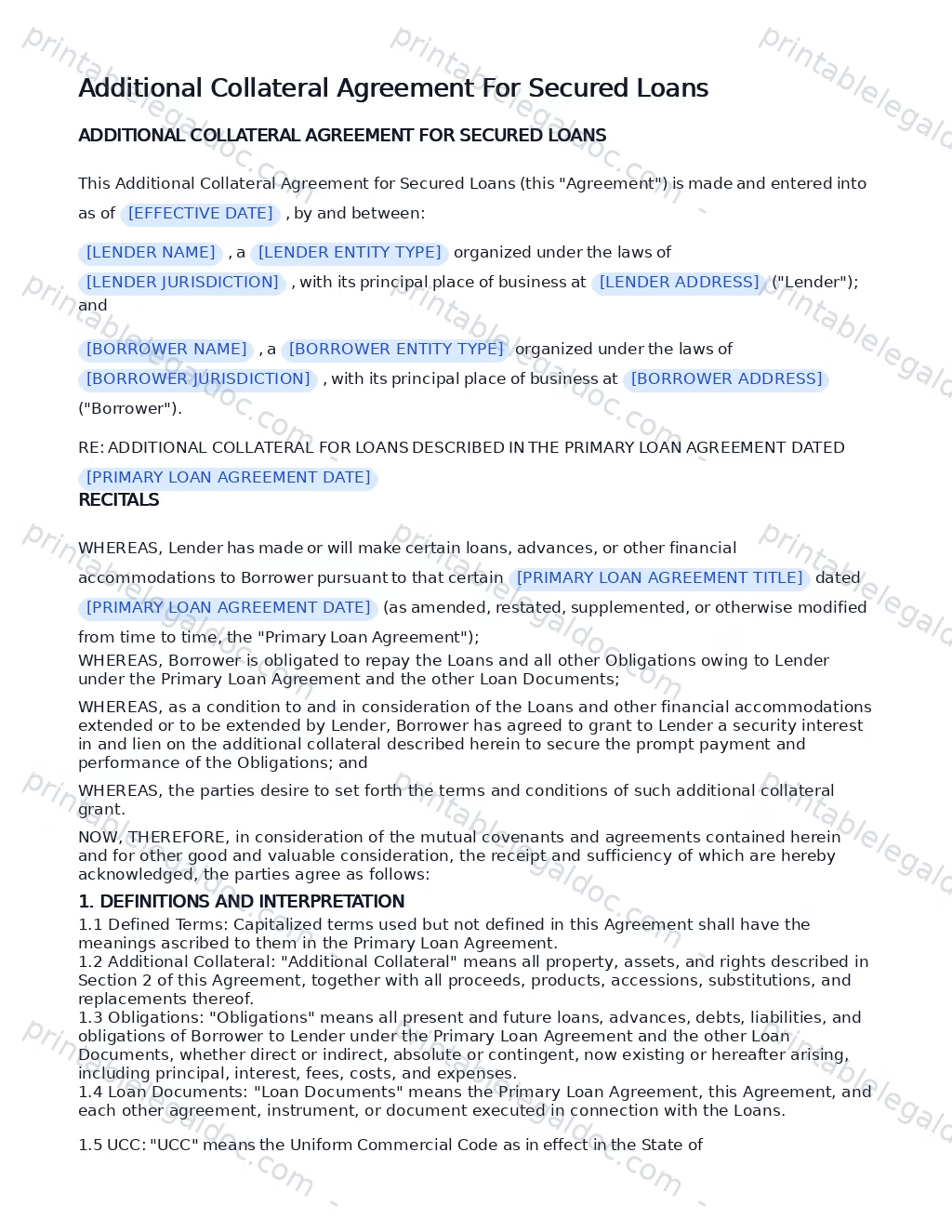
Additional Collateral Agreement For Secured Loans
An additional collateral agreement strengthens a secured loan by pledging more assets as backing. Lenders use this document when the original security no longer covers the risk. The template spells out which assets go on the line. It names the borrower and the lender. It describes the property, equipment, or accounts offered as extra protection. Clear terms matter here. The agreement should state what happens if the borrower defaults. It also defines how the lender can claim or release the collateral. Our template gives you a ready structure for these details. Fill in the blanks, adjust the clauses, and both sides sign. You get a clean record of the new security. That keeps the loan terms transparent and the lender's position stronger.
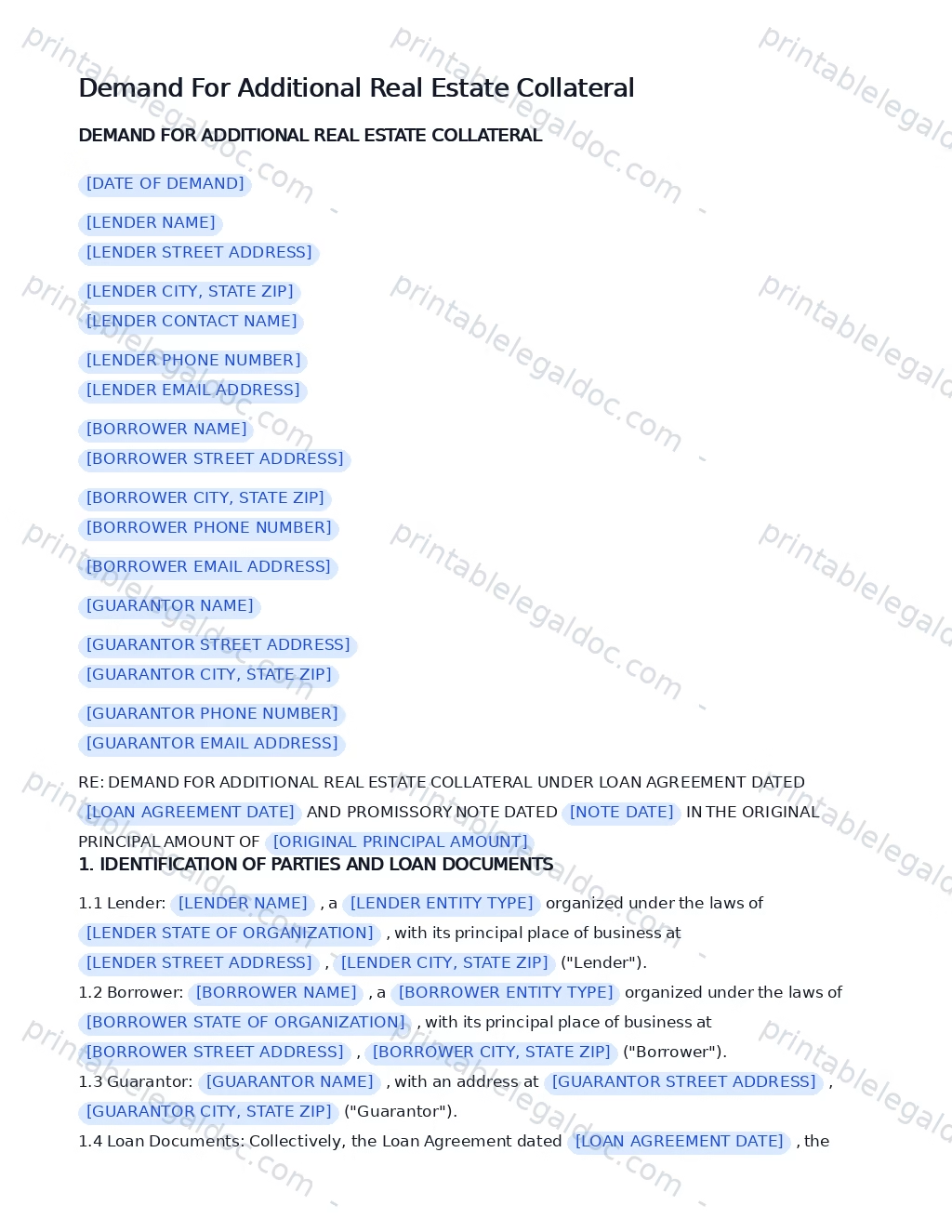
Demand For Additional Real Estate Collateral
Lenders may ask for additional real estate collateral when a property loan needs extra security. This demand often arises during refinancing or when a property value drops. Borrowers who face this request must act fast. You can pledge another property to satisfy the lender. Yet not every borrower owns spare real estate. That gap creates real stress. Some lenders accept a second lien on the same asset. Others want a fresh parcel with clear title. Understand the loan to value ratio first. Then review your equity position. A strong counteroffer may reduce the collateral demand. Talk to your lender early and keep records.
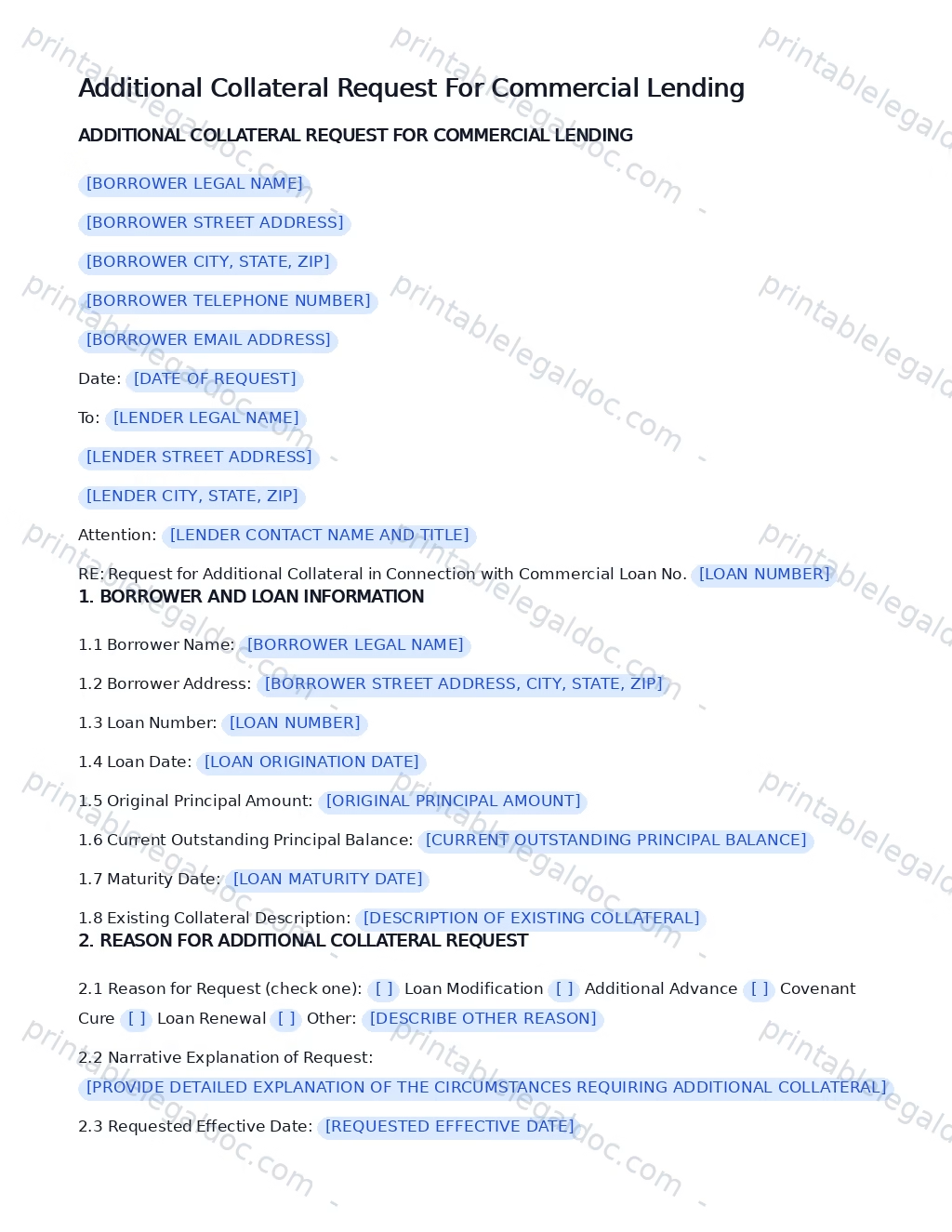
Additional Collateral Request For Commercial Lending
An additional collateral request happens when a lender asks a commercial borrower for more security. This often occurs mid loan. The original collateral may have lost value. Or the borrower's financial picture has changed. Lenders use this request to reduce their risk. They might ask for real estate, equipment, or a personal guarantee. For the borrower, the request means finding extra assets fast. It can strain cash flow and delay funding. A clear loan agreement helps both sides here. It spells out when a lender can ask for more security. Borrowers should review those terms early. Know what assets you can pledge if needed. Good preparation keeps the deal moving and protects the relationship.
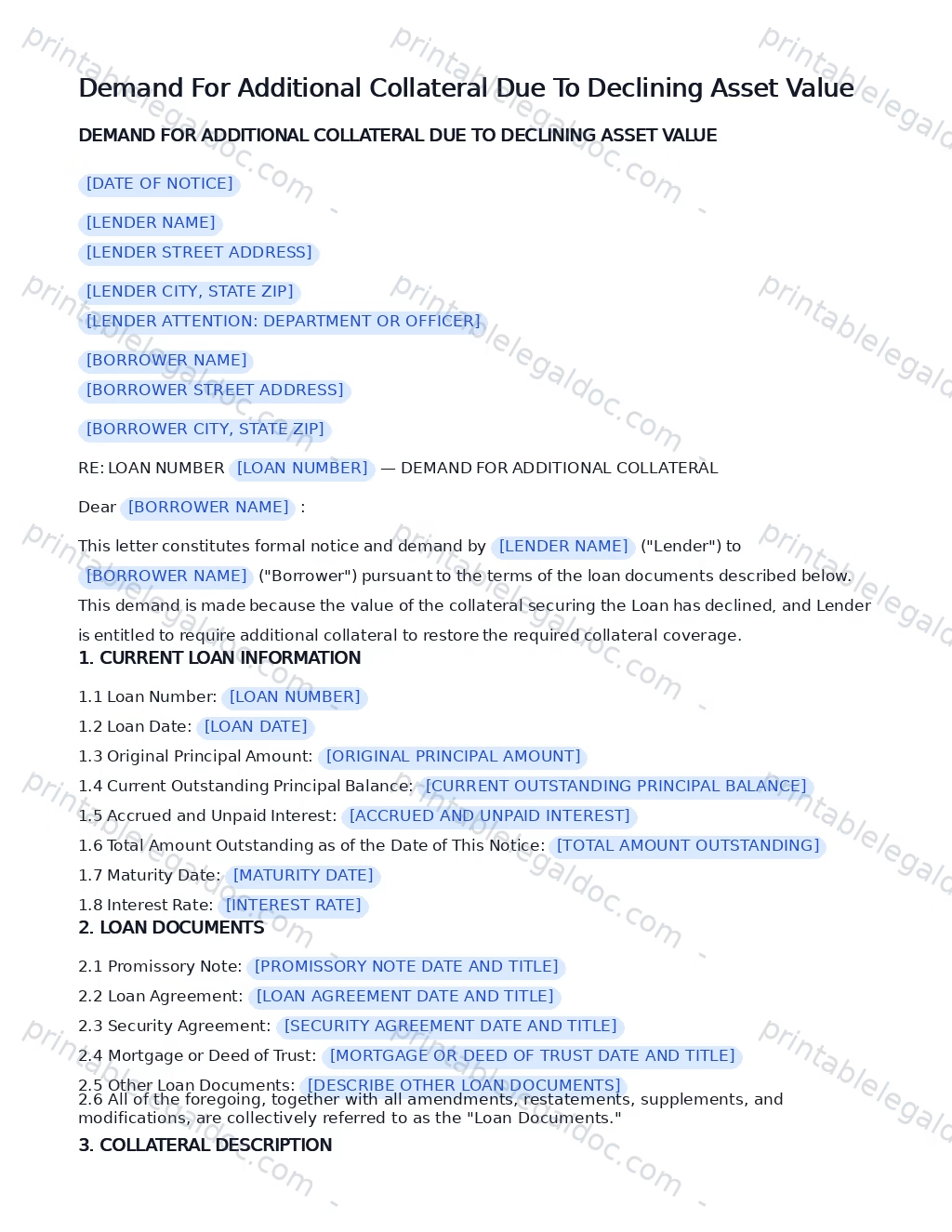
Demand For Additional Collateral Due To Declining Asset Value
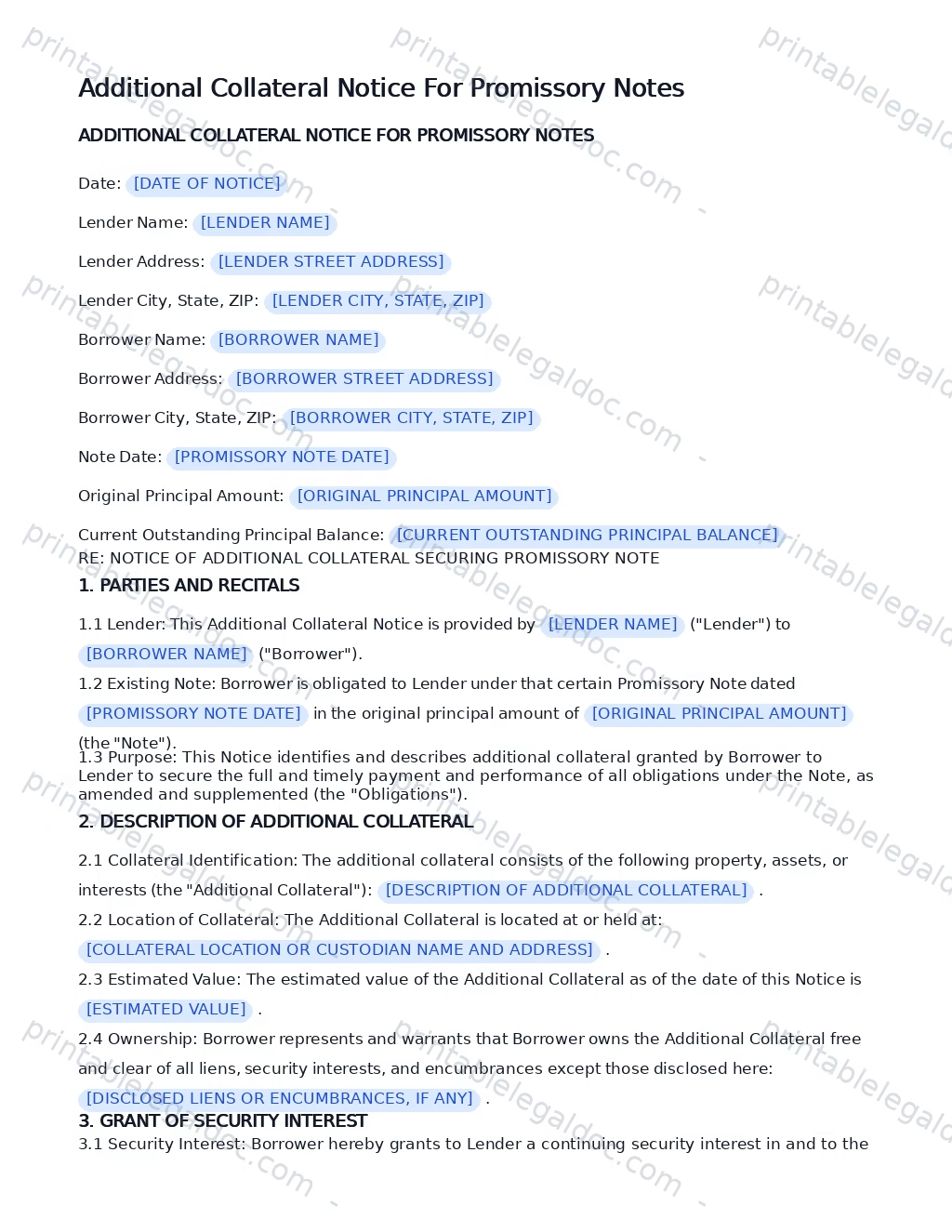
Additional Collateral Notice For Promissory Notes
An additional collateral notice for promissory notes protects lenders when a borrower pledges extra assets as security. This document records the new collateral and links it to the original note. It keeps both parties clear on what backs the loan. You gain a written trail that holds up if a dispute arises. Lenders use it to reduce risk. Borrowers use it to show good faith. The notice should list the assets, the note terms, and the signatures. Keep the language simple. File it with the original note. That way the record stays complete and easy to find.
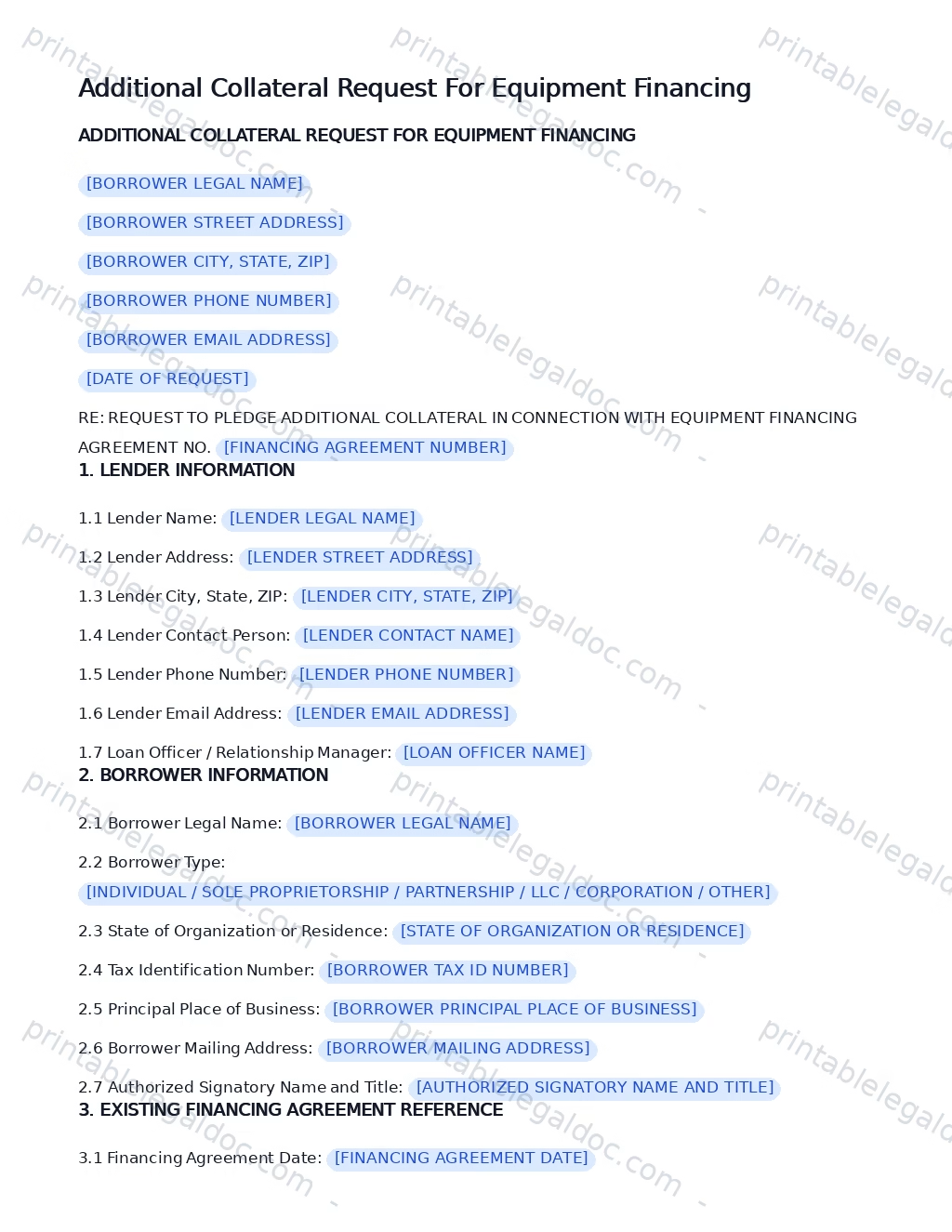
Additional Collateral Request For Equipment Financing
Lenders may ask for more security when equipment financing feels risky. An additional collateral request protects the lender if you default. You pledge extra assets beyond the equipment itself. These might include real estate, vehicles, or receivables. Expect this request when your credit score is low. New businesses often face it too. A large loan amount can trigger the ask. So can a weak cash flow history. The lender wants a safety net. You can negotiate terms or offer different assets. Sometimes a personal guarantee works instead. Ask about the loan-to-value ratio. That number shapes the request. Understand why the lender asks. Then decide if the deal still works for you.
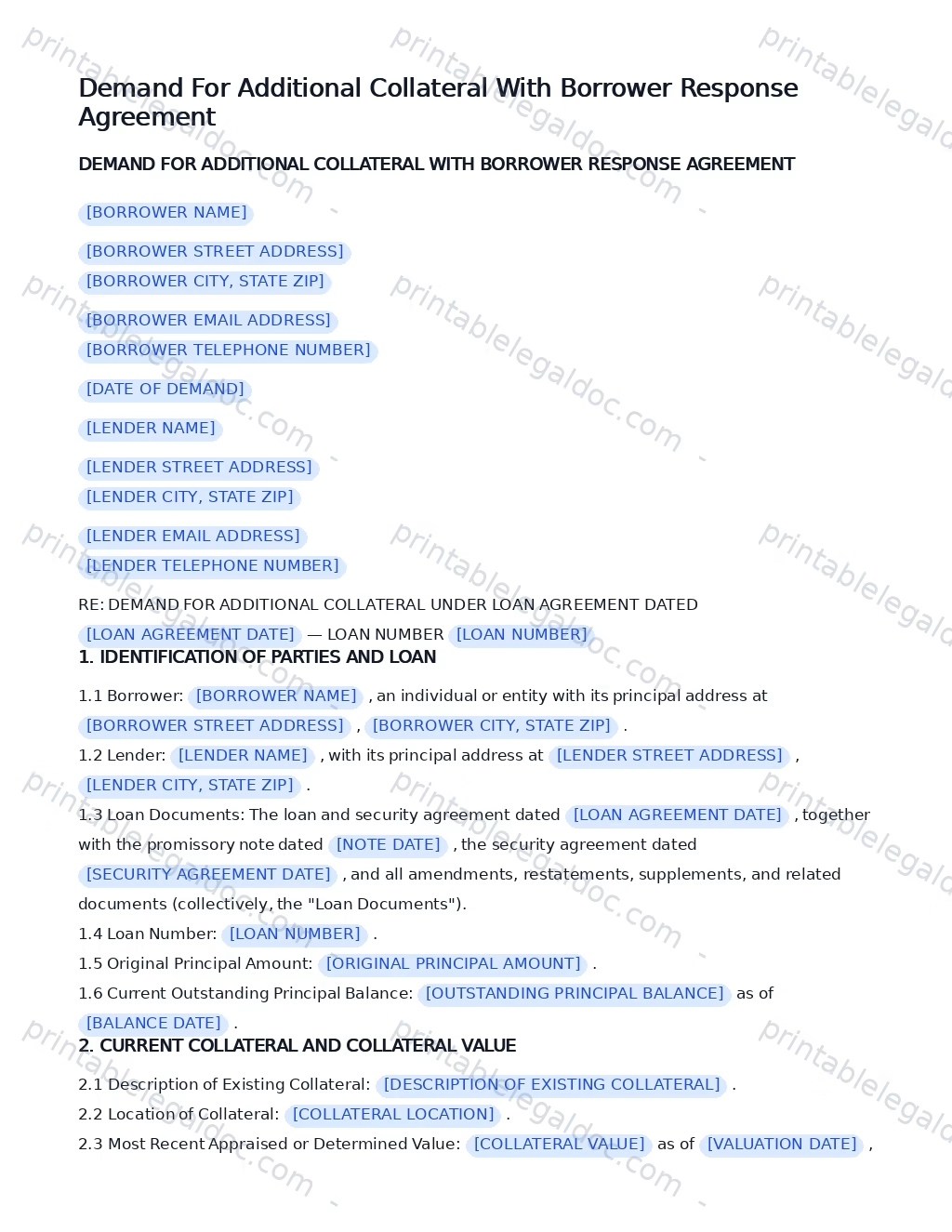
Demand For Additional Collateral With Borrower Response Agreement
A borrower response agreement can include a demand for additional collateral. Lenders ask for this when risk rises. The request gives the borrower a chance to cure the default. You may need to pledge more assets. Cash, property, or equipment can serve as security. Read the agreement closely. Note the deadline for your response. Miss it and the lender may pursue other remedies. Talk to your lender early. Ask what collateral they will accept. Get the terms in writing. A clear plan helps you protect your loan and your business.

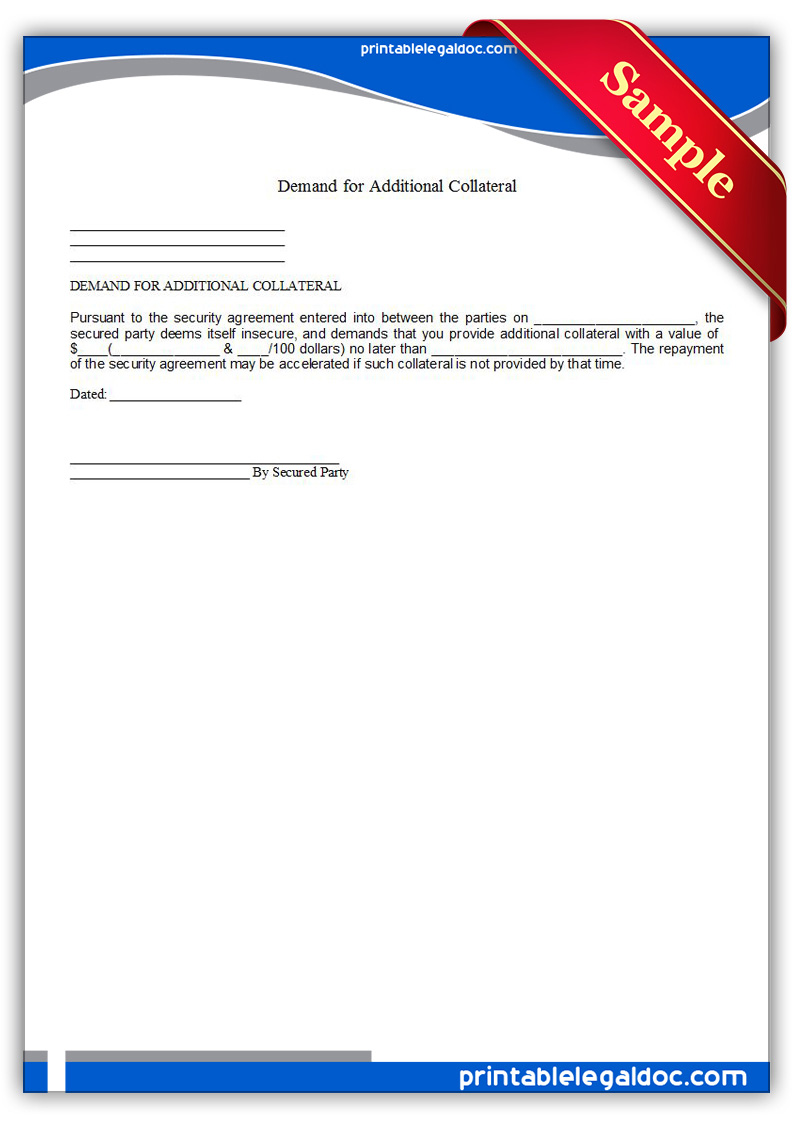
Demand For Additional Collateral
Demand for Additional Collateral
_______________________________
_______________________________
_______________________________DEMAND FOR ADDITIONAL COLLATERAL
Pursuant to the security agreement entered into between the parties on _____________________, the secured party deems itself insecure, and demands that you provide additional collateral with a value of $____(______________ & ____/100 dollars) no later than _________________________. The repayment of the security agreement may be accelerated if such collateral is not provided by that time.
Dated: ___________________
_______________________________________
__________________________ By Secured PartyDemand for Additional Collateral
Review ListThis review list is provided to inform you about this document in question and assist you in its preparation. This Demand for Additional Collateral can help the creditor improve their security position as well as provide the debtor more time to repay the loan. This can radically improve the probability of improving the collection percentage of the creditor as well. We strongly recommend taking this approach after payment problems have been incurred but prior to other court filings.
1. Make multiple copies. Send one to the debtor by mail, another by fax, and keep copies in the related files of the creditor.
2. In any settlement and/or court dealings in the future, this good faith step will be held in favor of the creditor for trying to act in good faith and be reasonable. Similarly it can be used by the debtor to avoid extra damage awards (in states such as Massachusetts that provide them, on occasion, under statutes such as their 93A clause) by their good intent by providing the collateral additions. However, notwithstanding that, this is definitely a document that best serves the purposes of the creditor.
Frequently Asked Questions
What is a demand for additional collateral?
A demand for additional collateral is a formal notice sent by a secured party to a debtor under an existing security agreement. It states that the secured party deems itself insecure and requires the debtor to provide additional collateral of a specified value by a certain deadline. The document also warns that repayment of the security agreement may be accelerated if the collateral is not provided on time.
When should a creditor use a demand for additional collateral?
According to the review list, this approach is strongly recommended after payment problems have been incurred but prior to other court action. It can help the creditor improve their security position and may provide the debtor more time to repay the loan. This can also radically improve the probability of improving the collection percentage of the creditor.
What happens if the debtor fails to provide the additional collateral?
The demand states that the repayment of the security agreement may be accelerated if the additional collateral is not provided by the specified deadline. Acceleration means the full outstanding amount may become immediately due. The document does not specify other consequences beyond acceleration.
How much additional collateral must be provided?
The demand requires additional collateral with a value of a specific dollar amount, which is left blank in the template to be filled in by the secured party. The amount is written in both numeric and word form. The debtor must provide collateral worth at least that amount.
What is the deadline for providing the additional collateral?
The demand specifies a deadline by which the additional collateral must be provided. This date is left blank in the template and must be filled in by the secured party. The debtor must provide the collateral no later than that date to avoid potential acceleration.
What does it mean that the secured party deems itself insecure?
The phrase "deems itself insecure" indicates that the secured party has determined, under the security agreement, that its position is no longer adequately protected. This determination triggers the right to demand additional collateral. The demand does not require the secured party to specify the reasons for its insecurity.
Can a demand for additional collateral help avoid court action?
Yes, the review list suggests that this approach can be taken after payment problems have been incurred but prior to other court action. It may provide the debtor more time to repay the loan while improving the creditor's security position. This can also improve the probability of improving the collection percentage.
Who sends the demand for additional collateral?
The demand is sent by the secured party, as indicated by the signature block labeled "By Secured Party." The secured party is the party that holds the security interest under the security agreement. The document is dated and signed by the secured party.
What information must be included in a demand for additional collateral?
The demand must reference the security agreement entered into between the parties on a specific date. It must state that the secured party deems itself insecure, specify the required value of additional collateral, and set a deadline for providing it. It should also warn that repayment may be accelerated if the collateral is not provided by that time.
Is a demand for additional collateral a legal document?
Yes, it is a formal document sent pursuant to a security agreement. It serves as notice to the debtor of the secured party's demand and the potential consequences of non-compliance. The review list is provided to inform the user about the document and assist in its preparation.


