

This review list is intended to educate you about the subject of this document and to aid you in its preparation. To have these requests signed and placed in the workers’ files is simply good housekeeping. There are several reasons to do so, none of which indicate that it is an issue.
1. Obtain two signatures from the employee, one for their records and one for the files
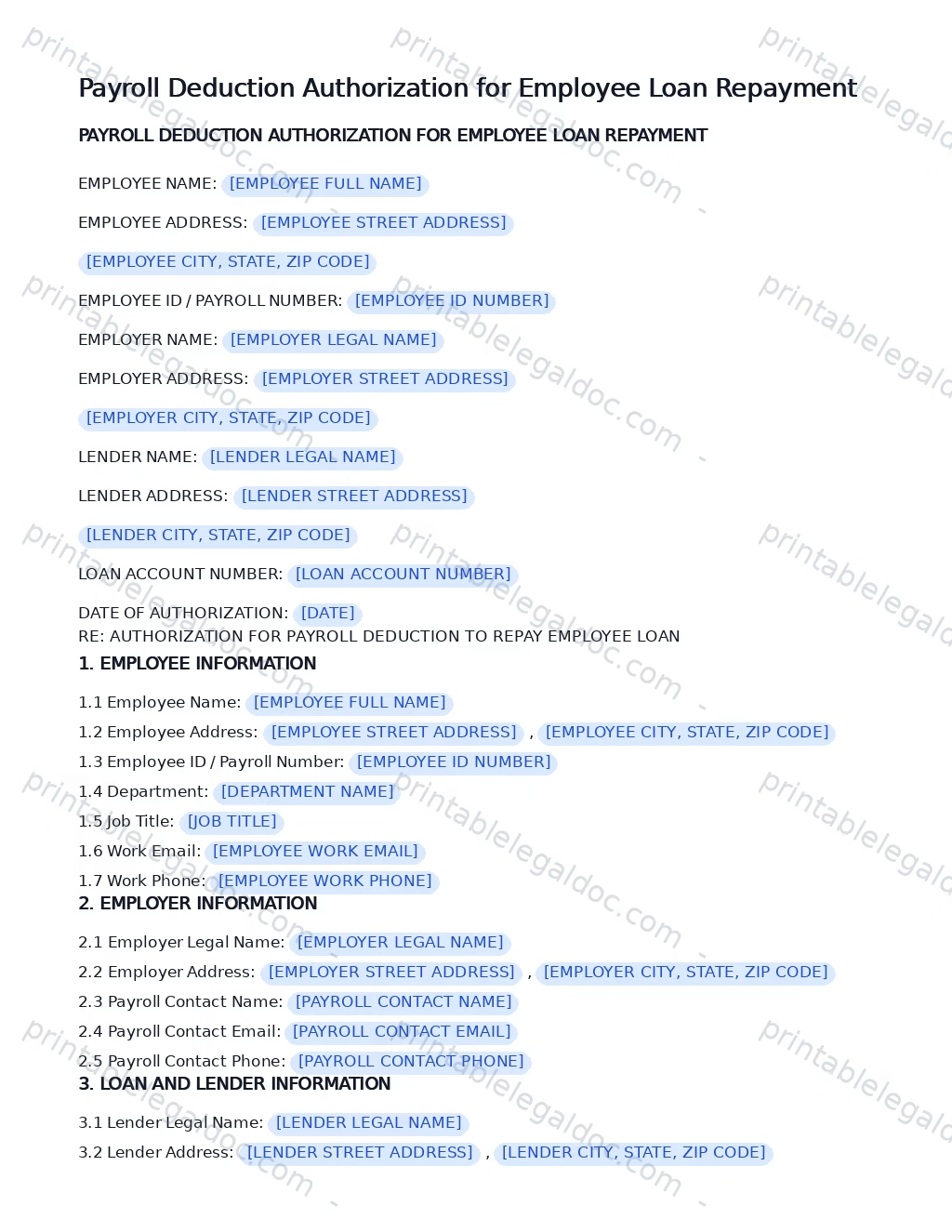
Payroll Deduction Authorization for Employee Loan Repayment
A payroll deduction authorization lets an employee repay a company loan straight from their paycheck. The form names the employee, the loan amount, and the repayment terms. It also states the deduction amount and how often it applies. Both parties sign the document. This creates a clear record and protects everyone involved. The employee sees the exact figure taken each pay period. The employer gains written consent before withholding any wages. That consent matters for compliance and for trust. Use this template to set up a simple, transparent repayment plan. It keeps the process fair and easy to track from the first payment to the last.
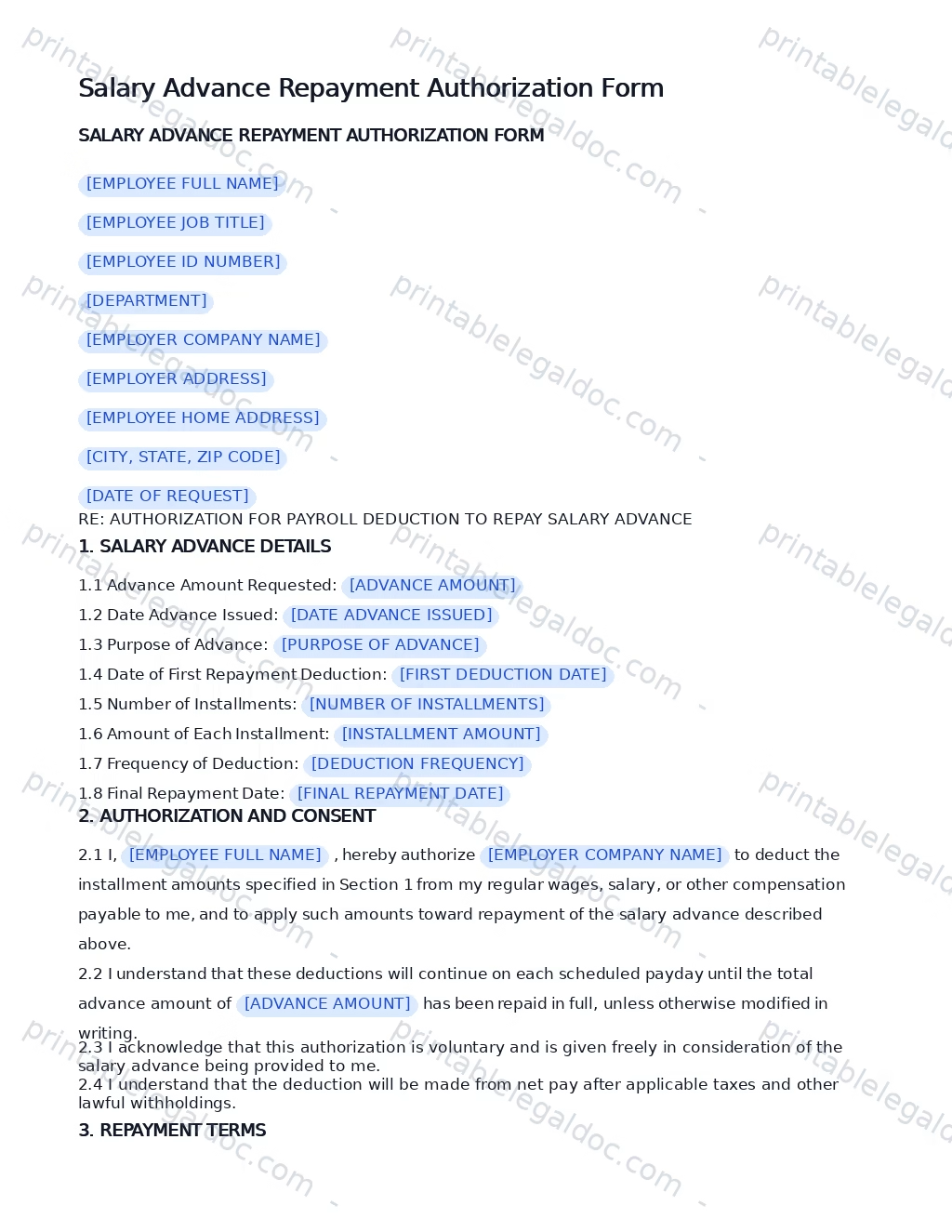
Salary Advance Repayment Authorization Form
A salary advance repayment authorization form gives you written consent to deduct money from an employee's paycheck. It sets clear terms. The worker agrees to the repayment amount and schedule. Your payroll team gets a record to fall back on. This form protects both sides. It stops confusion about what is owed. You can use it for small loans or emergency payouts. The template covers key details. That includes the advance sum, deduction dates, and signatures. Keep a signed copy in the employee file. Simple paperwork like this builds trust and keeps your payroll clean.
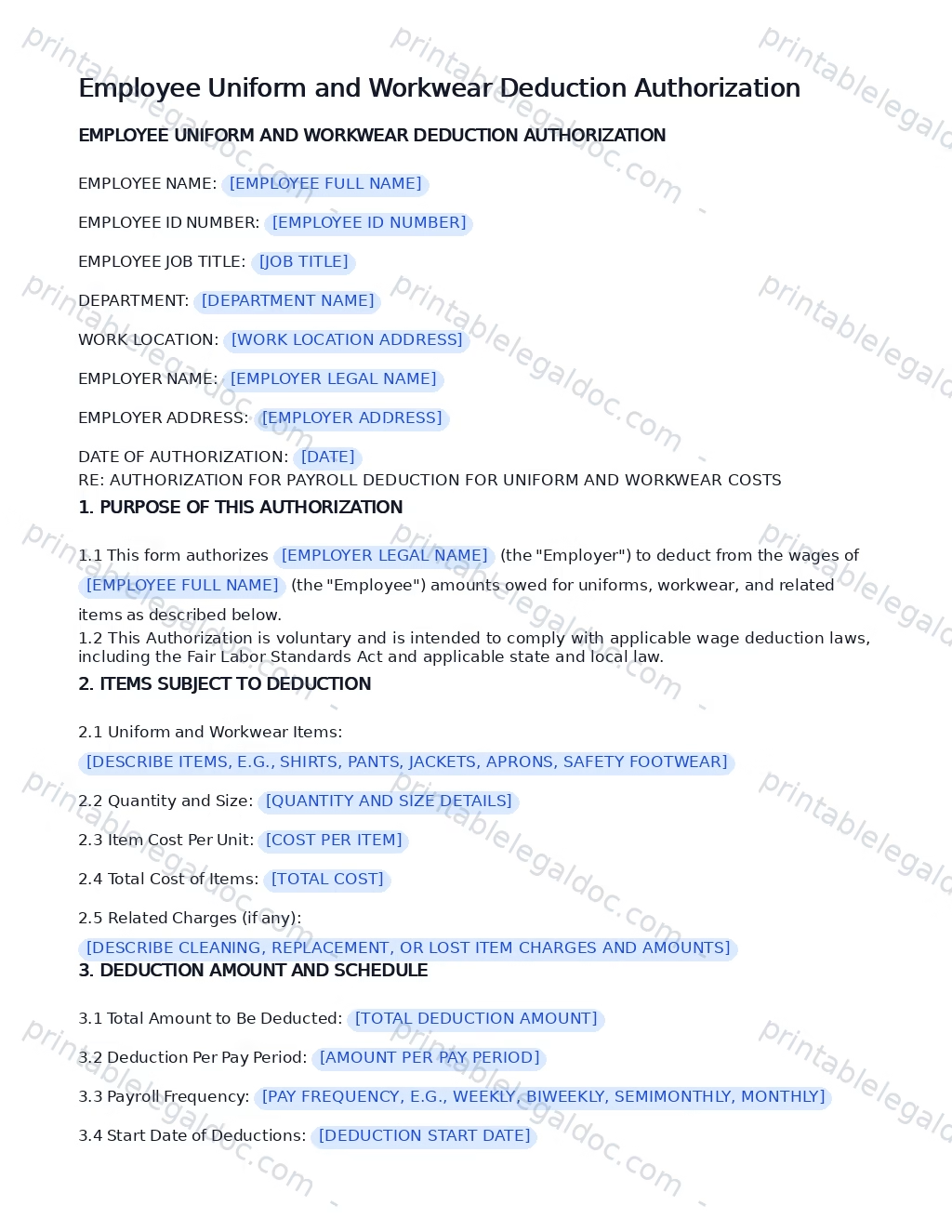
Employee Uniform and Workwear Deduction Authorization
An employee uniform and workwear deduction authorization form lets you recover uniform costs from wages with clear written consent. Your staff member signs to approve the deduction amount and payment terms. This protects both sides. The worker knows exactly what comes out of their pay. You gain a documented record that supports compliance with wage laws. Use this template when you issue company clothing, safety gear, or branded workwear. It captures the employee name, deduction total, and repayment schedule in one place. Clear consent reduces disputes and keeps payroll clean. Grab the template and simplify how you handle workwear costs.
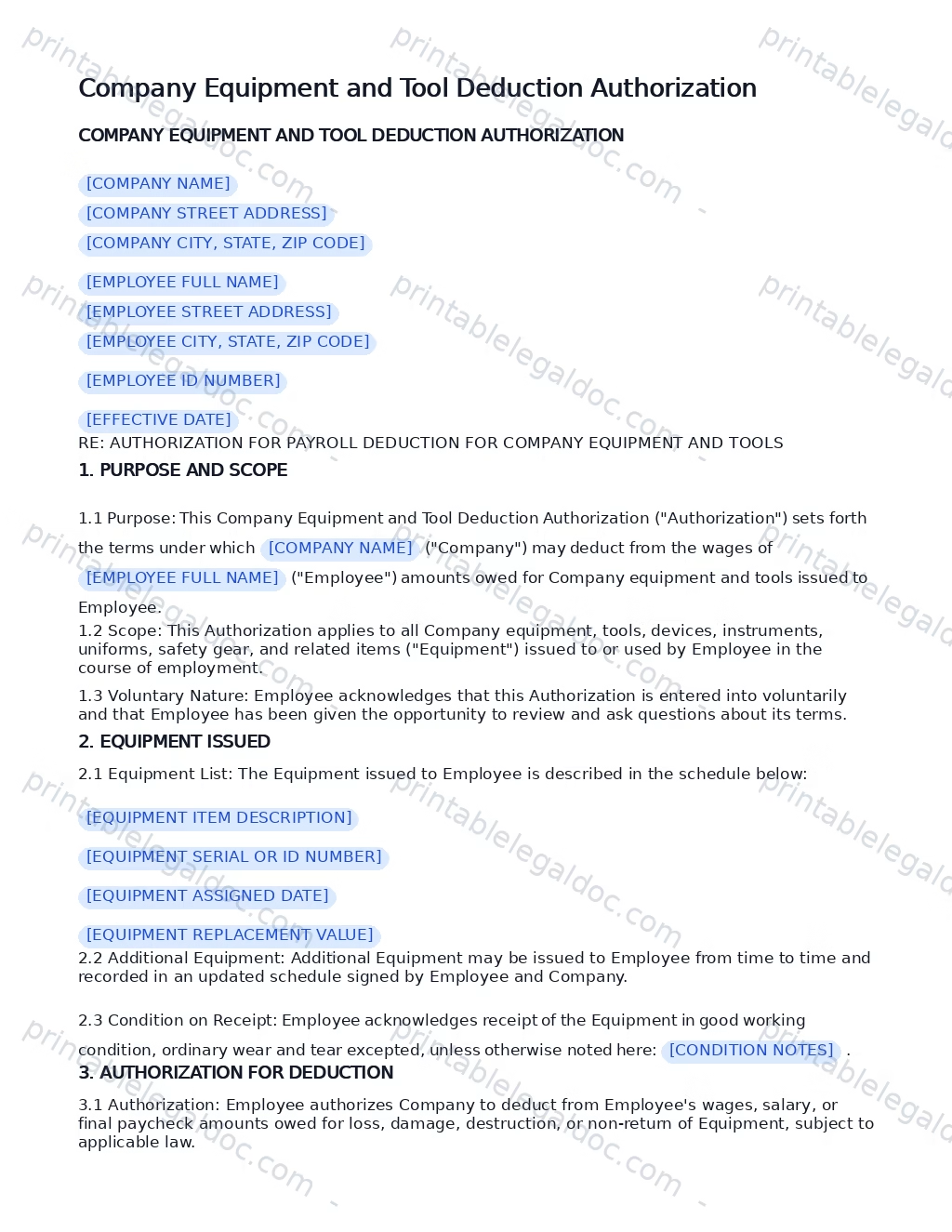
Company Equipment and Tool Deduction Authorization
This form gives your company written permission to deduct equipment and tool costs from an employee's pay. It covers lost, damaged, or unreturned items. Both sides sign. That keeps the process clear and fair. Use it when issuing company gear or closing out a worker's account. The template records the item, its value, and the agreed deduction amount. It also notes the reason and the date. Clear records protect everyone. Employees know what they owe. Managers have proof on file. The form supports payroll accuracy and reduces disputes. Keep a signed copy for your records. Review local wage laws before applying any deduction.
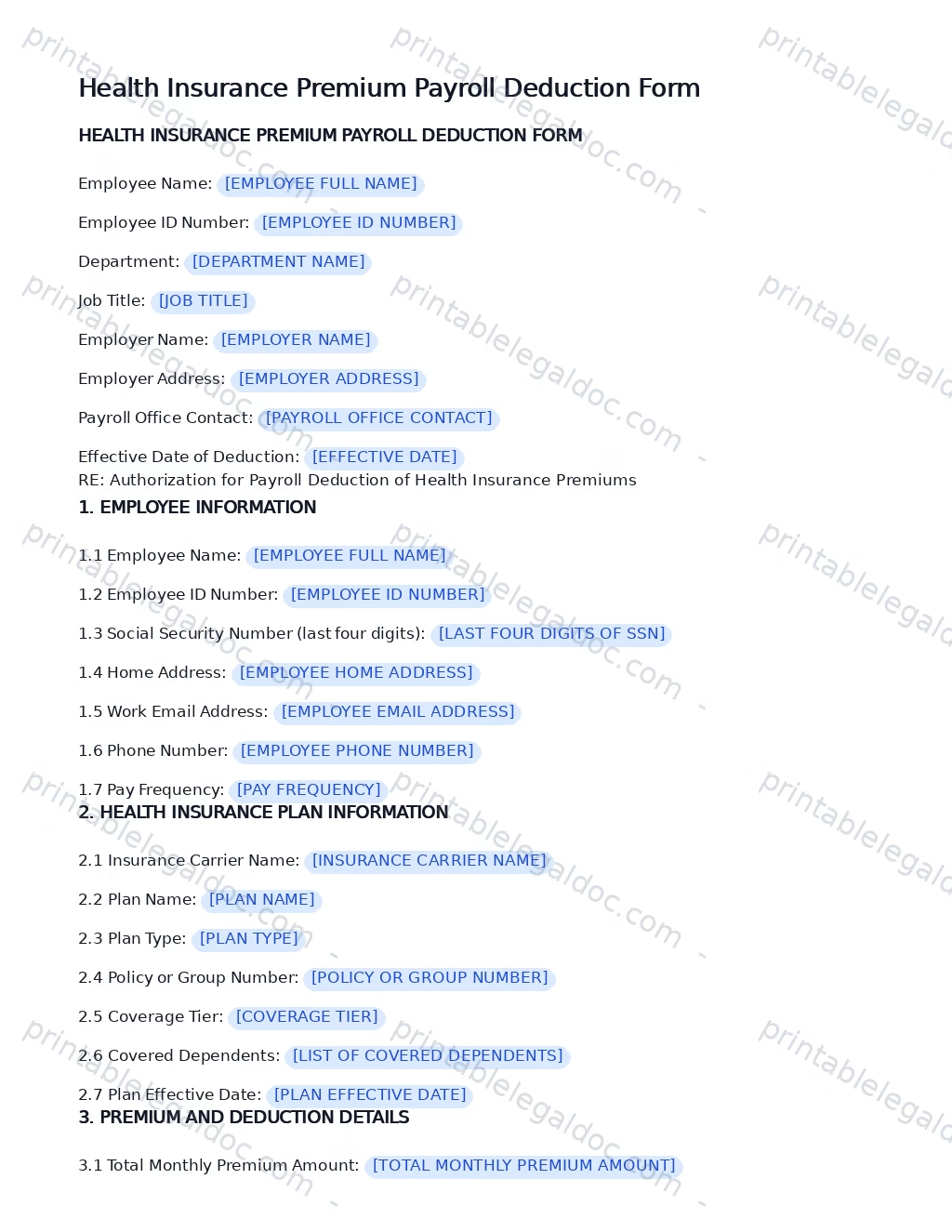
Health Insurance Premium Payroll Deduction Form
A health insurance premium payroll deduction form lets workers pay premiums straight from their paycheck. This simple document authorizes employers to withhold a set amount each pay period. It removes the hassle of manual payments and keeps coverage active without late fees. Employees fill in personal details, plan information, and the deduction amount. Payroll then applies the change on the next cycle. Clear records protect both sides if questions arise later. The form also gives staff control over how they fund their benefits. Use it to simplify billing and reduce admin work for your HR team.
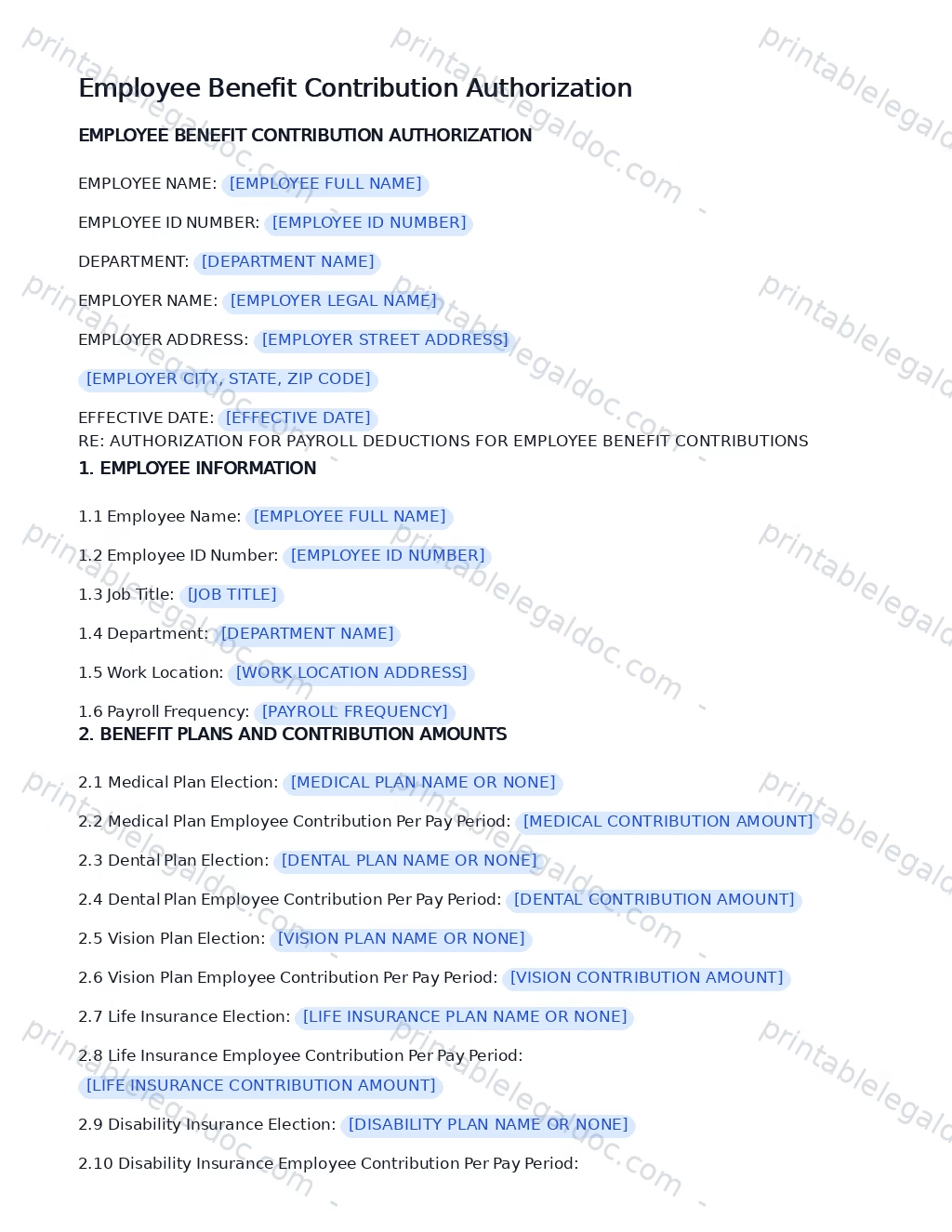
Employee Benefit Contribution Authorization
Employee Benefit Contribution Authorization lets workers decide how their benefit money gets spent. You approve payroll deductions for health plans, retirement accounts, and other perks. This simple form gives your employer clear permission to move funds. It protects both sides. You stay in control of your choices. Your company stays compliant with benefit rules. Fill it out once and update it when life changes. New job, marriage, or a raise might shift your needs. Keep a copy for your records. Ask HR if any line feels unclear. A signed form means fewer surprises on payday.
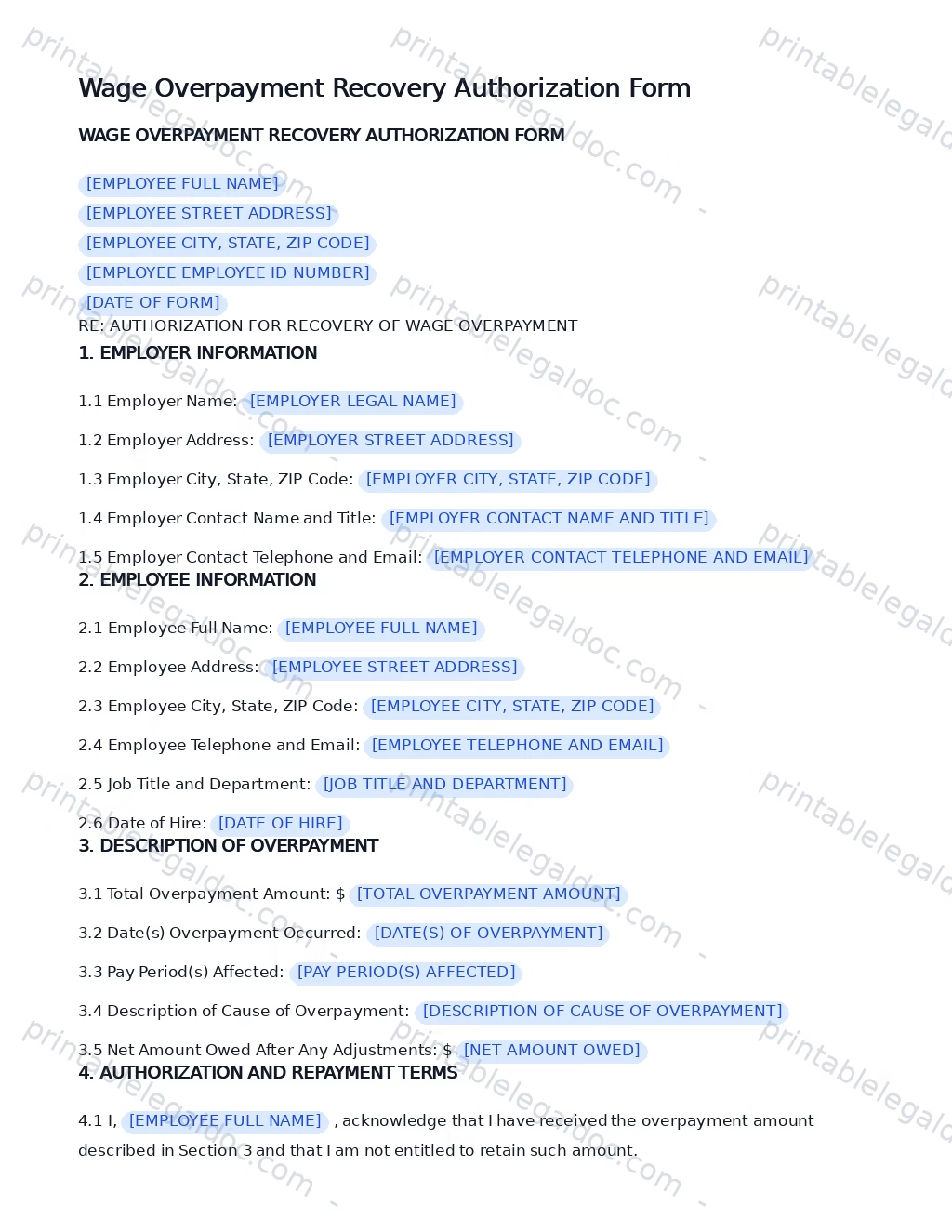
Wage Overpayment Recovery Authorization Form
A wage overpayment happens when an employee receives more pay than earned. This recovery authorization form gives you a clear way to fix it. The employee signs to approve a repayment plan. You set the amount and schedule. Weekly payroll deductions work well for most cases. Lump sum repayment suits others. The form protects both sides. It creates a written record of the debt and the agreed terms. No confusion later. HR and payroll teams use it to stay compliant with wage laws. Employees appreciate the transparency. Everyone knows what gets repaid and when. Grab this ready to use template and handle overpayments with confidence.
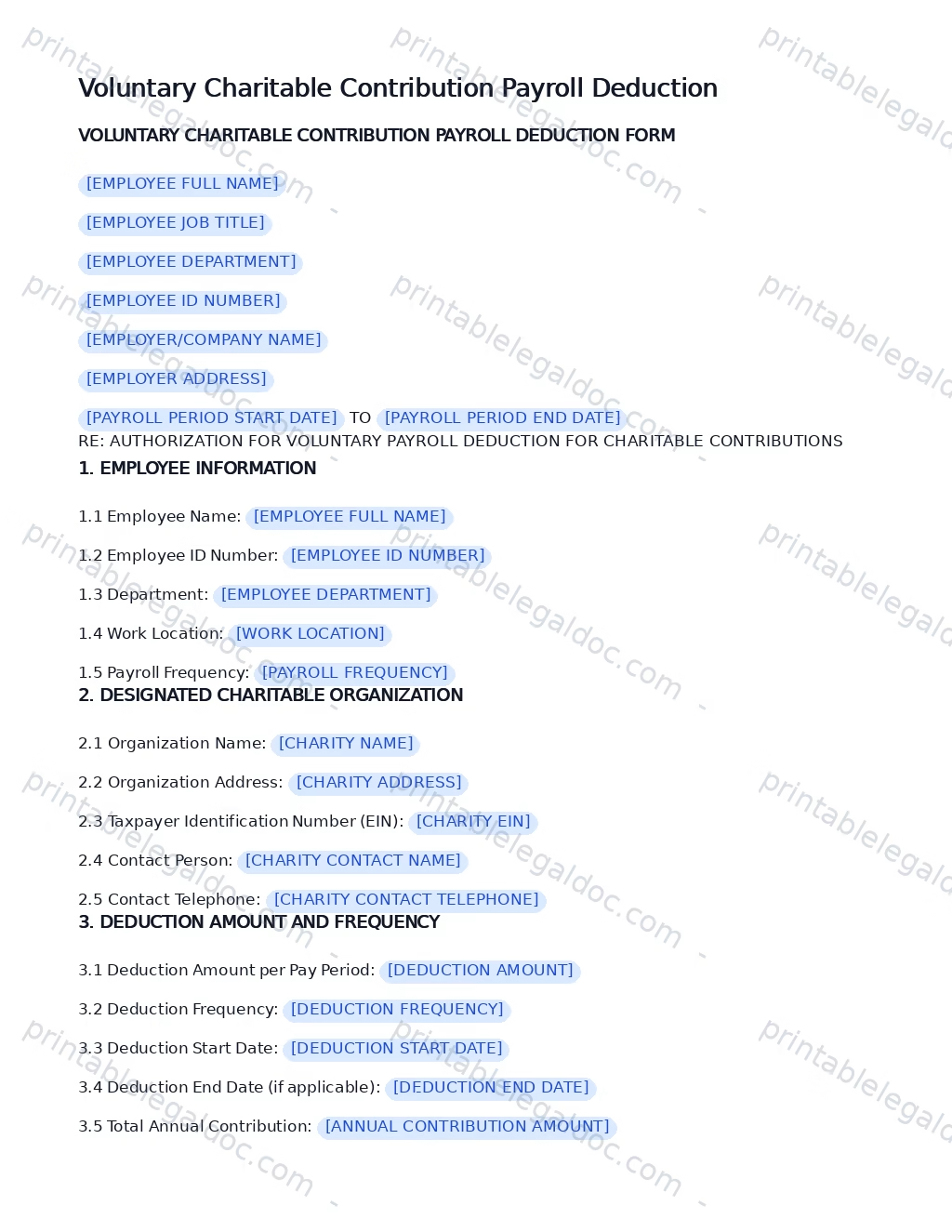
Voluntary Charitable Contribution Payroll Deduction
A voluntary charitable contribution payroll deduction makes giving simple. You choose a cause. You pick an amount. The gift comes straight from your paycheck each pay period. No extra steps. No reminders to write a check. Small amounts add up fast across a team. One dollar per week becomes real support over a year. Employees like the ease. Employers like the goodwill it builds. The process stays clear and transparent. You can start, pause, or change your gift when needed. Every deduction shows on your pay stub, so you always know where your money goes. This approach turns everyday pay into steady community impact.
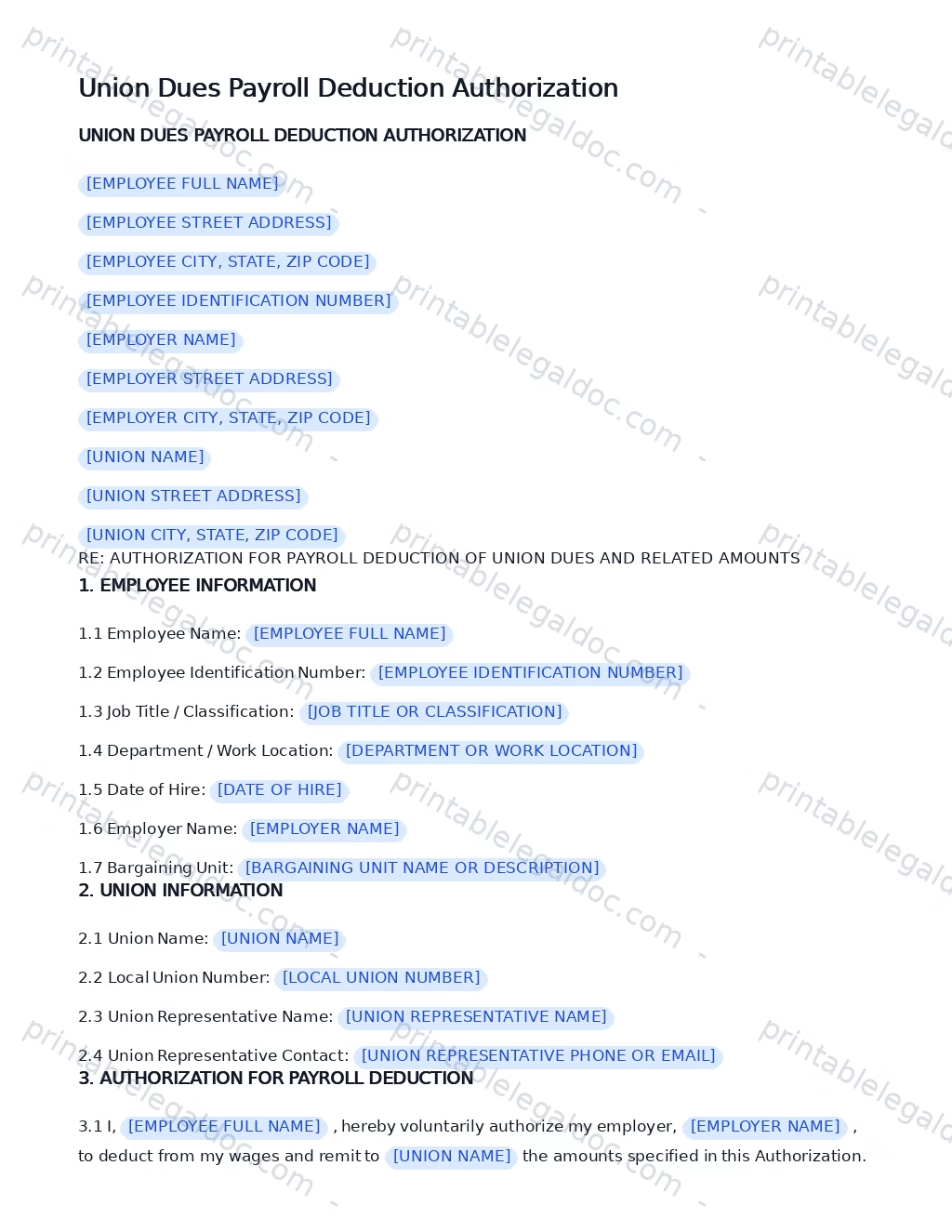
Union Dues Payroll Deduction Authorization
A union dues payroll deduction authorization lets workers choose automatic dues payments through payroll. The form gives clear consent. It names the union. It states the deduction amount. It shows how often the money comes out. Employees sign and date the document. Payroll then withholds dues each pay period. Workers can revoke permission in writing. The employer must stop the deduction on time. This simple record protects both sides. It keeps the process fair and open. It prevents payroll errors and disputes. Use this template to capture written consent. Store the signed form in the employee file. Review it when pay rates change.
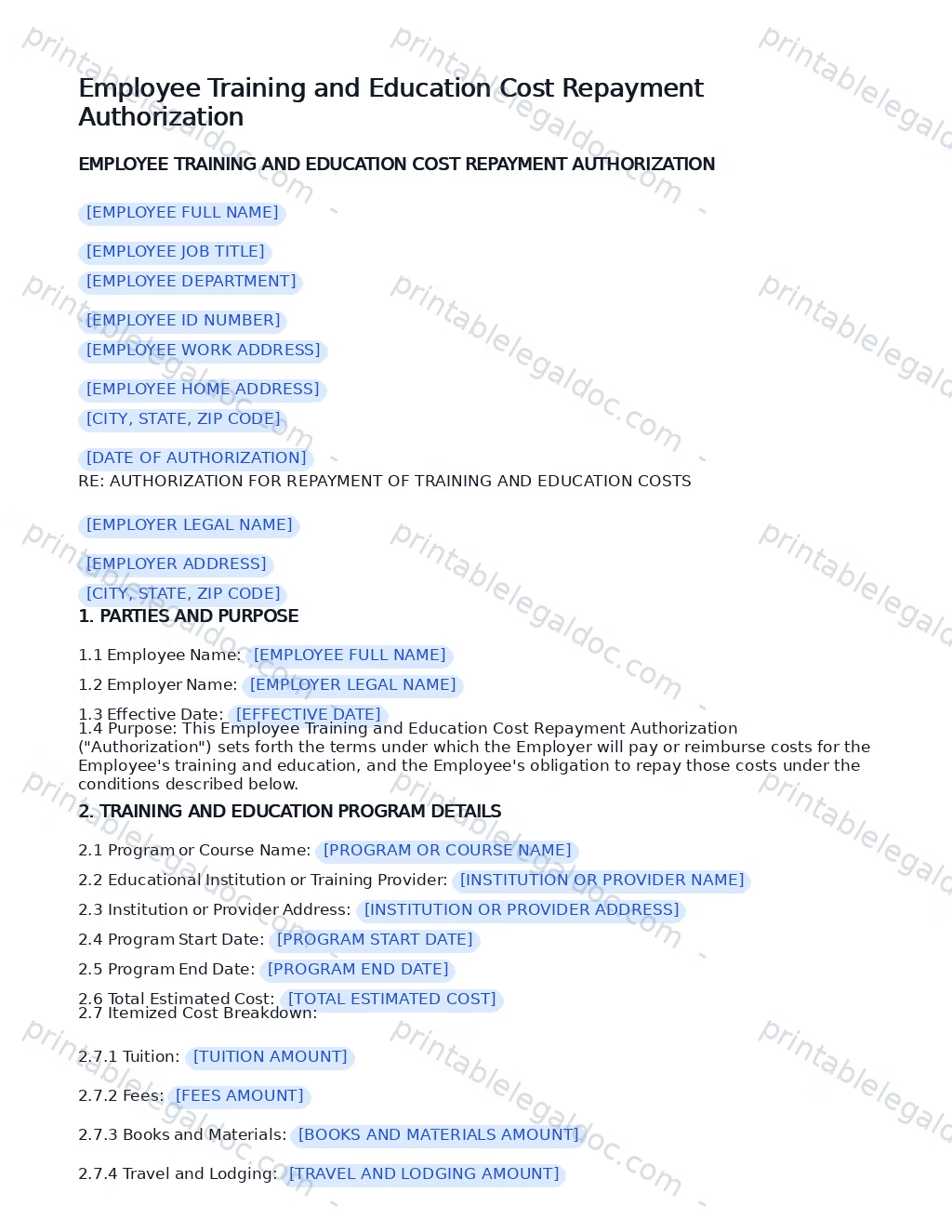
Employee Training and Education Cost Repayment Authorization
An employee training and education cost repayment authorization form protects your company when you fund staff development. It creates a clear written agreement. The employee commits to repaying tuition or training costs if they leave within a set period. Your form should state the total amount covered. List the repayment terms and the required service commitment. Add a schedule for partial repayment if the employee resigns early. Both parties sign the document to confirm consent. This record reduces disputes and supports fair treatment. Keep a signed copy in the employee file. Use the template each time you approve education support. Clear terms build trust and safeguard your training investment.
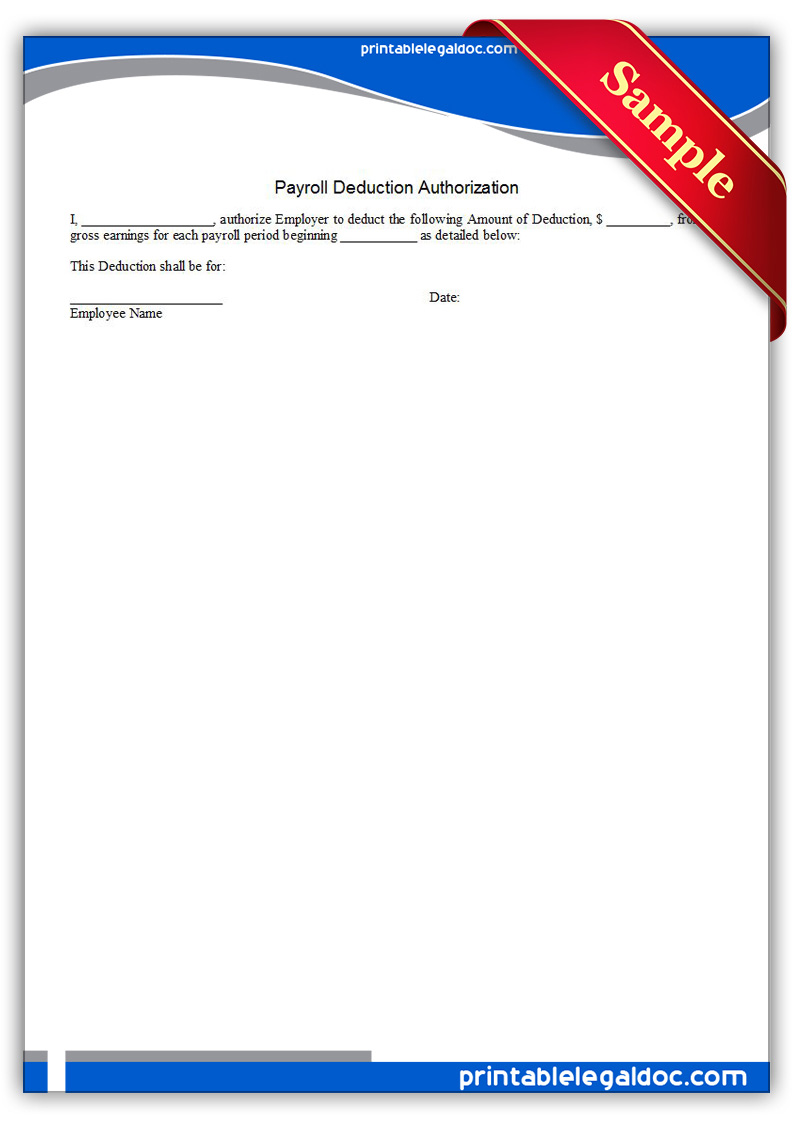
Payroll Deduction Authorization
Payroll Deduction Authorization
I, ___________________, authorize Employer to deduct the following Amount of Deduction, $ _________, from my gross earnings for each payroll period beginning ___________ as detailed below:
This Deduction shall be for:
______________________ Date:
Employee Name
Payroll Deduction Authorization
Review ListThis review list is provided to inform you about this document in question and assist you in its preparation. This is simply good housekeeping to get these requests signed and in the employees’ files. There are a host of reasons to do so and none suggesting it is a problem.
1. Have the employee sign two copies, one for their records and one for the files.
Frequently Asked Questions
What is a payroll deduction authorization?
A payroll deduction authorization is a document that allows an employer to deduct a specified amount from an employee's gross earnings each payroll period. The employee must sign the authorization to approve the deduction. It is used for various purposes as detailed in the form.
Why do I need to sign a payroll deduction authorization?
You need to sign a payroll deduction authorization to give your employer permission to deduct a certain amount from your paycheck. This ensures that the deduction is made with your consent and in accordance with your instructions. It also provides a record of the authorization for both you and your employer.
What information is required on a payroll deduction authorization form?
The form typically requires the employee's name, the amount to be deducted, the start date for the deduction, and the purpose of the deduction. The employee must also sign and date the form. The employer may also include a review list to ensure proper handling.
How many copies of the payroll deduction authorization should be signed?
The employee should sign two copies: one for their own records and one for the employer's files. This is recommended in the review list to ensure proper documentation. Keeping a copy for the employee helps maintain transparency.
Is a payroll deduction authorization legally required?
The article does not specify legal requirements, but it suggests that having signed authorizations is good housekeeping. It is a best practice to obtain written consent for payroll deductions. This helps avoid disputes and ensures compliance with company policies.
What happens if I don't sign a payroll deduction authorization?
Without a signed authorization, the employer may not be able to legally deduct the specified amount from your paycheck. The article implies that signed authorizations are necessary to process deductions. It is in the employee's interest to sign if they agree to the deduction.
Can I cancel a payroll deduction authorization?
The article does not address cancellation or revocation of the authorization. Typically, employees can revoke such authorizations by providing written notice to the employer, but specific procedures may vary. You should consult your employer's policies or legal advice for details.
What types of deductions can be authorized?
The form includes a blank line to specify the purpose of the deduction, so it can be used for various types of deductions. Common examples might include insurance premiums, retirement contributions, or charitable donations. The article does not limit the types of deductions.
Who keeps the payroll deduction authorization form?
The employee should keep one signed copy for their records, and the employer should keep the other in the employee's file. This is stated in the review list. Both parties should retain a copy for future reference.
Why is a review list included with the payroll deduction authorization?
The review list is provided to inform about the document and assist in its preparation. It serves as a checklist to ensure that the authorization is properly completed and signed. It emphasizes the importance of having these requests signed and filed.


