Life Sustaining Statute, North Carolina
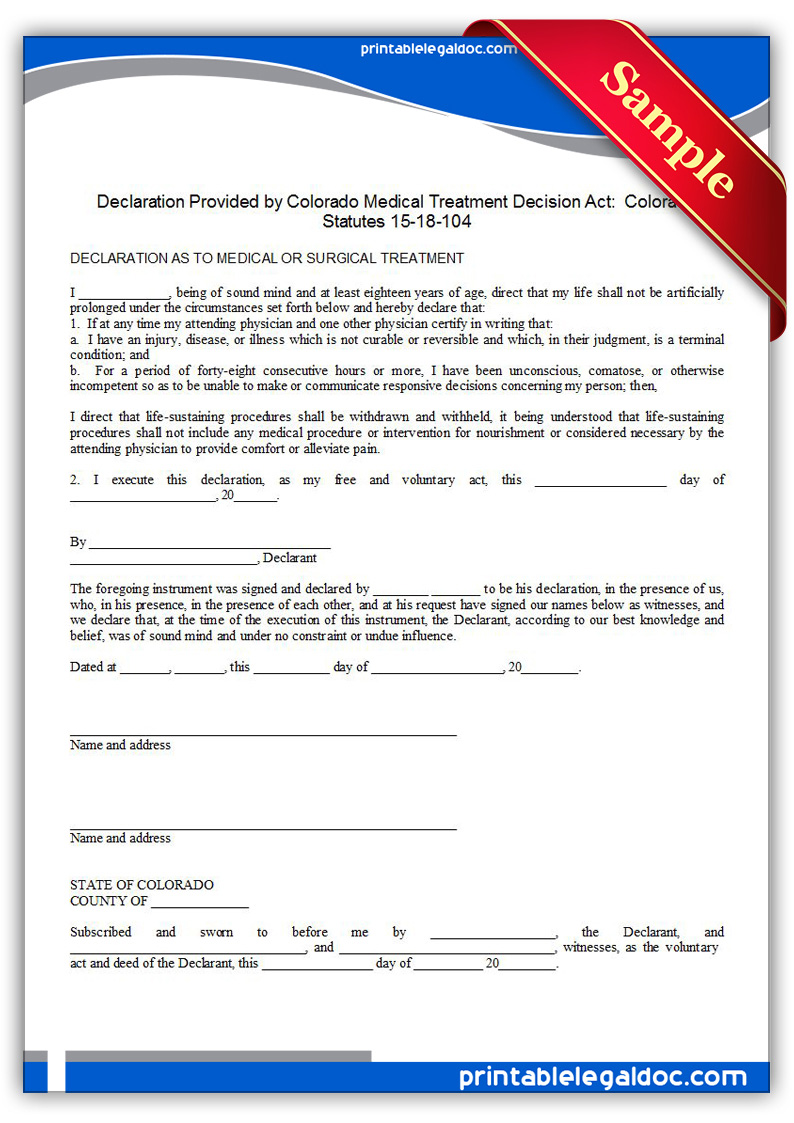
A life sustaining statute is generally legal in most states and will generally be enforce and made in the presence of witnesses and a notary public. There is a general format when it come to life sustaining statutes but the details may differ depending on the state you are in. In the state of North Carolina, it is a general legal form.
A Life Sustaining Statute or a uniform living will is a legal document written by someone who is diagnosed with an illness that may be difficult to cure or has a chance to become a terminal illness. A life sustaining statute or uniform living will states the wishes of the person who is ill. It states what they would want to happen in the case that their illness does become terminal or that they pass the point of no return. This document states the types of medications he will be restricted to and from. It also states that if the person decided to prolong or shorten his or her life, that he or she did it willingly, of sound mind, has been informed of possible treatments and procedures, and understands all legal implications of his or her decisions. The document is generally written (this may vary among states) with the writer’s signature, City of residence, County of residence, State of residence, Social Security Number, the Date it was signed, and the names of the witnesses present during this event. It is then presented to a notary public for notarization and publishing. Finally, you are encouraged to keep multiple copies. Make sure that theses can be accessible with your doctor, lawyer, and family members.

Life Sustaining Statute, North Carolina
Declaration of a Desire for a Natural Death as Provided by North Carolina G.S. 90-321
I, ________________, being of sound mind, desire that my life not be prolonged by extraordinary means if my condition is determined to be terminal and incurable. I am aware and understand that this writing authorizes a physician to withhold or discontinue extraordinary means.This the ______________ day of ___________________ 20___.
________________________________________________
SIGNATUREI hereby state that the Declarant, ________________, being of sound mind signed the above declaration in my presence and that I am not related to the Declarant by blood or marriage and that I do not know or have a reasonable expectation that I would be entitled to any portion of the estate of the Declarant, under any existing will or codicil of the Declarant, or as an heir under the Interstate Succession Act if the Declarant died on this date without a will. I also state that I am not the Declarant’s attending physician or an employee of the Declarant’s attending physician or an employee of a health facility in which the Declarant is a patient or an employee of a nursing home or any group-care home where the Declarant resides. I further state that I do not now have any claim against the Declarant.
Witness____________________________________________________________
Witness
____________________________________________________________
CERTIFICATE
I, _____________________________________________(state if Clerk of Superior Court or Deputy Clerk or Notary Public) for _________________________________ County, hereby certify that ________________, the Declarant, appeared before me and swore to me and to the witnesses in my presence that this instrument is his Declaration Of A Desire for A Natural Death, and that he willingly and voluntarily made and executed it as his free act and deed for the purposes expressed in it, I further certify that __________________________________ and__________________________ witnesses, appeared before me and swore that they witnessed ________________, Declarant, sign the attached declaration, believing him to be of a sound mind; and also swore that at the time they witnessed the declaration (i) they were not elated within the third degree to the Declarant or to the Declarant’s spouse, and (ii) they did not know or have a reasonable expectation that they would be entitled to any portion of the estate of the Declarant upon the Declarant’s death under any will of the Declarant or codicil thereto then existing or under the Interstate Succession Act as it provides at that time, and (iii) they were not a physician attending the Declarant or an employee of an attending physician or an employee of a health facility in which the Declarant was a patient or an employee of a nursing home or any group-care home in which the Declarant resided, and (iv) they did not have a claim against the Declarant.
I further certify that I am satisfied as to the genuineness and due execution of the declaration. This the _________ of ______________, 20______.
________________________________________________
Title: ____________________________________
County of _____________
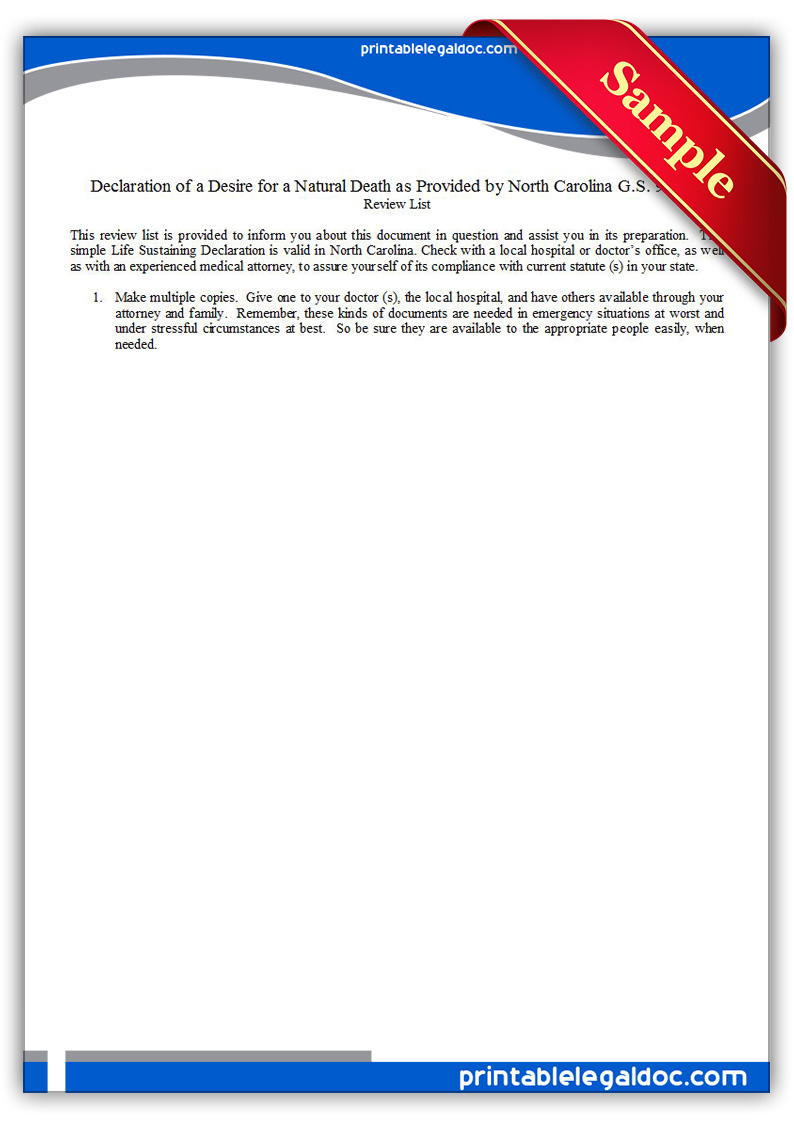
Declaration of a Desire for a Natural Death as Provided by North Carolina G.S. 90-321
Review ListThis review list is provided to inform you about this document in question and assist you in its preparation. This simple Life Sustaining Declaration is valid in North Carolina. Check with a local hospital or doctor’s office, as well as with an experienced medical attorney, to assure yourself of its compliance with current statute (s) in your state.
1. Make multiple copies. Give one to your doctor (s), the local hospital, and have others available through your attorney and family. Remember, these kinds of documents are needed in emergency situations at worst and under stressful circumstances at best. So be sure they are available to the appropriate people easily, when needed.
Frequently Asked Questions
What is the North Carolina life sustaining statute?
The North Carolina life sustaining statute is codified at North Carolina G.S. 90-321 and provides for a Declaration of a Desire for a Natural Death. This document allows a person to declare that they do not want their life prolonged by extraordinary means if their condition is determined to be terminal and incurable. The statute also outlines the requirements for witnesses to the declaration.
How do I make a living will in North Carolina?
In North Carolina, you can make a living will by completing a Declaration of a Desire for a Natural Death as provided by G.S. 90-321. The declaration must be signed by you, the declarant, and witnessed by two individuals who meet certain qualifications. The form includes a statement that you are of sound mind and that you do not wish to be kept alive by extraordinary means if terminally ill.
Who can witness a living will in North Carolina?
Under North Carolina G.S. 90-321, witnesses to a Declaration of a Desire for a Natural Death must not be related to the declarant by blood or marriage. They also cannot have a reasonable expectation that they would be entitled to any portion of the declarant's estate under any existing will or codicil, or as an heir under the Intestate Succession Act if the declarant died without a will. Additionally, witnesses cannot be the declarant's attending physician, an employee of the attending physician, or an employee of a health facility, nursing home, or group-care home where the declarant is a patient.
What does 'extraordinary means' mean in a North Carolina living will?
In the context of the North Carolina life sustaining statute, 'extraordinary means' refers to medical treatments or procedures that are intended to prolong life when a person's condition is terminal and incurable. The declaration authorizes a physician to withhold or discontinue such extraordinary means. The statute does not provide a specific list of what constitutes extraordinary means, but it is generally understood to include life-sustaining treatments.
Can a physician withhold treatment if I have a living will in North Carolina?
Yes, if you have a valid Declaration of a Desire for a Natural Death under North Carolina G.S. 90-321, it authorizes a physician to withhold or discontinue extraordinary means when your condition is determined to be terminal and incurable. The declaration must be properly signed and witnessed according to the statute. The physician is then permitted to follow your wishes as expressed in the declaration.
What is the North Carolina Declaration of a Desire for a Natural Death?
The Declaration of a Desire for a Natural Death is the specific form provided by North Carolina G.S. 90-321 for individuals to express their wishes regarding end-of-life medical care. It states that the declarant, being of sound mind, does not want their life prolonged by extraordinary means if their condition is terminal and incurable. The form includes a signature line and requires witnesses who meet certain criteria.
Is a living will in North Carolina legally binding?
Yes, a Declaration of a Desire for a Natural Death executed in accordance with North Carolina G.S. 90-321 is legally binding. The statute provides that the declaration authorizes a physician to withhold or discontinue extraordinary means under the specified conditions. To be valid, the declaration must be signed by the declarant and witnessed by qualified individuals as outlined in the statute.
What are the requirements for a valid living will in North Carolina?
To be valid in North Carolina, a living will must be a Declaration of a Desire for a Natural Death as provided by G.S. 90-321. The declarant must be of sound mind and must sign the declaration. The declaration must be witnessed by two individuals who are not related to the declarant by blood or marriage, do not have a reasonable expectation of inheriting from the declarant, and are not the declarant's attending physician, an employee of the attending physician, or an employee of a health facility, nursing home, or group-care home where the declarant is a patient.
Can I revoke a living will in North Carolina?
The provided article text does not address revocation of a living will in North Carolina. The article focuses on the declaration form and witness requirements under G.S. 90-321. For information on revoking a living will, you should consult the full statute or a legal professional.
What is the difference between a living will and a health care power of attorney in North Carolina?
The article text only discusses the Declaration of a Desire for a Natural Death under North Carolina G.S. 90-321, which is a living will. It does not mention health care power of attorney. Therefore, the difference between the two cannot be determined from the provided information.