


Tenant’s Preinspection List
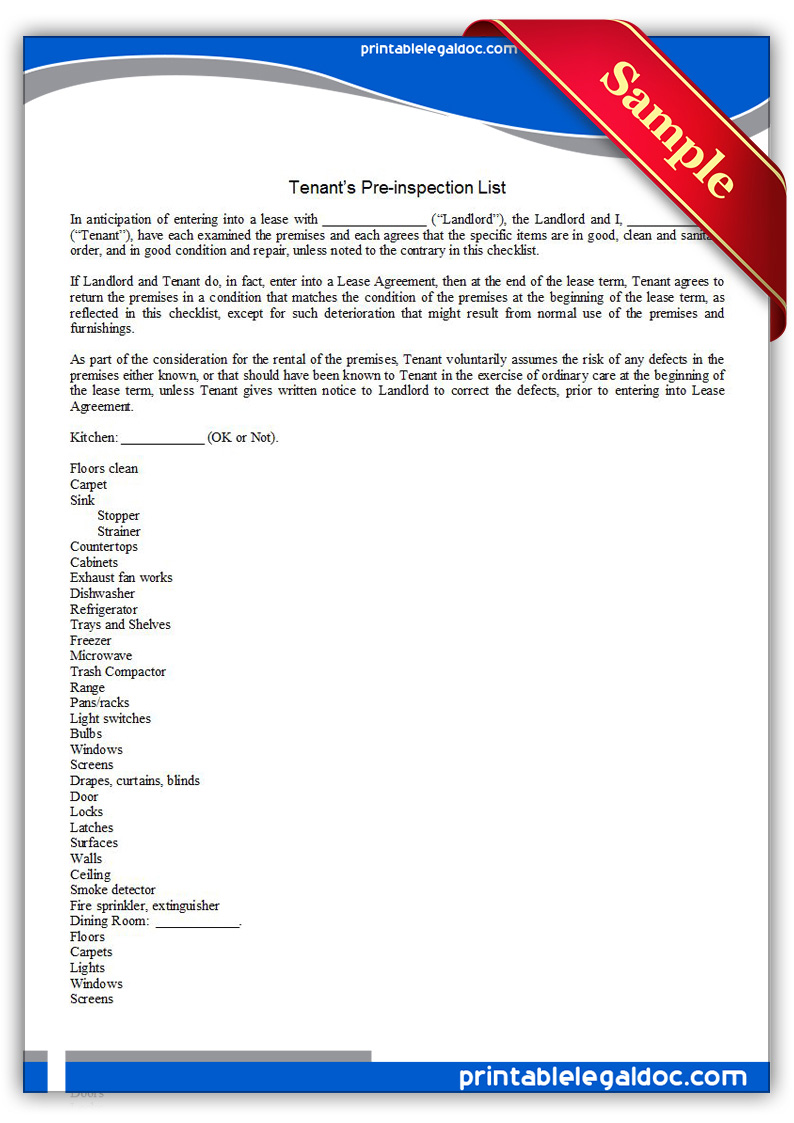
Tenant’s Pre-inspection List
In anticipation of entering into a lease with _______________ (“Landlord”), the Landlord and I, ______________ (“Tenant”), have each examined the premises and each agrees that the specific items are in good, clean and sanitary order, and in good condition and repair, unless noted to the contrary in this checklist.
If Landlord and Tenant do, in fact, enter into a Lease Agreement, then at the end of the lease term, Tenant agrees to return the premises in a condition that matches the condition of the premises at the beginning of the lease term, as reflected in this checklist, except for such deterioration that might result from normal use of the premises and furnishings.
As part of the consideration for the rental of the premises, Tenant voluntarily assumes the risk of any defects in the premises either known, or that should have been known to Tenant in the exercise of ordinary care at the beginning of the lease term, unless Tenant gives written notice to Landlord to correct the defects, prior to entering into Lease Agreement.
Kitchen: ____________ (OK or Not).
Floors clean
Carpet
Sink
Stopper
Strainer
Countertops
Cabinets
Exhaust fan works
Dishwasher
Refrigerator
Trays and Shelves
Freezer
Microwave
Trash Compactor
Range
Pans/racks
Light switches
Bulbs
Windows
Screens
Drapes, curtains, blinds
Door
Locks
Latches
Surfaces
Walls
Ceiling
Smoke detector
Fire sprinkler, extinguisher
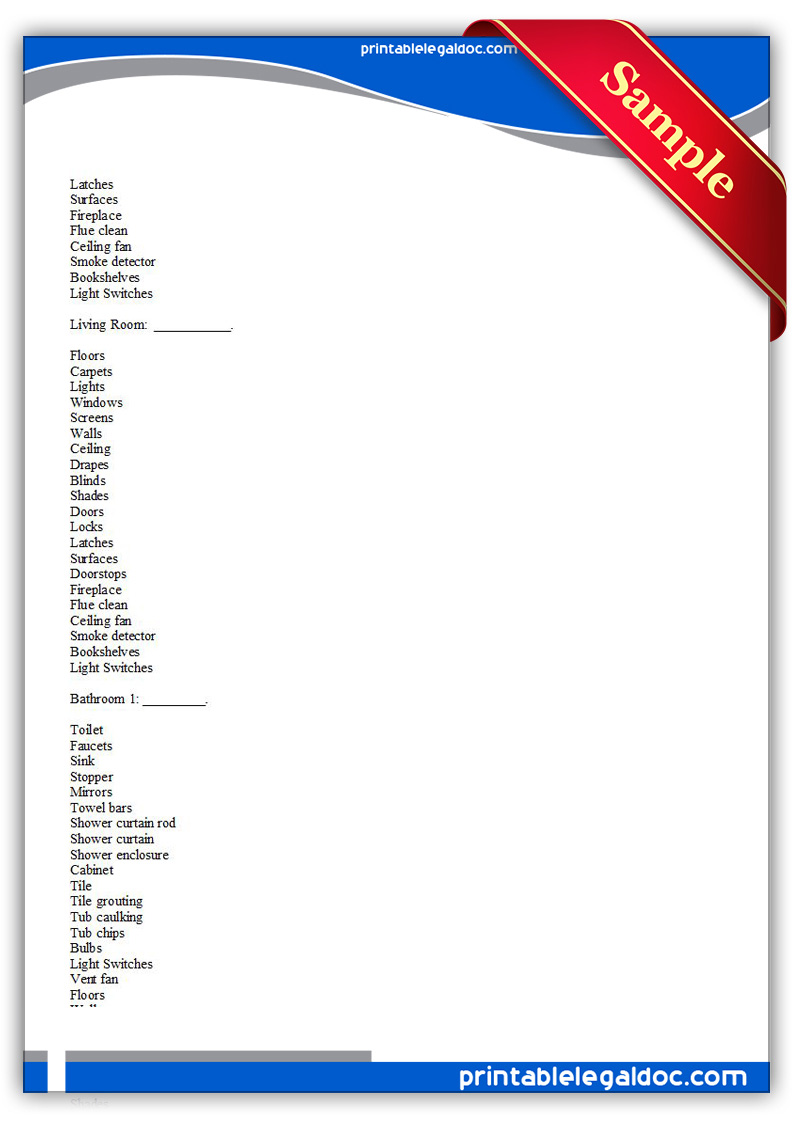
Dining Room: ____________.
Floors
Carpets
Lights
Windows
Screens
Walls
Ceiling
Drapes
Blinds
Shades
Doors
Locks
Latches
Surfaces
Fireplace
Flue clean
Ceiling fan
Smoke detector
Bookshelves
Light SwitchesLiving Room: ___________.
Floors
Carpets
Lights
Windows
Screens
Walls
Ceiling
Drapes
Blinds
Shades
Doors
Locks
Latches
Surfaces
Doorstops
Fireplace
Flue clean
Ceiling fan
Smoke detector
Bookshelves
Light SwitchesBathroom 1: _________.
Toilet
Faucets
Sink
Stopper
Mirrors
Towel bars
Shower curtain rod
Shower curtain
Shower enclosure
Cabinet
Tile
Tile grouting
Tub caulking
Tub chips
Bulbs
Light Switches
Vent fan
Floors
Walls
Ceiling
Windows
Screens
Curtains
Blinds
Shades
Doors
Locks
Latches
Surfaces
Bathroom 2 __________.
Make Second column and comment accordingly.
Bedroom 1: ___________.Walls
Floors
Carpets
Ceiling
Lights
Light Switches
Windows
Screens
Curtains
Blinds
Shades
Doors
Locks
Latches
Surfaces
Closets
Smoke alarmBedroom 2 or more: _______.
Make extra columns and comment accordingly.Hall: _____________.
Floor
Walls
Stairway
Closets
Ceiling
Light switches
Bulbs
Windows
Doors
Locks
Latches
Surfaces
Smoke alarmHall 2: ________.
Make another column and comment accordingly.Other rooms or locations:
Comments:
Tenant acknowledges that the smoke detector was tested in the Tenant’s presence and operated properly and its operation was explained to Tenant. Tenant agrees to test, and be responsible for testing, the detector at least once every three months and to report any problems to Landlord in writing. If the detector is battery operated, Tenant agrees to replace the battery as necessary with a new alkaline battery (unless applicable laws require otherwise)._______________ ______________
Tenant LandlordLandlord and Tenant acknowledge that they have each read this checklist and agree that the condition and contents of the above-mentioned rental dwelling are, without exception, as represented in this checklist. Tenant understands that Tenant is liable for any damage done to this dwelling as outlined in the Lease Agreement. Both parties acknowledge receiving a copy of this checklist.
_______________ ______________
Tenant Landlord
Date:
Tenant’s Pre-inspection List
Review ListThis review list is provided to inform you about the document in question and assist you in its preparation. This list protects the Tenant from charges against his or her security deposit in the future. This list protects the Landlord by alerting him or her to excessive pickiness or concerns of Tenant. If the Tenant does not generally accept the appearance and condition of the location, then Landlord is better off selecting another Tenant who will be satisfied with the general condition of the location. As always, most properties rent at rates equal to the condition of the premises. If a Tenant is unduly picky about the property, this indicates Tenant and Landlord have not had a meeting of the minds about the rent for the actual property. As with most business transactions, those that start hard usually end hard. So, if this process starts hard, then the Landlord is advised to let the Tenant be discouraged and encourage them to withdraw from possible tenancy (comments to the effect, “This clearly doesn’t meet your standards,” and so on and so on).
1. Be sure to get each party to initial each page and sign the last one. Both parties should keep originals in case of any dispute in the future. Keep this record with the others for the location and/or Tenant or Landlord.
Frequently Asked Questions
What is a tenant's pre-inspection list?
A tenant's pre-inspection list is a checklist used before entering into a lease agreement to document the condition of the premises. Both the landlord and tenant examine the property and agree that specific items are in good, clean, and sanitary order, unless noted otherwise. This list serves as a record of the property's condition at the beginning of the lease term.
Why is a pre-inspection list important for tenants?
A pre-inspection list is important because it establishes the baseline condition of the premises, which the tenant agrees to match at the end of the lease term, except for normal wear and tear. It also helps allocate responsibility for any existing defects, as the tenant assumes the risk of defects known or that should have been known unless written notice is given to the landlord. This protects both parties by providing a clear reference for the return condition.
What should be included in a tenant's pre-inspection list?
The list should include specific items and areas of the premises, such as the kitchen, with details like floors, carpet, sink, stopper, strainer, countertops, cabinets, exhaust fan, and dishwasher. Each item is marked as 'OK' or 'Not' to indicate its condition. The article provides an example for the kitchen, but other rooms and items may also be included based on the property.
How does a pre-inspection list affect the security deposit?
The article does not explicitly mention security deposits, but the pre-inspection list serves as evidence of the premises' condition at the start of the lease. At the end of the lease term, the tenant agrees to return the premises in a condition matching the checklist, except for normal deterioration. This documentation can help determine whether deductions from a security deposit are justified.
What happens if the tenant does not give written notice of defects before signing the lease?
If the tenant does not give written notice to the landlord to correct defects prior to entering into the lease agreement, the tenant voluntarily assumes the risk of any defects either known or that should have been known through ordinary care. This means the tenant may be responsible for those defects and cannot later claim they were pre-existing. The pre-inspection list helps identify such defects.
Can a tenant make changes to the pre-inspection list after signing the lease?
The article does not specify whether changes can be made after signing, but the list is intended to reflect the condition at the beginning of the lease term. Any modifications would likely require mutual agreement between landlord and tenant. It is best to complete the list thoroughly before entering into the lease agreement.
What does 'normal use' mean in the context of a pre-inspection list?
The article refers to 'deterioration that might result from normal use of the premises and furnishings' as an exception to the tenant's obligation to return the premises in matching condition. Normal use generally includes wear and tear from everyday living, such as minor scuffs or carpet wear. The pre-inspection list helps distinguish normal use from damage.
Is a pre-inspection list legally binding?
The article states that if the landlord and tenant enter into a lease agreement, the tenant agrees to return the premises in a condition matching the checklist, except for normal deterioration. This indicates that the pre-inspection list becomes part of the lease terms and is legally binding. However, the exact enforceability may depend on applicable laws.
What should a tenant do if they find defects during the pre-inspection?
If a tenant finds defects during the pre-inspection, they should note them on the checklist and provide written notice to the landlord to correct the defects prior to entering into the lease agreement. This helps avoid assuming the risk for those defects. The article emphasizes that without such notice, the tenant assumes the risk.
Who is responsible for completing the pre-inspection list?
Both the landlord and tenant are responsible for completing the pre-inspection list together. The article states that the landlord and tenant each examine the premises and agree on the condition of specific items. This joint process ensures mutual understanding and agreement on the premises' condition.



love it sooo much, i’ll print it now 😛 Thanx
looove it 😀
I knew there was a reason why this month is my favorite month…alot of freebie forms.
amazing, lovely job, sweetie thank you for sharing your template
wonderful sample form, i love it
Beautifully done. Im printing it know.
This is stunning!
Awesome. Well done sir.
So beautiful template
Wonderful work. I love the way you created the template its well written said my lawyer.