


This review list is offered to help you learn more about the document in question and prepare it. This, along with the Employment Manual, should be signed.
- This Employee Code of Conduct is only effective if it is effectively communicated and
consistently enforced. Most businesses are intimidated by the process of spreading and implementing these types of policies. This is very understandable. However, in today’s litigious environment, your business can defend itself against several regulatory and legal proceedings by making a deliberate effort to spread the word and enforce it immediately. We highly advise you to retain the wording in the Laws of Conduct that clearly identifies governmental rules and regulations as a primary reason for enforcing these rules. This approach not only absolves you and your firm of responsibility, but it is also totally accurate.
- The Employee Code of Conduct should be read and signed by potential employees before they are officially hired. The signed form should be stored permanently in the employee’s personnel file or other pertinent business documents, with a copy sent to the employee. Obtaining current employees to sign these agreements might be challenging. You can grandfather some in (i.e., make it optional), but this is always a risky, though reasonable, strategy. At the very least, they should be provided a copy and informed that this is the rule, regardless of whether they sign it.
- Employers should examine employment-related documents such as this one with their
attorneys before to utilizing them and on a recurrent basis thereafter to verify compliance with all applicable regulations and legislation. Employment law is getting more complicated and, as a result, more prone to litigation. This is a great area for your attorney to provide “well care” on a frequent basis.
- It should be emphasized that whenever this document or another policy is utilized or
transmitted, it is with the understanding that:
The employer has the right to amend this or any other policy at any time. Although some argue that these types of policies do not contractually “lock the company in,” we feel they do and that the most prudent approach is for you to constantly keep in mind that they may. Employees should be able to rely on any company policy that is established and widely enforced. And this reliance may not be limited to the relationship between the Company and the employee. It might be between the breaching Employee and other workers, particularly in instances of discrimination, sexual harassment, and other infringements of personal liberty. All of this emphasizes the need of maintaining alert and consulting with your attorney on a frequent basis.
- Maintain a signed copy in the employee’s personnel file and another in a master folder for future reference.
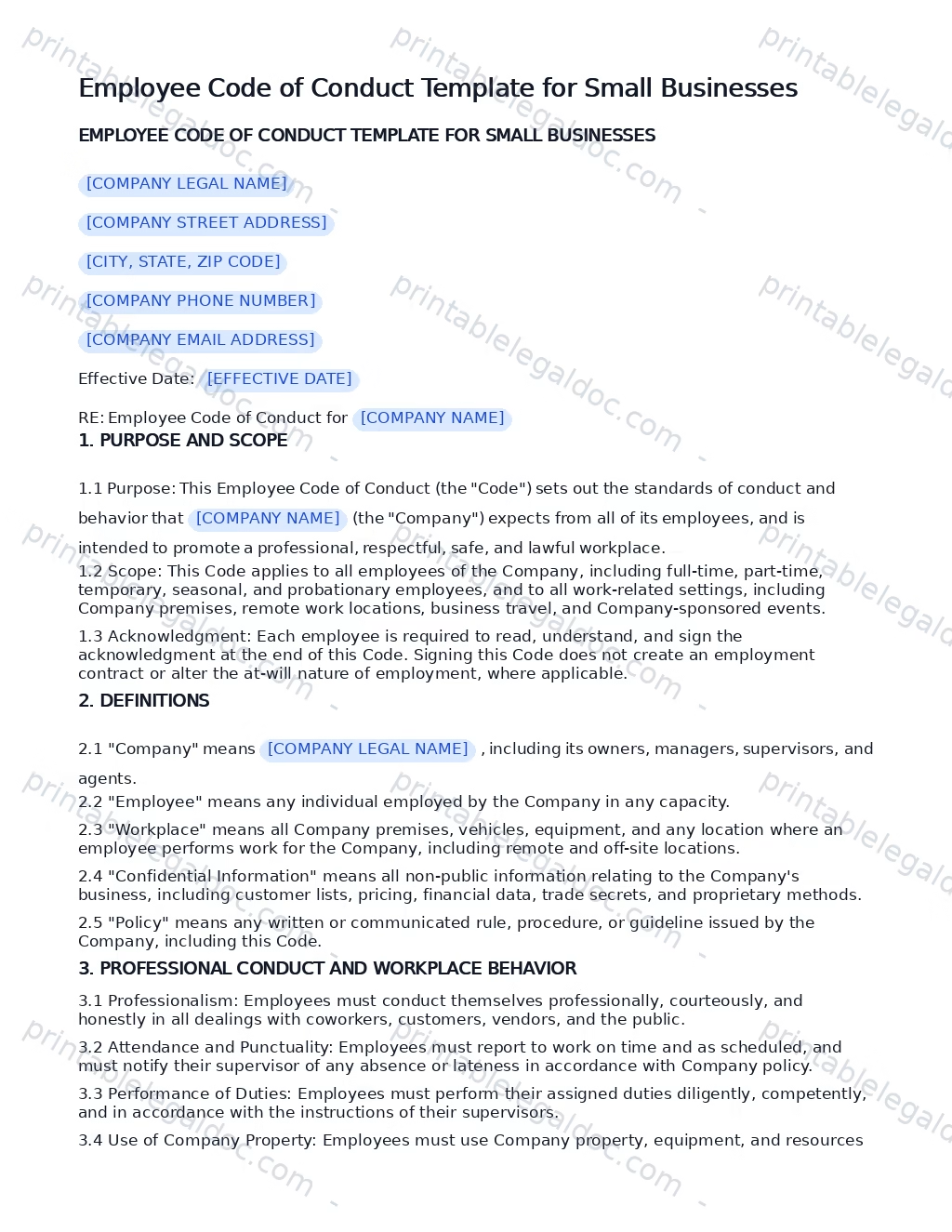
Employee Code of Conduct Template for Small Businesses
A clear employee code of conduct sets fair rules for your team. Small businesses need one. It keeps everyone on the same page. Our template makes this easy. You get ready-made sections on behavior, ethics, and workplace respect. Just fill in your company details. The format is simple and short. Staff will understand it fast. Use it to reduce confusion and protect your business. New hires can sign it on day one. The template covers attendance, dress code, and conflict rules. It also explains what happens when rules break. Save time and stay compliant. Download the template and adjust it to fit your needs. Good conduct starts with clear words.
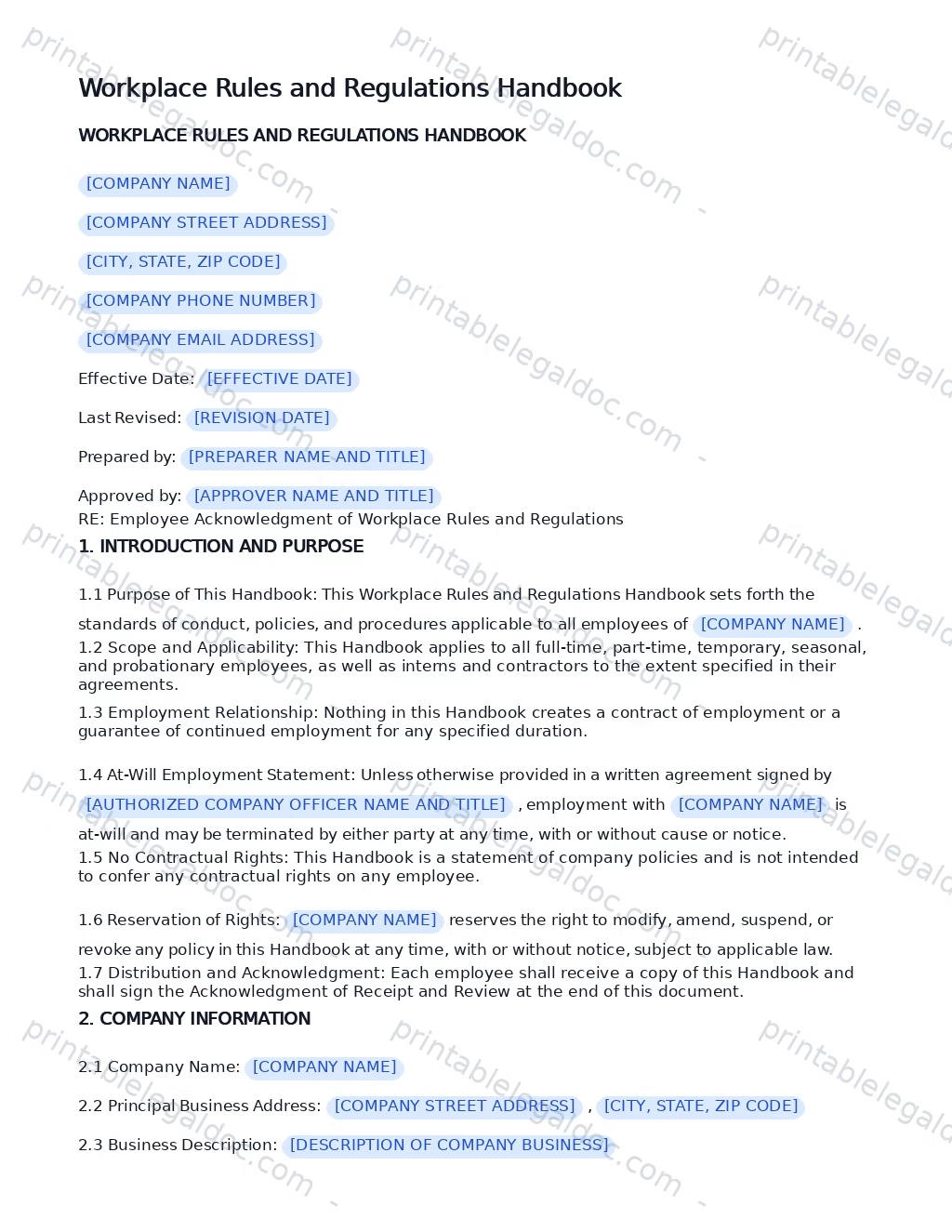
Workplace Rules and Regulations Handbook
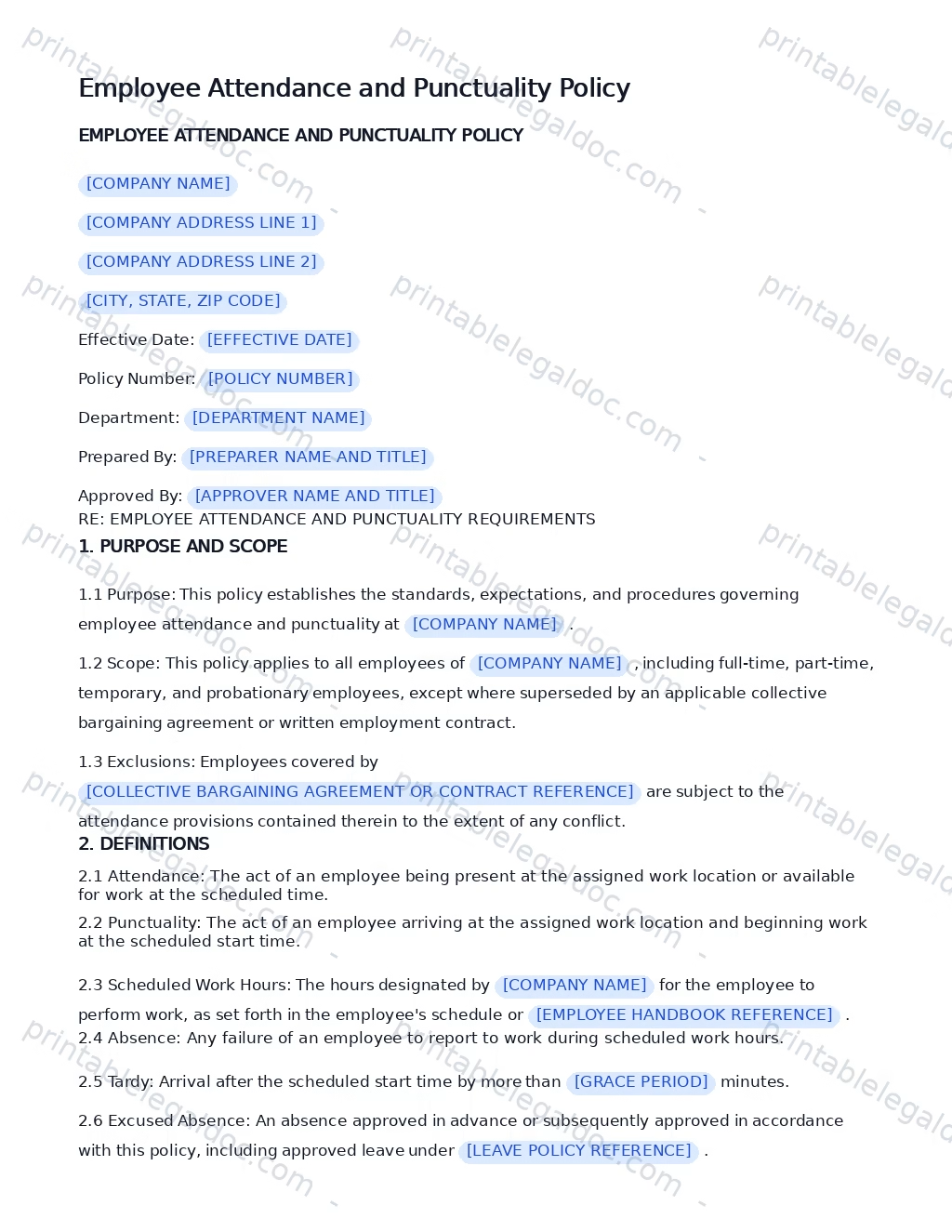
Employee Attendance and Punctuality Policy
A clear attendance and punctuality policy sets fair rules for everyone. Our template helps you track work hours with ease. It outlines late arrivals and early departures. You get simple steps for recording absences too. Managers can apply the same standard to every team member. This builds trust and keeps daily work running smoothly. The policy also covers notice periods for planned time off. Clear records protect both the company and its staff. Use this ready template to save time on drafting. Adjust the details to match your workplace needs. Then share it with your team. Everyone will know what is expected each day.
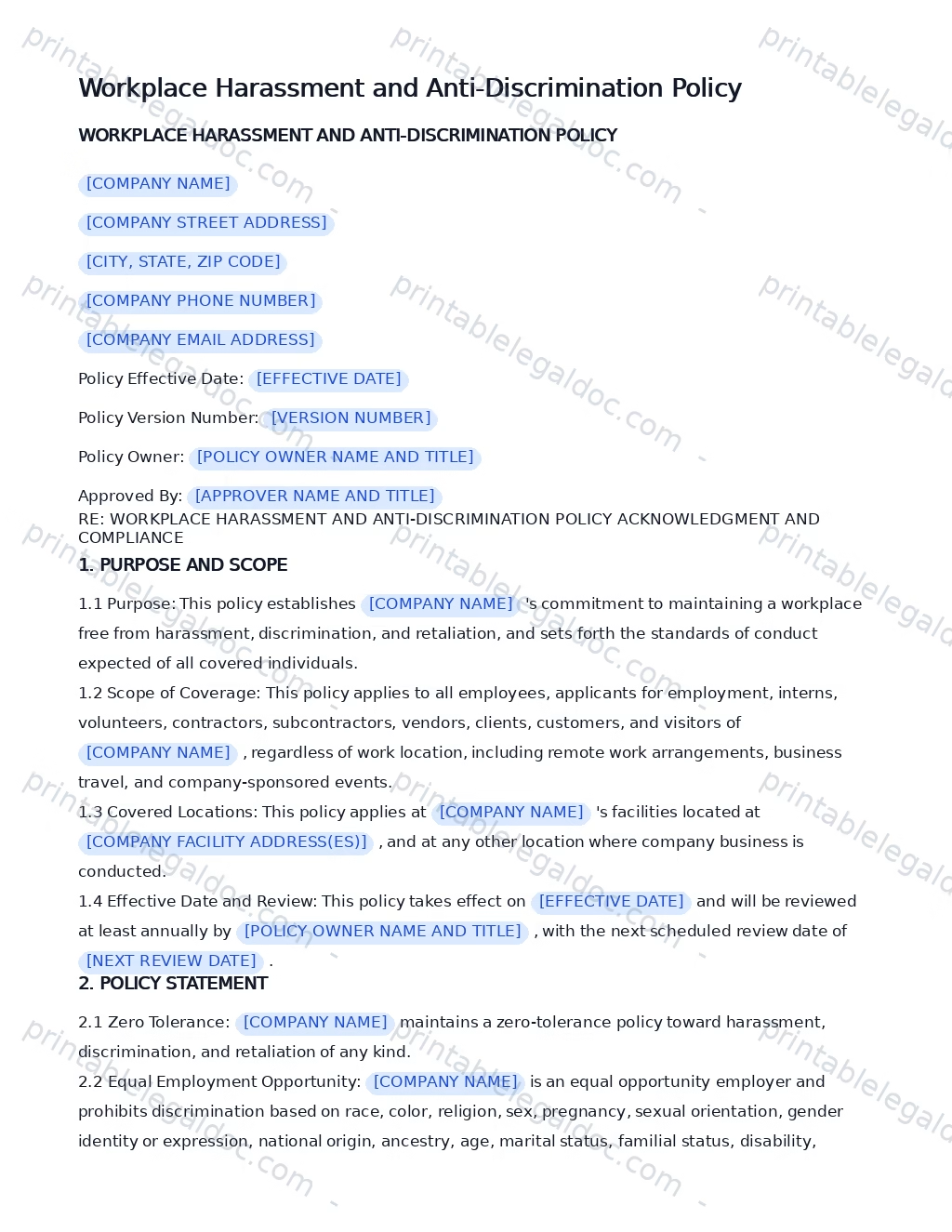
Workplace Harassment and Anti-Discrimination Policy
Workplace harassment and discrimination harm people and business. Our policy sets clear rules to prevent both. It explains what harassment looks like. It covers unfair treatment based on age, race, gender, religion, disability, and more. Everyone deserves respect at work. This policy protects employees, contractors, and visitors. It tells you how to report a concern. Reports are taken seriously. Managers must act fast. Retaliation against anyone who speaks up is never allowed. We investigate every claim fairly. Training helps teams spot bad behavior early. Clear steps keep the process simple. A safe workplace starts with strong rules and honest action. Read the policy. Know your rights. Speak up when something feels wrong. Together, we build a culture where everyone feels valued and heard.
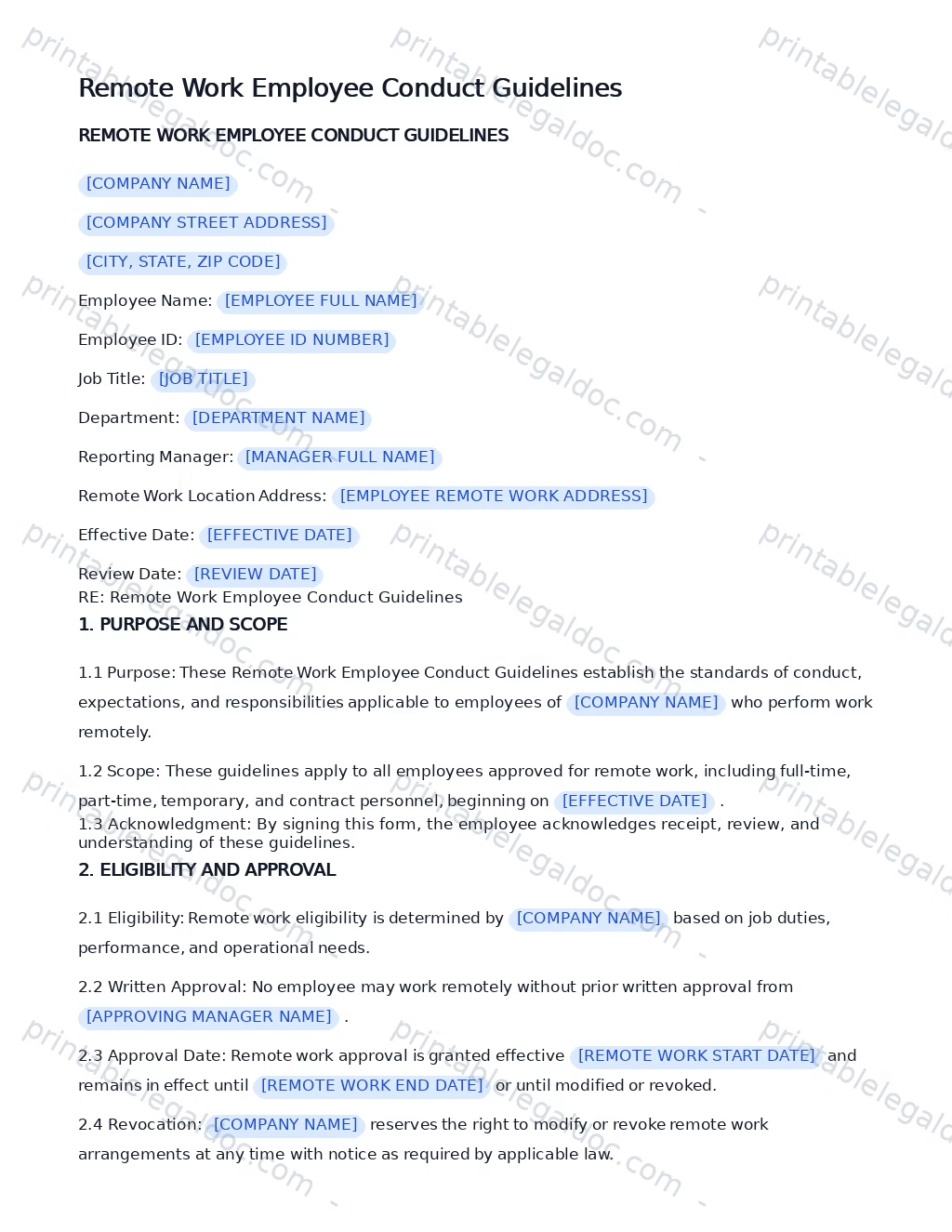
Remote Work Employee Conduct Guidelines
Remote work employee conduct guidelines help teams stay clear and respectful from a distance. They set simple rules for communication, availability, and professional behavior online. Staff learn when to respond, how to show up on video calls, and what data to protect. Good guidelines also cover deadlines, meeting etiquette, and device security. Clear rules reduce confusion and build trust across time zones. Employees feel safer when expectations are written down. Managers gain a fair way to handle issues without guesswork. These guidelines support focus and protect company data. They also keep remote culture healthy and open. Every team can adjust them to fit its own workflow. Short, plain rules work best. Review them often as tools and habits change. A strong policy turns remote work into a smooth, accountable routine for everyone.
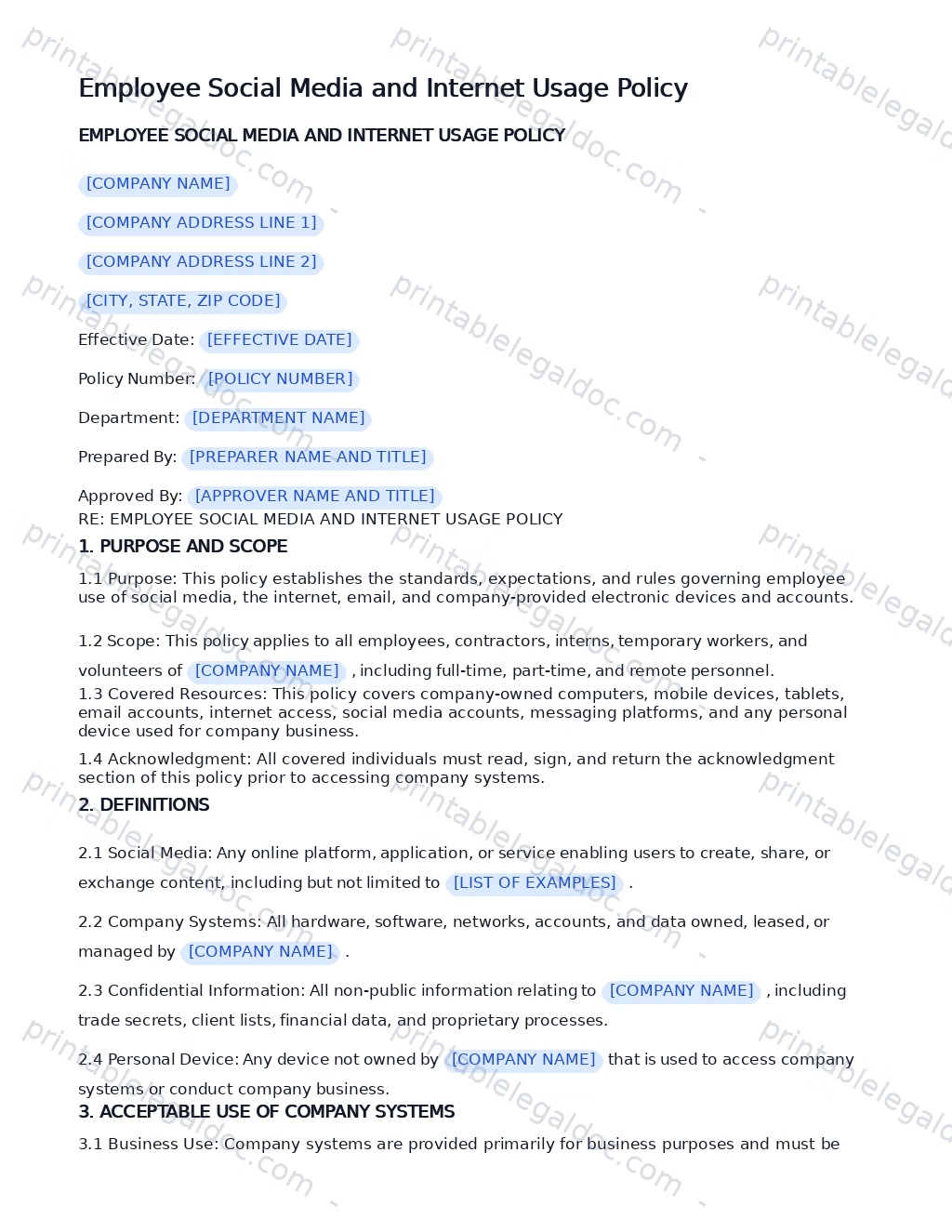
Employee Social Media and Internet Usage Policy
A clear social media and internet usage policy protects your business and guides your team. It sets simple rules for online behavior at work. Your employees learn what to share and what to avoid. The policy covers company devices and personal accounts used for work. It explains privacy limits and data safety. Staff also see how to report a problem fast. Clear language builds trust and reduces risk. You gain legal cover and a safer workplace culture. This template gives you a ready structure you can adapt to your brand. Use it to set fair rules and keep everyone on the same page.
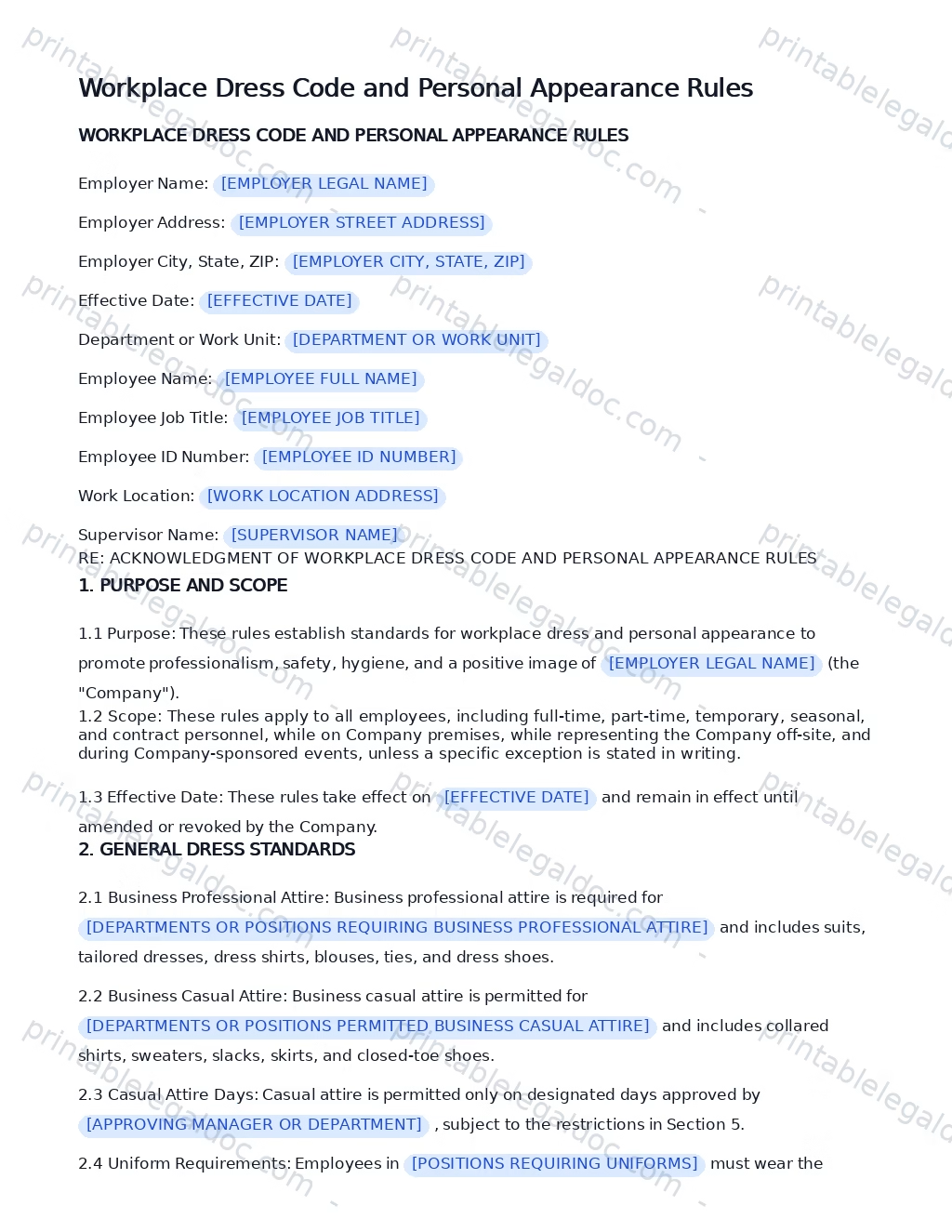
Workplace Dress Code and Personal Appearance Rules
A workplace dress code sets clear expectations for how employees present themselves on the job. These personal appearance rules cover clothing, grooming, and accessories. They help create a professional image and support a safe work environment. A good policy balances company needs with employee comfort. It should explain what to wear and what to avoid. Clear guidelines reduce confusion and prevent awkward conversations. They also promote fairness across all roles and teams. Some workplaces allow casual attire. Others require uniforms or business wear. The key is consistency and common sense. Review your dress code often. Update it as your culture changes. Share it with every new hire. Employees appreciate knowing the rules upfront. A simple, fair policy builds trust and keeps everyone focused on the work.
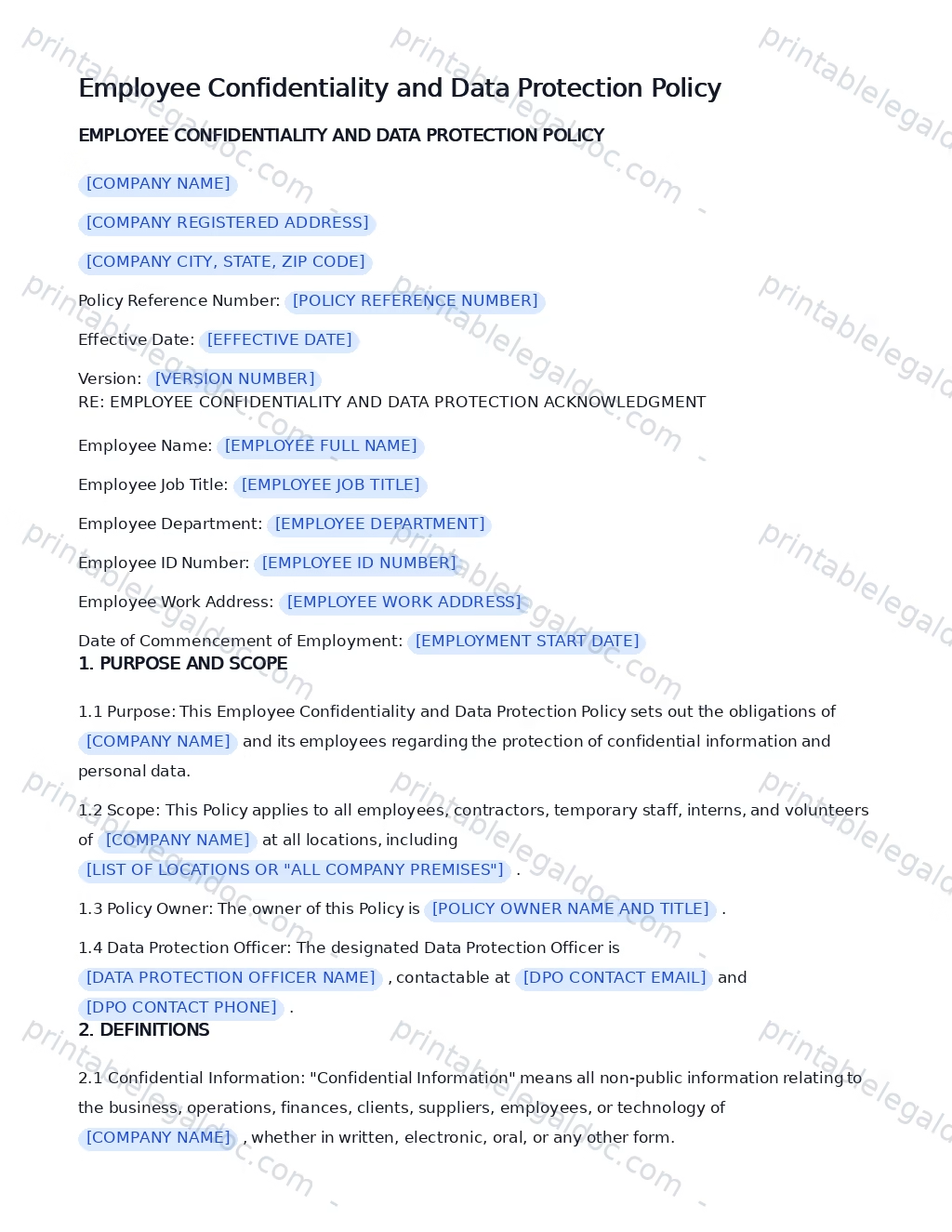
Employee Confidentiality and Data Protection Policy
An employee confidentiality and data protection policy protects your business secrets and personal information. It sets clear rules for staff on handling sensitive data. Your team learns what to keep private and how to store it safely. The policy covers customer details, trade secrets, and internal records. It explains what happens when someone breaks the rules. Clear guidelines reduce the risk of leaks and legal trouble. Staff know their duties from day one. This builds trust with clients and partners. A strong policy also meets privacy law requirements. You get a ready template that saves time. Customize it for your company needs. Simple language makes it easy for everyone to follow. Protect your business with clear confidentiality rules today.
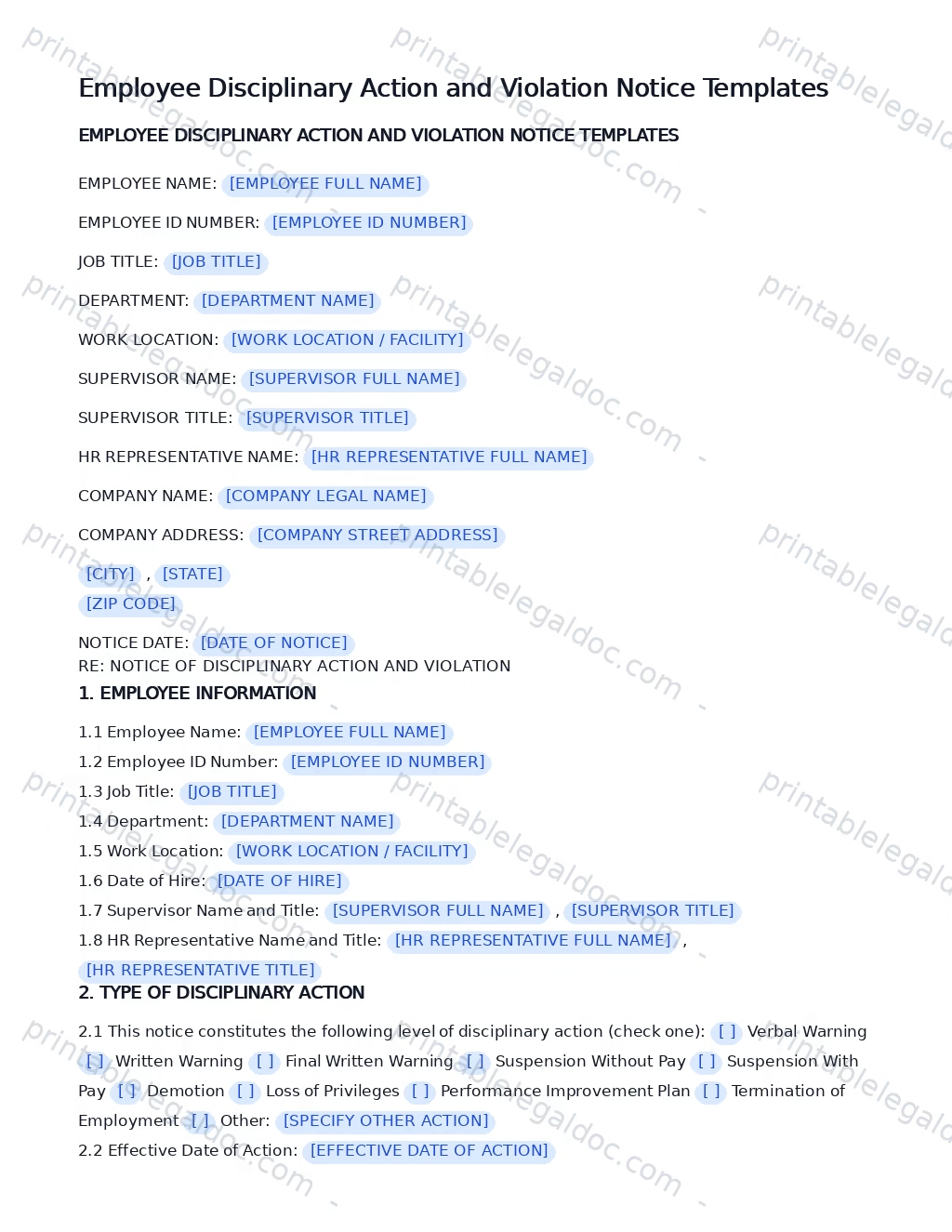
Employee Disciplinary Action and Violation Notice Templates
Every workplace faces tough moments. An employee breaks a rule. You need to act. Our Employee Disciplinary Action and Violation Notice Templates make that job easier. Each template gives you clear language for warnings, write ups, and formal notices. You get a simple structure that protects your company and treats workers fairly. No guesswork. No messy paperwork. Just fill in the details and move forward. These templates help managers stay consistent and calm during hard talks. They also create a written record you can trust. Use them to set expectations and correct behavior early. Small problems stay small when you respond fast. Grab these templates today and handle discipline with confidence.
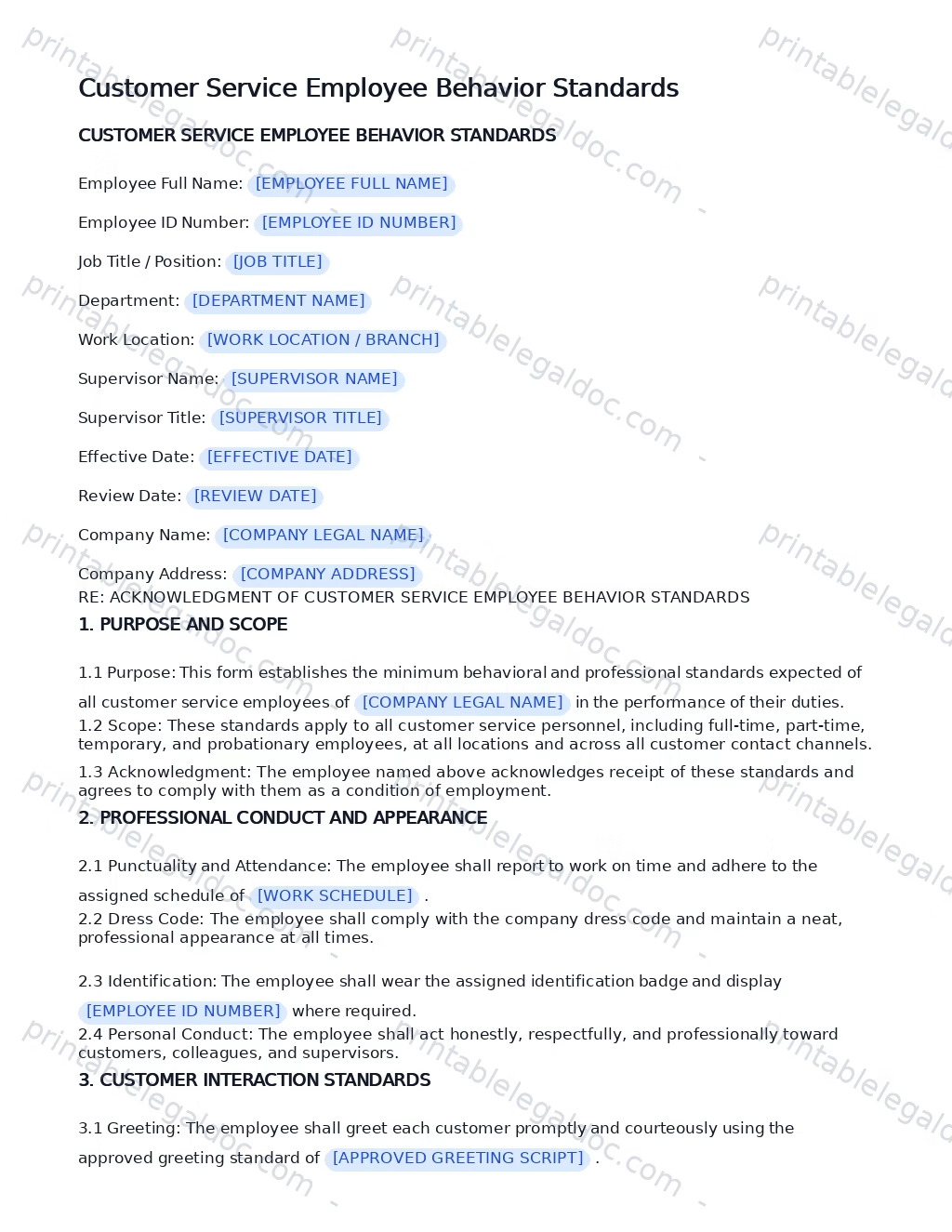
Customer Service Employee Behavior Standards
Great customer service starts with clear behavior standards. Your team needs to know how to greet people. They should listen well. They must speak with respect. These standards shape every interaction. Set rules for tone, response time, and problem solving. Show employees how to handle angry customers. Teach them to stay calm under pressure. Good standards also cover dress code and punctuality. Write your rules in simple language. Train your staff on them. Review behavior often. Praise good work. Correct mistakes quickly. Clear standards build trust with customers. They also protect your business. Your team feels confident when they know what to do. Customers notice the difference. Strong behavior standards turn service into a real strength.

Employee Rules Of Conduct
Employee Rules of Conduct
The Company (“Company”) has established these Rules of Conduct applicable to all employees due primarily to the requirements of local, state, and federal laws and statutes. In signing this Agreement, the Employee agrees to be bound by these Rules of Conduct at all times and under all circumstances in order to continue employment with the Company. If you as an Employee of the Company cannot abide by these Rules, the Company cannot offer you employment and will be compelled to seek your resignation or terminate your employment unilaterally if you cannot abide by them after being hired.
Employee acknowledges that they understand that other more specific rules may be enacted by the Company from time to time concerning more specific issues and areas of operation. If the Employee finds he or she cannot or will not abide by these new rules, the Employee must bring the matter to his or her immediate supervisor to see what can be resolved. If nothing satisfactory can be resolved, it is understood the Employee will tender their immediate resignation or be terminated by the Company.
Clearly defined rules of conduct are necessary for the Company to remain in compliance with local, state, and federal laws and statutes, as well for the fair and orderly operation of the firm. The Company believes each employee has a right to know what is expected of them. Each employee must familiarize himself or herself with all Company rules and regulations pertaining to their positions and duties in order for the Employee and the Company to remain in compliance with local, state, and federal laws and statutes, as well as for the fair and orderly operation of the firm
The Company, and many governmental regulations as mentioned above, both require that each employee faithfully abide by these rules and regulations. If any Company rule is held invalid by local, state, or federal law or statute, each Employee understands that governmental ruling shall be the governing ruling for the Company effective immediately upon notice to the Company by the appropriate government authority.
Employee understands that every new hire is on 90 days probation after initially being hired. Each employee is subject to termination, with or without cause, within this 90-day probation period.
The following are the Rules of Conduct and may be later supplemented by local and departmental regulations that must also be observed. The Company may modify these rules at any time for reasonable cause.
1. Employees shall maintain a presentable and non-offensive appearance at all times while at work. They shall wear clothing appropriate to their activities and responsibilities. If the term “non-offensive” term is subject to interpretation, Employees are encouraged to take the more conservative choice offered and be aware that local, state, and federal laws and statutes prohibit clothing that is deemed offensive to certain members of our society. The Company is required to enforce these rules strictly in fairness to all Employees and remain in compliance with local, state, and federal statutes and laws.
2. Smoking is prohibited in all Company facilities as well as immediately outside all outside doorways and exits.
3. Reporting to work under the influence of liquor or drugs or the unauthorized introduction, possession or use of liquor or drugs on Company premises is prohibited.
4. Violence, fighting, horseplay, and other inappropriate conduct is prohibited.
5. Gambling of any kind on Company premises cannot be tolerated.
6. No employee shall engage in outside employment that is detrimental to the Company’s interest or where such work is competitive or in conflict with the Company’s interest. Employment outside the Company must be reported to the employee’s supervisor to protect all parties with regard to the above issues.
7. Employees shall not reveal information in Company records to unauthorized persons. Employees shall not publish or broadcast material in which the Company is identified without first submitting such material to the appropriate Company officials for review and approval.
8. False information submitted on resumes or in other documents required by the Company or presented by a prospective Employee shall submit the Employee to immediate termination by the Company.
9. Excessive tardiness, absence, or departure from work early without the permission of their supervisors is expressly forbidden and shall subject the Employee to immediate termination. Every employee shall notify his or her supervisor or specified contact of an anticipated absence or lateness in accordance with Company and departmental procedures.
10. Employees shall not use Company equipment, materials or facilities for personal purposes. This especially involves not using the phone or computer systems for personal purposes outside of the occasional call or response to personal emergencies.
11. Out of fairness to all employees, no employee shall be on or about Company property selling other products or services, soliciting funds or services, selling tickets, distributing petitions or literature for any purpose (except as otherwise provided by law) at any time without the prior consent of his or her supervisor.
12. All duties shall be performed in a professional and workmanlike manner both with regard to the specific conduct of work assignments and as such activities affect one’s relationship with others. In the latter instance, harassment for reasons related to sex, color, race, religion, national origin, age or handicap is strictly prohibited. Not only is this Company policy, it is the law. It must be reported promptly and will be dealt with seriously.
13. Every employee must comply with safety regulations and procedures.
14. Every employee has a duty to protect and safeguard Company property and the property of customers and employees, and no employee shall occupy, use or operate any Company property without prior authorization.
15. No employee shall be in unauthorized possession of any property of the Company, its customers or employees, or attempt to remove such property from Company premises at any time.
16. Employees shall not bring their own or any other minor children to their place of work or elsewhere on Company premises during the employee’s working hours when such accompaniment might interfere with the discharge of the employee’s duties and responsibilities. This also applies to any other live creatures such as dogs or cats.
17. No employee shall be in possession of firearms (licensed or unlicensed) or other weapons while on Company premises. The rule applies to all knives not required for the performance of job duties.
The violation of any of these regulations will result in disciplinary action ranging from a warning to termination. The measure of discipline will correspond to the gravity of the offense as weighed by its violation of government laws and statutes, it potential effect on the Company, as well as the seniority and work record of the employee involved, among other factors. Most importantly, violation of many of these rules subjects the individual Employee and the Company to prosecution by various local, state, and federal authorities.
The Company reserves the right to make inspections of employee lockers, desks, lunch boxes, vehicles and other items of personal property located on Company premises in those instances where there is reason to believe that they contain evidence of a violation of these regulations. Any refusal to cooperate fully in such inspections or searches will subject the Employee to immediate termination. As a preliminary caution, never bring any materials on to Company property that you would not like read or looked at by another Employee or Supervisor.
I acknowledge that I have read, understood, and agree to the foregoing Rules of Conduct. A copy of these rules has been provided to me. I understand that many of these rules are a result of local, state, and federal law and statutes and therefore make compliance all the more mandatory to prevent me from putting myself and the Company in potential violation of these laws and statutes.
I understand that my remedy for not complying with these rules, at any time, is to resign from the Company and seek employment elsewhere.
____________________ _______________________
Employee Signature: Company Signature____________________
Date
Employee Rules of Conduct
Review ListThis review list is provided to inform you about the document in question and assist you in its preparation. This should be signed along with the Employment Manual.
1. This Employee Rules of Conduct is effective only if properly communicated and promptly enforced. The process of disseminating and enforcing these kinds of rules intimidates most companies. This is understandable. But, in this litigious world, your company can be protected from many governmental and legal actions by making a concerted effort to get the word out and enforce the word promptly. We strongly recommend you leave the language in the Rules of Conduct that point a clear finger at governmental rules and regulations as a leading cause for you to enforce these rules. This approach not only removes the onus from you and your company, it also happens to be entirely true.
2. Prospective employees should read and be required to sign the Employee Rules of Conduct prior to being formally offered employment. The signed document should be permanently retained in the employee’s personnel file or other appropriate corporate records, as well as a copy given to the Employee. It can be a tricky matter to get current employees to sign these agreements. You can grandfather some in (in other words, not require it), but this is always a dangerous, though understandable policy. At a minimum, they should be given a copy and told this is the rule, whether they sign it or not.
3. Employers should review with their attorneys employment related forms such as this one prior to using them and periodically review them thereafter to ensure compliance with all laws and statutes. Employment law is becoming increasing complex and therefore ripe for litigation. This is an excellent area to do “well care” on a regular basis with your attorney.
4. Anytime this document or other policy is used or distributed, it should be noted that
The employer may modify this policy or any other policy at any time. Although some believe these kinds of policies do not contractually “lock the company in,” we believe they do and that the more conservative approach is for you to always remember that they may lock you in. It only makes practical sense that any policy implemented by a company, and generally enforced, can be relied upon to some extent by the Employees. And this reliance may not just be between Company and Employee. It can be between violating Employee and other employees, especially in areas of discrimination, sexual harassment, and other infringement of personal liberty questions. All of this points to the need for vigilance and regular consultations with your attorney.5. Keep a signed copy in the employee’s personnel file as well as a copy in a master folder, for reference should the need arise.
Frequently Asked Questions
What are employee rules of conduct?
Employee rules of conduct are a set of guidelines established by the Company that all employees must follow. They are primarily based on local, state, and federal laws and statutes. By signing the agreement, employees agree to be bound by these rules at all times and under all circumstances to continue employment.
Why does the Company have rules of conduct?
The Company has established these rules primarily due to the requirements of local, state, and federal laws and statutes. Clearly defined rules of conduct are necessary for the Company to remain in compliance. They help ensure that all employees understand and adhere to legal and ethical standards.
What happens if an employee cannot abide by the rules of conduct?
If an employee cannot abide by the rules, the Company cannot offer employment and will be compelled to seek the employee's resignation or terminate their employment unilaterally. This applies both before hiring and after being hired if the employee cannot abide by the rules. The employee acknowledges that other more specific rules may be enacted from time to time.
Can the Company introduce new rules of conduct after hiring?
Yes, the employee acknowledges that the Company may enact other more specific rules from time to time concerning more specific issues and areas of operation. If the employee finds they cannot or will not abide by these new rules, they must bring the matter to their immediate supervisor to see what can be resolved. If nothing satisfactory can be resolved, the employee will tender their immediate resignation or be terminated by the Company.
What should an employee do if they disagree with a new rule?
If an employee finds they cannot or will not abide by a new rule, they must bring the matter to their immediate supervisor to see what can be resolved. If nothing satisfactory can be resolved, it is understood the employee will tender their immediate resignation or be terminated by the Company. This process is outlined in the rules of conduct.
Are the rules of conduct legally binding?
Yes, by signing the agreement, the employee agrees to be bound by these rules of conduct at all times and under all circumstances in order to continue employment with the Company. The rules are established due primarily to the requirements of local, state, and federal laws and statutes. Therefore, they are legally binding as a condition of employment.
What does it mean to be bound by the rules of conduct at all times?
Being bound by the rules of conduct at all times means that the employee must adhere to them under all circumstances while employed by the Company. This is a condition for continuing employment. If the employee cannot abide by these rules, the Company cannot offer employment and will be compelled to seek resignation or terminate employment.
Who enacts the rules of conduct?
The Company establishes the rules of conduct applicable to all employees. The rules are enacted primarily due to the requirements of local, state, and federal laws and statutes. Additionally, the Company may enact other more specific rules from time to time concerning more specific issues and areas of operation.
What is the consequence of not following the rules of conduct after being hired?
If an employee cannot abide by the rules after being hired, the Company will be compelled to seek their resignation or terminate their employment unilaterally. The employee acknowledges that they understand the rules and any new specific rules enacted. If nothing satisfactory can be resolved regarding new rules, the employee will tender their immediate resignation or be terminated.
Is resignation required if an employee cannot follow the rules?
Yes, if an employee cannot abide by the rules, the Company will be compelled to seek their resignation or terminate their employment unilaterally. If new rules are enacted and the employee cannot or will not abide by them, and nothing satisfactory can be resolved with their immediate supervisor, the employee will tender their immediate resignation or be terminated by the Company.


Love your printable legal forms!
Its so awsome.Thank you for sharing your free printable templates.
Ah, very nice! I like your printable template.
Luv this and luv your blank word template! Thank you!
How do you print them? I can’t even figure out to do that???
thx for sharing your sample form!I love it so much !!!!!
I discovered you today. You do things fantastic. BRAVO
These are so sweet. I love your printable form.
So professionally written!!! Many thanks!
This is soo brilliant form :3 Oh yes..