


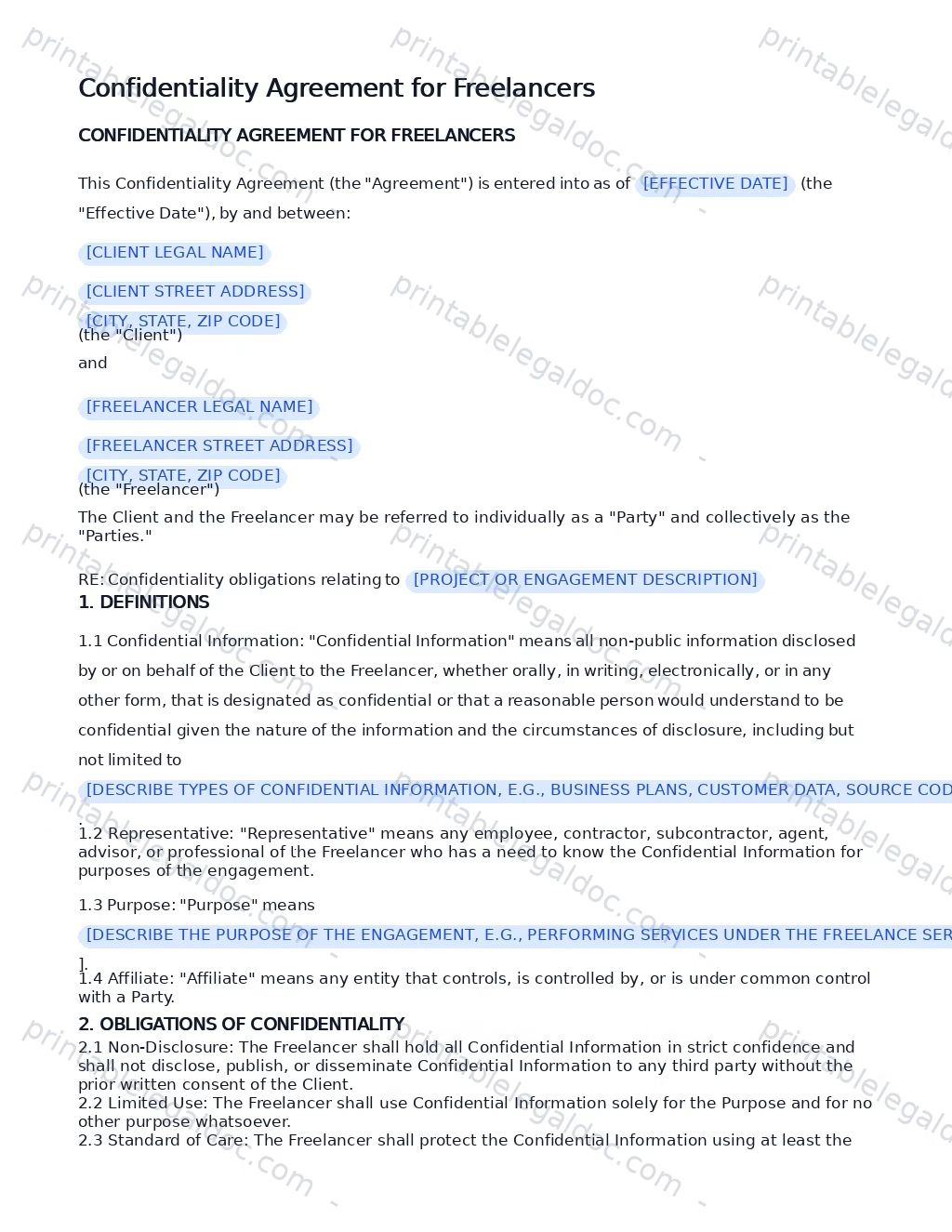
Confidentiality Agreement for Freelancers
A confidentiality agreement protects your freelance business. It keeps client information private. You share sensitive details during projects. This contract sets clear rules for both sides. Your client trusts you with trade secrets. You need legal cover for that trust. A simple template makes this easy. It defines what stays confidential. It states how long the duty lasts. You avoid awkward conversations about privacy. The agreement also limits your liability. Clients see you as a professional. That builds stronger working relationships. Use this template for every new project. It saves time and reduces risk. Your ideas and client data stay safe. Both parties sign and keep a copy. Clear terms prevent future disputes.
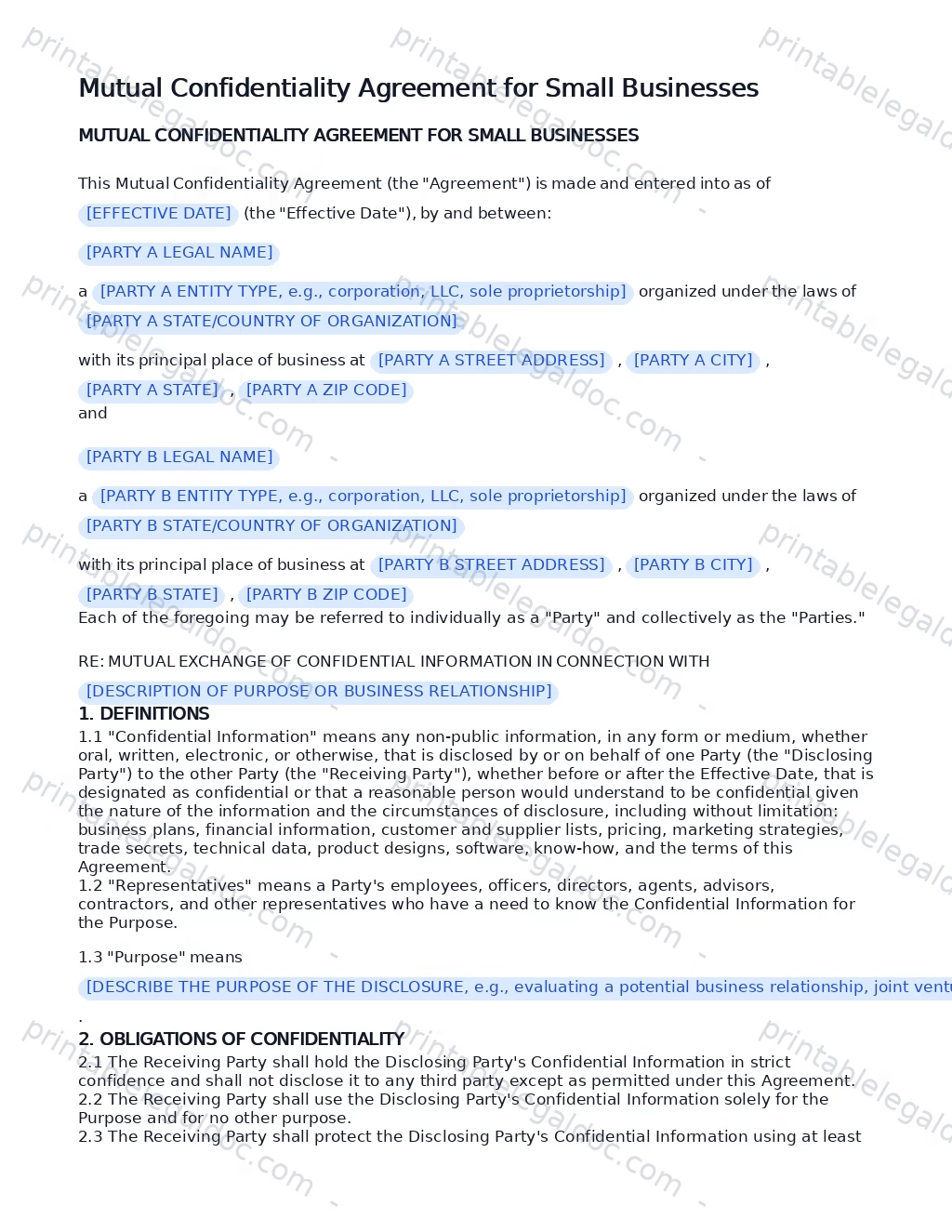
Mutual Confidentiality Agreement for Small Businesses
A mutual confidentiality agreement protects both sides when sharing sensitive information. Small businesses often exchange ideas, client lists, or financial data with partners and vendors. This template gives you a clear framework to do that safely. Each party agrees to keep the other's secrets private. The document covers what counts as confidential. It also sets out how long the duty lasts. You get plain language clauses that are easy to adapt. No legal maze. Just solid terms you can review with your attorney. Use this template when you need trust on paper. It suits freelancers, startups, and growing teams. Grab the file and customize it for your next deal.
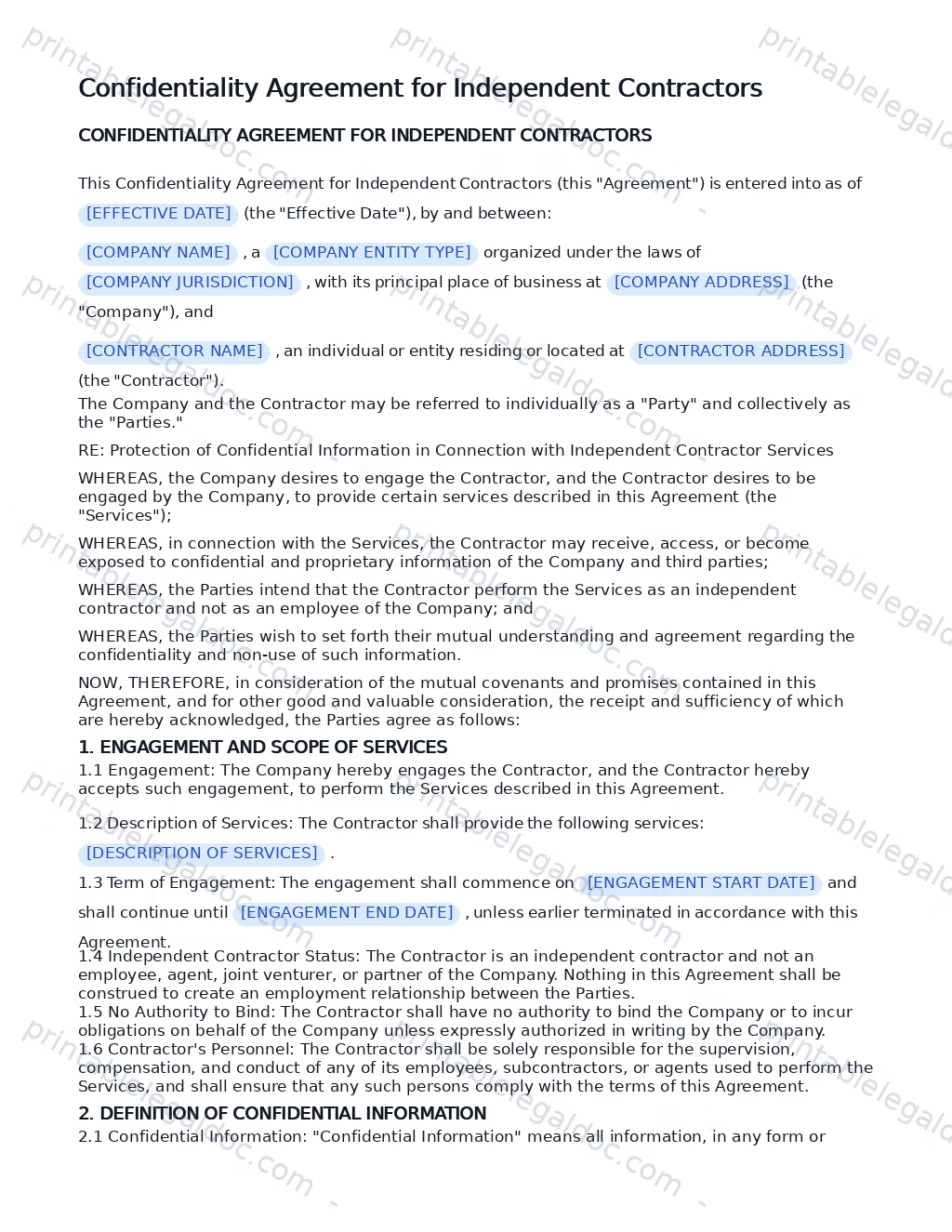
Confidentiality Agreement for Independent Contractors
A confidentiality agreement for independent contractors protects your business secrets. This simple template helps you share sensitive information with freelancers safely. It sets clear rules about what they can do with your data. The contract covers non disclosure terms. It also defines how long the obligation lasts. You can use this document for projects like marketing, design, or software work. The template is easy to edit and ready to use. It gives both sides clarity and reduces legal risk. Clear terms build trust from day one. Grab this template and keep your business information secure.
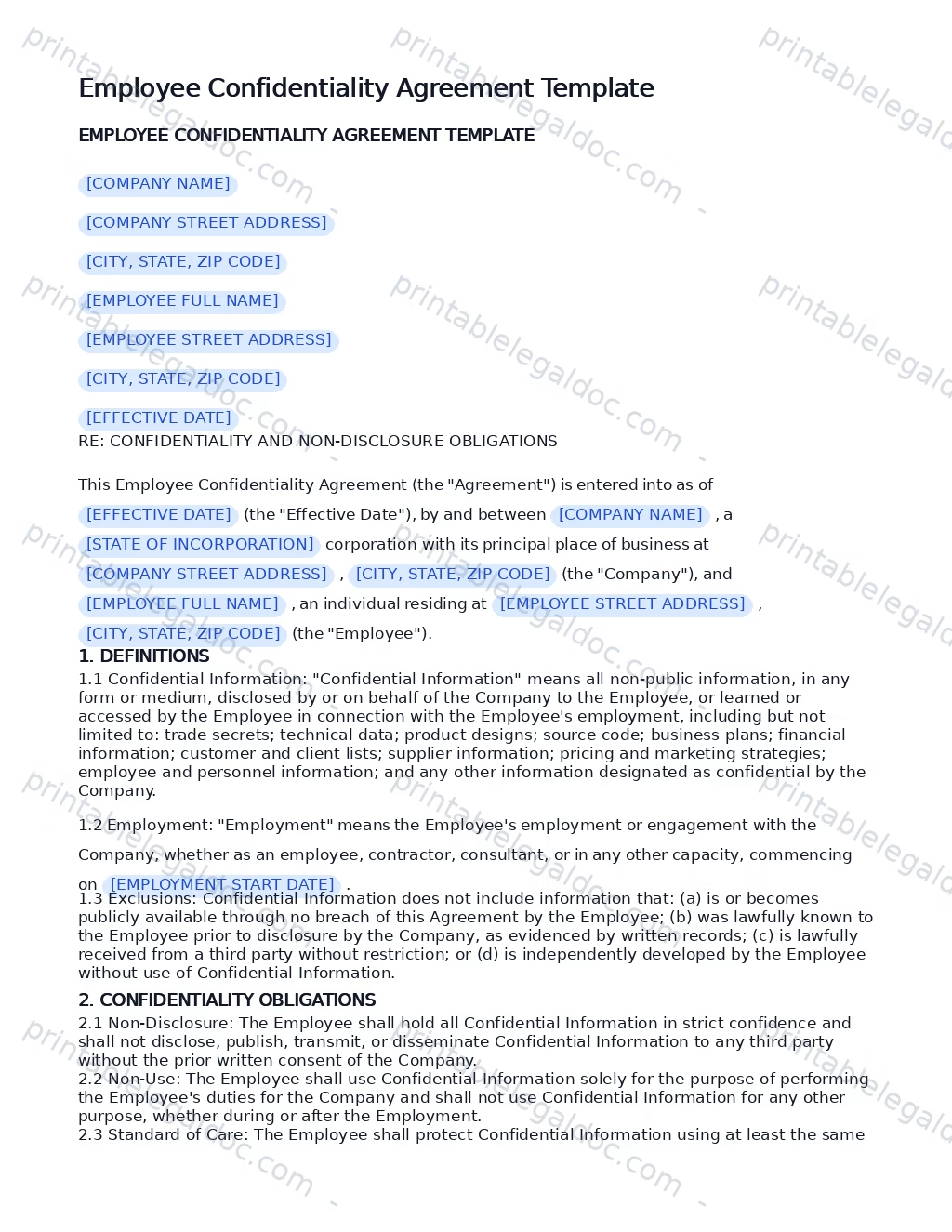
Employee Confidentiality Agreement Template
An employee confidentiality agreement template protects your business secrets. It gives you a ready to use contract for new hires. The document spells out what staff must keep private. Trade secrets, client lists and internal processes all stay covered. Clear terms help prevent leaks from day one. Your team knows exactly what they can share. This template saves you legal drafting time. Fill in the blanks and adjust clauses to fit your company. Both parties sign and the protection begins. Simple language keeps everyone on the same page. Use it for full time staff or contractors. A solid agreement builds trust and guards your hard work.
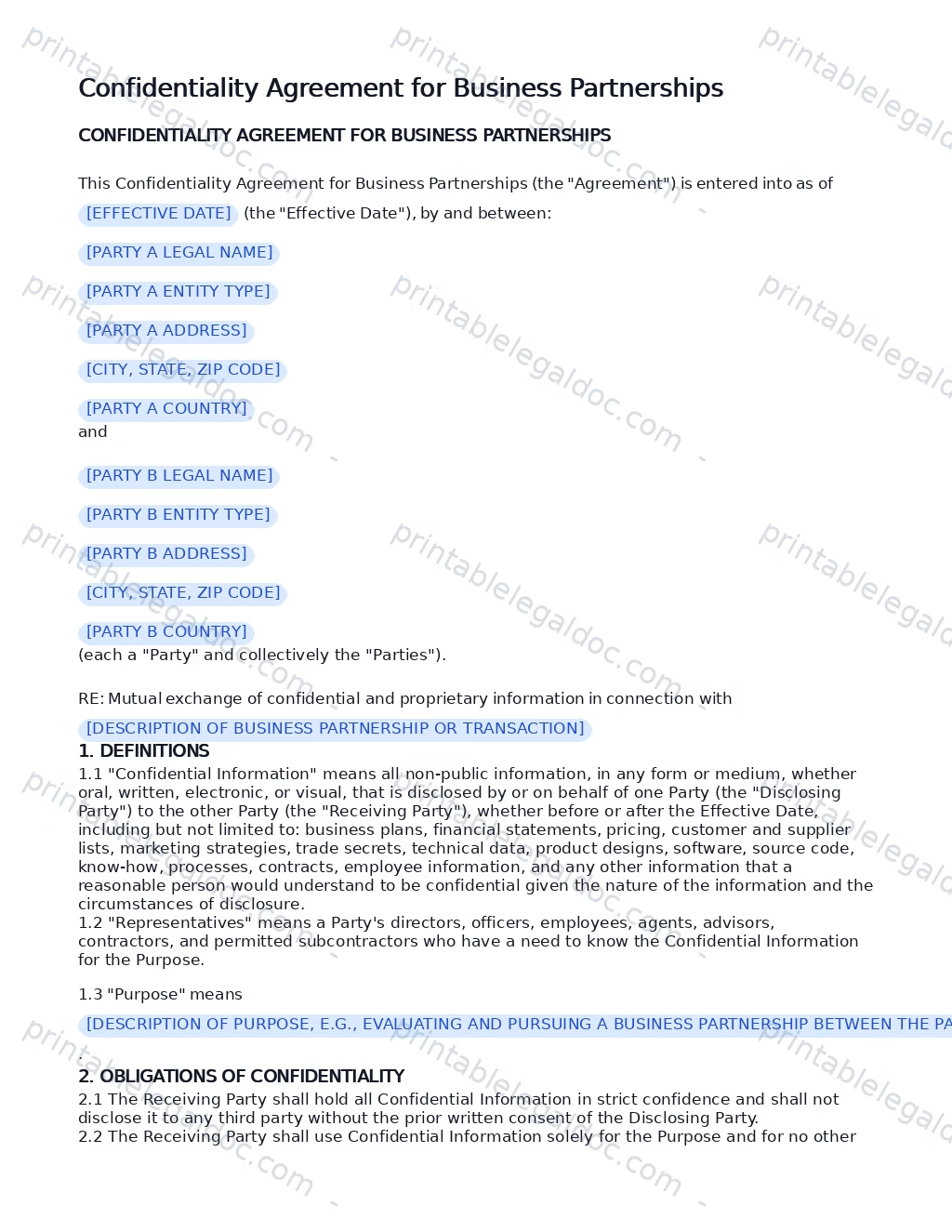
Confidentiality Agreement for Business Partnerships
A confidentiality agreement protects your business partnerships. It keeps shared ideas, data, and trade secrets private. Our template makes this easy. You get clear terms both sides can trust. Each clause covers what matters most. That includes client lists, pricing, and product plans. The layout stays simple. Fill in the blanks and sign. No legal jargon slows you down. Use it before talks begin. That way, every partner knows the rules. Your secrets stay yours. Disputes become less likely too. The template works for startups, agencies, and established firms. Download it today and start your next partnership with confidence.
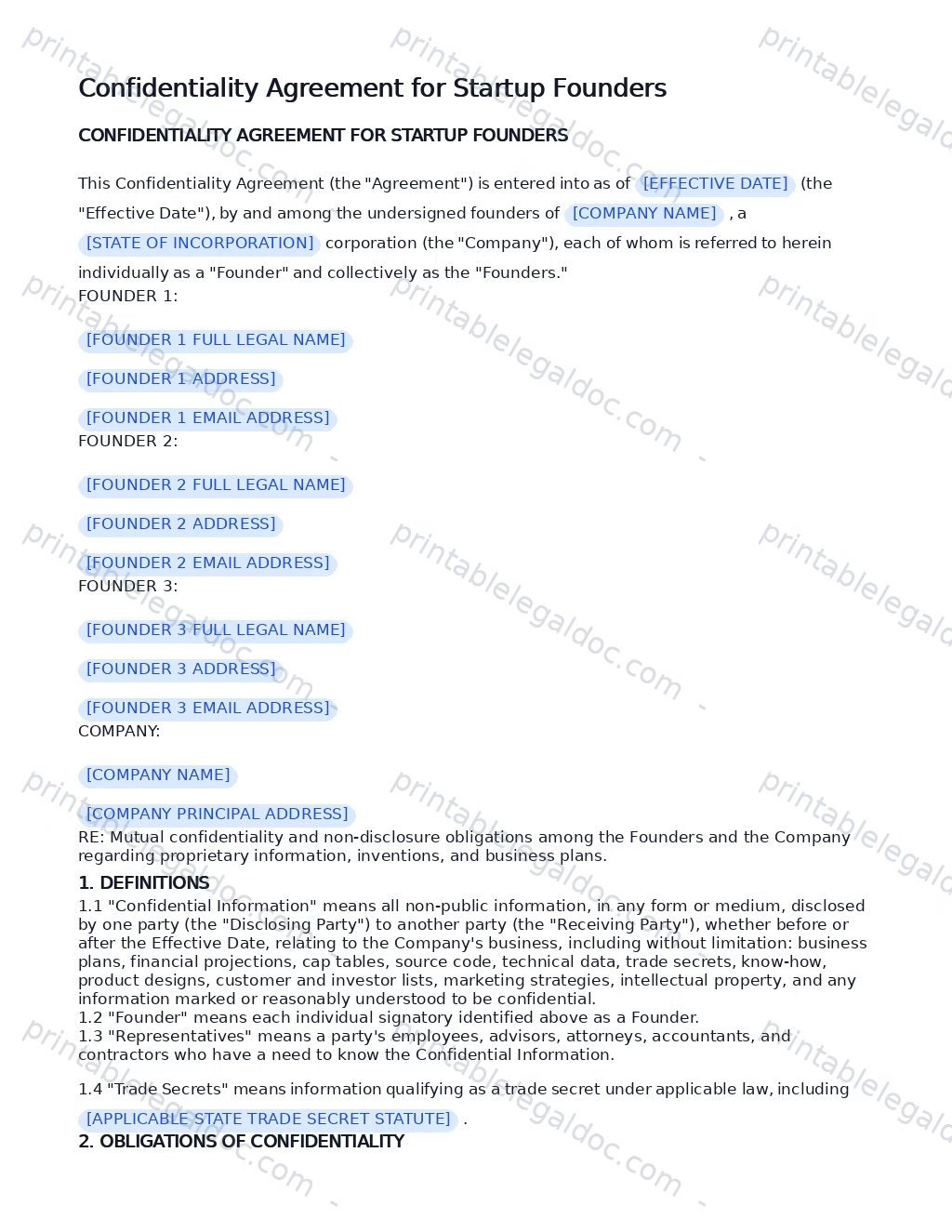
Confidentiality Agreement for Startup Founders
A confidentiality agreement protects your startup's sensitive information. Founders share ideas with investors, partners, and employees. This template helps you control that flow of information. It defines what stays private and what can be shared. Clear terms reduce risk and build trust. You get clauses on non-disclosure, non-use, and return of materials. The agreement covers both one-way and mutual sharing. Simple language keeps it readable for everyone involved. Use it before meetings, pitches, or onboarding new team members. Customize the fields to match your situation. Review it with a lawyer when stakes are high. Good paperwork saves headaches later.
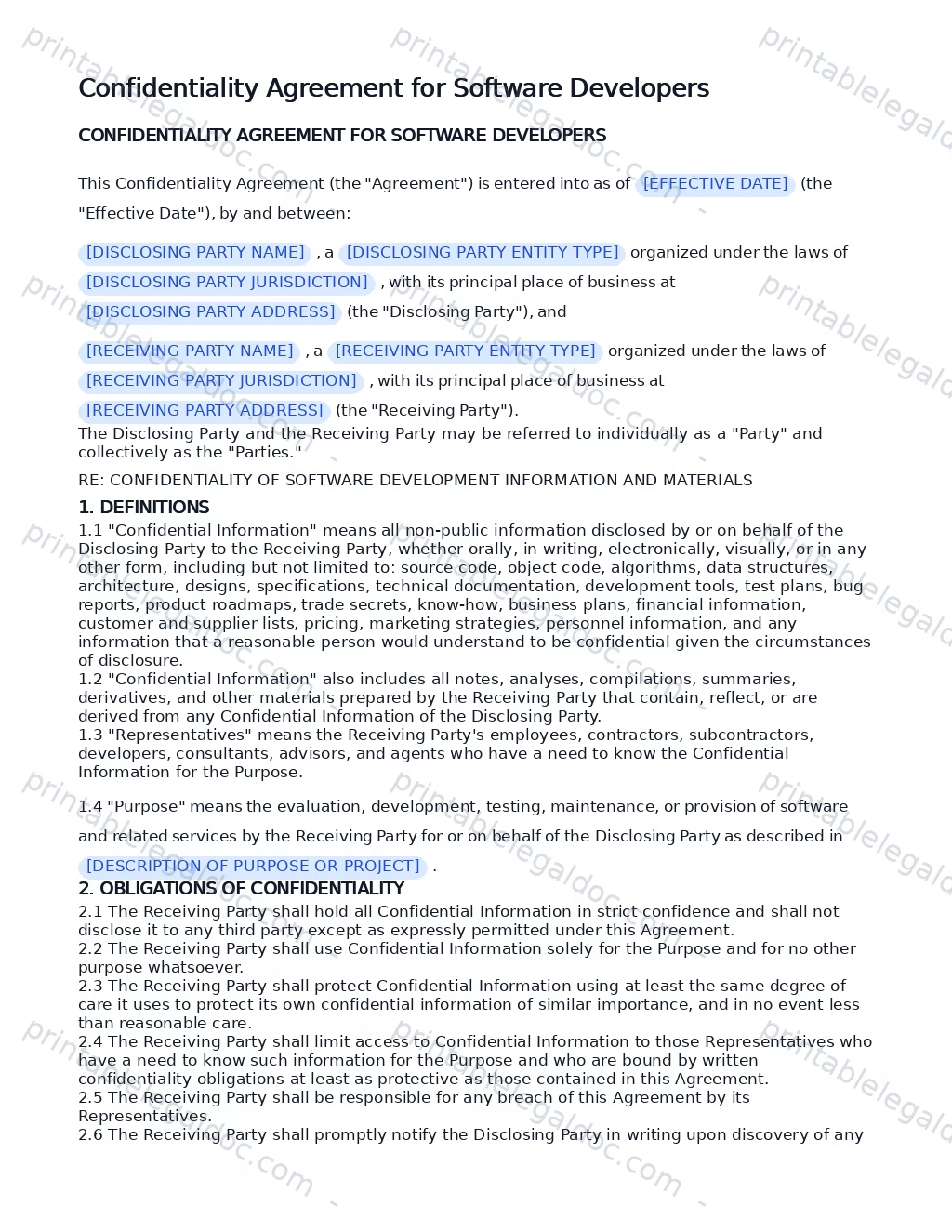
Confidentiality Agreement for Software Developers
A confidentiality agreement protects your code and ideas. This template gives software developers a clear way to guard trade secrets. It covers source code, client data, and project details. You can use it with employees, contractors, or partners. The agreement sets rules on what stays private. It also explains what happens if someone breaks those rules. Simple language makes it easy to read and sign. No legal jargon slows things down. You get a solid foundation for trust. Both sides know their duties from day one. That clarity prevents disputes later. Grab this template and secure your work today.
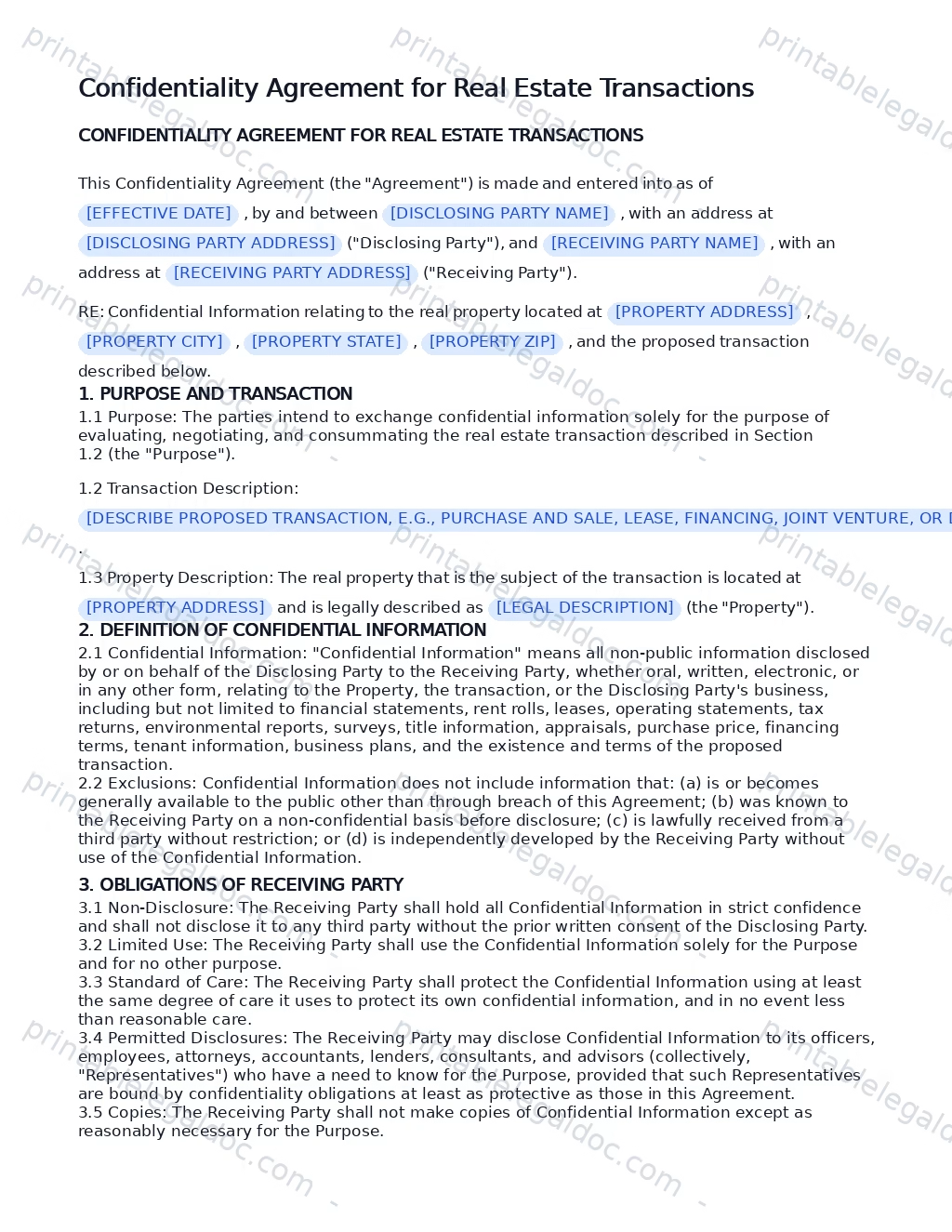
Confidentiality Agreement for Real Estate Transactions
A confidentiality agreement for real estate transactions protects sensitive details. Buyers and sellers share financial data. Property records stay private. This simple template covers the key points. It keeps deal terms under wraps. Both parties sign before talks begin. You gain legal cover if information leaks. The form works for residential and commercial deals. It spells out what counts as private. Clear language makes it easy to use. No lawyer needed for basic deals. Save time and reduce risk. Grab the template today. Protect your next property deal.
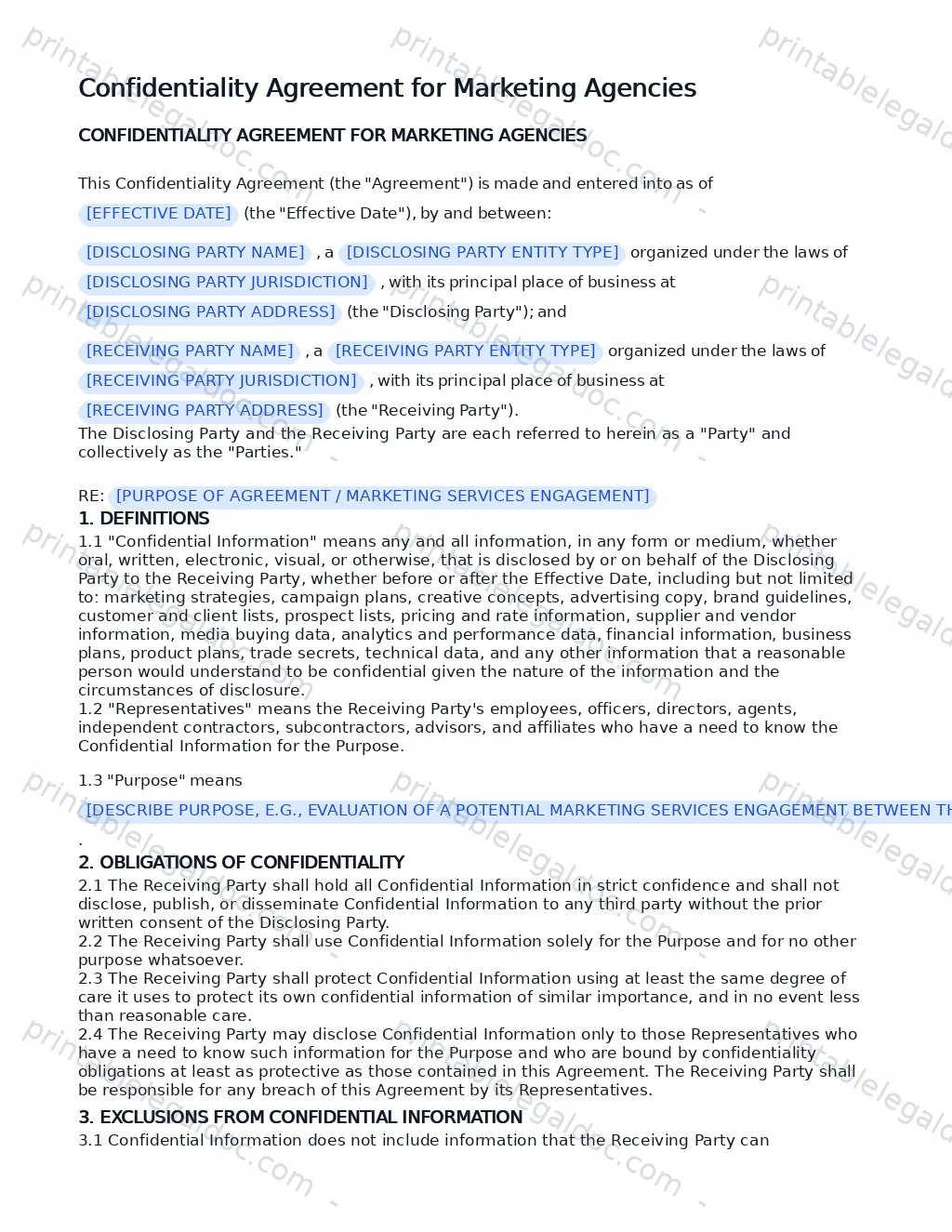
Confidentiality Agreement for Marketing Agencies
A confidentiality agreement for marketing agencies protects your client lists, campaign ideas, and pricing models. Your agency shares sensitive data every day. This template keeps that information safe. It sets clear rules on what stays private. It also defines how long secrecy lasts. Clients trust agencies that guard their secrets well. Use this agreement before any project starts. It covers subcontractors, freelancers, and internal teams. The document is simple to edit and ready to use. Strong legal protection helps your agency grow with confidence. Get the template today and secure your business relationships.
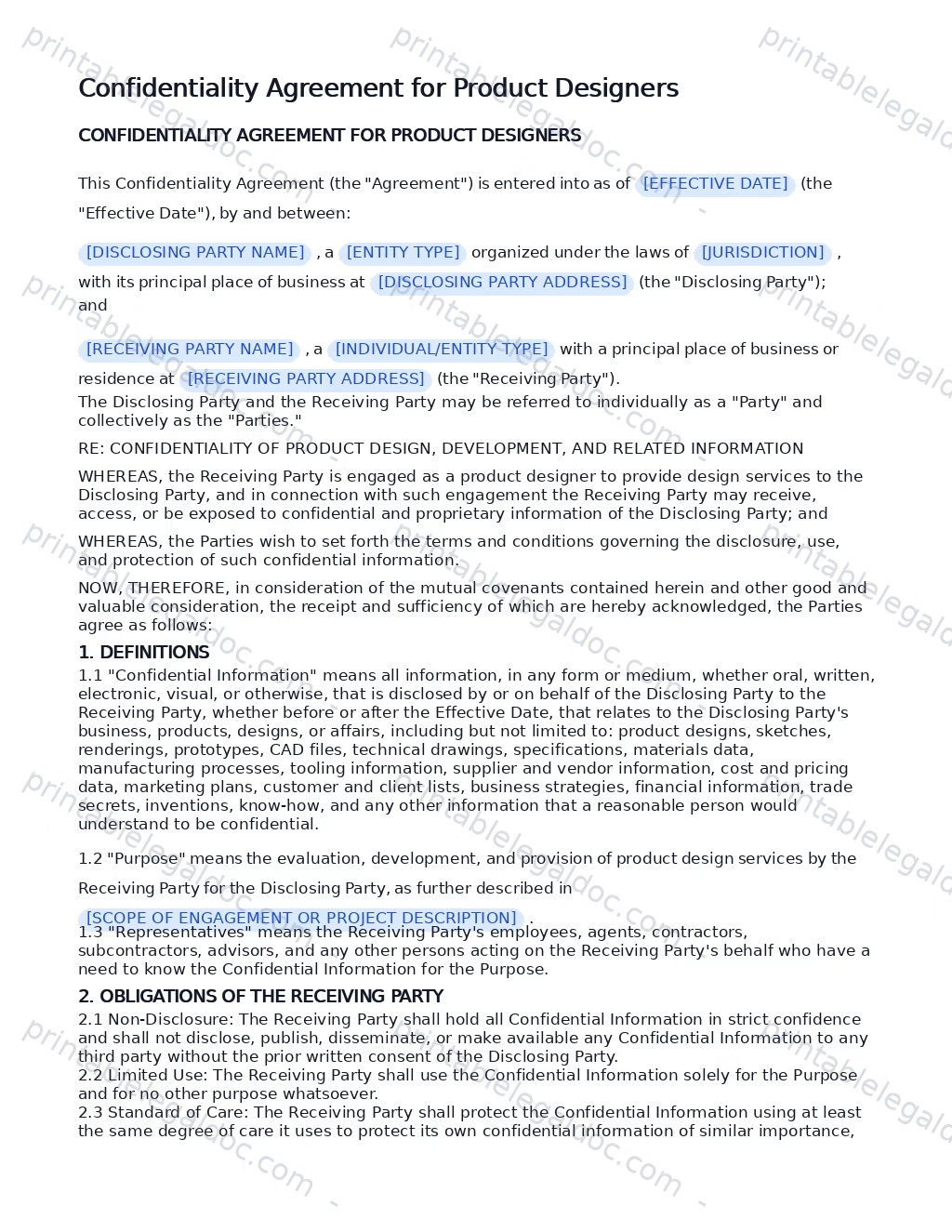
Confidentiality Agreement for Product Designers
A confidentiality agreement protects your design work. Product designers share sketches, prototypes, and client details every day. One leaked idea can cost you the project. This template gives you a clear contract. It sets rules for how others handle your sensitive information. You define what stays private. The agreement covers client names, design files, and business plans. Both sides sign. That creates a legal record. If someone shares your work without permission, you have proof. Use this template before you pitch a new concept. Send it to contractors and manufacturers too. It takes minutes to fill out. No lawyer needed for basic use. Keep your creative edge safe.

Confidentiality Agreement
Confidentiality Agreement
This Confidentiality Agreement (“Agreement”) is made and effective the ___________ (Date), by and between ____________________ (“Recipient”) and _______________ (“Owner”).
Whereas the Recipient wishes to review certain materials and products of the Owner and the owner wishes to retain confidentiality about the same, the Recipient and Owner agree as follows:
1. Confidential Information.
Owner proposes to disclose certain of its confidential and proprietary information (“Confidential Information”) to Recipient. Confidential Information shall include all data, materials, products, technology, computer programs, specifications, manuals, business plans, software, marketing plans, financial information, and other information disclosed or submitted, orally, in writing, or by any other media, to Recipient by Owner. Confidential Information disclosed orally shall be identified as such within five (5) days of disclosure. Nothing herein shall require Owner to disclose any of its information.
2. Recipient’s Obli2ations.
A. Recipient agrees that the Confidential Information is to be considered confidential and proprietary to Owner and Recipient shall hold the same in confidence, shall not use the Confidential Information other than for the purposes of its business with Owner, and shall disclose it only to its officers, directors, or employees with a specific need to know. Recipient will not disclose, publish or otherwise reveal any of the Confidential Information received from Owner to any other party whatsoever except with the specific prior written authorization of Owner.
B. Confidential Information furnished in tangible form shall not be duplicated by Recipient except for purposes of this Agreement. Upon the request of Owner, Recipient shall return all Confidential Information received in written or tangible form, including copies, or reproductions or other media containing such Confidential Information, within fifteen (15) days of such request. At Recipient’s option, any documents or other media developed by the Recipient containing Confidential Information may be destroyed by Recipient. Recipient shall provide a written certificate to Owner regarding destruction within fifteen (15) days thereafter.
3. Term.
The obligations of Recipient herein shall be effective today and from the date the Owner last discloses any Confidential Information to Recipient pursuant to this Agreement. Further, the obligation not to disclose shall not be affected by bankruptcy, receivership, assignment, attachment or seizure procedures, whether initiated by or against Recipient, nor by the rejection of any agreement between Owner and Recipient, by a trustee of Recipient in bankruptcy, or by the Recipient as a debtor-in-possession or the equivalent of any of the foregoing under local law.
4. Other Information.
Recipient shall have no obligation under this Agreement with respect to Confidential Information which is or becomes publicly available without breach of this Agreement by Recipient; is rightfully received by Recipient without obligations of confidentiality; or is developed by Recipient without breach of this Agreement; provided, however, such Confidential Information shall not be disclosed until sixty (60) days after written notice of intent to disclose is given to Owner along with the asserted grounds for disclosure.
5. No License.
Nothing contained herein shall be construed as granting or conferring any rights by license or otherwise in any Confidential Information. It is understood and agreed that neither party solicits any change in the organization, business practice, service or products of the other party, and that the disclosure of Confidential Information shall not be construed as evidencing any intent by a party to purchase any products or services of the other party nor as an encouragement to expend funds in development or research efforts. Confidential Information may pertain to prospective or unannounced products. Recipient agrees not to use any Confidential Information as a basis upon which to develop or have a third party develop a competing or similar product.
6. No Publicity.
Recipient agrees not to disclose its participation in this undertaking, the existence or terms and conditions of the Agreement, or the fact that discussions are being held with Owner, unless otherwise agreed in writing and signed by both parties.
7. Notices.
Any notice required by this Agreement or given in connection with it, shall be in writing and shall be given to the appropriate party by personal delivery or a recognized over night delivery service such as FedEx.
If to the Recipient: _____________________________________________________.
If to the Owner: ___________________________________________________.
8. No Waiver.The waiver or failure of either party to exercise in any respect any right provided in this agreement shall not be deemed a waiver of any other right or remedy to which the party may be entitled.
9. Entirety of Agreement.
The terms and conditions set forth herein constitute the entire agreement between the parties and supersede any communications or previous agreements with respect to the subject matter of this Agreement. There are no written or oral understandings directly or indirectly related to this Agreement that are not set forth herein. No change can be made to this Agreement other than in writing and signed by both parties.
10. Governing Law.
This Agreement shall be construed and enforced according to the laws of the State of ____________________ and any dispute under this Agreement must be brought in this venue and no other.
11. Headings in this Agreement
The headings in this Agreement are for convenience only, confirm no rights or obligations in either party, and do not alter any terms of this Agreement.
12. Severability.
If any term of this Agreement is held by a court of competent jurisdiction to be invalid or unenforceable, then this Agreement, including all of the remaining terms, will remain in full force and effect as if such invalid or unenforceable term had never been included.
In Witness whereof, the parties have executed this Agreement as of the date first written above.
_________________________ _______________________
Recipient Owner_________________________
DateConfidentiality Agreement
Review List
This review list is provided to help you to complete the Confidentiality Agreement and to ensure that the necessary steps are taken to make it effective, yet presentable to get most interested parties to sign it for your corporation’s protection.1. The Confidentiality Agreement is used when one party (the “Owner”) will disclose its valuable confidential information to someone else (the “Recipient”). This disclosure is “one way”, not reciprocal. Make sure these terms are appropriate for your situation. As a practical matter, you should have several copies available and prepared in advance for meetings with potential recipients. It is far easier to get these signed in person than by mail when they have time to reflect upon it and may have various other parties in their organization possibly undermining your efforts to get it signed.
2. Make sure that your information is marked to show the name of the owner and keep a record of the information that is disclosed. It may also be appropriate to label the information “Confidential”. At the conclusion of the evaluation by the Recipient, the Owner should demand the return of disclosed information as provided in the agreement. Doing this in person makes all of this much easier from a practical point of view. In fact, you should make this an integral and important part of any Sales presentation and be sure your sales people have copies ready for signature.
3. Laws vary from state to state and change over time, especially with regards to these kind of commercial and intellectual property restrictions. Before using this well care document, consider having a lawyer review it to make sure it complies with current regulations as they apply to your corporation in your state.
4. Have the Recipient sign two copies. They keep one for their files; you keep the other for yours. If it should come to litigation at a later date, it will help your cause if they produce the signed document in discovery. We strongly recommend you keep a separate binder for Confidentiality Agreements and periodically review it to be sure all appropriate parties have signed it. Often, new parties will review your materials at the company of the original Recipient. You should make it an ongoing obligation of your sales people and your management to try to obtain these signatures when you visit or meet with the other parties. Do this in person for the best results. Mailing these documents both cuts down on the rate of obtaining signatures and tends to “put off” the potential signatory.
Frequently Asked Questions
What is a confidentiality agreement?
A confidentiality agreement is a legal contract between a Recipient and an Owner that governs the handling of confidential and proprietary information. Under this agreement, the Recipient agrees to hold the Owner's Confidential Information in confidence. The agreement defines what constitutes Confidential Information and outlines the Recipient's obligations.
What types of information are considered confidential under this agreement?
Confidential Information includes all data, materials, products, technology, computer programs, specifications, manuals, business plans, software, marketing plans, financial information, and other information disclosed or submitted by the Owner to the Recipient. This information can be disclosed orally, in writing, or by any other media. Oral disclosures must be identified as confidential within five days.
How is confidential information disclosed orally handled?
If Confidential Information is disclosed orally, it must be identified as such within five (5) days of disclosure. This ensures that the Recipient is aware of the confidential nature of the information. The agreement does not require the Owner to disclose any information.
What are the Recipient's obligations under this confidentiality agreement?
The Recipient agrees that the Confidential Information is to be considered confidential and proprietary to the Owner. The Recipient shall hold the same in confidence. The specific obligations are further detailed in the agreement, but the core obligation is to maintain confidentiality.
Does the Owner have to disclose any information?
No, nothing in this agreement requires the Owner to disclose any of its information. The Owner has the sole discretion to decide whether to share Confidential Information with the Recipient. The agreement merely sets the terms for handling such information if it is disclosed.
What is the effective date of this confidentiality agreement?
The effective date of the agreement is the date specified in the blank space provided at the beginning of the document. This date is when the agreement becomes active. It is typically filled in when the parties sign the agreement.
Who are the parties to this confidentiality agreement?
The parties are the Recipient and the Owner. The Recipient is the party receiving the Confidential Information, and the Owner is the party disclosing it. Their names are to be filled in the blanks at the beginning of the agreement.
Can confidential information be disclosed in writing?
Yes, Confidential Information can be disclosed in writing, orally, or by any other media. The agreement covers all forms of disclosure. However, oral disclosures must be identified as confidential within five days.
What is the purpose of this confidentiality agreement?
The purpose is to allow the Recipient to review certain materials and products of the Owner while ensuring that the Owner retains confidentiality. The agreement sets forth the terms under which the Recipient may access and handle the Confidential Information. It protects the Owner's proprietary information from unauthorized use or disclosure.
Is this confidentiality agreement legally binding?
Yes, this confidentiality agreement is a legally binding contract between the Recipient and the Owner once signed and dated. It creates enforceable obligations regarding the handling of Confidential Information. The agreement outlines the Recipient's obligations to maintain confidentiality.


