
This review list is offered to educate you about the document and to aid you in preparing it. Again, a structured approach yields the best outcomes. You may also contact creditors and make comparable requests. However, transcription errors and other factors tend to reduce the number of appropriate responses to fewer than desired levels. It is preferable to send a formal letter with copies so that you have a collection of documentation to refer to if additional or third notices are required. If this becomes essential, we recommend just noting it on a copy of the initial letter. This creates a more lasting impact. Firm, direct, and precise.
This is a solicitation letter. You’re attempting to persuade the receiver to swiftly respond to your letter. Being pleasant assists in this endeavor, as well as reflecting positively on you. Attaching the credit rejection letter eliminates the delay created by them requesting a copy and encourages them to respond quickly to this coordinated request.
Ascertain that the party who was declined signs the letter. A signature from a spouse or other family member will not suffice. The writer’s signature should be exactly as it appears on the credit rejection letter (for example, using or deleting middle initials as done in the letter). Save a copy of the message until you receive a response from the recipient.
Three Major US Credit Reporting Agencies
Equifax
P.O. Box 740256
Atlanta, GA 30374-0256
800-685-1111
Trans Union Corporation
P.O. Box 34012
Fullerton, CA 92634-4012
714-738-3800
TRW – NCAC
P.O. Box 2106
Allen, TX 75002-2106
800-422-4879

Credit Denial, Request For Information
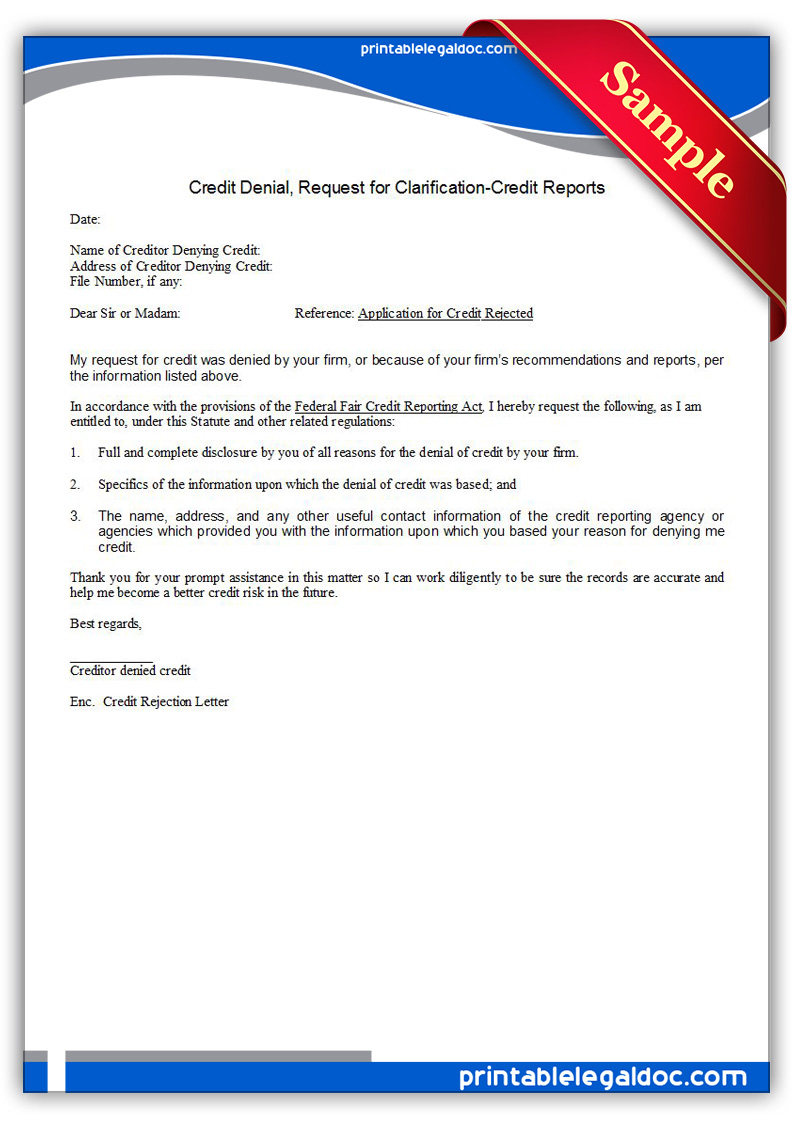
Credit Denial, Request for Clarification-Credit Reports
Date:
Name of Creditor Denying Credit:
Address of Creditor Denying Credit:
File Number, if any:Dear Sir or Madam: Reference: Application for Credit Rejected
My request for credit was denied by your firm, or because of your firm’s recommendations and reports, per the information listed above.In accordance with the provisions of the Federal Fair Credit Reporting Act, I hereby request the following, as I am entitled to, under this Statute and other related regulations:
1. Full and complete disclosure by you of all reasons for the denial of credit by your firm.
2. Specifics of the information upon which the denial of credit was based; and
3. The name, address, and any other useful contact information of the credit reporting agency or agencies which provided you with the information upon which you based your reason for denying me credit.
Thank you for your prompt assistance in this matter so I can work diligently to be sure the records are accurate and help me become a better credit risk in the future.
Best regards,
____________
Creditor denied creditEnc. Credit Rejection Letter
Credit Denial, Request for Clarification-Credit Reports
Review ListThis review list is provided to inform you about the document in question and assist you in its preparation. Once again, an organized approach is the best way to get the best results. You can call creditors and make similar requests. However, transcription errors and such tend to cut down the proper responses to less than you would like. Better to send a formal letter, making copies, so you have a set of documents to follow up with if second or third notices are required. If this becomes necessary, we recommend you just make that notation on the copy of the first letter. This makes a bigger impression. Firm, clear, and to the point.
This is a sales letter. You are trying to influence the recipient to respond to your letter promptly. Being nice helps in that regard as well as reflecting well upon you. Attaching the credit turn down letter prevents delay caused by them having to request a copy and encourages them to respond promptly to this organized request.
Be sure the party turned down signs the letter. A spouse or other family member signature will not be sufficient. The writer should sign exactly as his or her name appears on the credit rejection letter (for example, using or deleting middle initials as done in the letter). Keep a copy until at least you receive a response from the recipient.
Three Major US Credit Reporting Agencies
Equifax
P.O. Box 740256
Atlanta, GA 30374-0256
800-685-1111Trans Union Corporation
P.O. Box 34012
Fullerton, CA 92634-4012
714-738-3800TRW – NCAC
P.O. Box 2106
Allen, TX 75002-2106
800-422-4879
Frequently Asked Questions
What is a credit denial request for clarification?
A credit denial request for clarification is a formal letter sent to a creditor that denied credit, asking for the specific reasons for the denial and the information used to make that decision. It is based on rights granted by the Federal Fair Credit Reporting Act. The letter requests full disclosure of all reasons for denial, specifics of the information upon which the denial was based, and contact information for any credit reporting agency that provided information.
What should I include in a credit denial request for clarification letter?
Your letter should include the date, the name and address of the creditor that denied credit, and any file number associated with your application. It should clearly state that your request for credit was denied and that you are requesting information under the Federal Fair Credit Reporting Act. Specifically, ask for all reasons for the denial, the specifics of the information upon which the denial was based, and the name, address, and other contact information of any credit reporting agency that provided information.
What are my rights under the Fair Credit Reporting Act when credit is denied?
Under the Federal Fair Credit Reporting Act, you have the right to request a full and complete disclosure of all reasons for the denial of credit by the creditor. You also have the right to know the specifics of the information upon which the denial was based and to receive the name, address, and other useful contact information of any credit reporting agency that provided information used in the denial. These rights are designed to help you ensure your records are accurate and improve your credit risk in the future.
How do I write a letter to a creditor asking why my credit application was denied?
Start with a formal salutation and include the date, creditor's name and address, and any file number. Reference your rejected credit application and state that you are requesting information under the Federal Fair Credit Reporting Act. List the three specific items you are requesting: all reasons for denial, specifics of the information upon which the denial was based, and contact information for any credit reporting agency involved. Close with a polite thank you and your signature.
What information is a creditor required to provide after denying credit?
A creditor is required to provide full and complete disclosure of all reasons for the denial of credit. They must also provide the specifics of the information upon which the denial was based. Additionally, they must provide the name, address, and any other useful contact information of the credit reporting agency or agencies that provided the information upon which the denial was based.
Can I request the credit reporting agency's information from a creditor that denied my credit?
Yes, under the Federal Fair Credit Reporting Act, you are entitled to request the name, address, and any other useful contact information of the credit reporting agency or agencies that provided the information upon which the creditor based the denial. This information should be included in your written request for clarification. The creditor is required to provide this information to you.
What is the purpose of a credit denial letter?
The purpose of a credit denial letter is to formally request from a creditor the reasons for denying your credit application and the information used in that decision. It helps you understand why you were denied and allows you to work on correcting any inaccuracies in your credit reports. By obtaining this information, you can take steps to become a better credit risk in the future.
How long does a creditor have to respond to a credit denial request?
The provided article does not specify a time frame for a creditor's response to a credit denial request. It simply states that you are entitled to request the information under the Federal Fair Credit Reporting Act. For specific time limits, you may need to consult the Act or seek legal advice.
What should I do if a creditor denies my credit application?
If a creditor denies your credit application, you should send a written request for clarification under the Federal Fair Credit Reporting Act. In this letter, ask for all reasons for the denial, the specifics of the information upon which the denial was based, and the contact information for any credit reporting agency involved. This will help you identify any errors and improve your creditworthiness.
Is a credit denial request for clarification the same as a credit rejection letter?
No, they are different. A credit rejection letter is typically sent by a creditor to inform you that your credit application has been denied. A credit denial request for clarification is a letter you send to the creditor after receiving a rejection, asking for the specific reasons and information used in the denial. The article includes an enclosure labeled 'Credit Rejection Letter' as an example, but the request for clarification is your formal request for details.