

Dissent Notice of Shareholder: Regarding sale of all Assets of Corporation
A Dissent Notice of Shareholder: Regarding sale of all Assets of Corporation is a written legal document that states all of the:
- Sale of assets in regular course of business
- Sale of assets other than in regular course
- Rights of shareholders to dissent and obtain payments
- Rights of dissenting shareholders and others.
A Dissent Notice of Shareholder is an opinion, a legal opinion for this matter by one or more judges showing or expressing their disagreement with the court’s majority opinion. This may also be called a minority report when you are not necessarily referring to a company’s legal decision.
Any shareholder of a corporation may obtain payment or dissent from any of the following corporate actions that may or may not apply to the situation:
- Any and all plans of exchange where share by corporations are to be
- Plans of consolidation or merger.
- Amendments that may adversely affect the rights of the shares of a corporation such as:
- Alterations
- Abolishing or rights
- Creation of new rights
- Others
The requirements for this form are the following:
- The name of the shareholder stating dissent on:
- The assets of _________ Corporation
- The contribution of the assets of the corporation
- The number of shares
- The class of shares
- Rights under corporation law of _____
- The Date
- Name of the Shareholder
- The dissent notice of the shareholder (regarding sale of all assets of a certain corporation)
- And finally, a review list
You are encouraged to keep multiple copies of the signed letter.
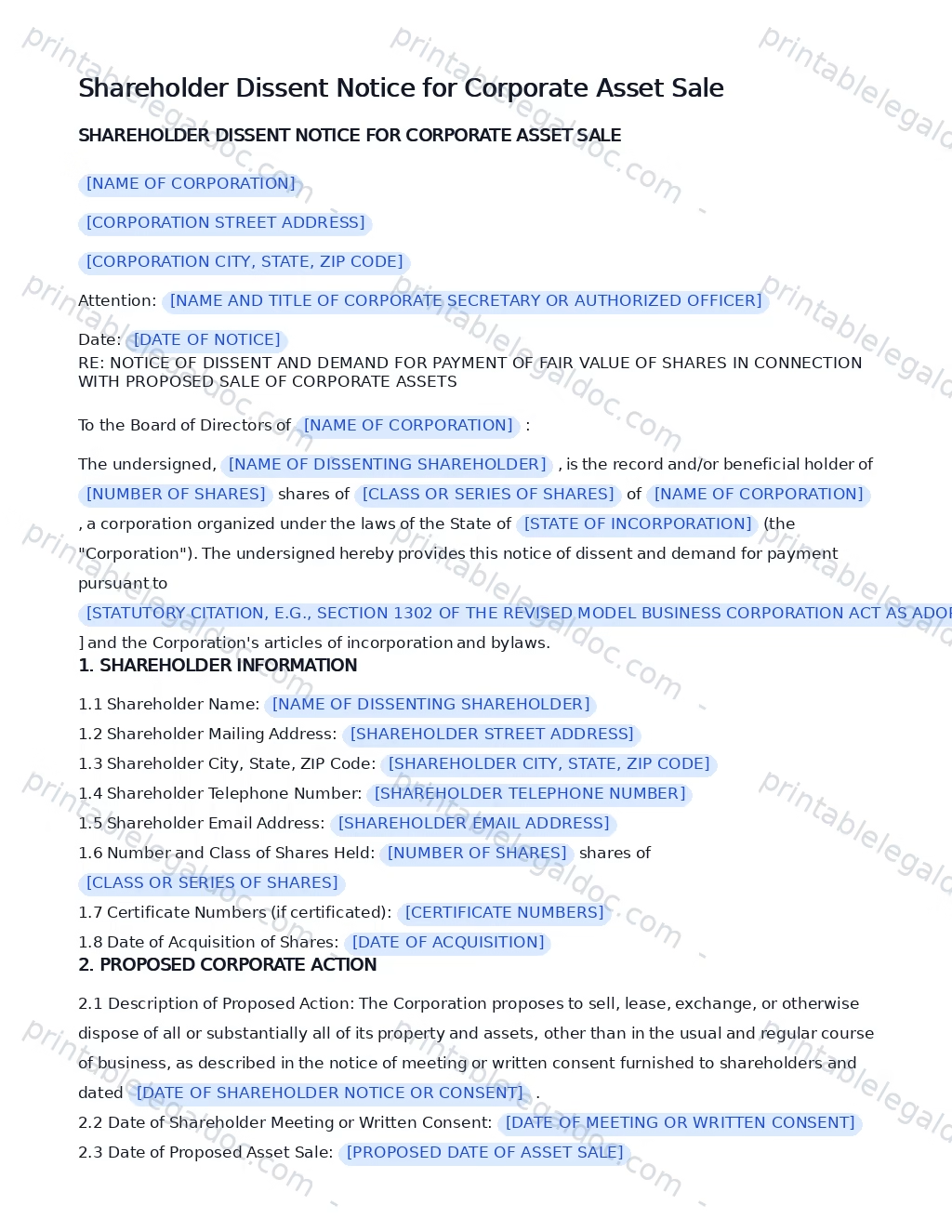
Shareholder Dissent Notice for Corporate Asset Sale
A shareholder can object to a corporate asset sale. The law lets them voice dissent. They must act fast. A written notice protects their rights. This template makes that step simple. It covers key details. It names the shareholder. It identifies the sale. It states the objection clearly. Courts value clean records. Your notice should be clear and timely. Use this template to document your position. It saves time. It reduces errors. It gives you a solid record. Send it before the deadline. Keep a copy for your files.
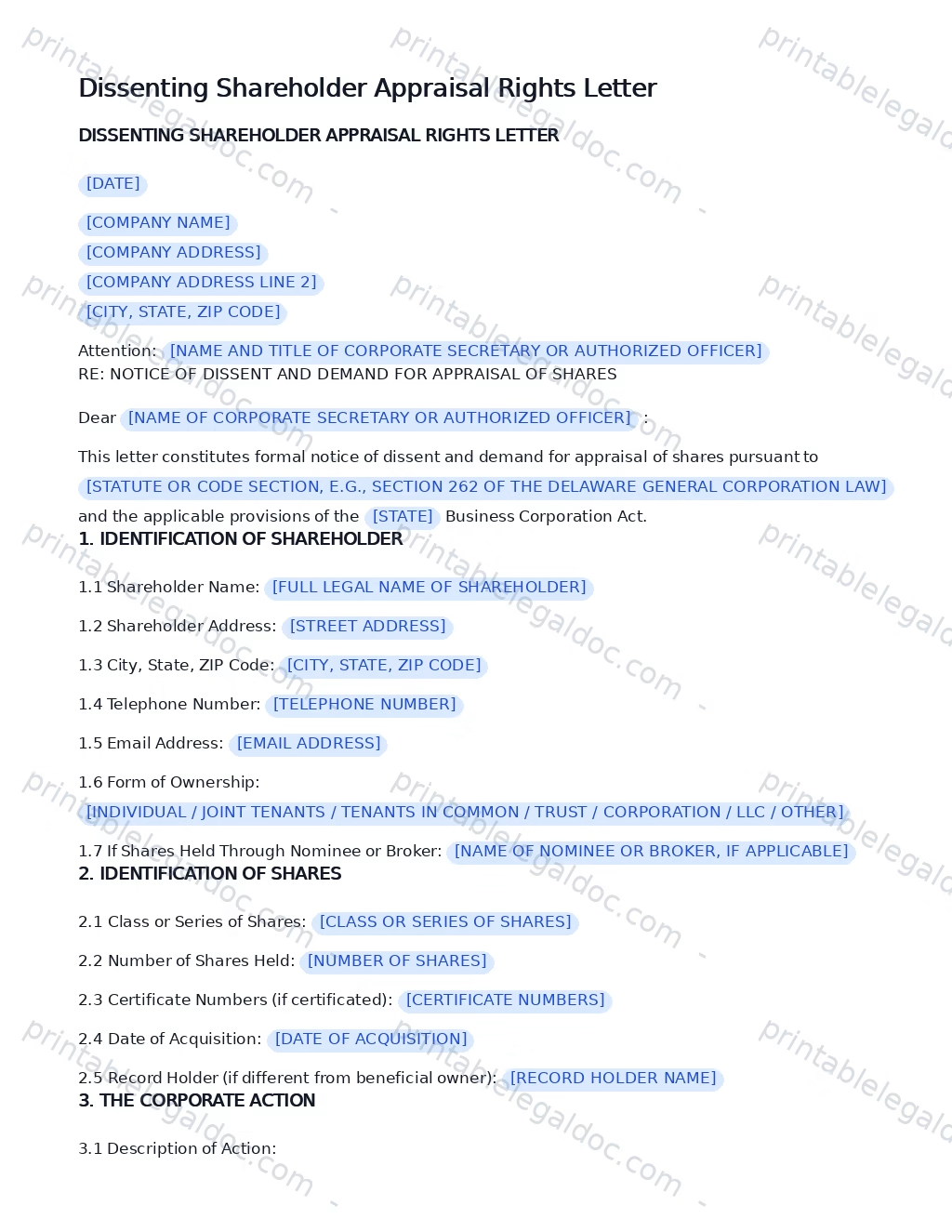
Dissenting Shareholder Appraisal Rights Letter
A dissenting shareholder appraisal rights letter is a formal notice. It tells a company you object to a merger or acquisition. You want fair value for your shares. This template gives you clear language for that step. It covers key details like your name, share count, and the transaction you oppose. Use it to protect your rights before deadlines pass. The letter states your intent to demand appraisal. It also requests payment of fair value. Simple fields let you fill in your case fast. Review it with a legal advisor when needed. Then send it to the company on time.
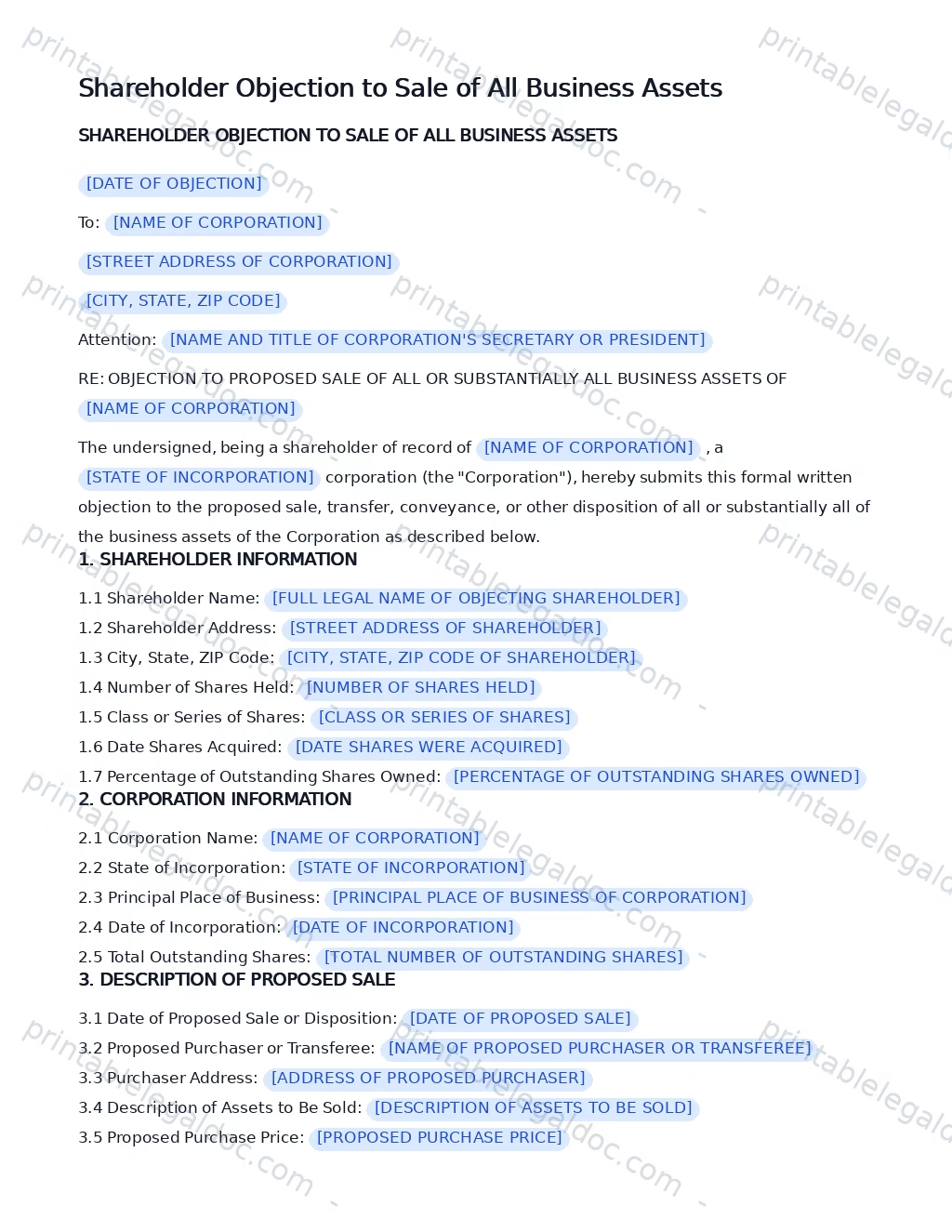
Shareholder Objection to Sale of All Business Assets
A shareholder objection to the sale of all business assets is a formal way to protect your investment. You can challenge a deal that feels rushed or undervalued. Such a sale often requires a majority vote. Yet, minority owners still hold rights. They may claim the price is too low. Or they might argue the process lacked transparency. Filing a written objection puts your concerns on record. It can also open talks with the board. Sometimes, it leads to a better offer or a court review. Know your rights before you sign anything. Speak with a business attorney early.
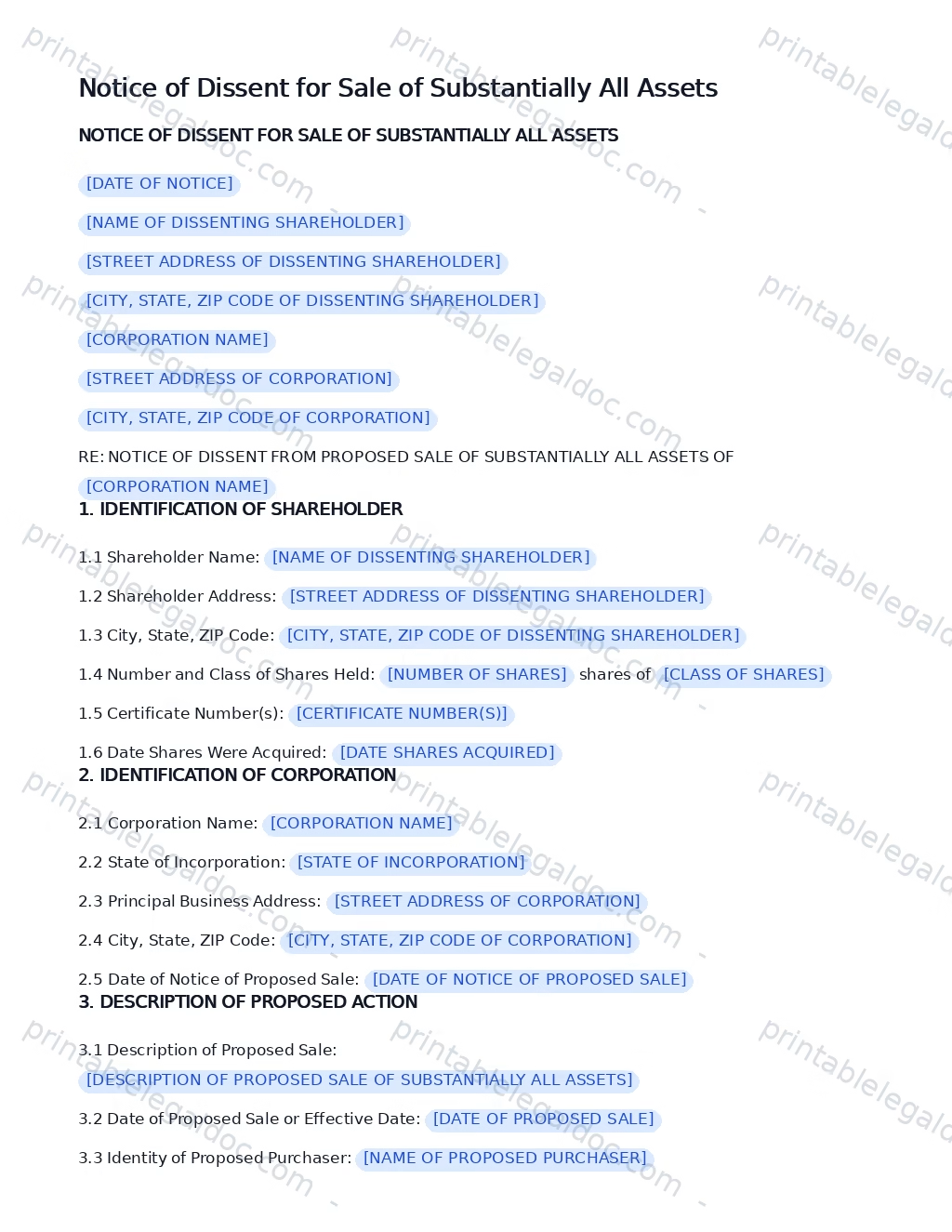
Notice of Dissent for Sale of Substantially All Assets
A Notice of Dissent for Sale of Substantially All Assets lets a stakeholder formally object to a major company sale. The template gives you clear language to record your position. You can state your concerns in writing before the deal closes. This protects your rights and creates a written record. Fill in the parties, the asset details, and your reasons for objecting. The form works for shareholders, members, or directors. Use it when you believe the sale harms your interests. Clear wording helps everyone understand your stance. The document saves time and reduces confusion. Get your objection on file today.
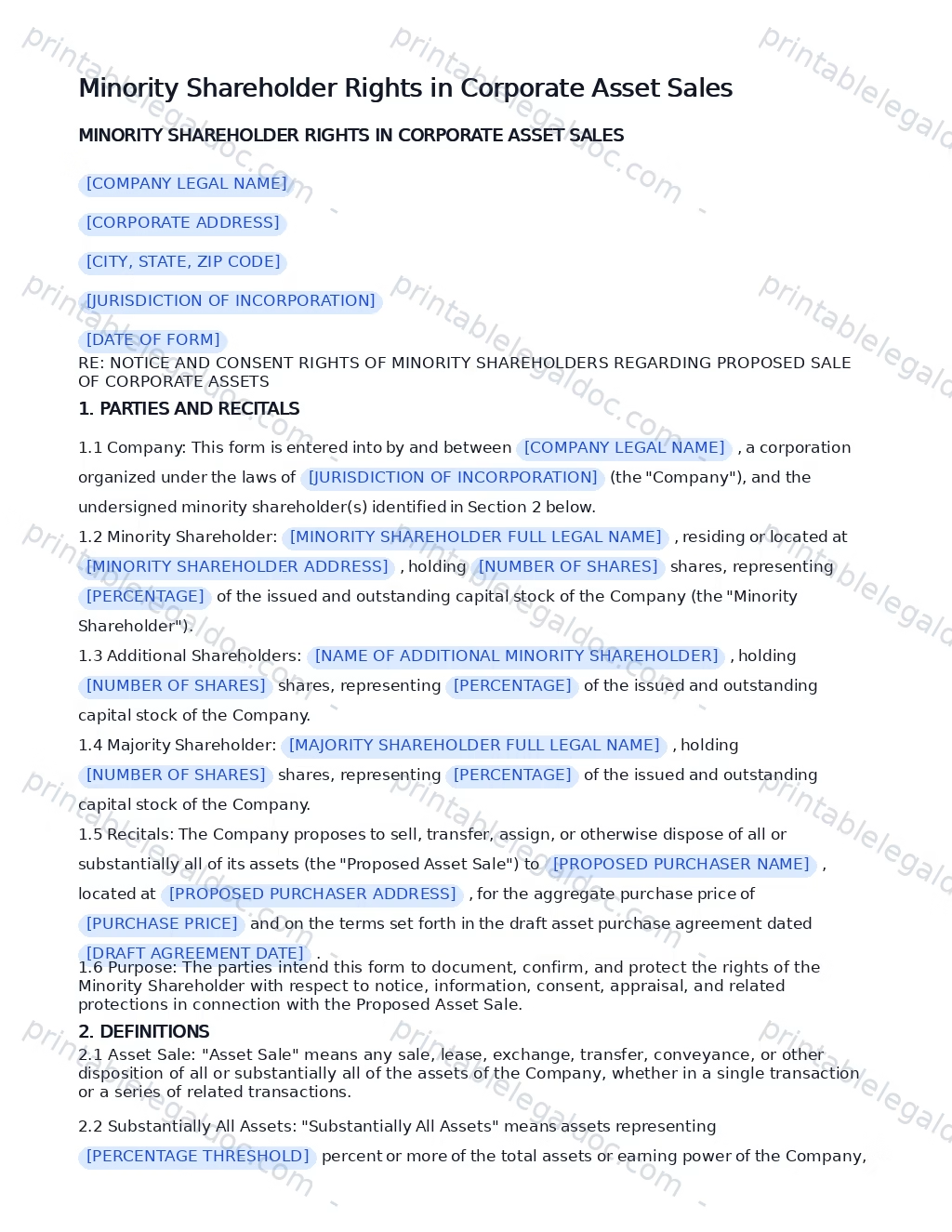
Minority Shareholder Rights in Corporate Asset Sales
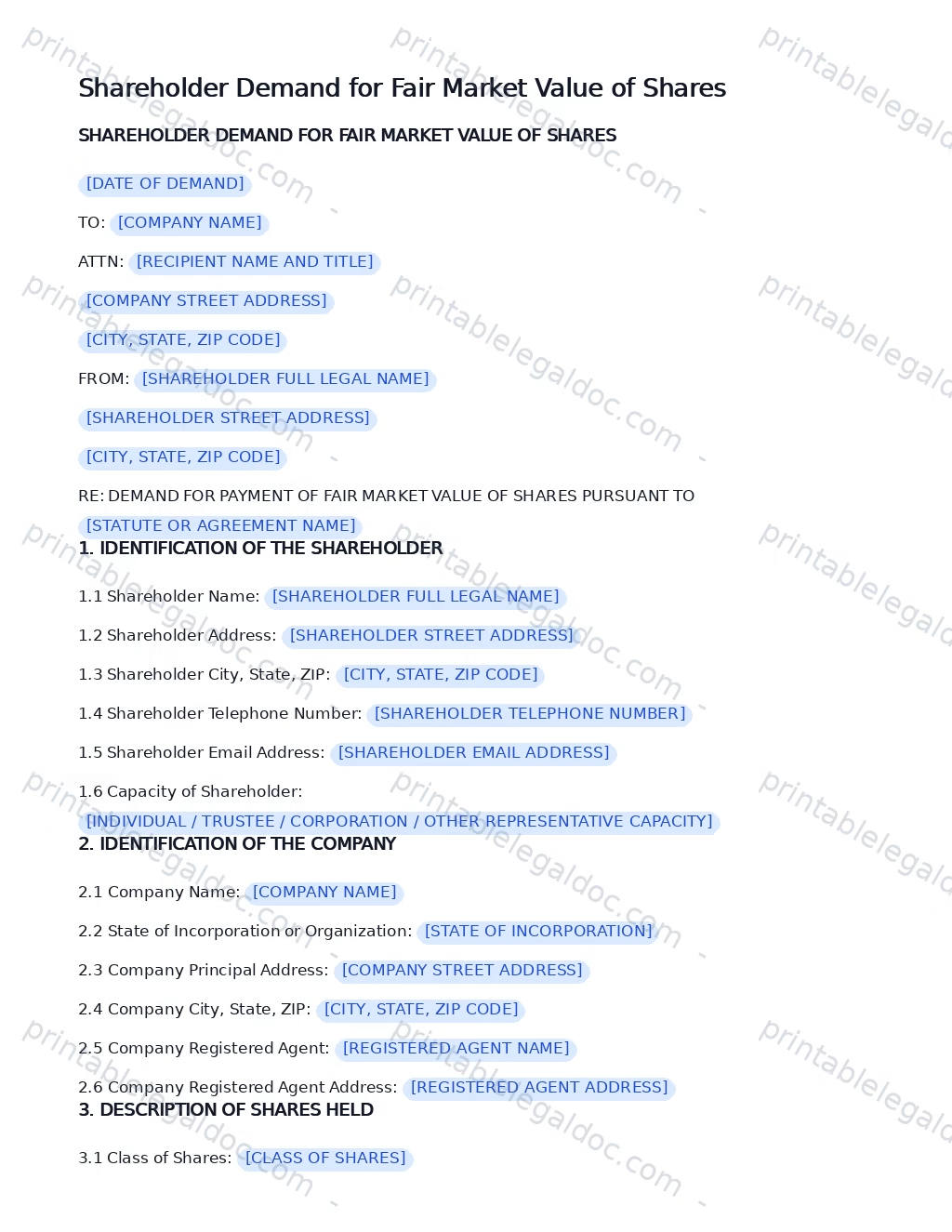
Shareholder Demand for Fair Market Value of Shares
A shareholder demand for fair market value of shares arises when owners believe a buyout offer falls short of true worth. Fair market value reflects what a willing buyer would pay a willing seller in an open market. Both parties have reasonable knowledge of the facts. Disputes often emerge during mergers, forced buyouts, or company reorganizations. In these moments, minority shareholders may feel pressured to accept less than their stake deserves. An independent valuation can settle the matter. It weighs assets, earnings, and market conditions. This process protects shareholder rights and builds trust in the transaction. Clear valuation standards also reduce conflict and costly litigation. When fair market value guides a deal, everyone gains confidence in the outcome.
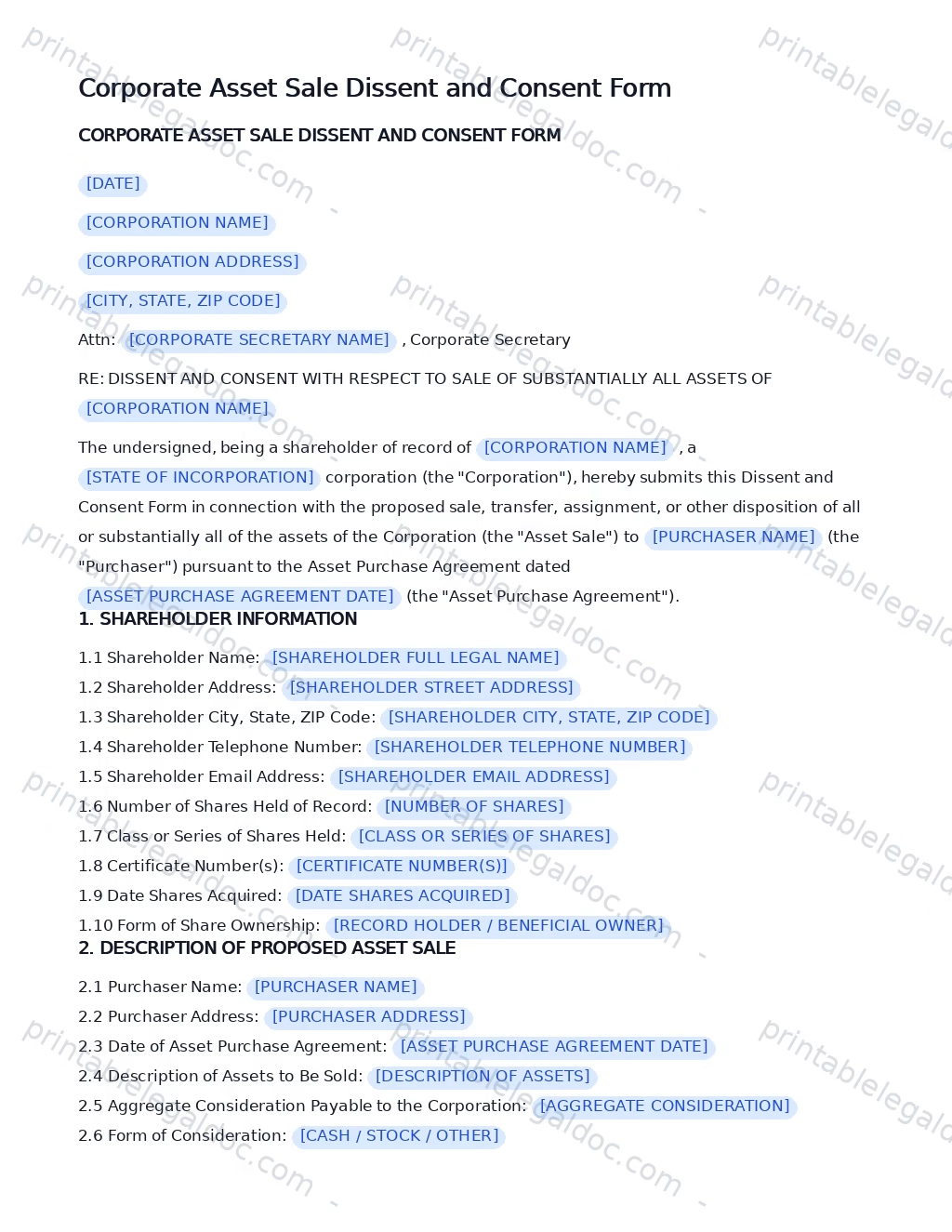
Corporate Asset Sale Dissent and Consent Form
A corporate asset sale changes more than paperwork. It shifts ownership, control, and risk. Our Corporate Asset Sale Dissent and Consent Form template helps shareholders record their position clearly. Consent signals approval. Dissent protects objection rights. This form captures both in one place. Use it to document votes, note objections, and meet record keeping duties. The layout stays simple. Fields are easy to complete. Legal language is plain and direct. Every party leaves with a clear record of where they stand. That clarity reduces disputes later. It also supports smooth deal closing. Get the template and put your decision in writing today.
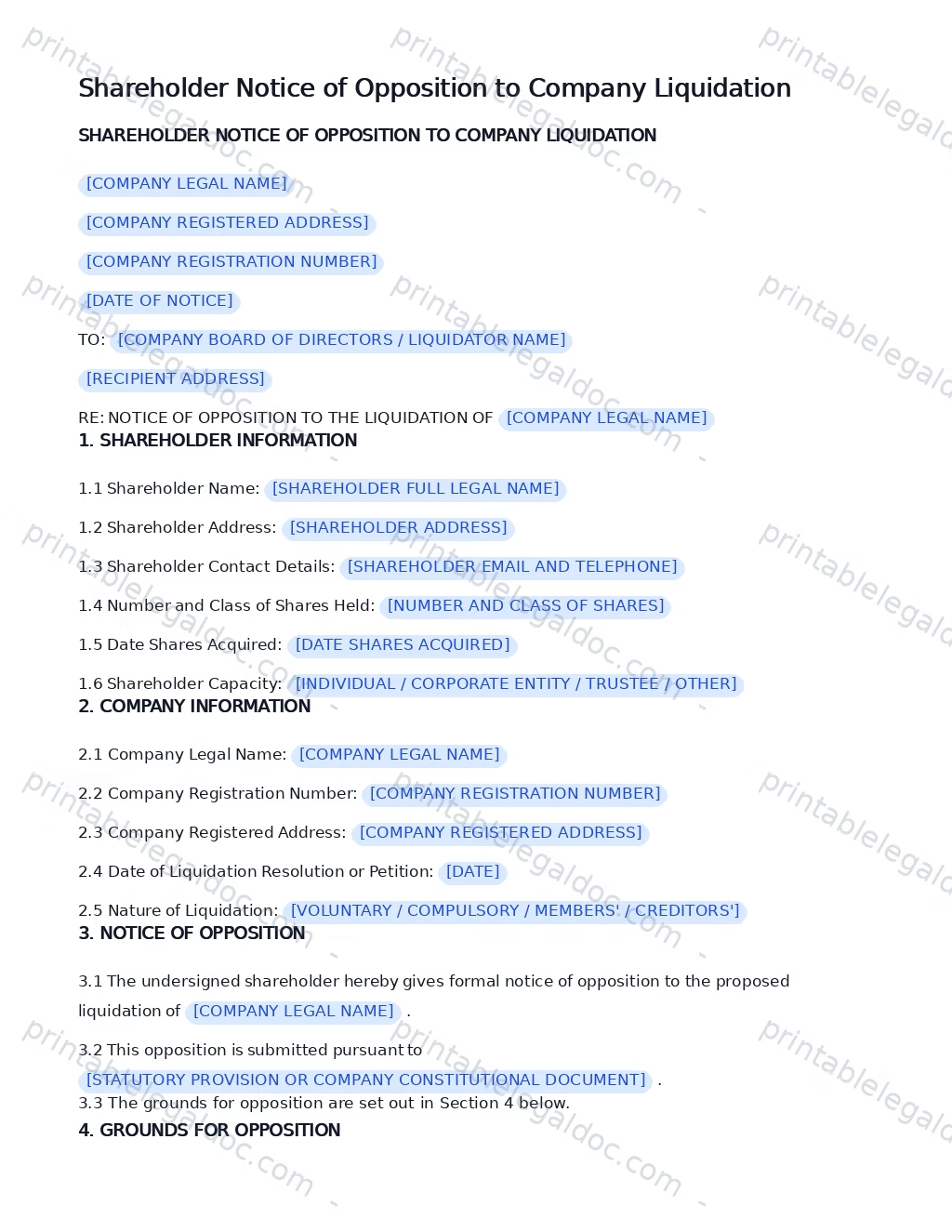
Shareholder Notice of Opposition to Company Liquidation
A shareholder can formally oppose a company liquidation. This notice gives that shareholder a clear voice. It tells the liquidator and the court about the objection. The document sets out the grounds for opposition. It also states the shareholder's interest in the company. Filing this notice protects your rights during winding up. The template covers key details in a simple format. You fill in names, dates, and reasons for objection. Then you submit it to the right party. Use this notice early. Delay can weaken your position. The template saves time and reduces errors. It works for small claims and larger disputes alike.
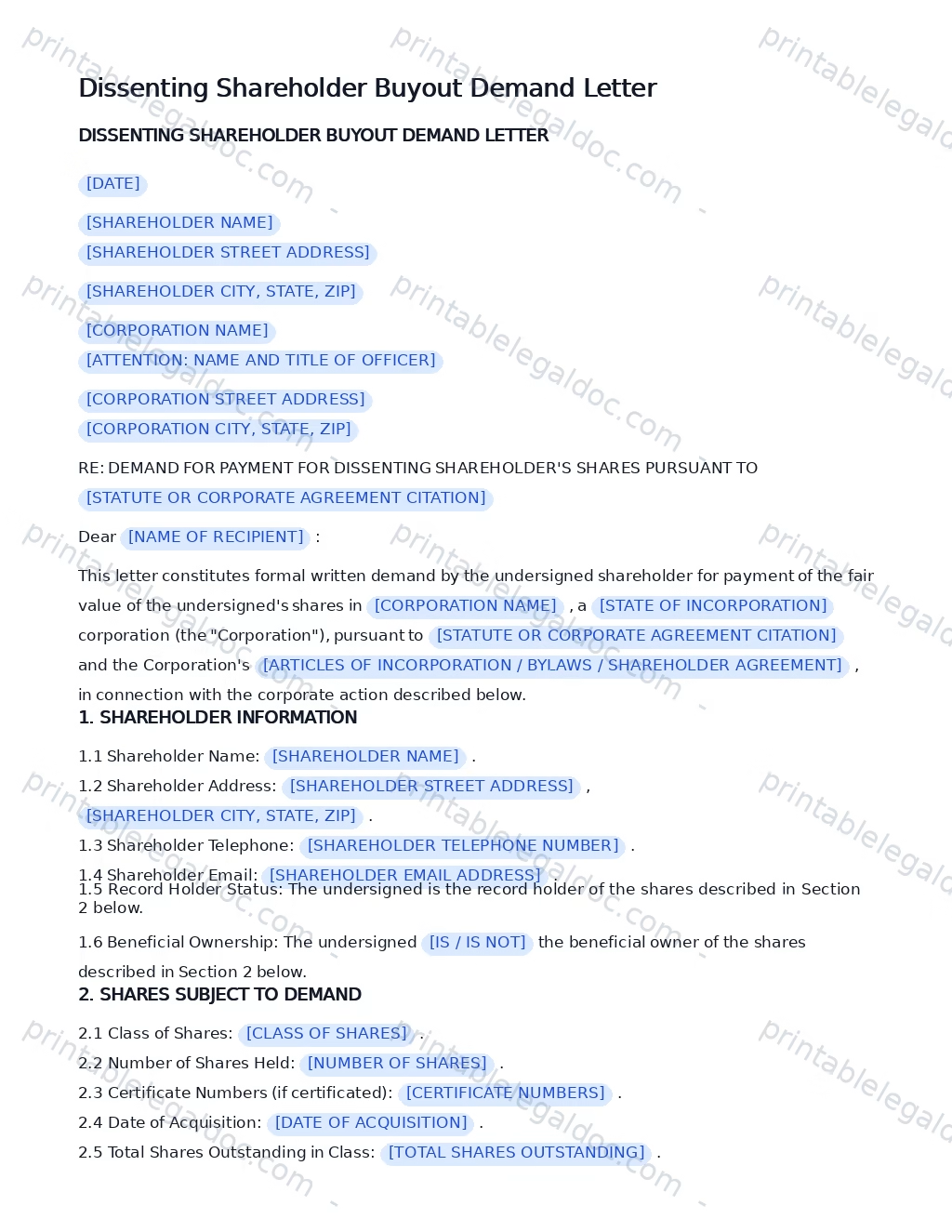
Dissenting Shareholder Buyout Demand Letter
A dissenting shareholder buyout demand letter protects your rights when you disagree with a major corporate decision. This template gives you a clear structure to state your objection and request fair payment for your shares. You get ready language for key sections. That includes your share details, the action you oppose, and your valuation request. Skip the guesswork. Follow a proven format that courts and companies recognize. The letter helps you act fast and stay within legal deadlines. Use it to open a formal negotiation from a position of strength.
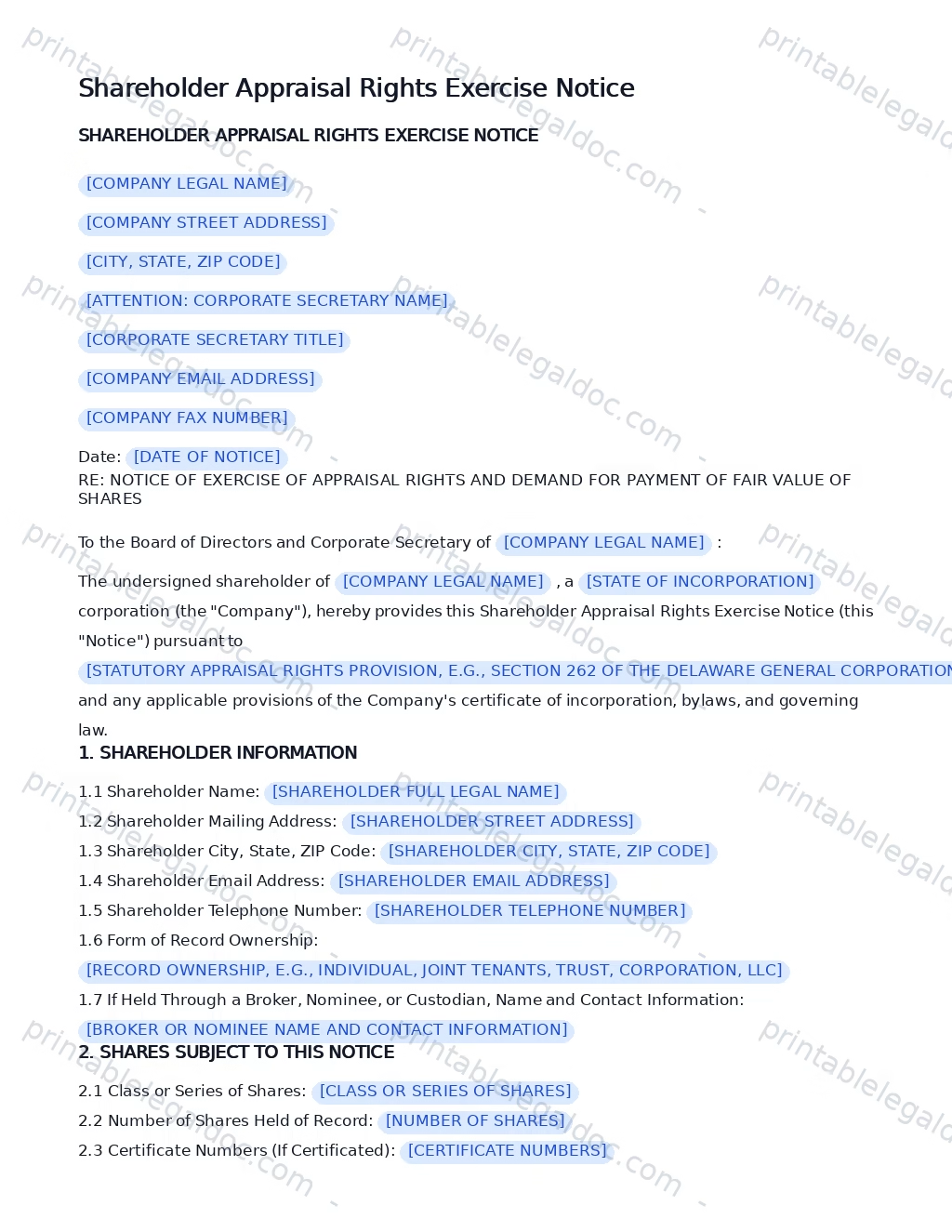
Shareholder Appraisal Rights Exercise Notice
A shareholder appraisal rights exercise notice is a formal document. It lets a dissenting shareholder demand fair value for their shares after a merger or similar corporate action. The notice states the shareholder's intent to exercise appraisal rights. It identifies the company, the shares held, and the transaction in question. Clear language matters here. Courts and companies expect precise details. Our template gives you a ready structure for this notice. It covers the key elements you must include. Fill in your specific facts. Then send it to the company within the required deadline. This simple step protects your right to challenge the offered price.
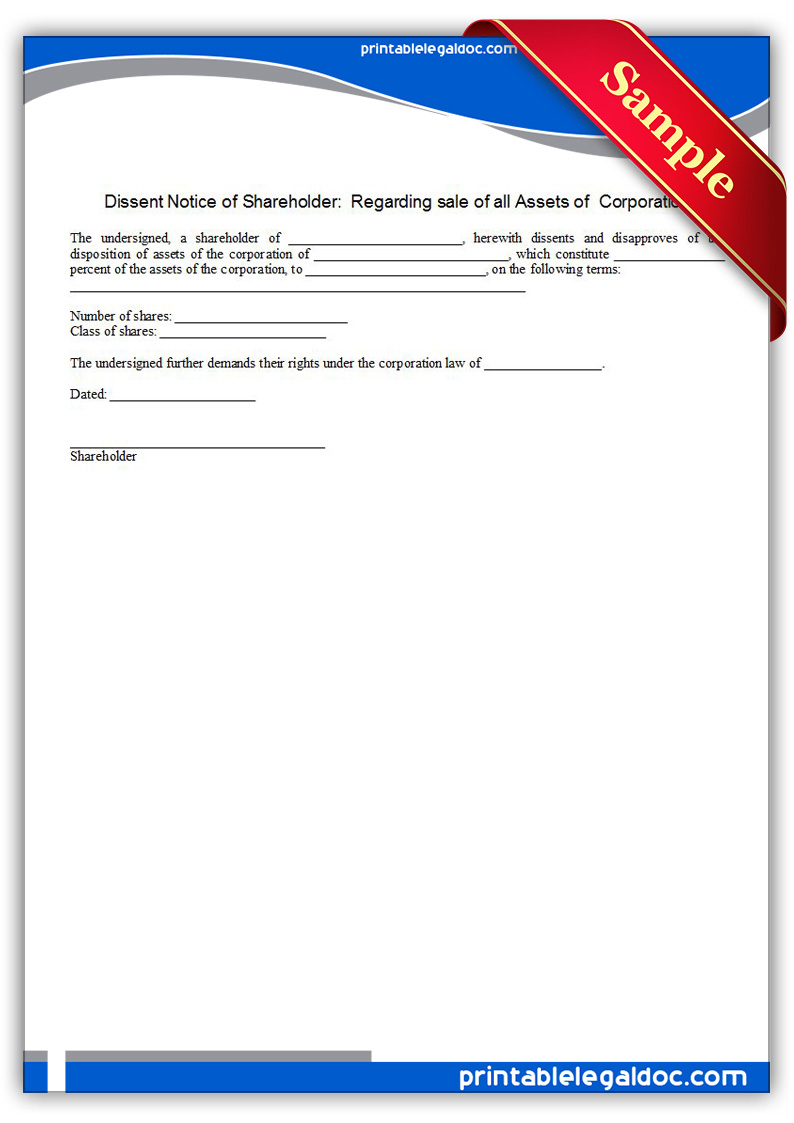
Dissent Notice Of Shareholder Regarding Sale Of All Assets
Dissent Notice of Shareholder: Regarding sale of all Assets of Corporation
The undersigned, a shareholder of _________________________, herewith dissents and disapproves of the disposition of assets of the corporation of ____________________________, which constitute ________________ percent of the assets of the corporation, to __________________________, on the following terms:
__________________________________________________________________Number of shares: _________________________
Class of shares: ________________________The undersigned further demands their rights under the corporation law of _________________.
Dated: _____________________
_____________________________________
ShareholderDissent Notice of Shareholder: Regarding Sale of all Assets of Corporation
Review ListThis review list is provided to inform you about this document in question and assist you in its preparation. This Dissent form can be adapted to a number of different issues relating to stockholder dissent. It can be most effectively used in small private companies with a few shareholders. You can add to the number of shareholders in providing your protest. This formal approach can often lead to a negotiated settlement.
1. Keep a copy of the signed letter.
Frequently Asked Questions
What is a dissent notice of shareholder regarding sale of all assets?
A dissent notice of shareholder regarding sale of all assets is a formal document used by a shareholder to express disapproval of a corporation's disposition of assets. It is typically employed when a corporation sells a significant portion of its assets, and the shareholder wishes to dissent from that decision. The notice demands the shareholder's rights under the applicable corporation law.
When should a shareholder use a dissent notice for the sale of all assets?
A shareholder should use a dissent notice when they disapprove of the disposition of corporate assets that constitute a significant percentage of the corporation's total assets. This form is most effective in small private companies with a few shareholders. It allows the shareholder to formally protest the sale and demand their rights under corporation law.
What information is required in a dissent notice of shareholder regarding sale of all assets?
The notice requires the name of the corporation, the name of the shareholder, the percentage of assets being disposed of, the name of the party acquiring the assets, and the terms of the disposition. It also requires the number and class of shares held by the dissenting shareholder, the date, and a reference to the corporation law under which rights are demanded. The shareholder must sign the document.
Can a dissent notice be used for issues other than the sale of all assets?
Yes, this dissent form can be adapted to a number of different issues relating to stockholder dissent. While it is specifically titled for the sale of all assets, the structure allows for modification to address other matters. It is most effectively used in small private companies with a few shareholders.
How can multiple shareholders file a dissent notice together?
You can add to the number of shareholders in providing your protest. This means that multiple shareholders can join in the dissent by including their names and share details in the notice or by filing separate notices. The form can be adapted to accommodate additional shareholders.
What rights does a shareholder have after filing a dissent notice?
By filing a dissent notice, the shareholder demands their rights under the corporation law of the specified jurisdiction. These rights typically include the right to receive fair value for their shares if the sale is consummated. The exact rights depend on the applicable corporation law.
Is a dissent notice legally binding?
A dissent notice is a formal legal document that asserts the shareholder's dissent and demands their statutory rights. Its legal effect depends on compliance with the relevant corporation law and the corporation's governing documents. It is not a court order but can be a precursor to legal action to enforce dissenters' rights.
What is the purpose of the review list provided with the dissent notice?
The review list is provided to inform you about the document and assist in its preparation. It offers guidance on how to complete and use the dissent notice effectively. It helps ensure that the shareholder understands the form's purpose and application.
Can this dissent notice be used in any state?
The form references the corporation law of a specific state, which must be filled in. Therefore, it can be adapted for use in any state by specifying the applicable corporation law. However, the rights and procedures for shareholder dissent vary by state, so it is important to comply with local laws.
What happens if a shareholder does not file a dissent notice?
If a shareholder does not file a dissent notice, they may be deemed to have consented to the sale or disposition of assets. They could lose their right to dissent and demand fair value for their shares under corporation law. Therefore, timely filing is crucial to preserve dissenters' rights.




Love your printable legal forms!
Its so awsome.Thank you for sharing your free printable templates.
Ah, very nice! I like your printable template.
Luv this and luv your blank word template! Thank you!
How do you print them? I can’t even figure out to do that???
thx for sharing your sample form!I love it so much !!!!!
I discove
These are so sweet. I love your printable form.
So professionally written!!! Many thanks!
This is soo brilliant form :3 Oh yes..
I discovered you today. You do things fantastic. BRAVO