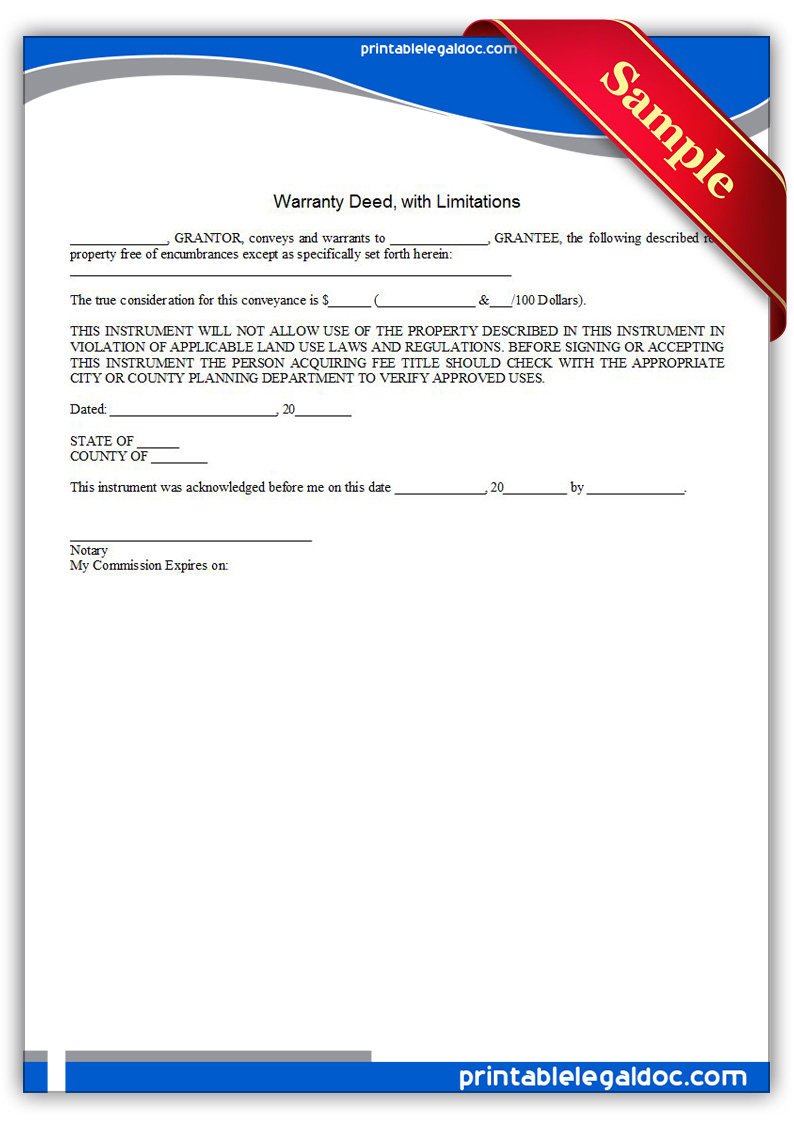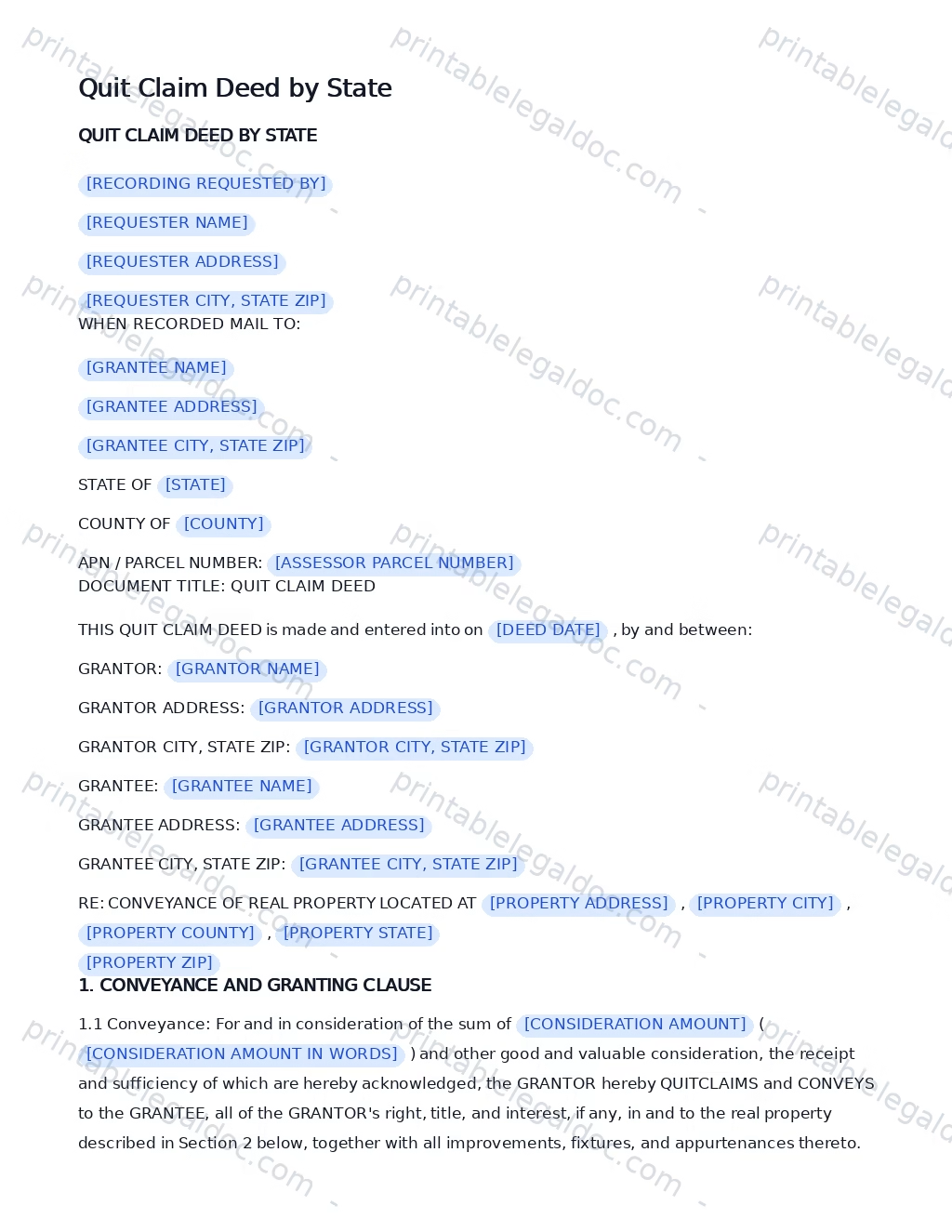
Quit Claim Deed by State
A quit claim deed transfers property rights from one person to another without any warranty. Each state sets its own rules for this document. Some states require specific wording. Others demand witness signatures or notary stamps. Our template covers the key elements every state expects. You get clear fields for the grantor, grantee, and legal property description. The form also includes space for signing and notarization. Rules vary by state, so check your local requirements before filing. This template gives you a solid starting point. It saves time and reduces errors. Record the deed with your county office after signing. That step makes the transfer official.

Quit Claim Deed Between Family Members
A quit claim deed between family members transfers property without a formal sale. It offers a simple way to move ownership from one relative to another. The form needs clear details. List the grantor and grantee by full legal name. Describe the property exactly as recorded. Add the county and state where the property sits. The grantor signs the document. A notary must witness the signature. Some states require extra witnesses or filing steps. The deed does not guarantee a clean title. That fact matters when family trust is high. Record the signed deed with the local land office. This step protects everyone involved. Keep copies for your records.
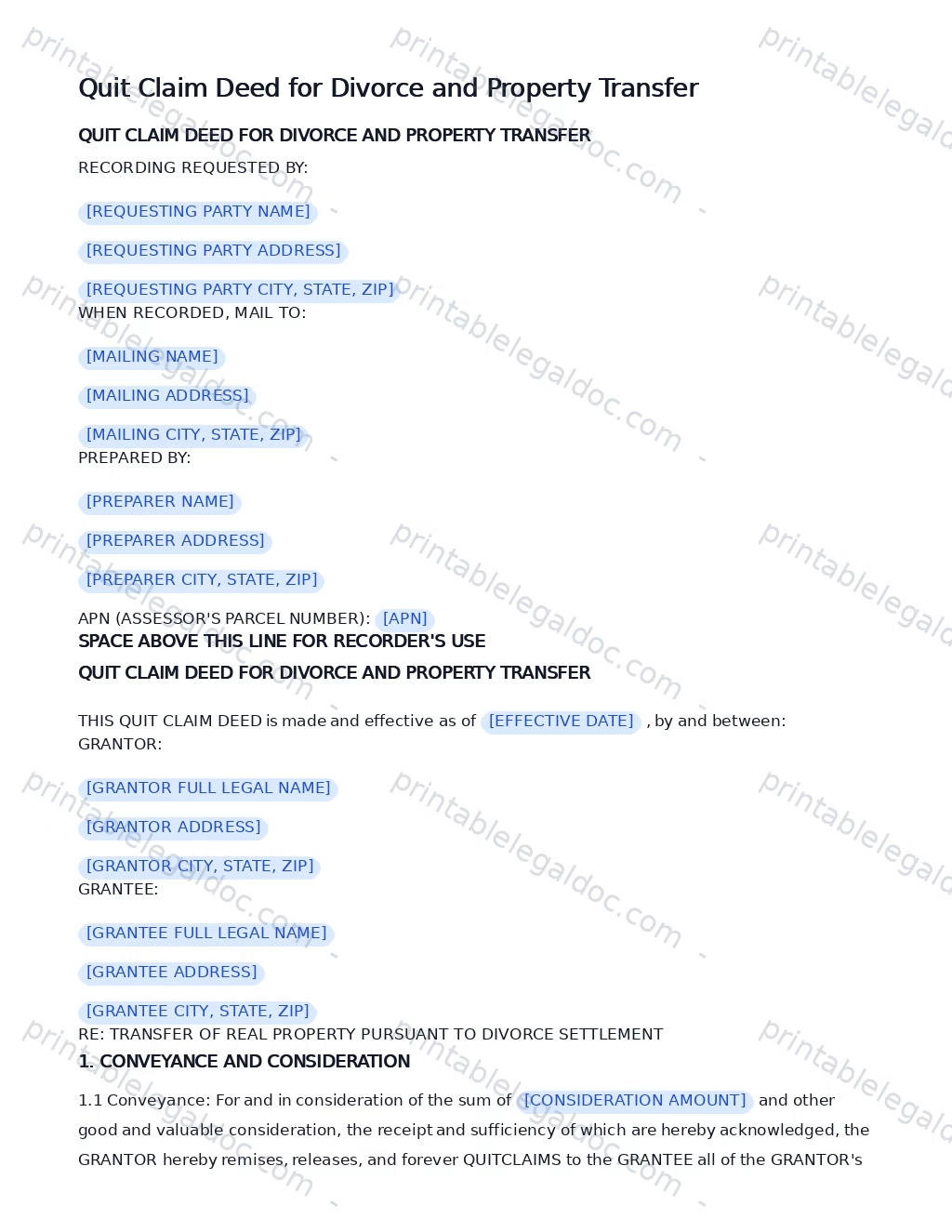
Quit Claim Deed for Divorce and Property Transfer
A quit claim deed for divorce transfers property from one spouse to the other. This simple document moves ownership without a full title search. Courts often approve this method for a clean split. Our template makes the process clear. Fill in names, property details, and sign before a notary. The deed protects both parties after the marriage ends. Use it when one spouse keeps the home. The other spouse gives up all claims. This step avoids future disputes over the property. Record the signed deed with your county office. That creates a public record of the transfer. Get the paperwork done right and move forward with confidence.

Quit Claim Deed for Adding a Spouse to a Property Title
Adding a spouse to your property title strengthens your shared future. A quit claim deed makes this transfer simple and affordable. This legal document moves property interest from one person to another without a full title search. Our template guides you through each step. Fill in names, property details, and sign before a notary. Record the deed with your county office to make it official. Lenders may need notice if a mortgage exists. Some states offer spousal rights that affect the process. Review local rules before you file. This clear template saves time and legal fees. It gives couples a straightforward path to joint ownership.
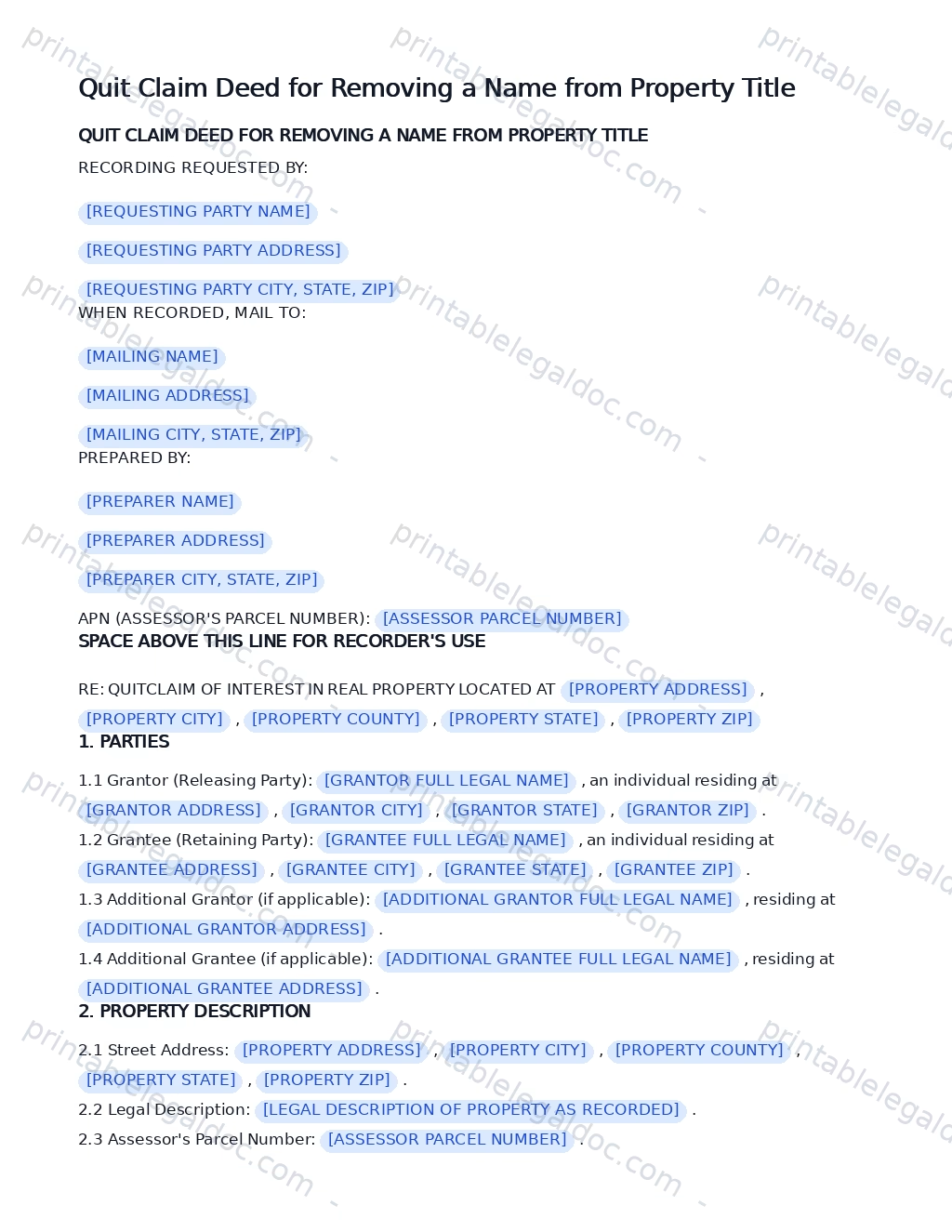
Quit Claim Deed for Removing a Name from Property Title
A quit claim deed removes a name from a property title without a full sale. One owner signs their interest over to the other. The form is short. It needs the property description, both names, and a notary. File it with the county recorder. This step makes the change official. Use this deed between family or trusted parties. It offers no warranty on the title. Get legal advice first.
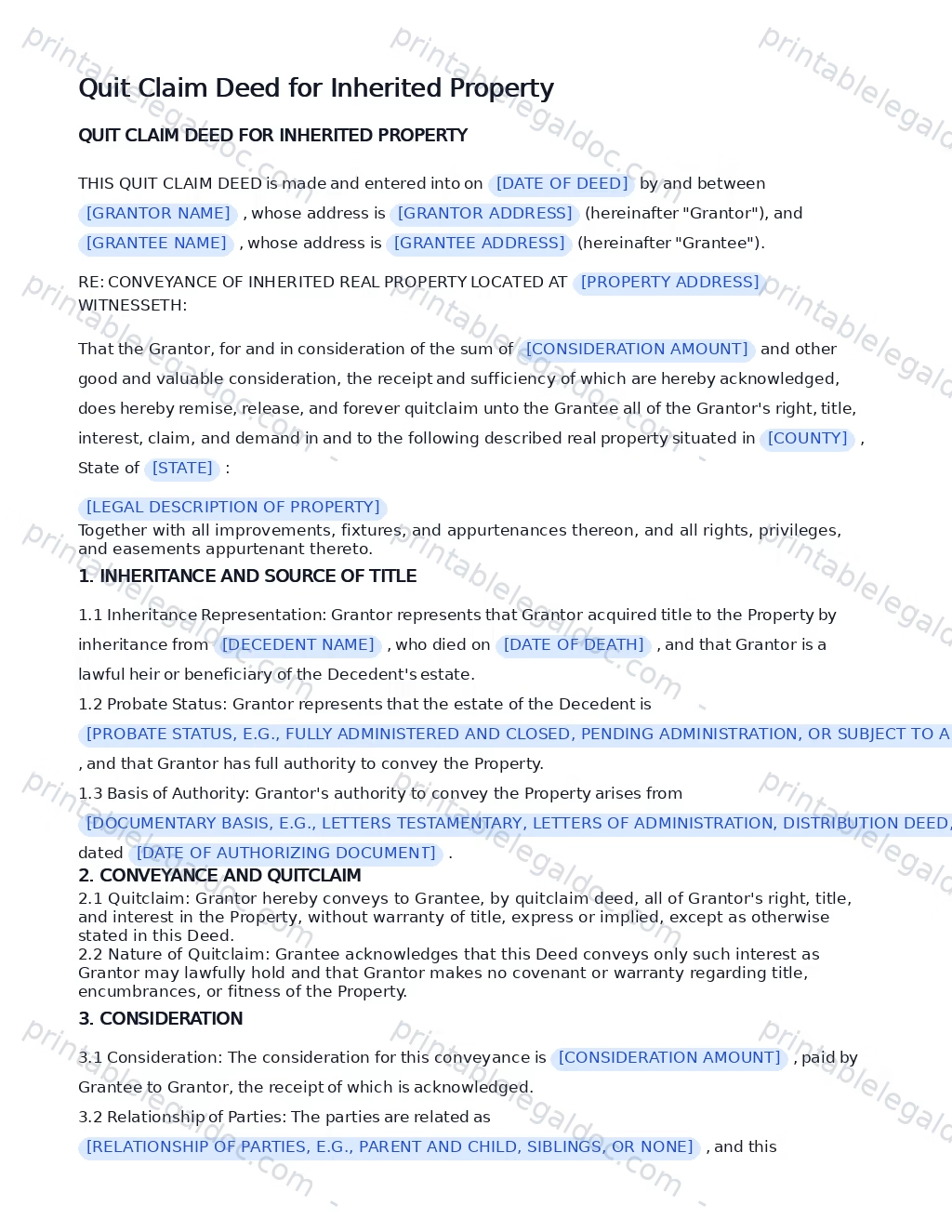
Quit Claim Deed for Inherited Property
A quit claim deed for inherited property transfers your interest to someone else. The document is simple. It carries no warranty. You sign over whatever rights you hold. The buyer takes the property as is. This tool works well for family transfers. It also suits estate settlements. The form needs the grantor name. Add the grantee name. List the property address and legal description. Include the county where records are kept. Sign before a notary. File the deed with the local recorder. The new owner then holds a clear record title. Confirm tax rules with a professional. Some states require extra forms. Check local rules first.
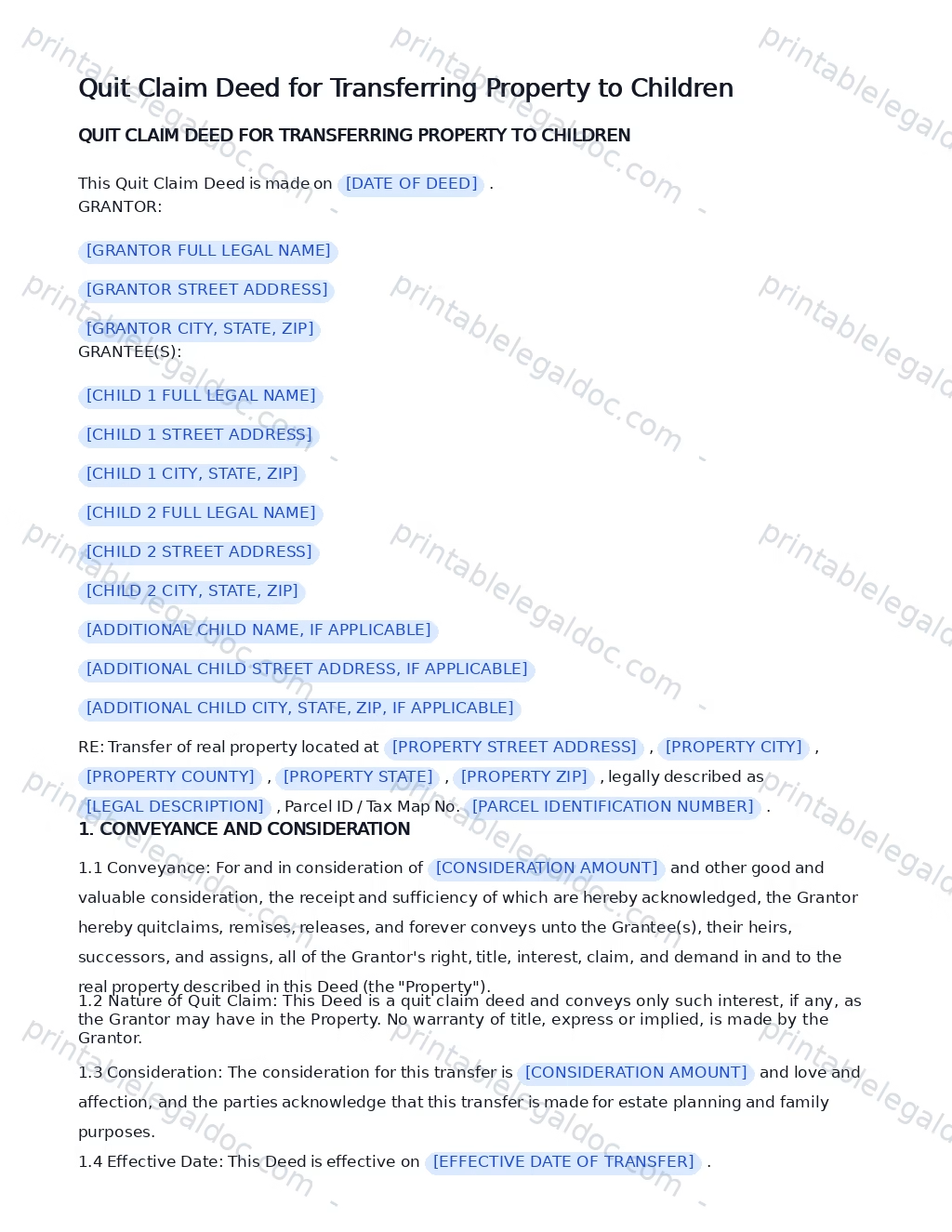
Quit Claim Deed for Transferring Property to Children
A quit claim deed lets you transfer property to your children without a formal sale. This simple document moves your ownership interest to them. It offers a fast and low cost path for family transfers. Many parents use it to pass a home or land to the next generation. The deed makes no promises about the title. It simply releases whatever claim you hold. Your children receive your share as it stands. This tool works well for estate planning and gifts. It can also simplify a transfer during life changes. Speak with a legal expert first. Rules differ by state, and small errors can cause big problems later.
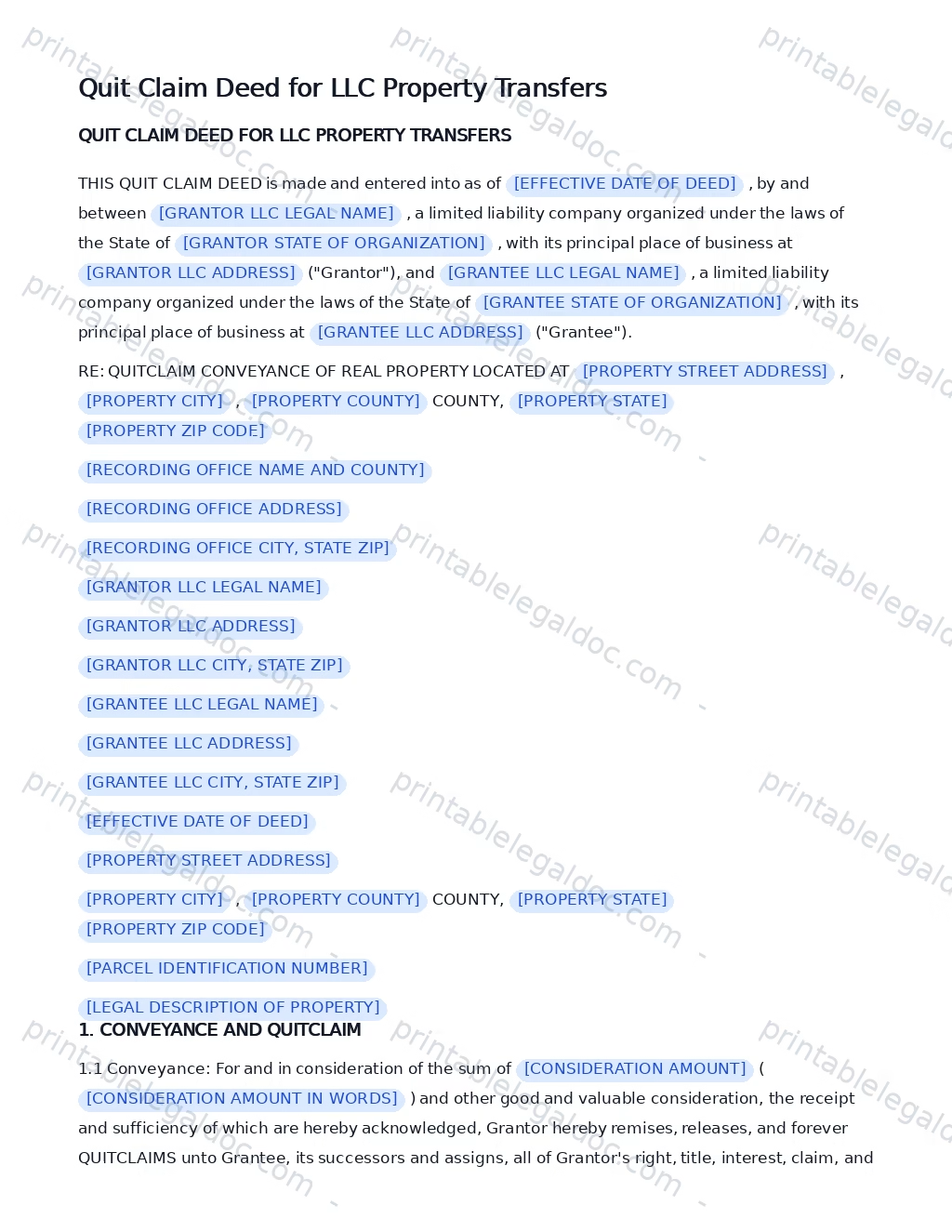
Quit Claim Deed for LLC Property Transfers
A quit claim deed for LLC property transfers moves ownership without a formal warranty. The LLC signs the deed and hands over its interest to a buyer or member. This tool suits internal shifts between partners. It also works when an entity restructures its holdings. Our template keeps the language clear and state ready. Fill in the parties, the property details, and the transfer date. Sign it before a notary. Record the deed with your county office. That step protects the chain of title. Review local rules first. Some states ask for extra forms or fees. Grab the template and finish your transfer with confidence.
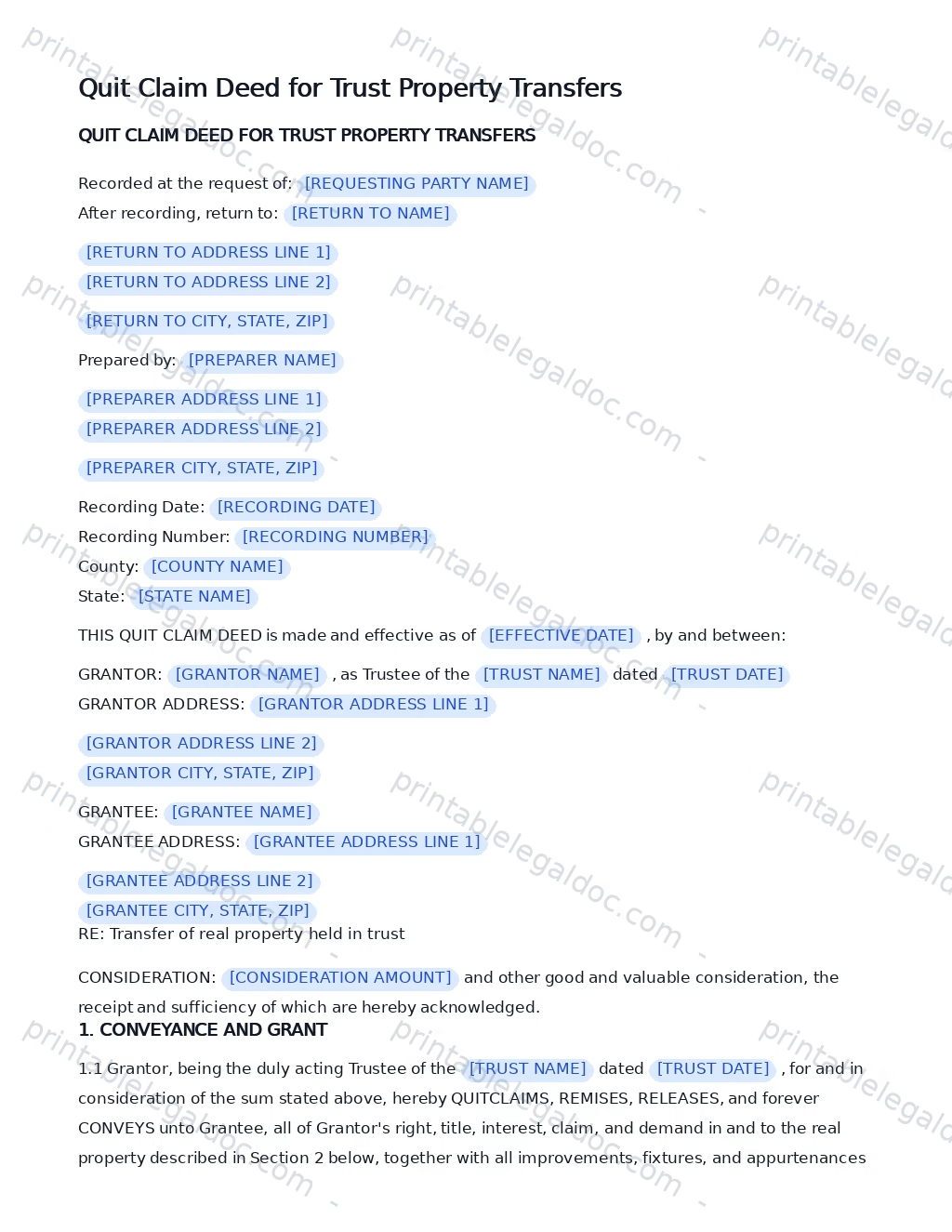
Quit Claim Deed for Trust Property Transfers
A quit claim deed for trust property transfers moves real estate into or out of a trust. The trustee signs the deed. The grantee receives whatever interest the trust holds. This document does not promise a clear title. It simply releases the trust's claim. Use it when you fund a living trust or distribute assets to beneficiaries. The form needs the trust name, trustee signature, property legal description, and county recording details. State rules vary. Some states require a trustee certificate. Record the deed with the county clerk after signing. This step keeps the transfer valid and public. Get legal advice for complex trust arrangements.

Quit Claim Deed Form with Notary and Recording Instructions
A quit claim deed form with notary and recording instructions makes property transfers simple. This template includes clear steps for signing, notarizing, and filing your document. You get a straightforward layout that covers every required field. Notary instructions guide you through proper witnessing. Recording directions explain where to submit the deed and what fees to expect. The form works for family transfers, gifts, or removing a name from a title. Each section stays short and easy to follow. Users avoid common mistakes that delay county processing. Print the form, complete it, and follow the included checklist. Your transfer moves forward without confusion or extra trips to the recorder's office.

Quit Claim Deed
Quit Claim Deed
I, ______________, of _____________, _______, the grantor, for and in consideration of one dollars ($1), receipt of which is hereby acknowledged conveys and quitclaims to ________________ of ________, ________, all interest which I (we) have, if any, in the following described real estate:
______________________________________________________________
______________________________________________Dated: ______________________, 20____________
Witnesses:
______________________________________________
Name:______________________________________________
Name:Before me, the undersigned notary, ______________ acknowledged before me that ______________ executed this warranty deed as their free act and deed, and that the witnesses stated above witnessed at the request of ______________ the execution of this deed intending to be bound thereby.
_______________________________________________
Notary
My Commission Expires on:Quit Claim Deed
Review ListThis review list is provided to inform you about this document in question and assist you in its preparation. The Quit Claim Deed should be notarized and filed with the appropriate local registry of deeds.
1. Make multiple copies. Give one to the signatory and the recipient should keep one with the appropriate file after recording it with the local registry of deeds.
Frequently Asked Questions
What is a quit claim deed?
A quit claim deed is a legal document in which the grantor conveys and quitclaims to the grantee all interest they have, if any, in a described piece of real estate. The document includes a consideration of one dollar and requires the grantor's acknowledgment before a notary. It is used to transfer whatever interest the grantor may hold, without any warranty of title.
How does a quit claim deed differ from a warranty deed?
A quit claim deed transfers only the interest the grantor has, if any, in the property, whereas a warranty deed typically includes guarantees about the title. The article notes that the notary acknowledgment in the quit claim deed form mistakenly refers to a warranty deed, but the document itself is a quit claim deed. This distinction means a quit claim deed offers no warranties to the grantee.
Does a quit claim deed need to be notarized?
Yes, the quit claim deed should be notarized. The document includes a notary acknowledgment section where the grantor acknowledges executing the deed as their free act and deed. The review list explicitly states that the Quit Claim Deed should be notarized and filed with the appropriate local registry of deeds.
Where should I file a quit claim deed after it is signed?
After signing and notarization, the quit claim deed should be filed with the appropriate local registry of deeds. The review list provided with the document advises filing with the local registry. This step ensures the transfer is recorded in public records.
What does the grantor convey in a quit claim deed?
The grantor conveys and quitclaims to the grantee all interest which the grantor has, if any, in the described real estate. The deed does not guarantee that the grantor actually owns any interest. The phrase 'if any' indicates that the transfer is of whatever interest exists, without warranty.
What is the consideration for a quit claim deed?
The quit claim deed form in the article states a consideration of one dollar ($1), receipt of which is acknowledged. This nominal amount is common in quit claim deeds, though the actual consideration may be different. The document itself specifies one dollar as the consideration.
Who are the parties involved in a quit claim deed?
The parties are the grantor, who conveys the interest, and the grantee, who receives it. The grantor is identified by name and location, and the grantee is similarly identified. Witnesses and a notary also sign the document to acknowledge the execution.
Are witnesses required for a quit claim deed?
The quit claim deed form includes spaces for witnesses to sign. The notary acknowledgment states that the witnesses witnessed the execution of the deed at the request of the grantor. Therefore, the form contemplates the presence of witnesses, though requirements may vary by jurisdiction.
What should I do before using a quit claim deed?
The article provides a review list to inform you about the document and assist in its preparation. It advises that the quit claim deed should be notarized and filed with the appropriate local registry of deeds. It also suggests making multiple copies, as indicated by the truncated instruction 'Make multiple co'.
Can a quit claim deed transfer property if the grantor has no ownership interest?
A quit claim deed conveys all interest the grantor has, if any, in the property. If the grantor has no interest, the deed transfers nothing. The document makes no guarantees about the grantor's ownership, so the grantee receives whatever interest exists, which may be none.