SUBROGATION AGREEMENT
Subrogation, in simple definition, is the substitution of one person or group by another in reverence of an insurance claim, together with the recovery of any associated rights whereas subrogation, in the insurance part, occurs when the party at-fault has been taken into account by the other party (insured) due to an accident payment and the insurance company takes the responsibility on the financial aspects of the insured. It is a legal right taken by most insurance companies, which is to officially pursue a third party that brings about the loss of insurance to the policyholder. Subrogation mostly arises in three-party situations and there it varies from a jurisdiction to another depending on the situation on which the subrogation will be available.
In effect of subrogation, the subrogated party is permitted to implement the other party’s rights. Once the equity is recognized, the court may prompt the subrogation resolution by charges or other possible legal actions. To add on, not all claims may be subrogated.
A subrogation agreement or waiver is an arrangement between two parties in which one party agrees to put aside subrogation rights against another in cases of accident or loss. The intent of the waiver is to prevent one party’s insurer from pursuing subrogation against the other party. If you dislike complexities and time-consuming processes, this agreement could be beneficial on the parties involved for this agreement may just forbid you onto engaging in lawsuits and insurance claims. You may also want to check your knowledge about what you insurance policy says for not all policies will allow you to waive the subrogation rights of your insurance company.
Insurance Subrogation Agreement Template
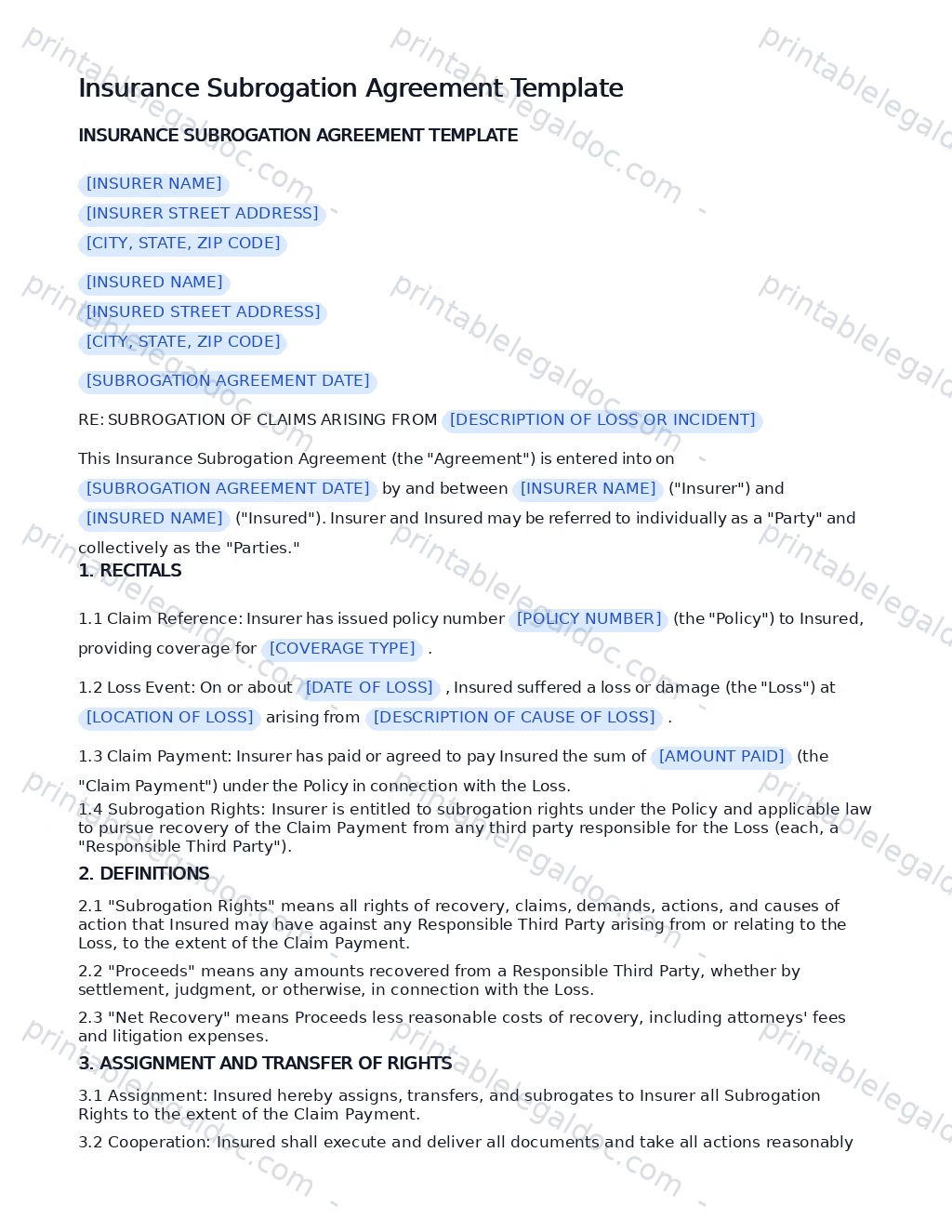
An insurance subrogation agreement template gives you a ready-made document for transferring recovery rights after a claim. It spells out who pays, who pursues the at-fault party, and how funds get shared. The form covers key terms like waiver of rights, claim assignment, and reimbursement limits. You can adapt it for auto, property, or liability cases. Clear language keeps both parties on the same page and reduces disputes later. Grab the template, fill in the blanks, and protect your recovery options.
Auto Accident Subrogation Agreement Form
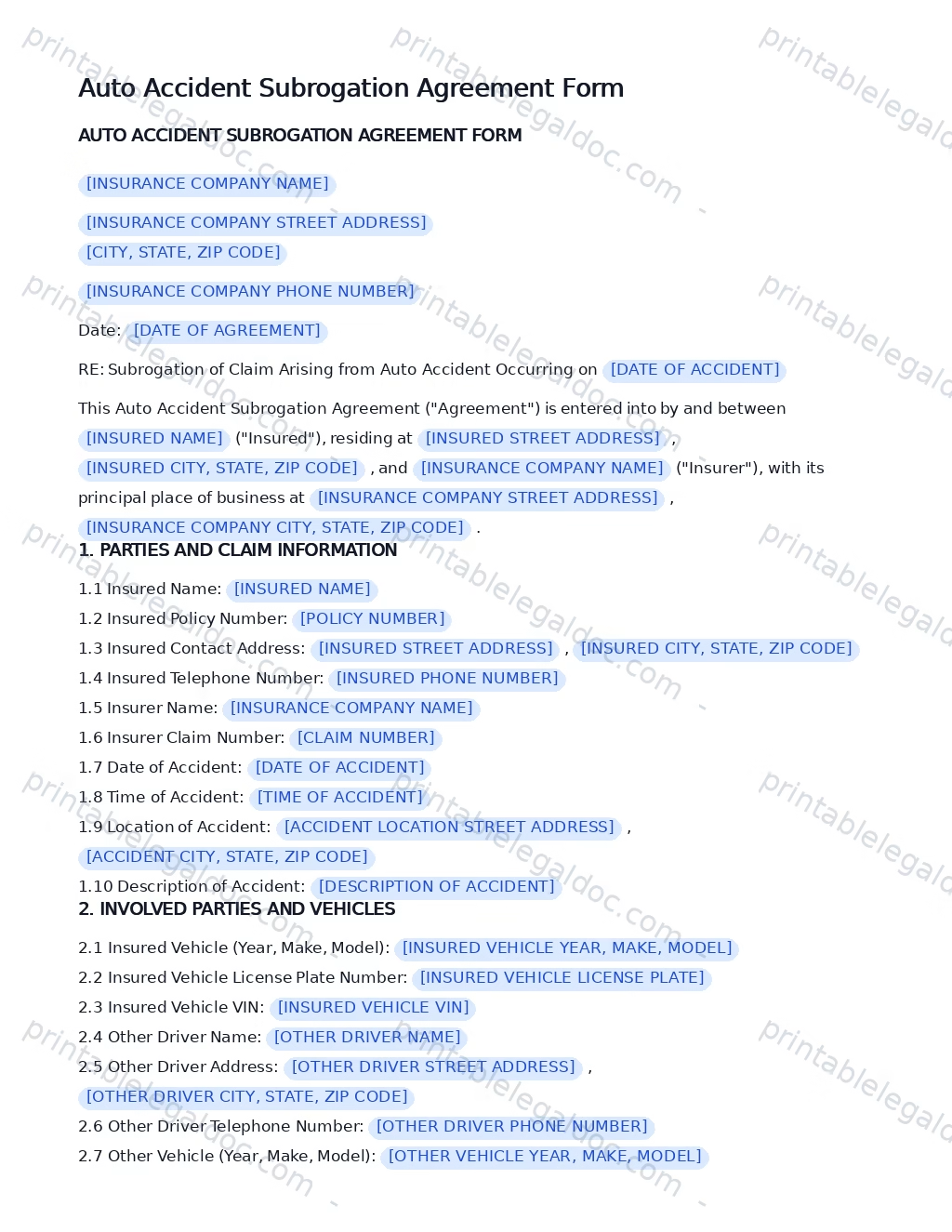
An auto accident subrogation agreement form helps insurance companies recover money after a crash. One insurer pays your claim. Then it seeks repayment from the at-fault driver's insurer. This form puts that process in writing. It confirms who owes what. It protects both parties. You get clear terms. The other side gets a fair record. No confusion. No surprise bills later. Use this template to document the transfer of claim rights. It works for small fender benders and larger collision claims. Fill in the details. Sign it. Keep a copy for your files. Simple paperwork. Strong protection.
Workers’ Compensation Subrogation Agreement
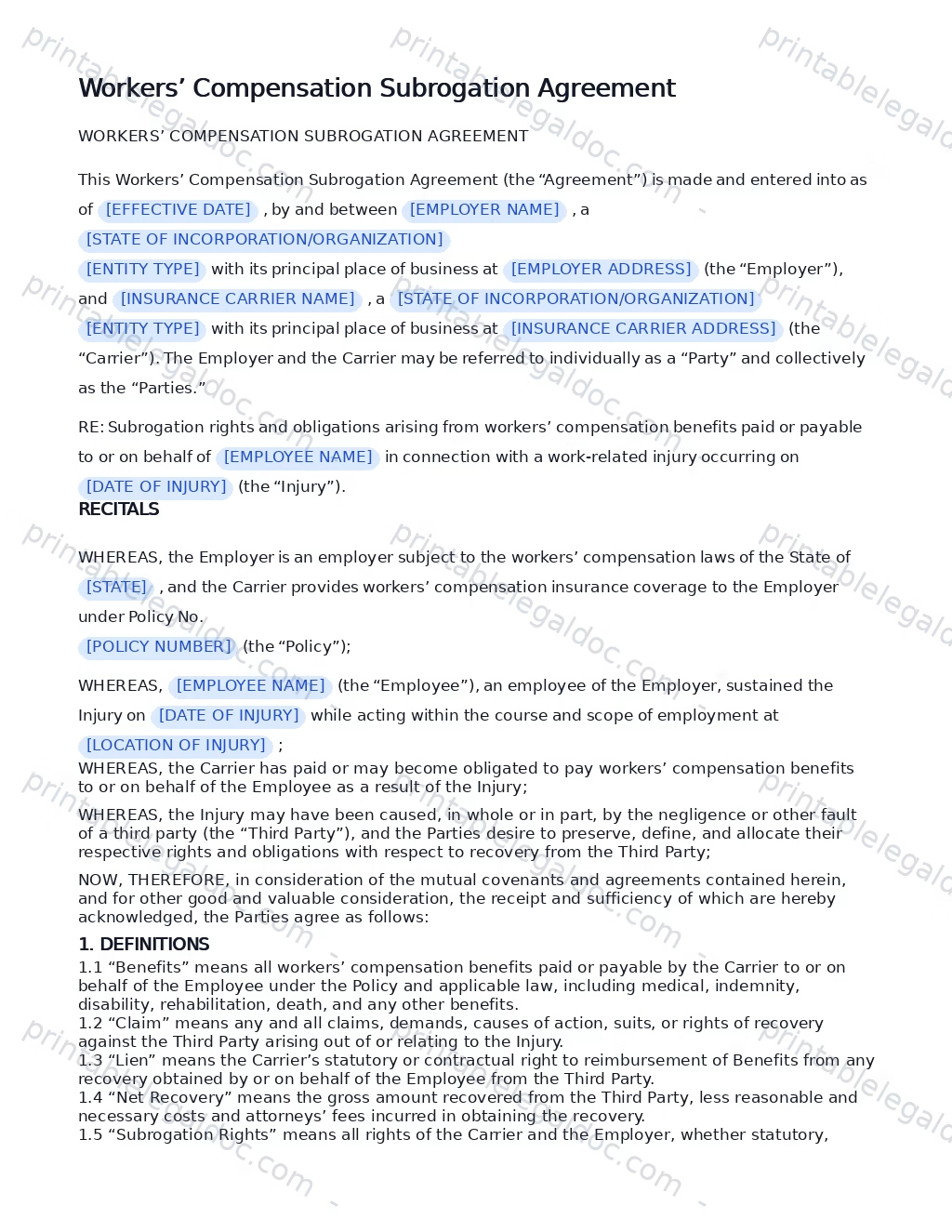
A workers’ compensation subrogation agreement lets an insurer recover costs after a third party causes a workplace injury. The employer pays benefits first. Then the insurer seeks repayment from the responsible party. This agreement sets the rules for that recovery. It defines who pays, how much, and when. Clear terms protect both the employer and the carrier. They also reduce delays in claims handling. A solid agreement spells out lien rights and settlement approval steps. It keeps everyone on the same page. Workers get their benefits without waiting for a lawsuit. Employers avoid double payment. Insurers recover what they are owed. That balance makes the process fair and predictable for all sides.
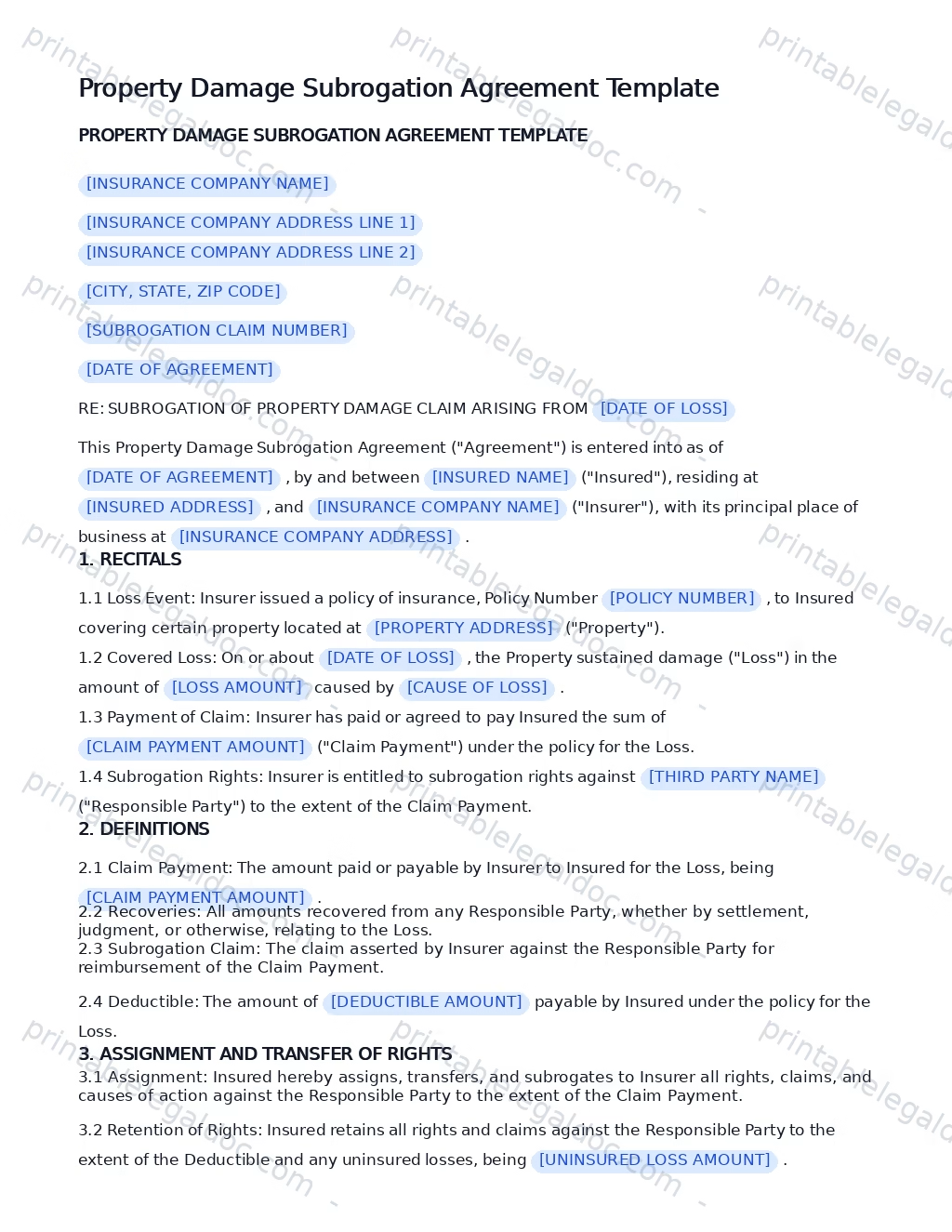
Property Damage Subrogation Agreement Template
A property damage subrogation agreement template helps you recover costs after an insurance payout. The document transfers recovery rights from the insured party to the insurer. It outlines clear terms for pursuing a responsible third party. You get a ready structure for claims, liability, and reimbursement. The template saves time and reduces legal drafting errors. Small businesses and landlords use it to protect their interests. Every clause stays simple and easy to edit. Fill in the blanks, add party details, and sign. This tool keeps your recovery process organized and fair.
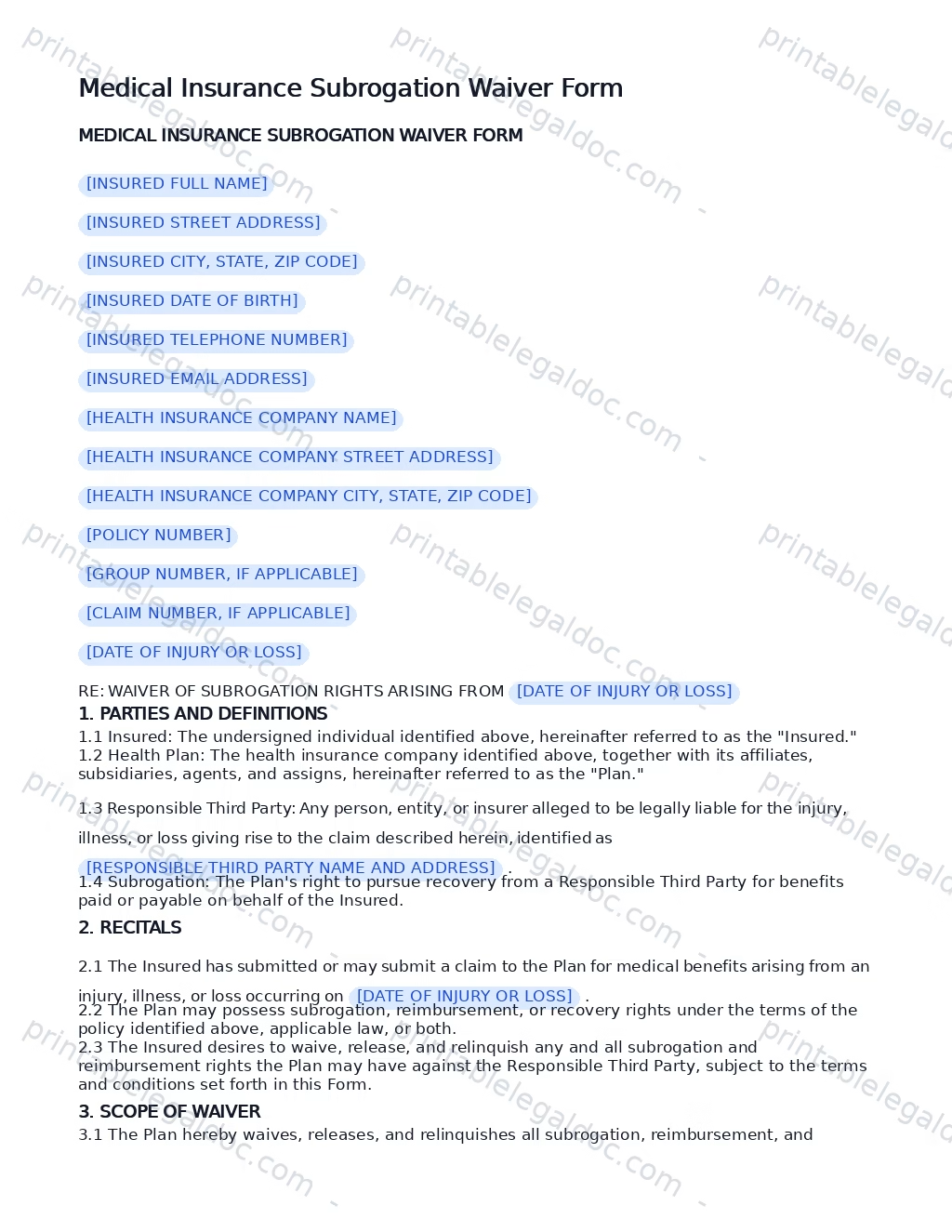
Medical Insurance Subrogation Waiver Form
A Medical Insurance Subrogation Waiver Form lets a patient give up the insurer's right to recover costs from a third party. Use this simple template when a quick settlement matters more than a claim. The form records the patient's name, policy number, and the incident details. It states clearly that the insurer will not seek repayment later. Both sides sign and date the document. Keep one copy for your files and give one to the policyholder. This short waiver protects everyone from surprise bills and drawn out disputes. It saves time and keeps the process fair.
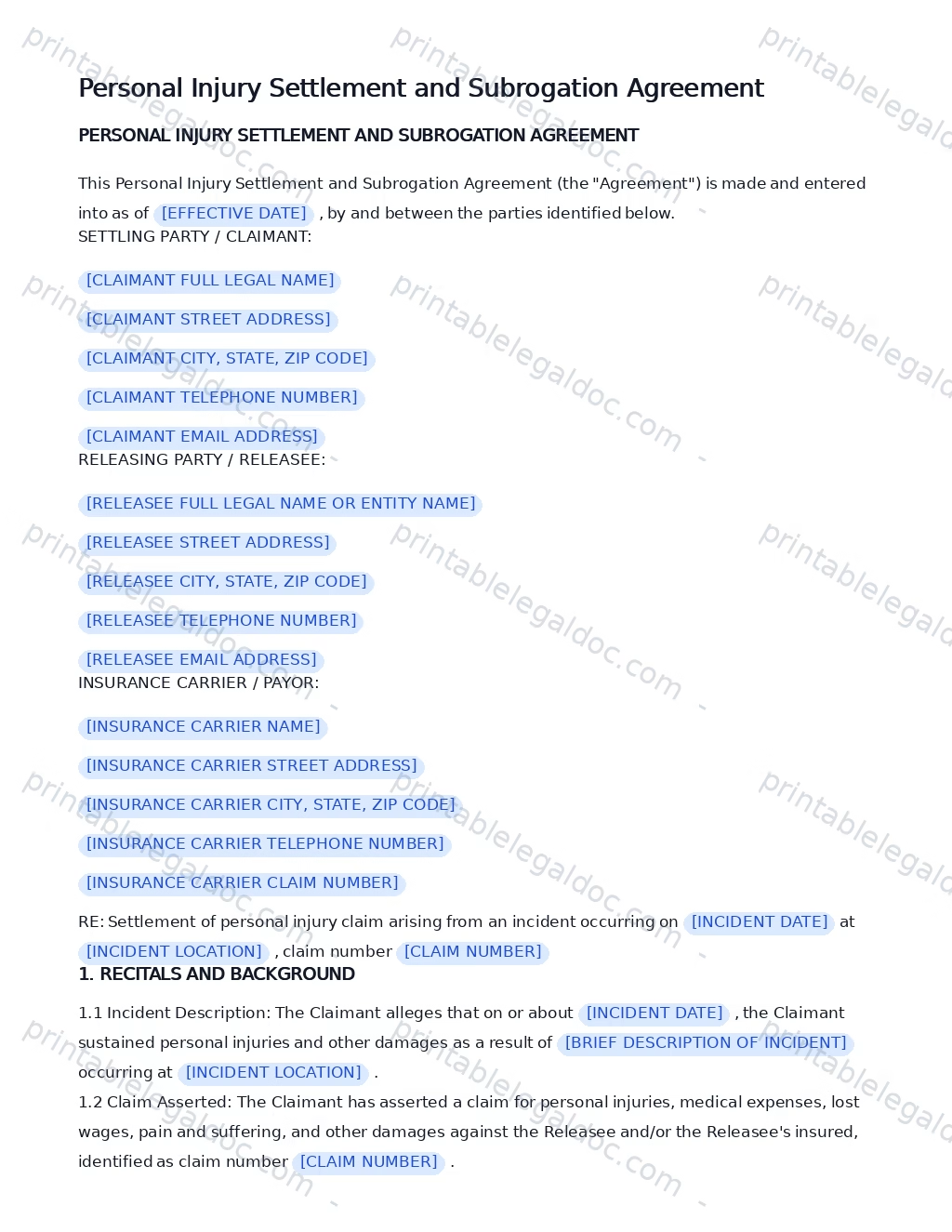
Personal Injury Settlement and Subrogation Agreement
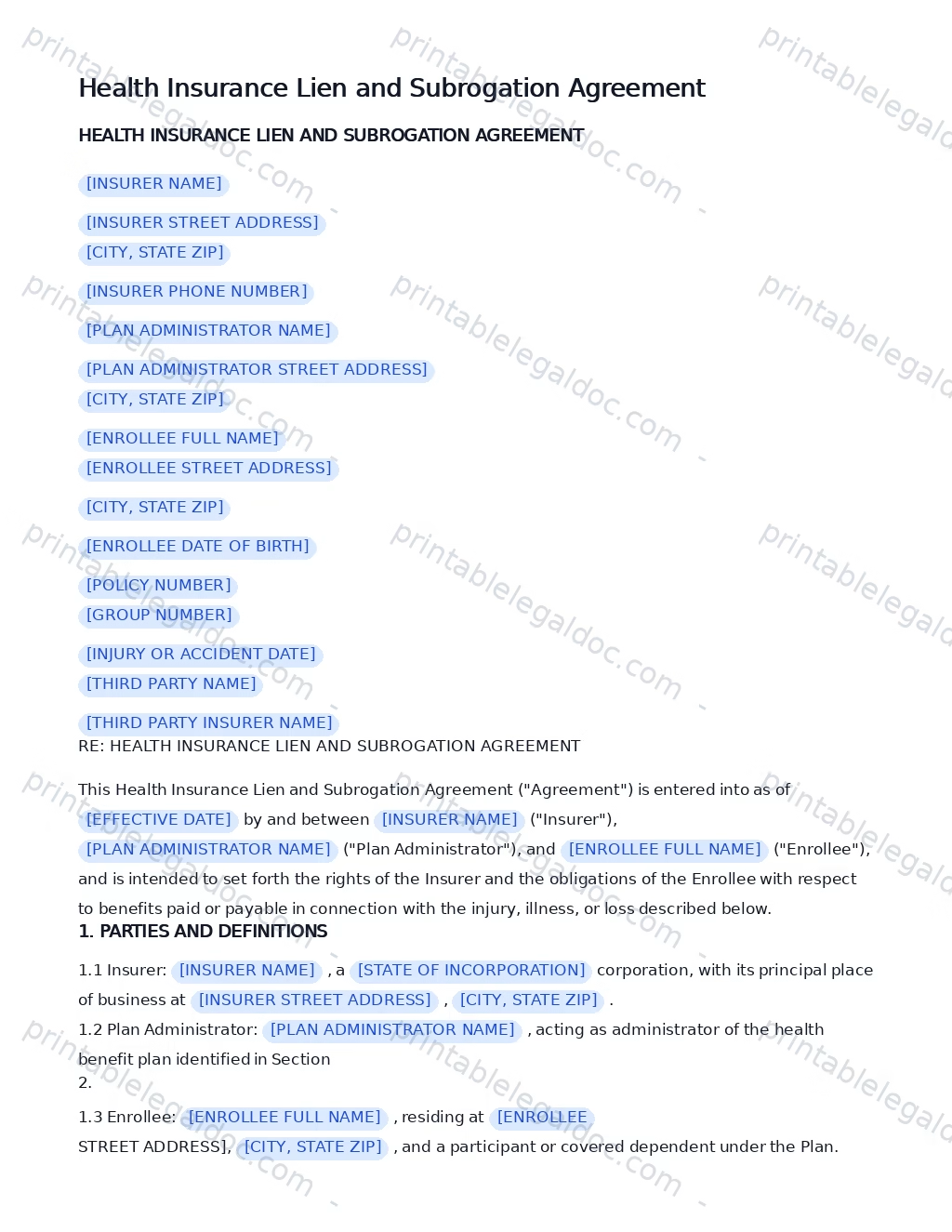
Health Insurance Lien and Subrogation Agreement
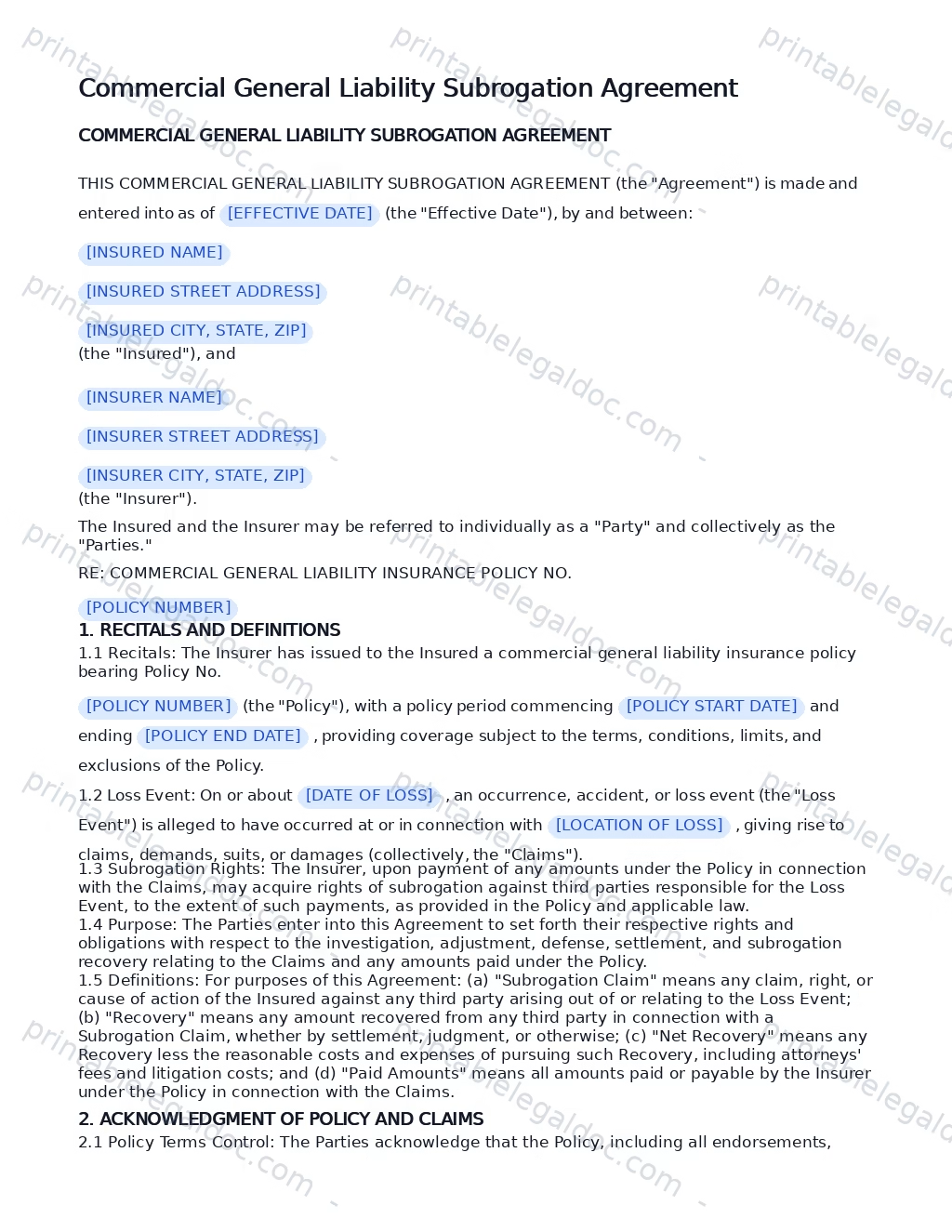
Commercial General Liability Subrogation Agreement
A commercial general liability subrogation agreement transfers recovery rights after an insurer pays a claim. This template sets clear terms for all parties. It defines who can pursue a third party at fault. It also explains how recovered funds get shared. Each clause protects the insurer's right to seek reimbursement. The document covers notice duties and cooperation rules. It spells out what happens when multiple policies apply. Clear language keeps disputes to a minimum. Small businesses and carriers both benefit from written terms. The template saves time on legal drafting. It supports faster claim resolution and fair cost recovery. Use it to document subrogation rights with confidence.
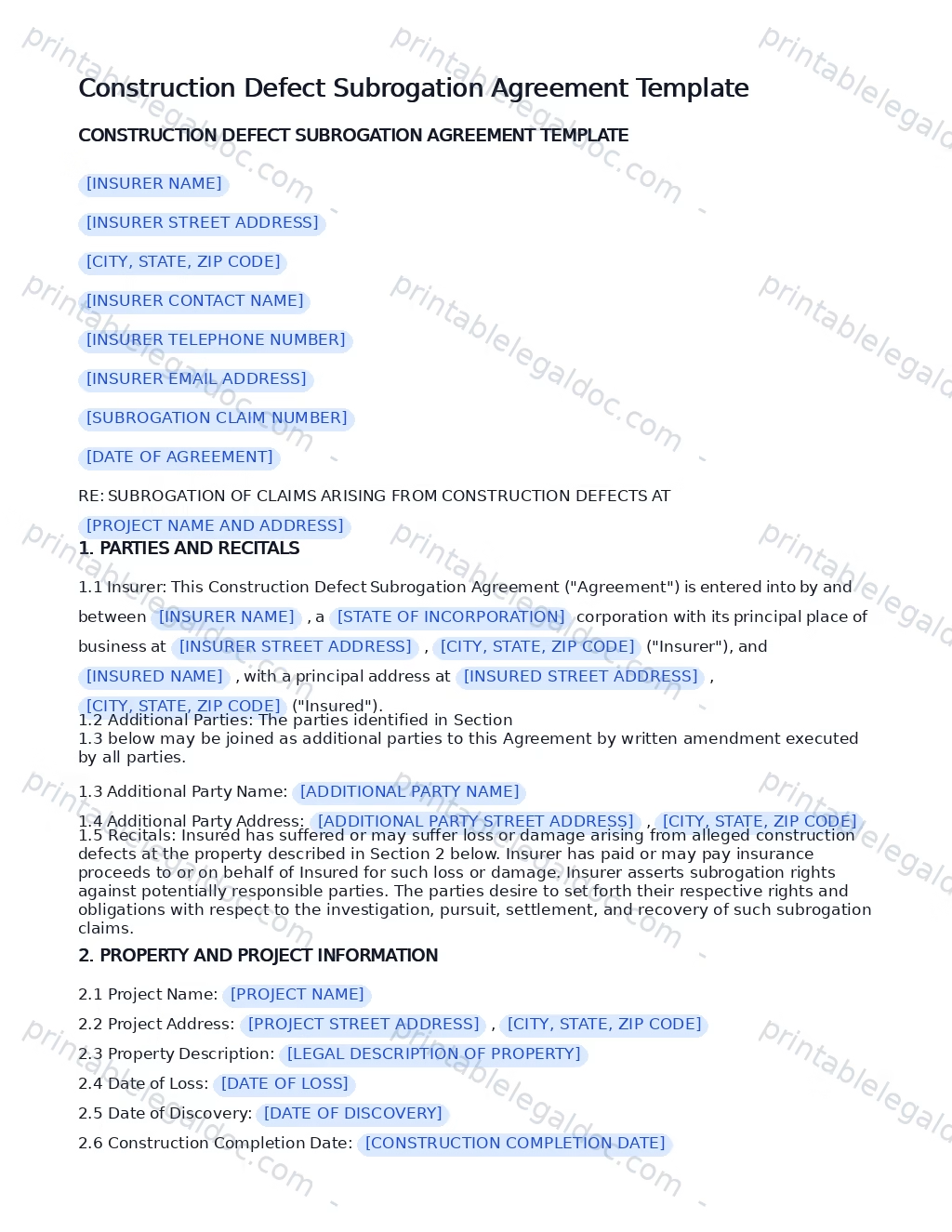
Construction Defect Subrogation Agreement Template
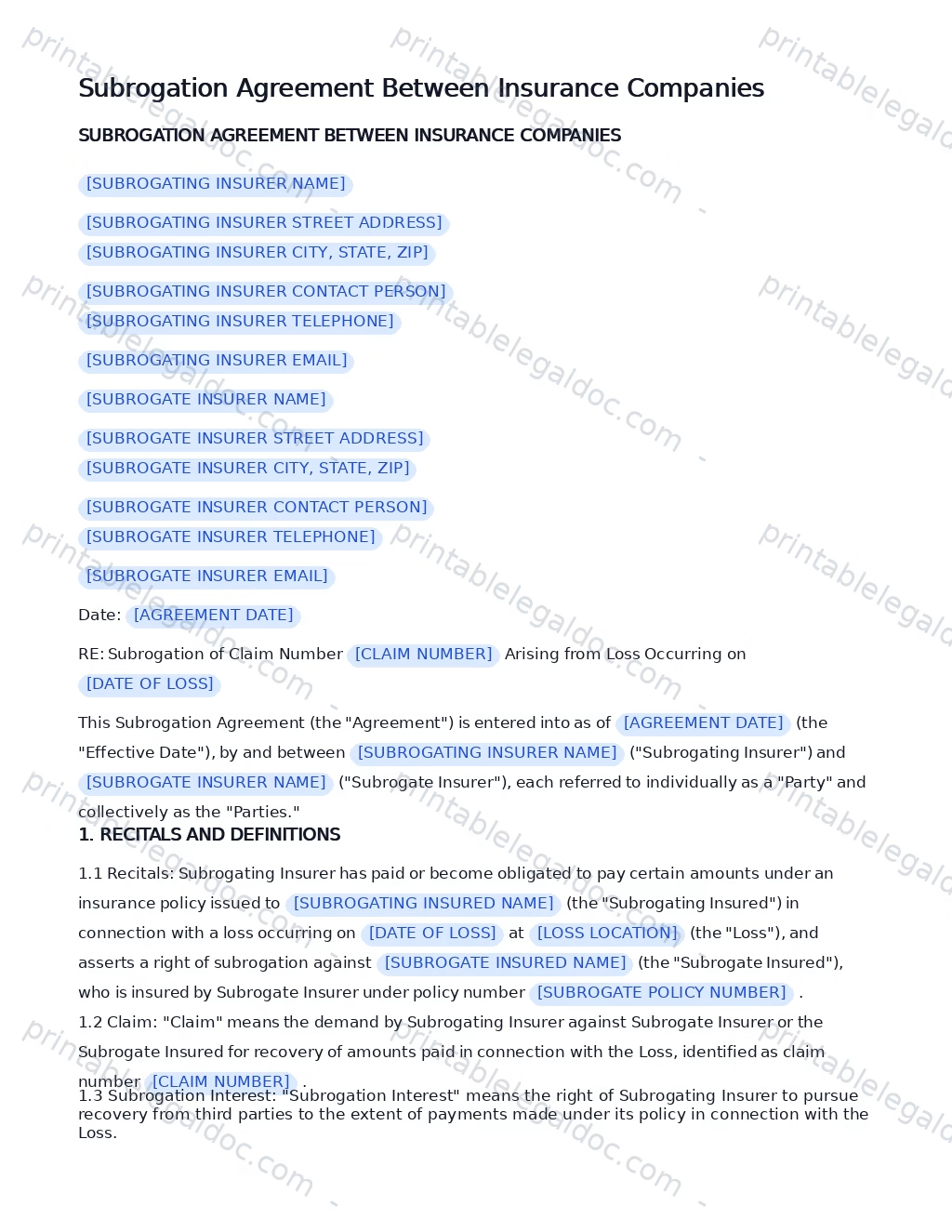
Subrogation Agreement Between Insurance Companies
A subrogation agreement between insurance companies lets one insurer recover costs from another after paying a claim. The paying insurer steps into the policyholder's shoes. It then pursues the party at fault. This keeps premiums fair for everyone. The deal sets clear rules for who pays what. It also prevents double recovery and messy disputes. Both sides agree on notice, cooperation, and claim handling. That saves time and legal fees. Policyholders benefit too. They get their payout fast and let the insurers sort out fault. A solid agreement turns a tangled process into a smooth one.

Subrogation Agreement
Subrogation Agreement
WHEREAS, on ____________________, ___________________, an insurance company, was presented with a claim arising from:
________________________under insurance coverage provided to ______________________, under its coverage for:
______________________,and, WHEREAS, on _________________________, ___________________ paid a claim in an amount of $ ____ (________________ & ____/100 dollars), with a deductible of $ _____(________ & ____/100 dollars), arising from the perils and covered by the policy stated above, NOW, THEREFORE:
______________________, his heirs and assigns, herewith assign and convey to ________________ and any all rights against any entity who may be liable to ______________________ for the loss stated above.
______________________ shall pursue any and all responsible parties at its own expense, and may at its option, bring such action in its own name or that of ______________________.
______________________ herewith covenants and agrees to fully assist ___________________ in pursuit of its rights of subrogation herein.
___________________ may at its option pursue the deductible loss of ______________________.In the event that ___________________ does so, it shall notify ______________________, and, further, ______________________ agrees that if any recovery is made that it will share in all costs related thereto pro rata.
______________________ further agrees not to release or exonerate the adverse party or parties or enter into any compromise with them without the prior approval of ___________________.
______________________ shall execute any and all instruments reasonably required by ______________ in connection herewith.
Date: _____________________________________
___________________________________________________
______________________Subrogation Agreement
Review List
This review list is provided to inform you about this document in question and assist you in its preparation. This is a technical document that should only be executed by someone expert in the field.
Frequently Asked Questions
What is a subrogation agreement?
A subrogation agreement is a legal document in which an insured party assigns to an insurance company any and all rights against any entity that may be liable for a loss. The agreement is used after the insurance company has paid a claim for that loss. It allows the insurer to pursue responsible parties to recover the amount paid.
When is a subrogation agreement used?
A subrogation agreement is used after an insurance company has paid a claim arising from a covered loss. The agreement is presented to the insured party to formally transfer the right to recover from liable parties. It is typically executed once the claim payment has been made.
What does an insured party assign in a subrogation agreement?
In a subrogation agreement, the insured party assigns and conveys to the insurance company any and all rights against any entity who may be liable for the loss stated in the agreement. This assignment includes the right to pursue legal action against responsible parties. The insured party's heirs and assigns are also bound by this assignment.
Who is responsible for pursuing the responsible parties after a subrogation agreement?
According to the subrogation agreement, the insurance company shall pursue any and all responsible parties at its own expense. The insurance company may bring such action in its own name or in the name of the insured party. This means the insurer bears the cost of the recovery effort.
What obligations does the insured party have under a subrogation agreement?
The insured party covenants and agrees to fully assist the insurance company in pursuit of its rights of subrogation. This assistance is required to help the insurer recover the claim amount from liable parties. The agreement does not specify the exact form of assistance, but it is a binding obligation.
Can the insurance company pursue the deductible loss?
Yes, the subrogation agreement states that the insurance company may at its option pursue the deductible loss of the insured party. This means the insurer can attempt to recover the deductible amount from responsible parties. The decision to do so is at the insurer's discretion.
What information is included in a subrogation agreement?
A subrogation agreement includes details such as the date the claim was presented, the name of the insurance company, the nature of the claim, the insured party, the coverage type, the date the claim was paid, the amount paid, and the deductible amount. It also includes the assignment of rights and the obligations of the parties. The agreement may have blank spaces to be filled in with specific information.
Does the insured party need to pay for the pursuit of responsible parties?
No, the subrogation agreement states that the insurance company shall pursue any and all responsible parties at its own expense. The insured party is not responsible for the costs of this pursuit. However, the insured party must assist the insurer as agreed.
What happens if the insurance company recovers more than the claim amount?
The provided article text does not specify what happens if the insurance company recovers more than the claim amount. The agreement focuses on the assignment of rights and the pursuit of responsible parties. Any excess recovery would likely be addressed by applicable law or other provisions not included in the text.
Is a subrogation agreement legally binding?
The article text presents a subrogation agreement as a formal legal document with covenants and agreements. It is intended to be binding on the insured party, their heirs, and assigns. However, the text does not provide legal advice, and enforceability depends on applicable law.