Bill of Transfer to a Trust
A Trust is a legal document containing a formal agreement between parties in which one party grants or vests the ownership rights (title) to one or more trustees for the purposes of conservation, protection, or preservation on behalf of the first party or beneficiary of the trust. This instrument normally and usually states: The reasons and purposes as to why the trust was established and the actions that will terminate the trust, a detailed record of what assets are placed and present in the trust, the authority and boundaries of the said trustees, the reporting requirements of the trustees, and other provisions associated to the trust. It may also state the compensation that the trustees will be receiving, if there are any.
A Bill of Transfer to a Trust is used to transfer personal property and can range to anything such as household appliances (refrigerators, microwaves, ovens), collections of jewelry, furniture, fine china sets, and other items you may hold dear as long as these items do no have a title or deed. Items such as properties or vehicles cannot be placed in a bill of transfer to a living trust. A Bill of transfer is used to transfer personal property (without deeds or titles), and helps dictate which items belong to whom when the original owner passes away. It also helps solidify the title and shows just who owns what items. Using this legal document or form ensures the security and protection of your valuables and makes sure that they get into the hands of those you meant them for.
Bill Of Transfer To A Trust
Bill of Transfer to a Trust
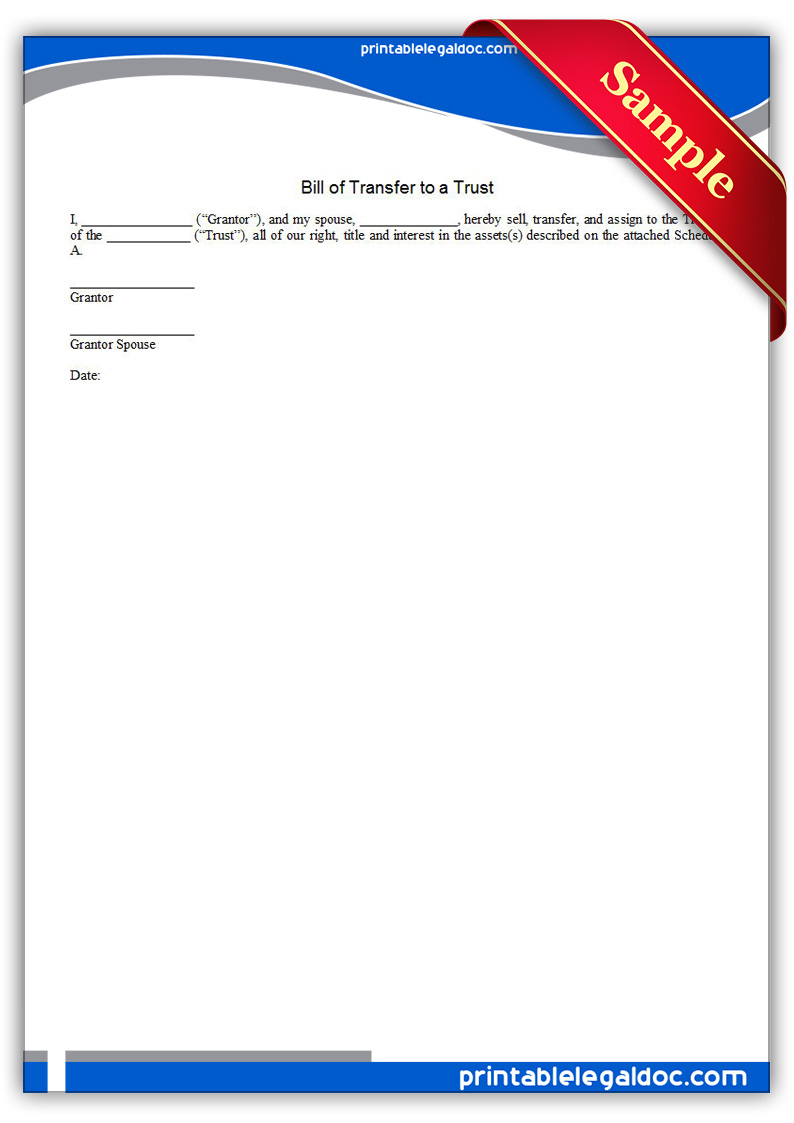
I, ________________ (“Grantor”), and my spouse, ______________, hereby sell, transfer, and assign to the Trustee of the ____________ (“Trust”), all of our right, title and interest in the assets(s) described on the attached Schedule A.
__________________
Grantor__________________
Grantor SpouseDate:
Bill of Transfer to a Trust
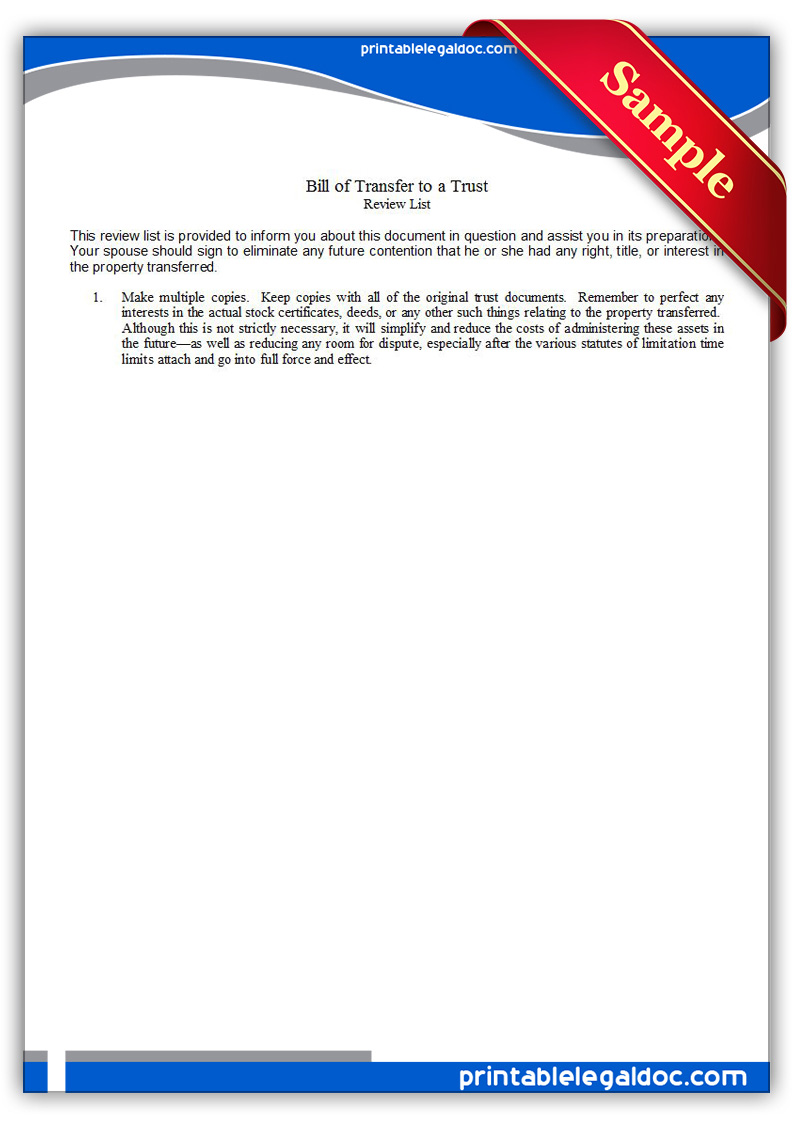
Review ListThis review list is provided to inform you about this document in question and assist you in its preparation. Your spouse should sign to eliminate any future contention that he or she had any right, title, or interest in the property transferred.
1. Make multiple copies. Keep copies with all of the original trust documents. Remember to perfect any interests in the actual stock certificates, deeds, or any other such things relating to the property transferred. Although this is not strictly necessary, it will simplify and reduce the costs of administering these assets in the future-as well as reducing any room for dispute, especially after the various statutes of limitation time limits attach and go into full force and effect.
Frequently Asked Questions
What is a bill of transfer to a trust?
A bill of transfer to a trust is a legal document used to transfer assets into a trust. It is signed by the grantor and often the grantor's spouse, assigning all right, title, and interest in the assets described on an attached Schedule A to the trustee of the trust. This document helps ensure that the assets are properly titled in the name of the trust.
Why does my spouse need to sign the bill of transfer?
Your spouse should sign the bill of transfer to eliminate any future contention that he or she had any right, title, or interest in the property transferred. This signature helps prevent disputes over ownership of the assets. It is a recommended step to ensure the transfer is clear and uncontested.
What should be included in Schedule A of the bill of transfer?
Schedule A should describe the assets being transferred to the trust. The bill of transfer assigns all right, title, and interest in the assets described on the attached Schedule A. Therefore, it is important to list all relevant assets accurately on this schedule.
Do I need to perfect interests in stock certificates or deeds after signing the bill of transfer?
Yes, you should perfect any interests in the actual stock certificates, deeds, or other such things relating to the property transferred. Although it is not strictly necessary, doing so will simplify and reduce the costs of administering these assets in the future. It also reduces any room for dispute, especially after statutes of limitation time limits attach.
How many copies of the bill of transfer should I make?
You should make multiple copies of the bill of transfer. Keep copies with all of the original trust documents. This ensures that you have proper documentation of the transfer.
Is a bill of transfer to a trust legally required to transfer assets into a trust?
The article does not state that a bill of transfer is legally required, but it is a document used to sell, transfer, and assign assets to a trust. It helps document the transfer of assets. However, for certain assets, perfecting interests in stock certificates, deeds, or other such things may be necessary to complete the transfer.
What happens if I don't perfect the transfer of assets like stock certificates or deeds?
If you do not perfect the transfer, it may complicate the administration of the trust and increase costs. It could also leave room for dispute, especially after statutes of limitation time limits attach. Perfecting the transfer simplifies the future administration of the assets.
Can a bill of transfer to a trust be used for real estate?
The bill of transfer can be used to transfer various assets, including real estate, as it assigns all right, title, and interest in the assets described on Schedule A. However, for real estate, you should perfect the interest by recording a deed. The article mentions deeds as an example of items that may need perfection.
Who signs the bill of transfer to a trust?
The grantor and, if applicable, the grantor's spouse sign the bill of transfer. The grantor is the person transferring the assets. The spouse's signature is recommended to eliminate any future contention about rights to the property.
What is the purpose of the review list provided with the bill of transfer?
The review list is provided to inform you about the document and assist in its preparation. It includes reminders such as making multiple copies, keeping copies with trust documents, and perfecting interests in assets. Following the review list helps ensure the transfer is properly completed.