

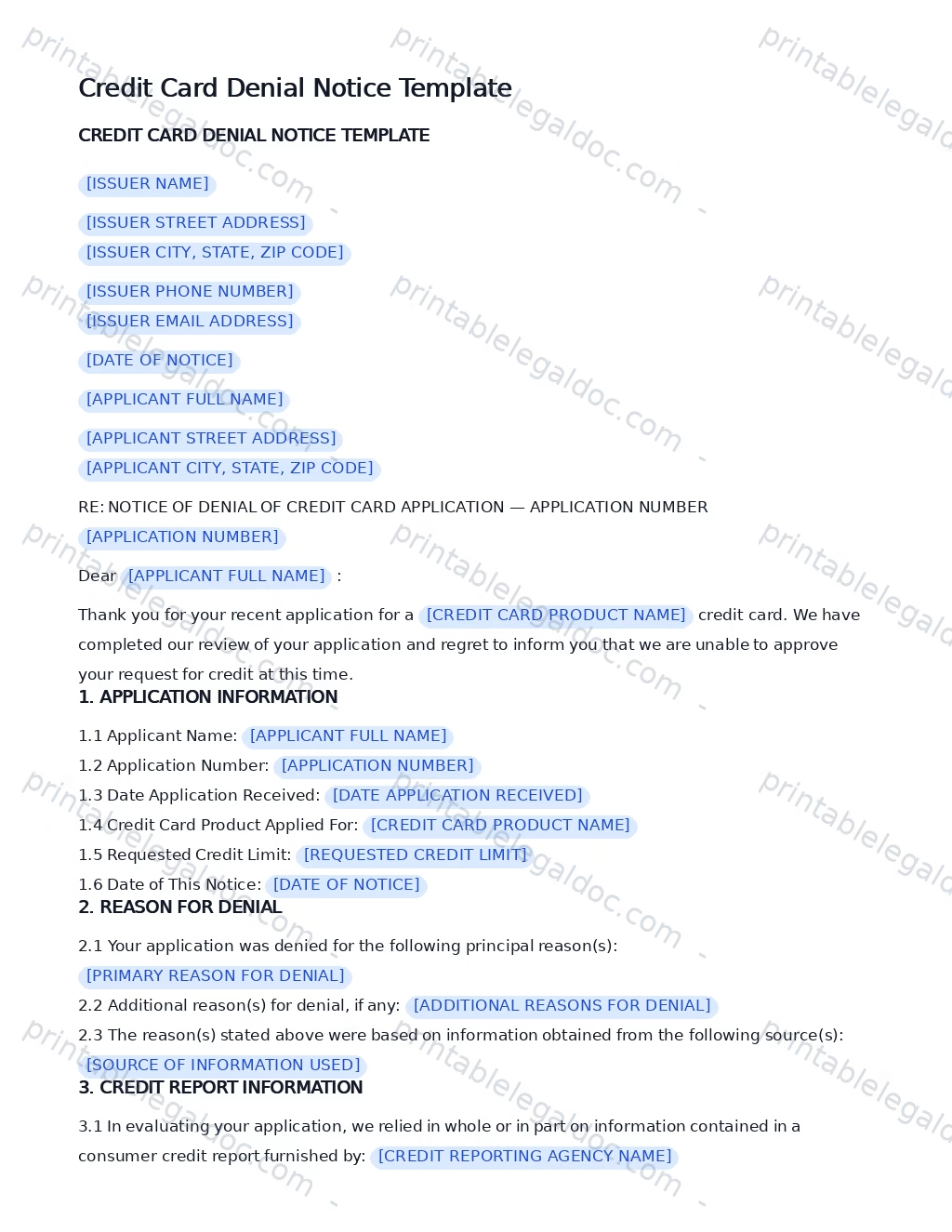
Credit Card Denial Notice Template
A credit card denial notice template helps you tell a customer their application did not go through. Clear words matter here. The message should explain the decision without blame or confusion. State the reason in simple terms. Mention the next steps the person can take. Keep the tone respectful and direct. Short sentences work best. This template gives you a ready structure for that hard conversation. Fill in the customer name, the date, and the specific reason. Avoid jargon. Skip long legal phrases. The reader needs to understand the outcome fast. A good notice protects your business and respects the applicant. Use this template to save time and stay consistent. Every denial letter should feel fair, honest, and easy to read.
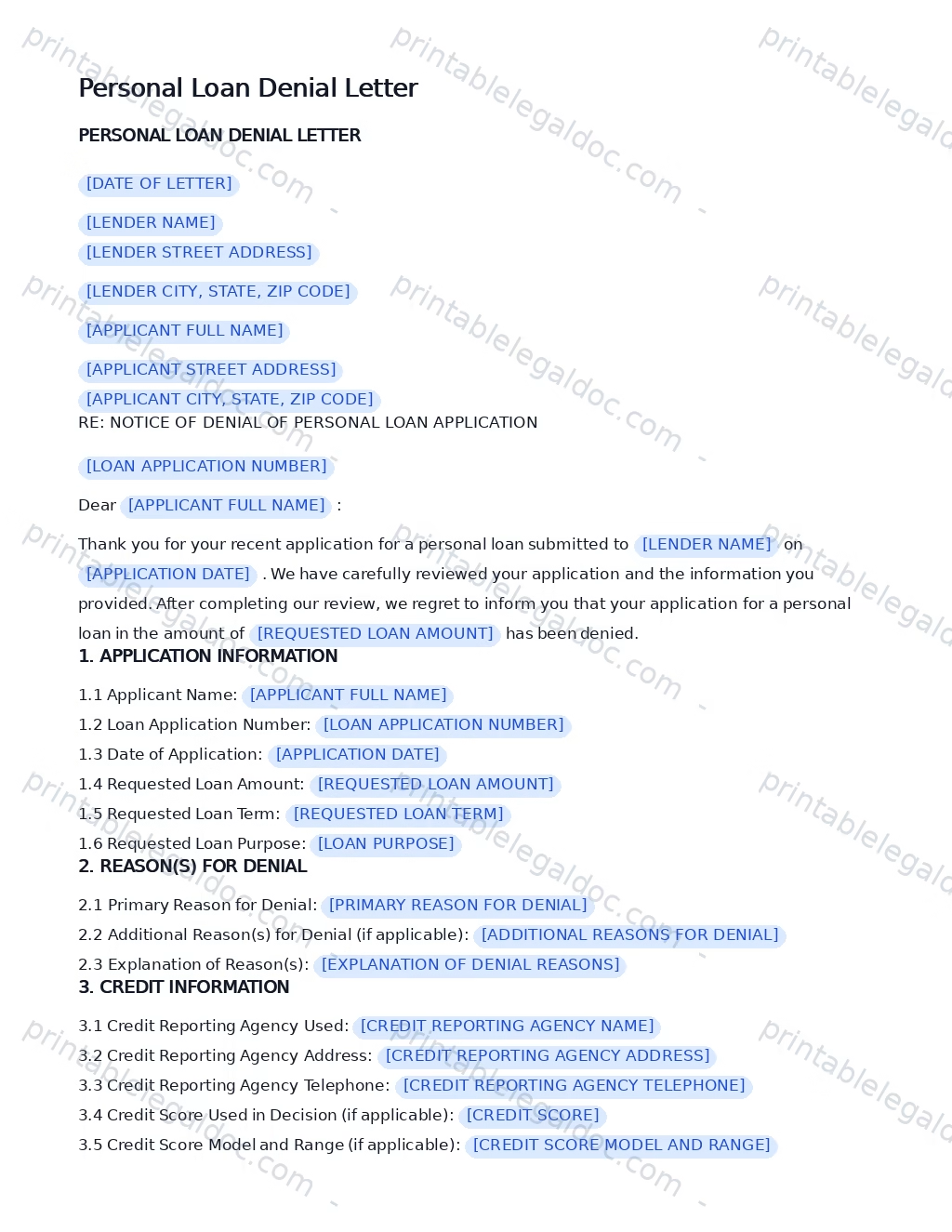
Personal Loan Denial Letter
A personal loan denial letter can feel like a setback. It states the lender's decision in clear terms. The letter also explains the reason behind the rejection. Common causes include low credit scores, high debt, or unstable income. Read it carefully. It tells you what to fix before you apply again. Our template makes this document simple to write. It covers every key section in plain language. You get a clean format that lenders recognize. Fill in the borrower details and the specific reason for denial. Add the date and your contact information. The result is a professional letter that respects the applicant. Use it to respond with clarity and keep a record for your files.
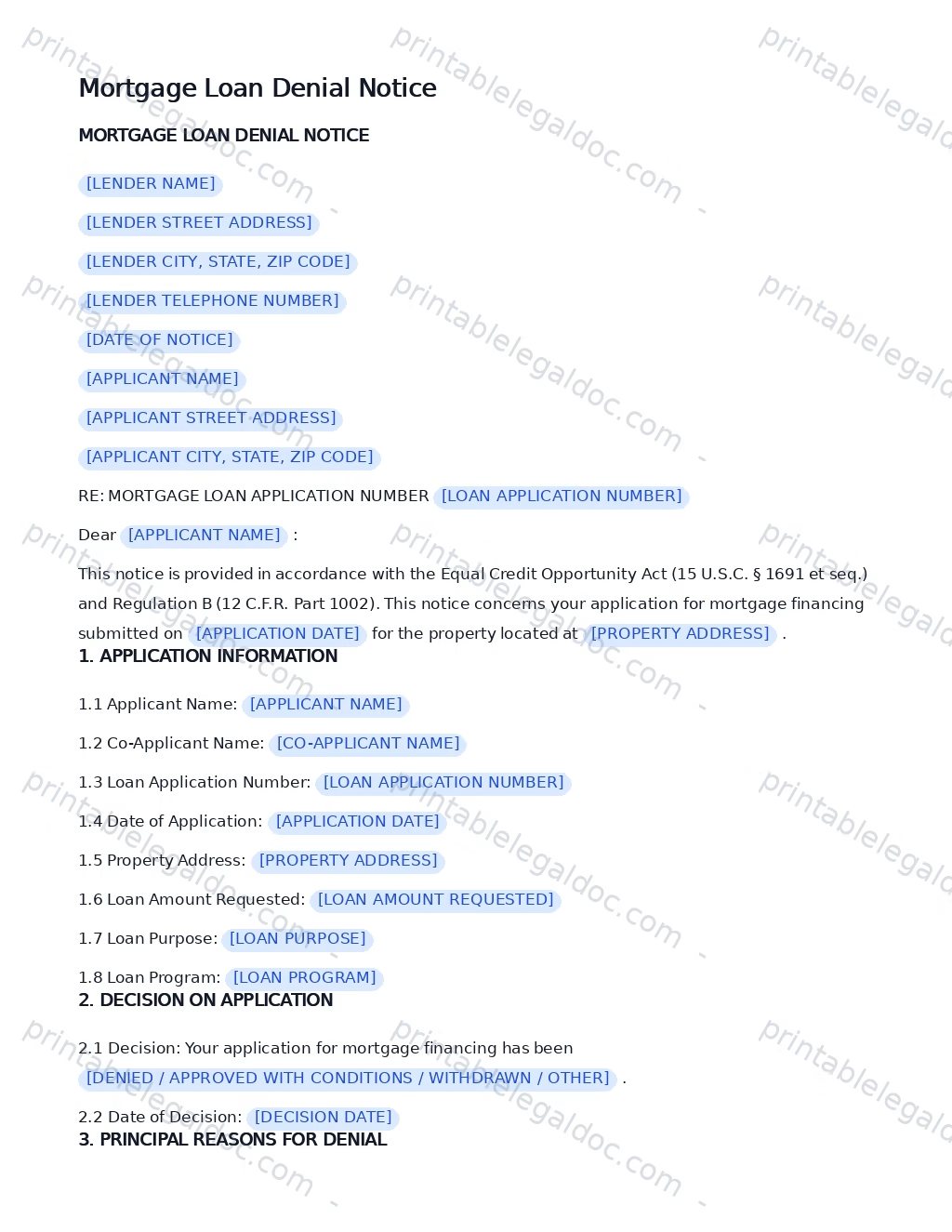
Mortgage Loan Denial Notice
A mortgage loan denial notice is a formal letter from a lender explaining why your application was rejected. It states the specific reason, such as low credit score, high debt, or unstable income. Federal law requires lenders to provide this notice. You can use it to understand your weak points. Then you can fix them before you apply again. A clear denial notice also tells you about your right to request a free credit report. Review the letter carefully. It may reveal errors you can correct. Many borrowers improve their chances after reading their denial notice. Keep this document safe. It helps you plan your next steps with confidence.
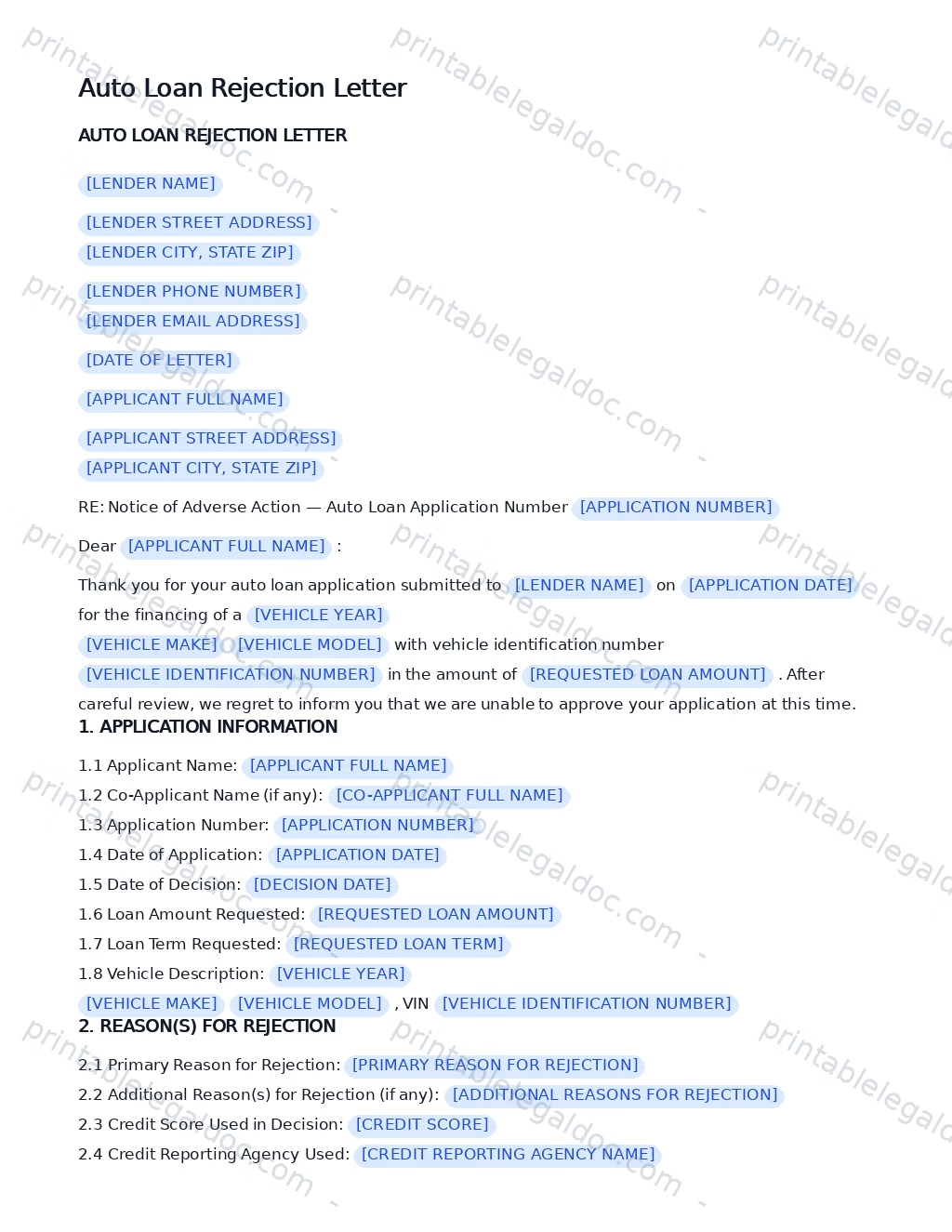
Auto Loan Rejection Letter
An auto loan rejection letter tells you a lender said no. It explains the reason in plain terms. You might see weak credit, high debt, or a low income listed. The letter may also cite a missing document or a vehicle that costs too much. Read every line with care. The reasons help you fix the problem. Ask the lender for details if something feels unclear. Then work on the weak spot. Pay down balances. Save a bigger down payment. Check your credit report for errors. A rejection stings. Yet it gives you clear direction. Use the letter as a roadmap. Your next application can land on stronger ground.
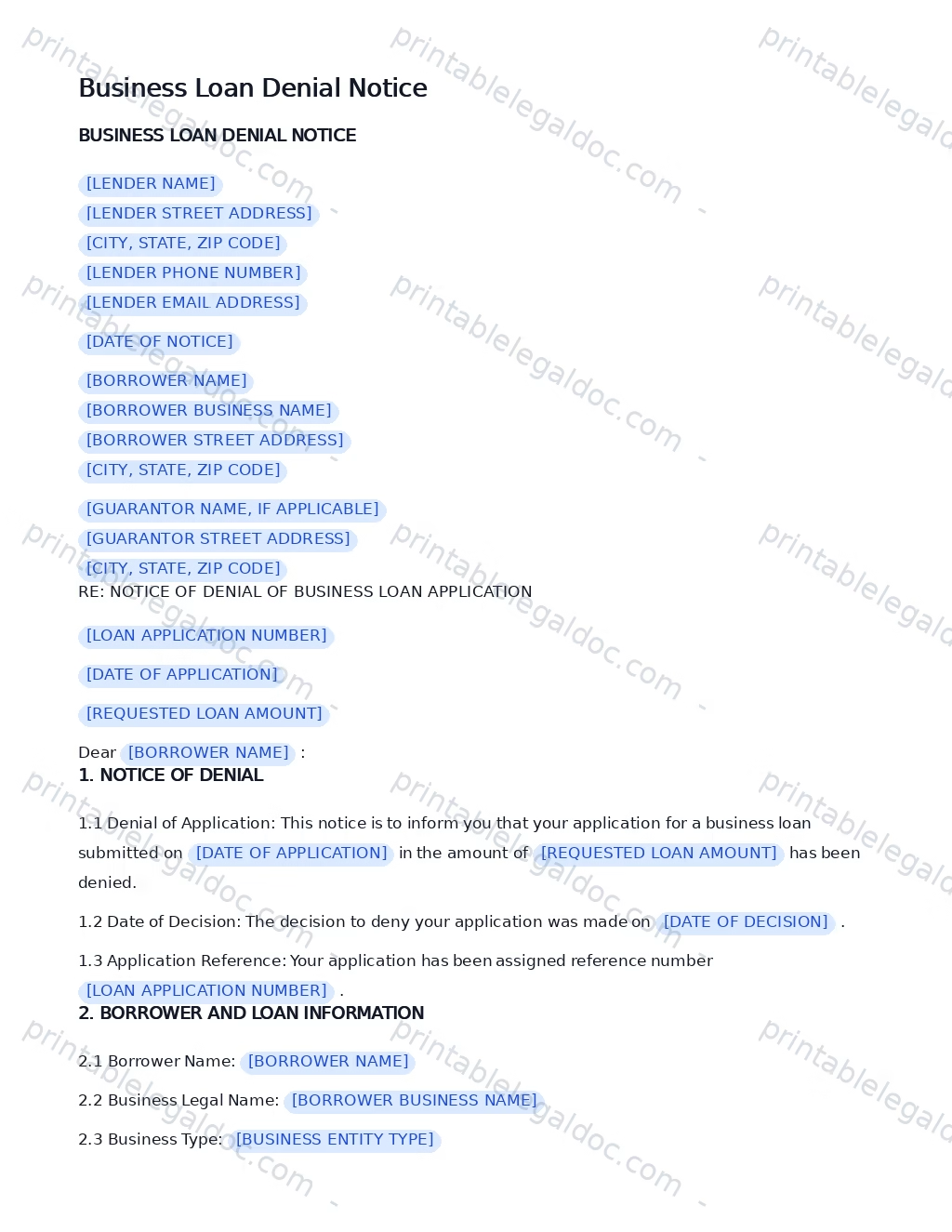
Business Loan Denial Notice
Got a business loan denial notice? Don't panic. A rejection is not the end of your funding journey. It is feedback. Lenders turn down applications for many reasons. Weak credit. Low revenue. Too much existing debt. The notice tells you what went wrong. Read it closely. Then fix the gaps before you apply again. Our clear template helps you understand every line of that notice. You will see the real reason behind the denial. You will know your next step. Use the notice as a roadmap. Improve your numbers. Strengthen your application. Come back stronger. Many successful business owners faced rejection first. Then they adjusted their approach and won approval. You can do the same. Turn that denial into your comeback story.
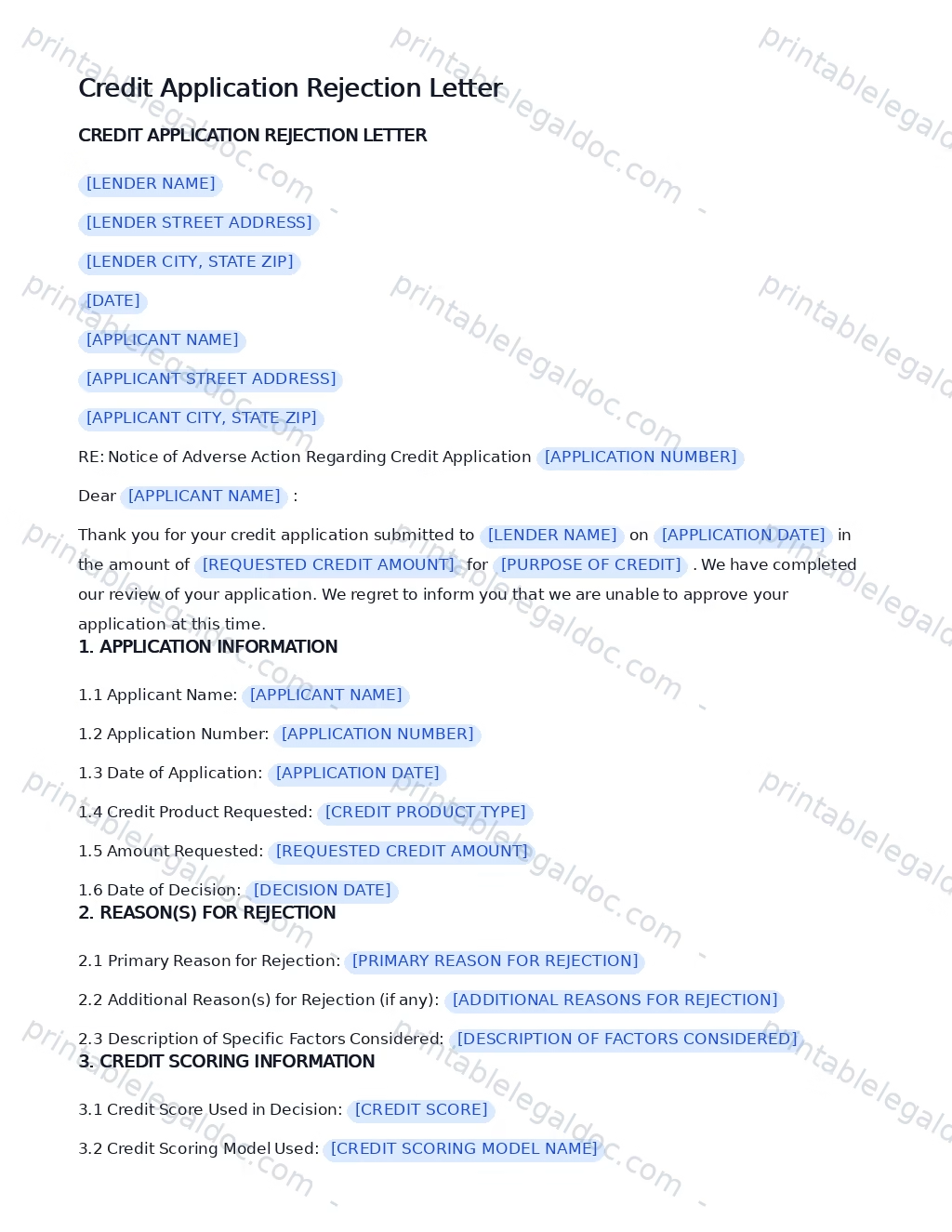
Credit Application Rejection Letter
A credit application rejection letter delivers bad news with clarity and respect. Use this template when you must decline a customer's request for credit. The letter states the decision early. It explains the reason in plain terms. It avoids harsh language and protects your company from legal risk. Each section guides the reader toward next steps. You can mention a reapplication date or suggest alternative payment options. The tone stays professional and fair. Small businesses and finance teams rely on this format to save time. The structure keeps every message consistent. Customers feel informed rather than dismissed. A strong template reduces confusion and keeps your records clean. Customize the details, then send it with confidence.
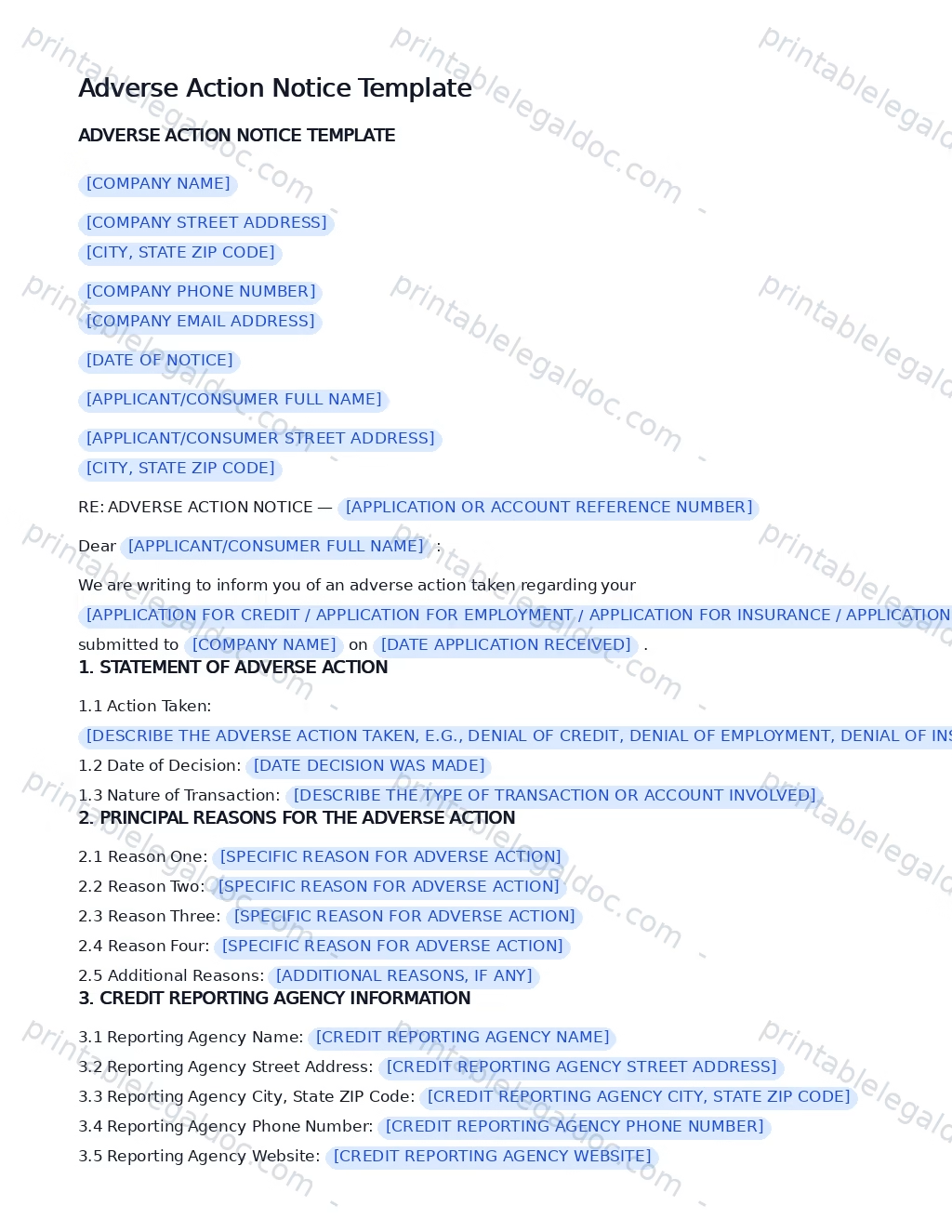
Adverse Action Notice Template
An adverse action notice template helps you tell someone why you denied their credit, job, or service. The law requires this step. Skip it and you risk fines or lawsuits. Our template gives you clear fields for the applicant's name, the decision, and the reason behind it. You also get space to cite the credit report used and the applicant's right to dispute. Each section follows federal rules. The layout stays simple. Fill in the blanks, sign, and send. No legal jargon. No guesswork. Small businesses and HR teams use this document every day. Grab the template, customize it in minutes, and protect your company from compliance trouble.
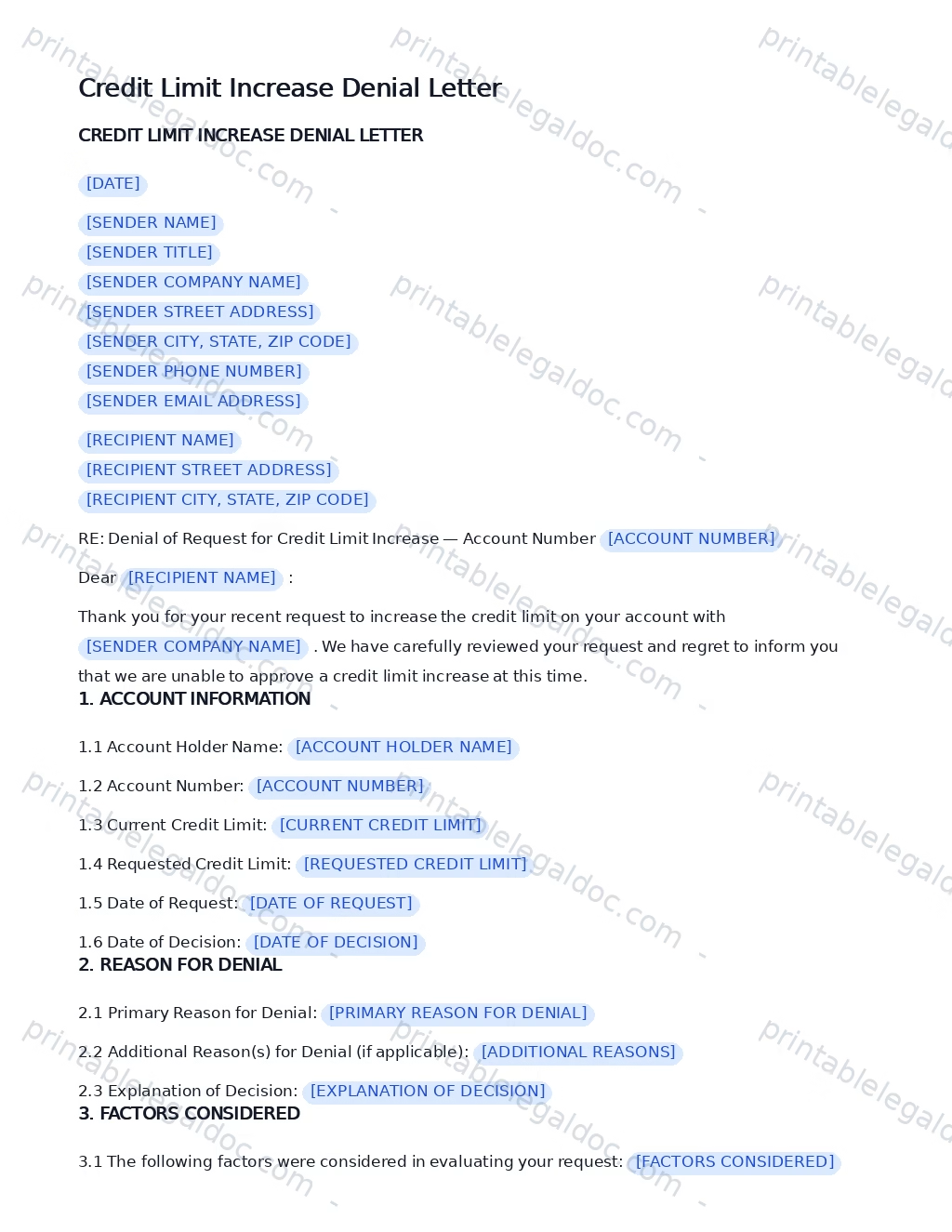
Credit Limit Increase Denial Letter
A credit limit increase denial letter tells you why your request was turned down. The reason may be a low score, high balances, or limited income proof. This template helps you write a clear and polite response. You can ask for the specific reason behind the decision. You can also request a review or share updated financial details. Keep your tone calm and factual. Short sentences work best. State your case without emotion. Mention any changes since your last application. Ask what steps would improve your chances next time. Send the letter by mail or email and keep a copy for your records.
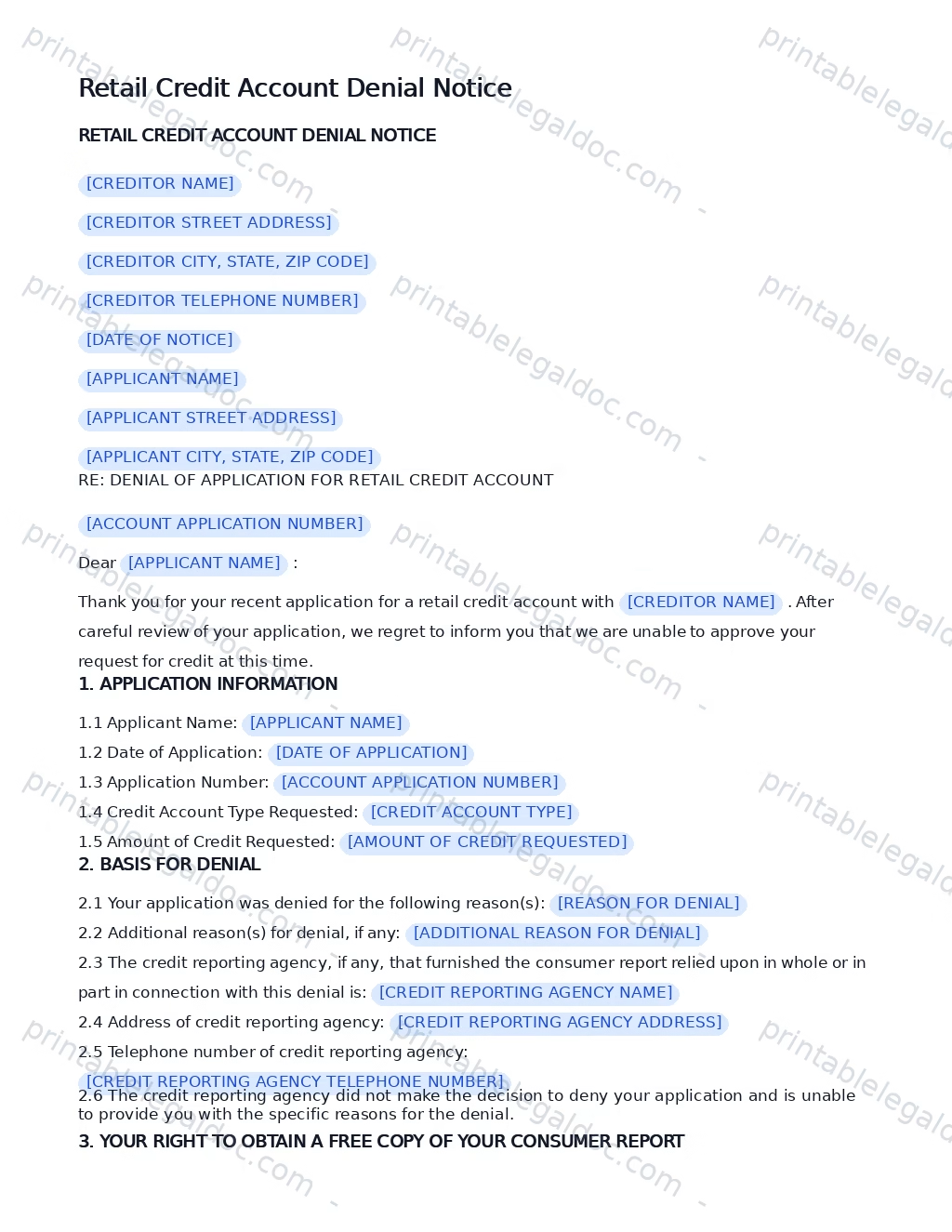
Retail Credit Account Denial Notice
A retail credit account denial notice tells a customer their application did not pass. The store sends this letter after reviewing the person's credit history and income details. Clear wording matters here. The notice should state the decision in plain terms. It also explains the main reason for the refusal. Common reasons include a low credit score, missed payments, or too much existing debt. The letter may invite the customer to request a copy of the report used in the review. A polite tone helps protect the store's reputation. Short sentences keep the message easy to follow. Include contact details for questions. This simple approach reduces confusion and builds trust.
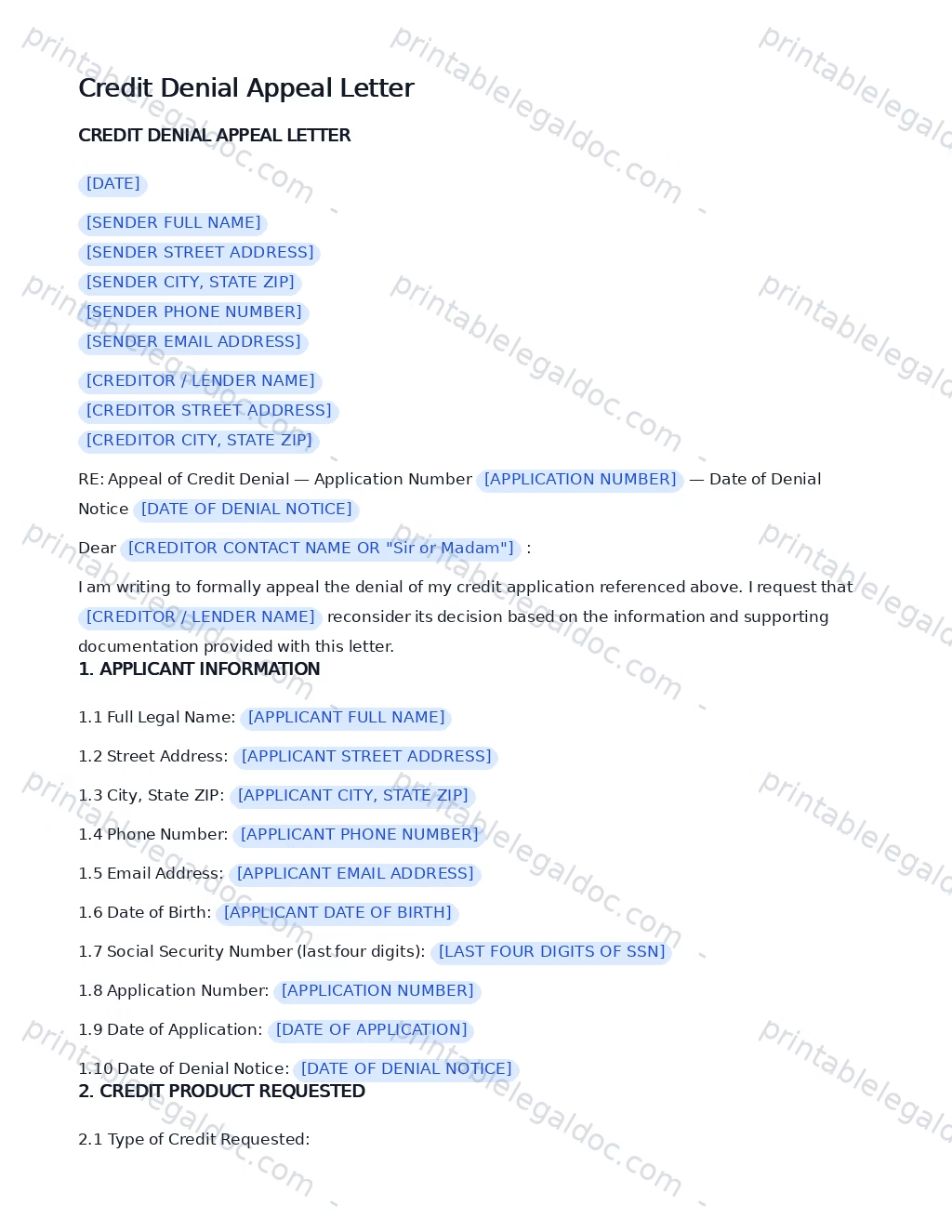
Credit Denial Appeal Letter
A credit denial appeal letter asks a lender to reconsider a rejected application. You state your case in clear terms. The letter explains mistakes on your report or details that changed since the decision. Keep it short and factual. Address the letter to the right person. Reference your application number. Attach proof, like a corrected report or proof of income. Stay calm and professional. Skip emotion and blame. A strong letter gives the reviewer a reason to look again. Many people win reversals with a simple, well organized appeal. Use a template to save time and avoid errors. Then edit it to fit your situation.

Credit Denial Notice
Credit Denial Notice
__________________________
__________________________
__________________________Dated: ___________________
Dear __________________________:
Pursuant to the Fair Credit Reporting Act, we are required to notify you that we have declined your application for ___________________________________________.
We have declined the application based on information contained in a consumer report obtained from _____________________, _______________________, and _.
Pursuant to the Fair Credit Reporting Act, you may obtain the full disclosure of the nature and substance of the information concerning you on file with the credit-reporting agency. Proper identification may be required to obtain this.
Please contact __________________________ for further information.
__________________________
Denier of Credit
Credit Denial Notice
Review ListThis review list is provided to inform you about this document in question and assist you in its preparation. You are entitled to deny credit with no cause, for facts uncovered in credit histories, but not for prejudicial purposes. People denied credit are entitled, by law, to this notice and similarly by law to receive any reports from credit agencies you may have used to make your determination. Businesses are not entitled to any of the above although some vendors provide this kind of letter as a courtesy.
1. Make multiple copies. Send one to the person denied credit. Keep one with the transaction file, should you retain one. Keep a copy in a general credit denial file.
2. Mail or faxing is sufficient notice. Time is not of the essence in this kind of notification though prompt responses are always sensible to do.
Frequently Asked Questions
What is a credit denial notice?
A credit denial notice is a document that informs an applicant that their request for credit has been declined. It is required under the Fair Credit Reporting Act when a credit decision is based on information contained in a consumer report. The notice typically identifies the credit-reporting agency that provided the report and explains the applicant's right to obtain a full disclosure of the information concerning them.
Why did I receive a credit denial notice?
You received a credit denial notice because your application for credit was declined. The denial may be based on information contained in a consumer report obtained from a credit-reporting agency. The notice is provided to comply with the Fair Credit Reporting Act.
What does the Fair Credit Reporting Act require in a credit denial notice?
The Fair Credit Reporting Act requires that when credit is denied based on information in a consumer report, the applicant must be notified. The notice must inform the applicant of the denial and provide the name of the credit-reporting agency that supplied the report. It must also state that the applicant may obtain a full disclosure of the nature and substance of the information concerning them on file with the agency.
What should I do if I receive a credit denial notice?
If you receive a credit denial notice, you should review it carefully to understand the reason for the denial. The notice will identify the credit-reporting agency that provided the consumer report. You may contact that agency to obtain a full disclosure of the information concerning you, and you may need to provide proper identification to do so.
Can I get a copy of the credit report that led to my denial?
Yes, pursuant to the Fair Credit Reporting Act, you may obtain the full disclosure of the nature and substance of the information concerning you on file with the credit-reporting agency. The credit denial notice provides the contact information for the agency. Proper identification may be required to obtain this disclosure.
Who can deny credit?
A creditor or lender, referred to as the denier of credit, can deny credit. You are entitled to deny credit with no cause, for facts uncovered in credit histories, but not for prejudicial purposes. The denial must comply with applicable laws, including the Fair Credit Reporting Act.
What information is included in a credit denial notice?
A credit denial notice typically includes the date, the applicant's name, a statement that the application has been declined, and the reason for the denial based on information from a consumer report. It also identifies the credit-reporting agency that provided the report and provides contact information for further inquiries. The notice may also include a review list to assist in its preparation.
What is the review list on a credit denial notice?
The review list is provided to inform you about the credit denial notice and assist in its preparation. It reminds that you are entitled to deny credit with no cause, for facts uncovered in credit histories, but not for prejudicial purposes. It also notes that people denied credit are entitled by law to this notice and to receive any reports from credit-reporting agencies.
How do I contact the credit-reporting agency listed on the notice?
The credit denial notice includes the name and contact information for the credit-reporting agency that provided the consumer report. You can use the contact details provided in the notice to reach out to the agency. The notice may also direct you to contact a specific person or department for further information.
Is a credit denial notice required by law?
Yes, pursuant to the Fair Credit Reporting Act, a credit denial notice is required when credit is declined based on information contained in a consumer report. The notice must inform the applicant of the denial and provide the name of the credit-reporting agency. It must also inform the applicant of their right to obtain a full disclosure of the information concerning them.


Omg don’t tell me this is for free.
Thank you so much for doing this it really helps alot
Very well written template…Thank you!
Going to used this form today.Thanks
The printable form itself is as impressive as you can get to paid one.
Wonderful template. im going to print this form and will talk together with my family on what to edit.
Wow, thanks, The template looks professional done, printing myself one now.
Thank you very much 🙂 . I need this badly. Thank you im glad i found you on Google 🙂
Thank you! This document is very helpful to my business.
That is BRILLIANT!!! admin, you just made my year even more worth while for me!