

This review list is intended to educate you about this document and to aid you in its preparation. This letter is designed to express a strong objection to a notation, statement, or other written item on the face of a check disputing to the charges and unilaterally asserting that this is in final settlement of the charges due.
To be effective, this type of letter must be issued immediately and with sufficient follow-up. If the creditor offsets the debt unilaterally, the debtor should be allowed to collect as long as the debtor is solvent. If, on the other hand, the creditor negotiated a payment with the debtor but ultimately declined, the debtor has the opportunity to stir the pot in court. If the creditor made an offer in response to the debtor’s suggestion, the offer should be accepted, and this letter should not be sent—though some creditors may attempt to “get away” with it.
This is one reason why written correspondence of all types is preferable if both parties desire to fulfill their duties. Oral exchanges are preferable for defendants looking for wriggle room (e.g., “but he stated…” and so on). Consider the business implications while engaging in this type of transaction.
Having said that, it is recommended to include a personal signature at the bottom of the letter. Additionally, you should create a file on the debtor to anticipate future issues and to keep your data in order. This letter clearly reinstates the balance in the “due” column and should therefore be treated as if it were never raised by the debtor. Proceed as necessary.
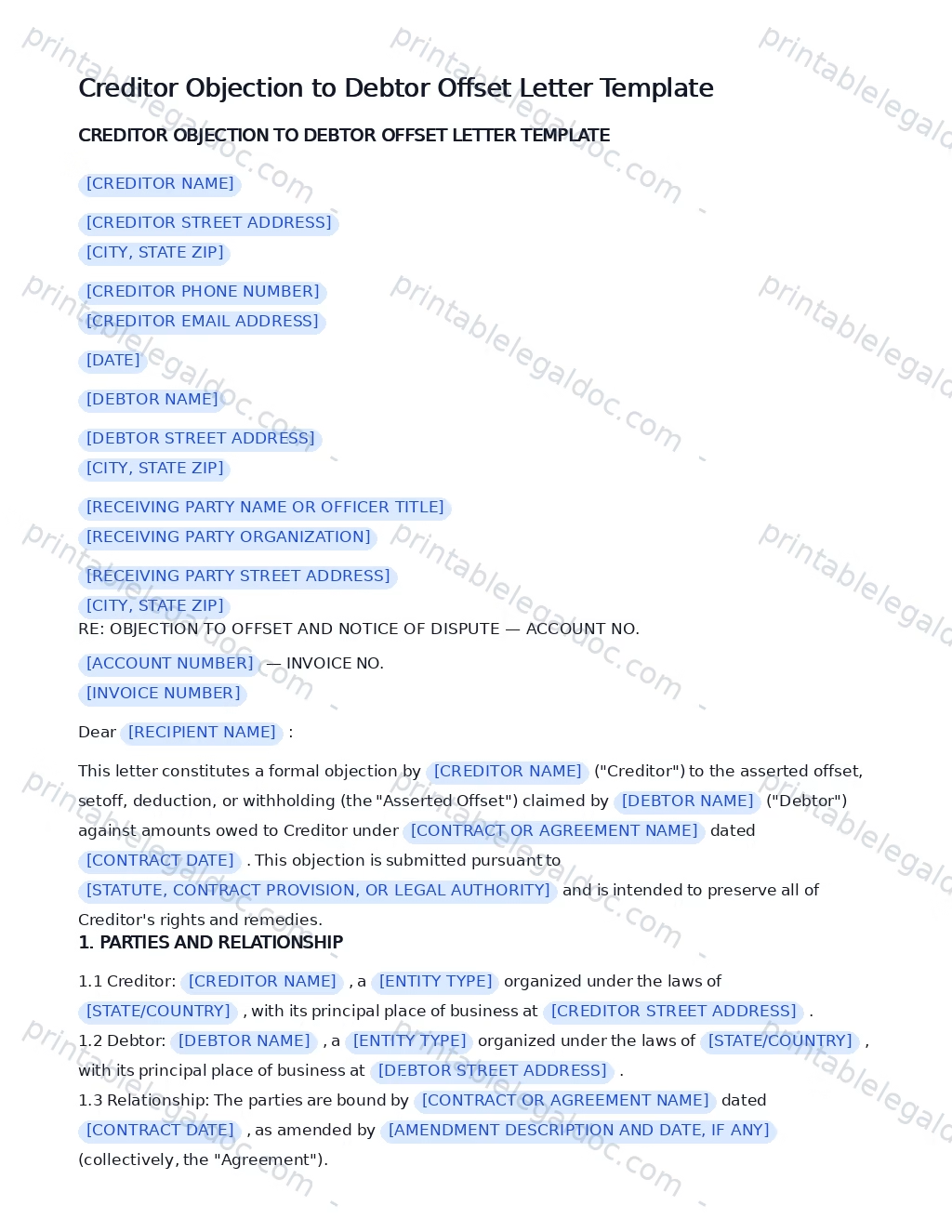
Creditor Objection to Debtor Offset Letter Template
A creditor objection to debtor offset letter template gives you a clear path to challenge improper setoffs. Use this document when a debtor tries to apply mutual debts in a way that harms your claim. The template walks you through each section. You state the facts, cite the legal grounds, and request a remedy. Short sentences keep your argument sharp. A judge or trustee can follow your logic without effort. You save time and avoid costly drafting mistakes. The format fits bankruptcy proceedings and general collection disputes. Fill in the blanks with your case details. Send a firm, professional objection that protects your rights.
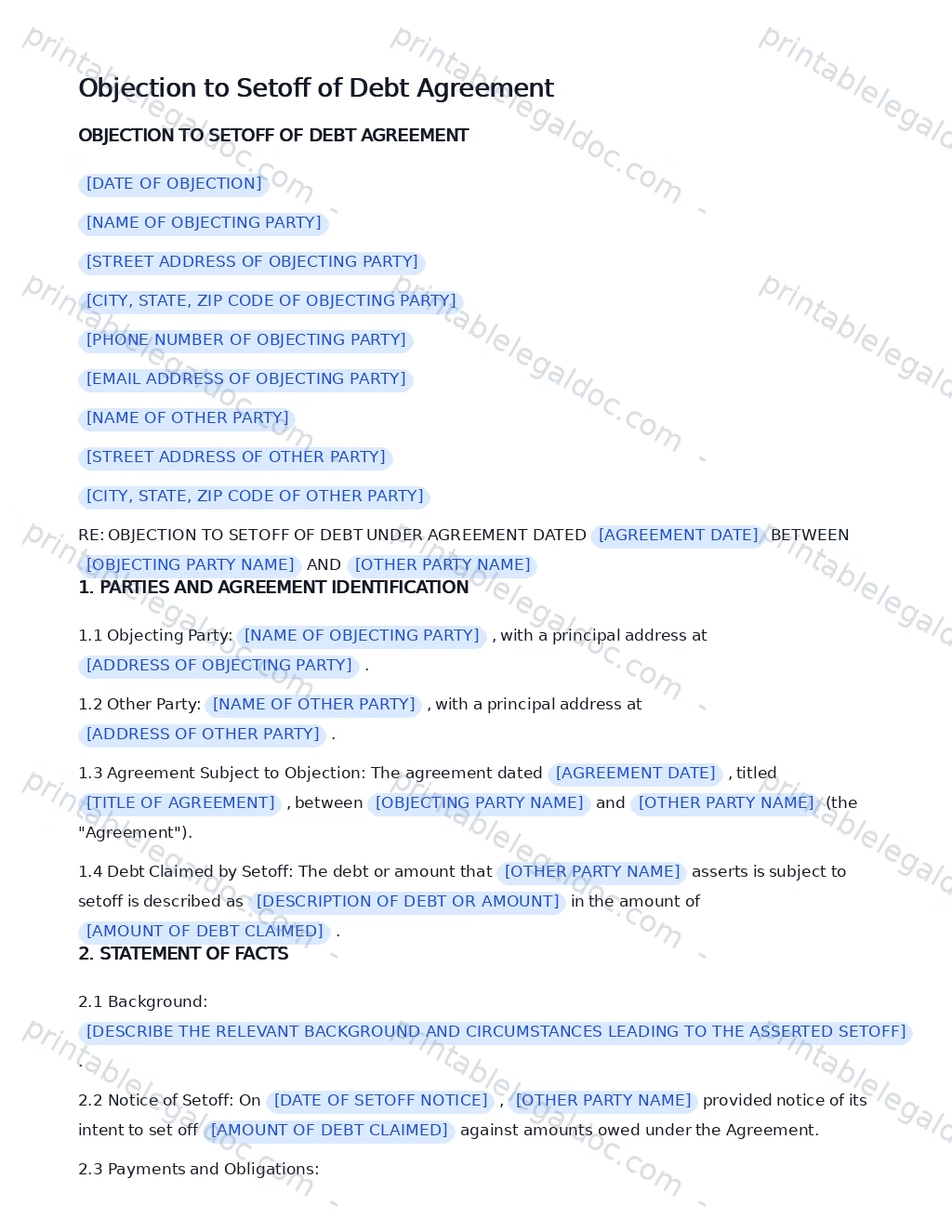
Objection to Setoff of Debt Agreement
An objection to setoff of debt agreement is a formal challenge to stop one party from cancelling debts against each other. This legal step matters when a contract limits or blocks setoff rights. You might face this issue in business deals, loan contracts, or insolvency cases. A clear objection protects your financial position. It also keeps the agreement terms intact. Courts look at the contract language and the intent of both parties. Strong evidence helps your case. You must act fast, as deadlines often apply. Talk to a legal expert before you file. A well-built objection can save you money and prevent unfair claims.
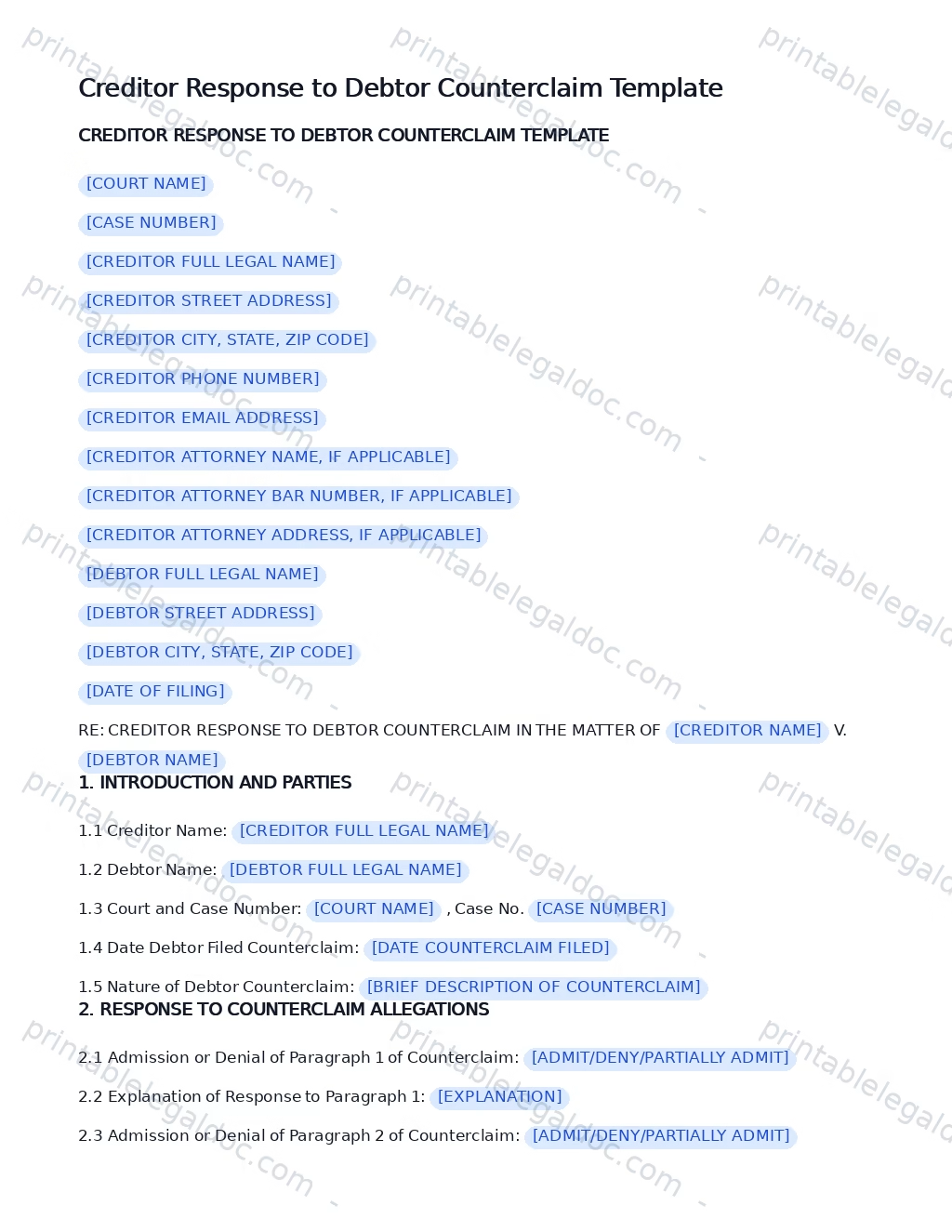
Creditor Response to Debtor Counterclaim Template
A creditor response to a debtor counterclaim template helps you answer a counterclaim with confidence. It gives you a clear structure for your legal reply. You state your position. You address each claim the debtor raises. The template keeps your language firm and factual. It saves you hours of drafting from scratch. Small business owners and attorneys use it to stay organized. You fill in the details, then file. The format follows standard court expectations. That reduces the risk of procedural errors. Use it when a debtor fights back with a counterclaim. It turns a stressful moment into a manageable task. Your response stays focused and professional.
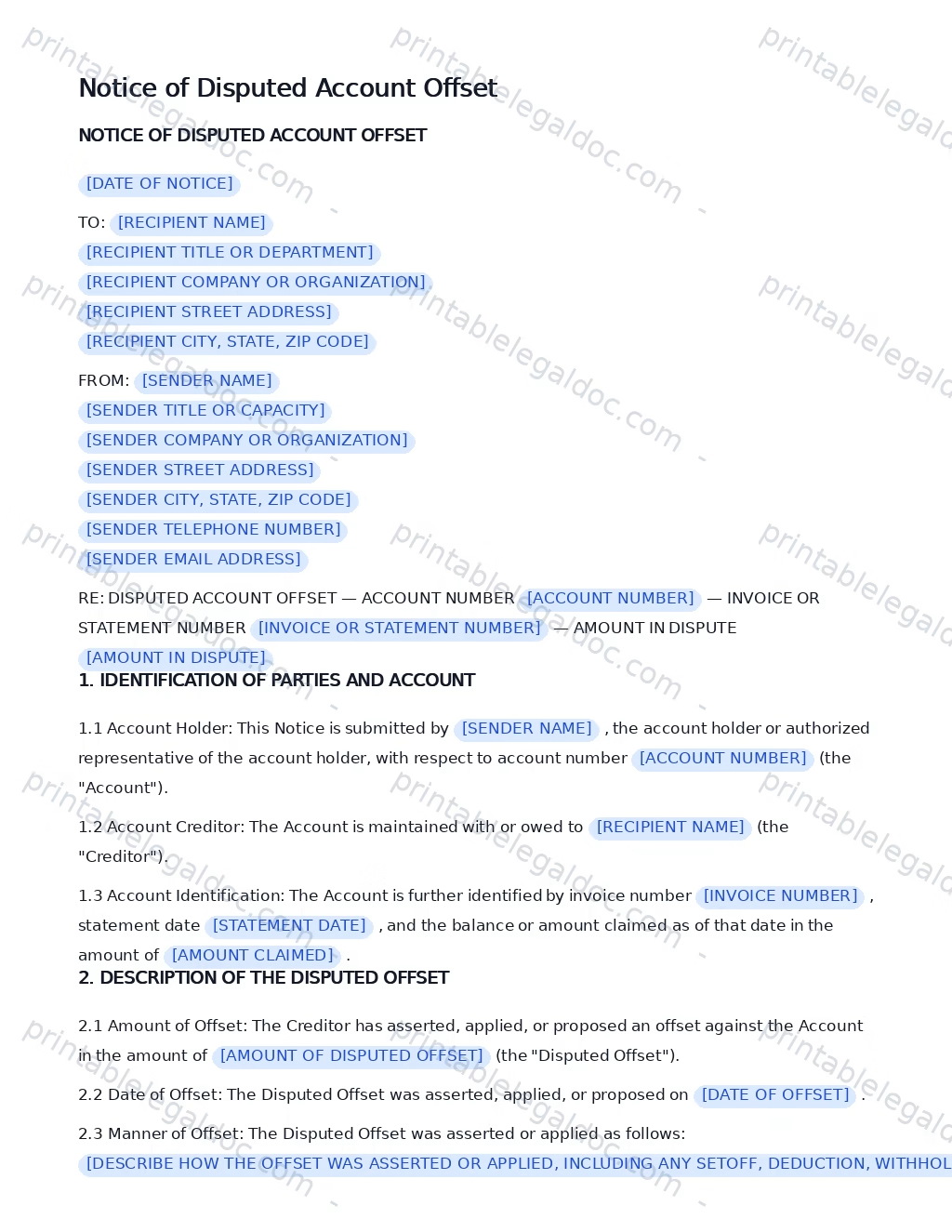
Notice of Disputed Account Offset
A Notice of Disputed Account Offset is a formal letter you send to a creditor or collection agency. It tells them you disagree with a charge or balance on your account. The letter asks them to stop offsetting funds against the disputed amount. You can use this template when a bank or lender takes money from your account without clear cause. It helps you protect your rights and create a written record of the dispute. Keep your tone clear and factual. Include your account details and the reason for your claim. Send it by certified mail so you have proof of delivery. This simple step can pause collection actions while the matter gets reviewed.
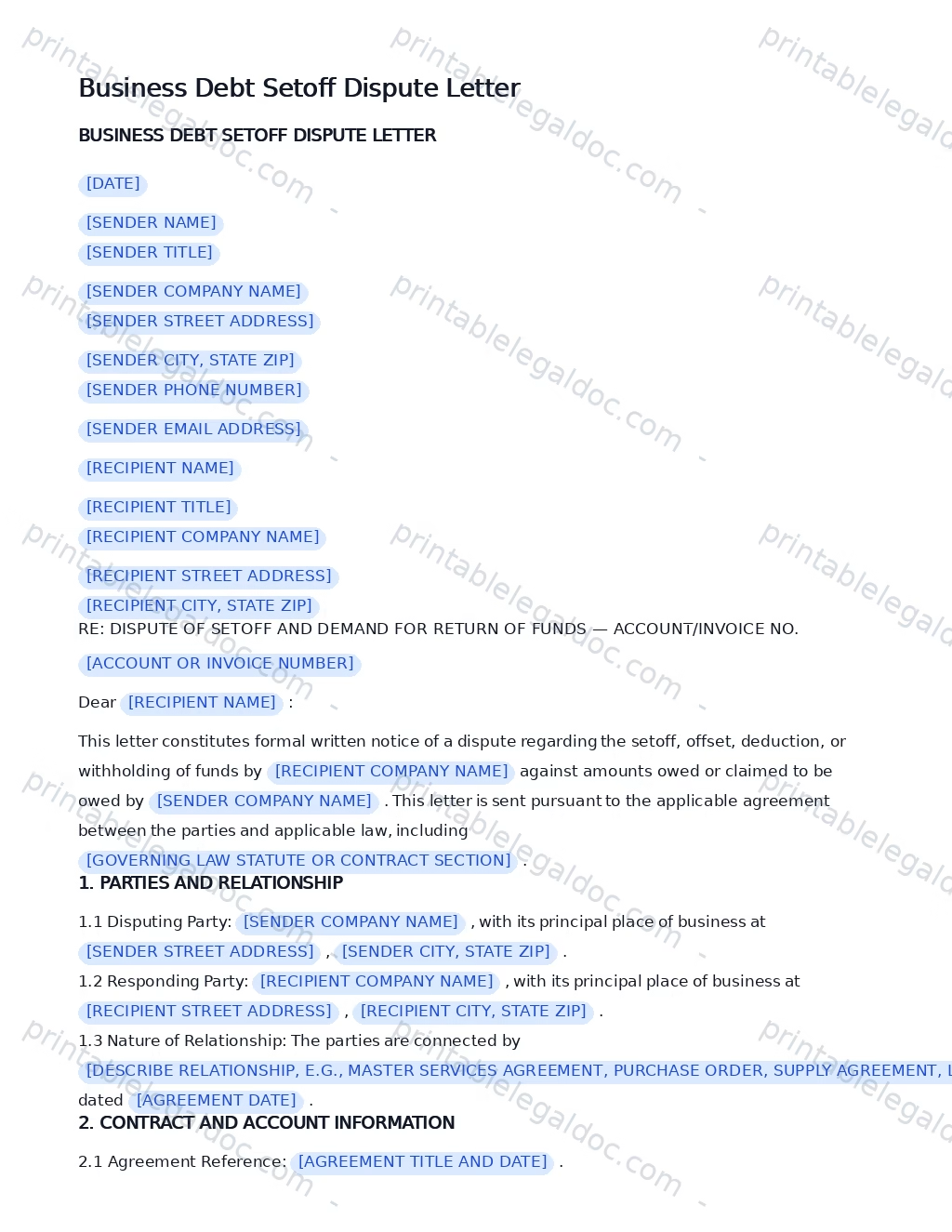
Business Debt Setoff Dispute Letter
A business debt setoff dispute letter helps you fight back when a lender grabs money from your account without warning. Banks and creditors sometimes use setoff rights to cover a debt you may not even owe. This letter puts your objection in writing. It tells them to stop the offset and return your funds. You get a clear structure that states the facts, cites your rights, and demands a response. Small businesses lose cash flow fast when this happens. A strong letter protects your position and starts a paper trail. Use this template to push back with confidence and keep your business running.
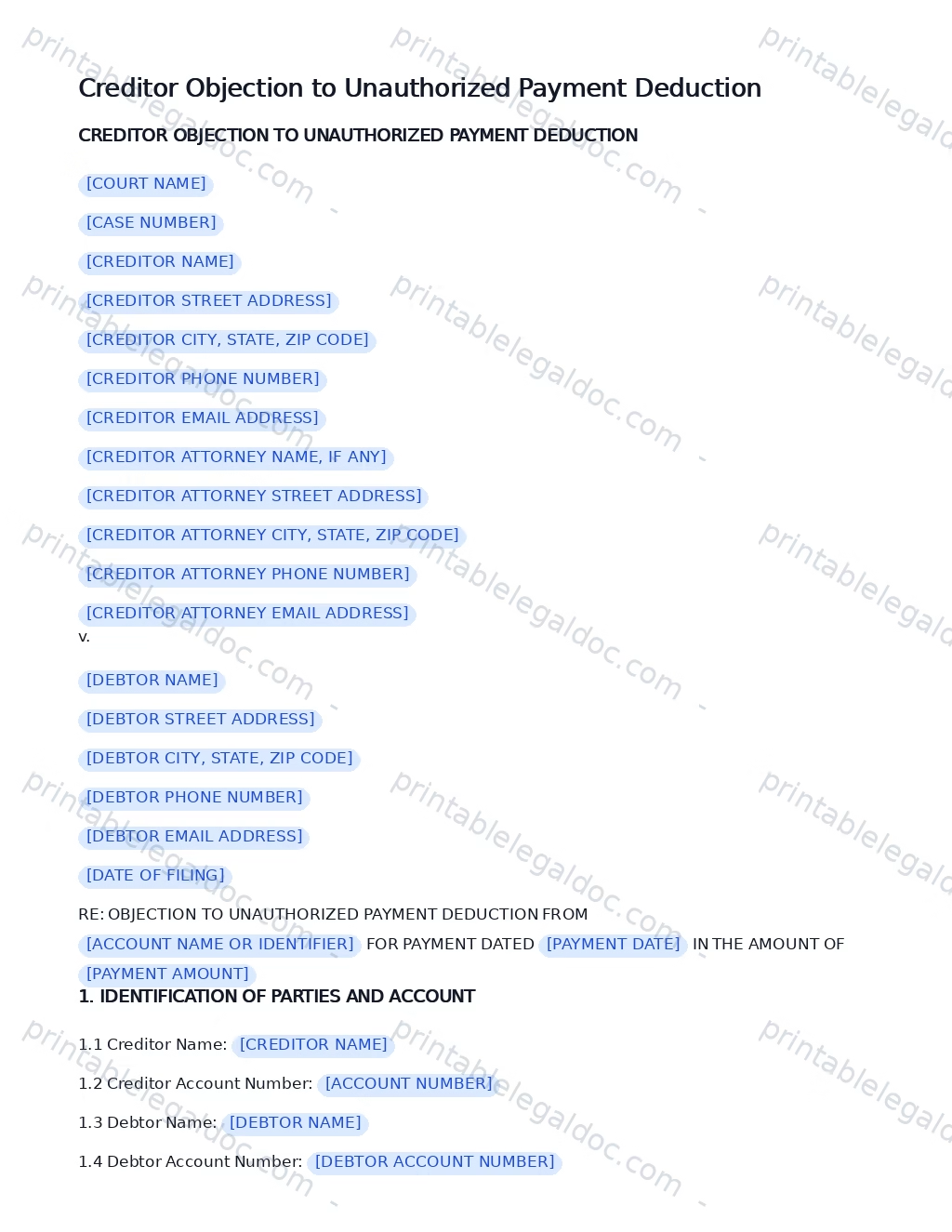
Creditor Objection to Unauthorized Payment Deduction
A creditor objection to unauthorized payment deduction challenges a charge you never approved. You may spot a deduction on your account that you did not authorize. That is your right to dispute. Creditors must prove the payment was valid. If they cannot, the deduction may be reversed. Act quickly. Review your statements often. Keep records of every transaction. Send a written objection to the creditor. State clearly why the charge is unauthorized. Ask for proof of authorization. Stay calm and firm. Follow up in writing. Know your rights under consumer protection laws. A strong objection protects your money and your credit standing.
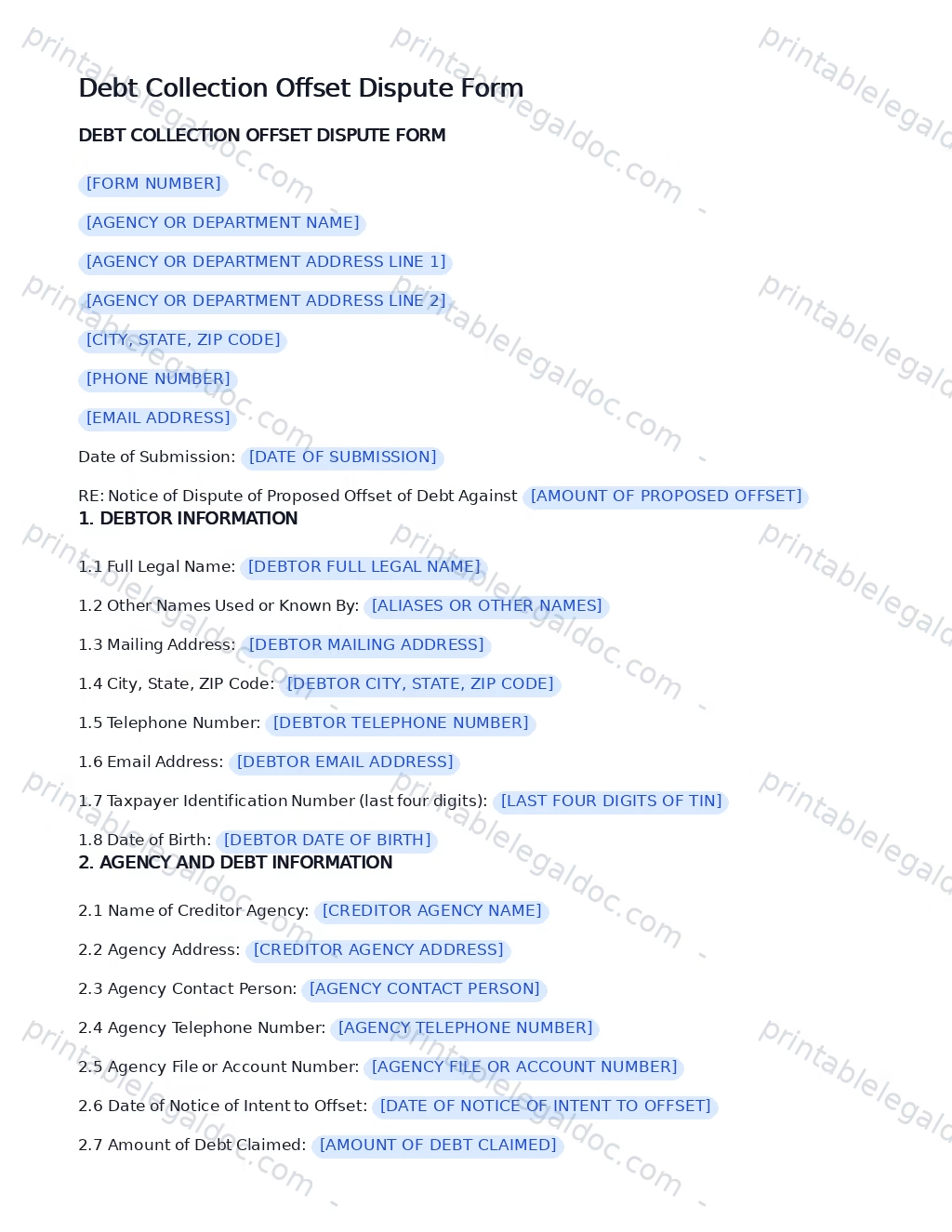
Debt Collection Offset Dispute Form
A debt collection offset dispute form helps you challenge money taken from your account or benefits. Use it when a collector applies funds without proper notice. The template asks for your details and the offset date. You list the reason for the dispute. Maybe the debt is not yours. Maybe the amount is wrong. The form gives you space to attach proof. Keep your tone clear and factual. Submit it to the right agency. Keep a copy for your records. This simple document protects your rights. It starts the formal review process.
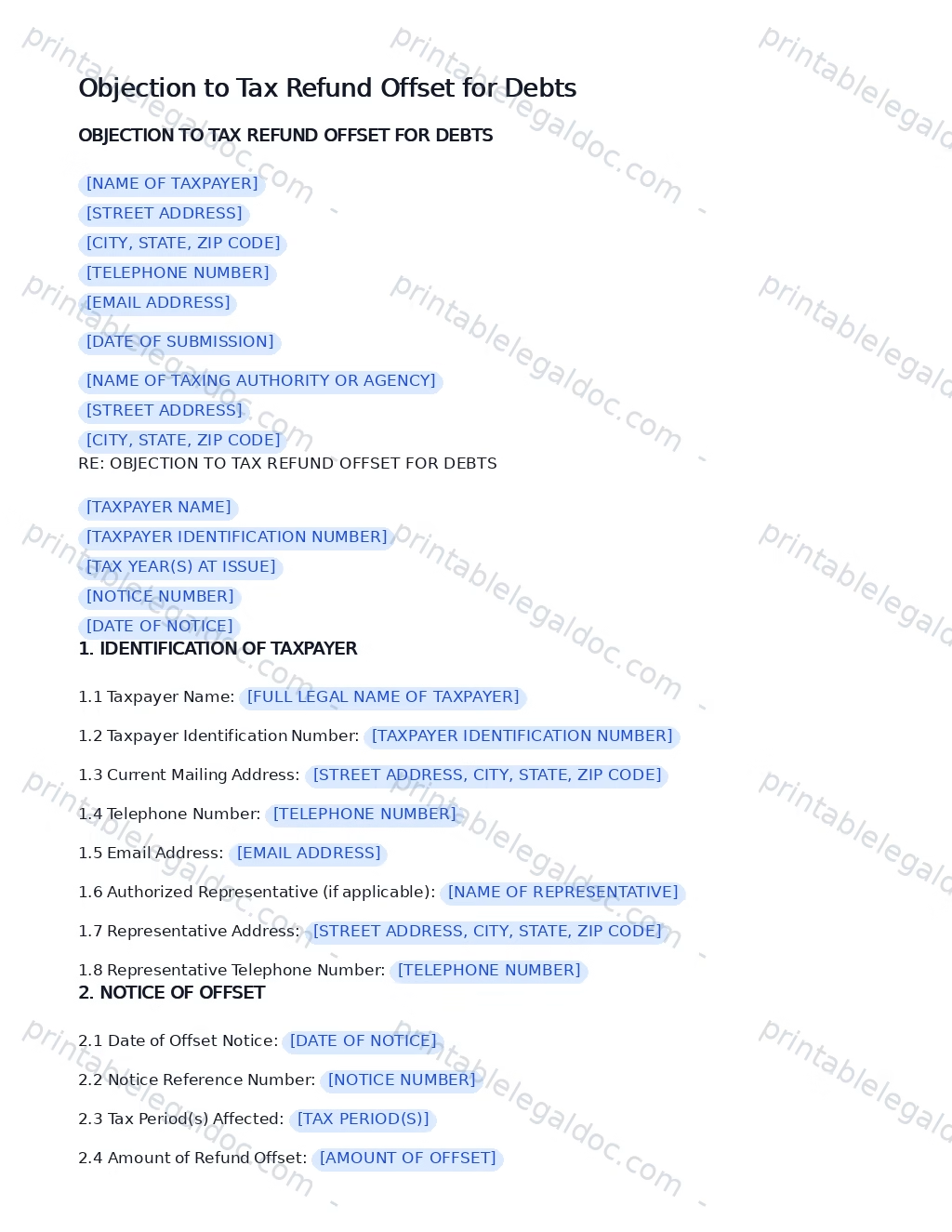
Objection to Tax Refund Offset for Debts
Got a tax refund offset notice? You can fight it. The IRS may take your refund to cover old debts. That feels unfair when you need that money. You have rights. File Form 8379 to request relief for injured spouses. Prove hardship if the offset causes real trouble. Gather your documents fast. Contact the offset department listed in your notice. Ask for a review. Many people win these cases with clear evidence. Act quickly. Deadlines matter. A simple letter can pause the process. Keep copies of everything you send. Stay calm and follow each step. Your refund is yours to claim. Learn the rules and push back.
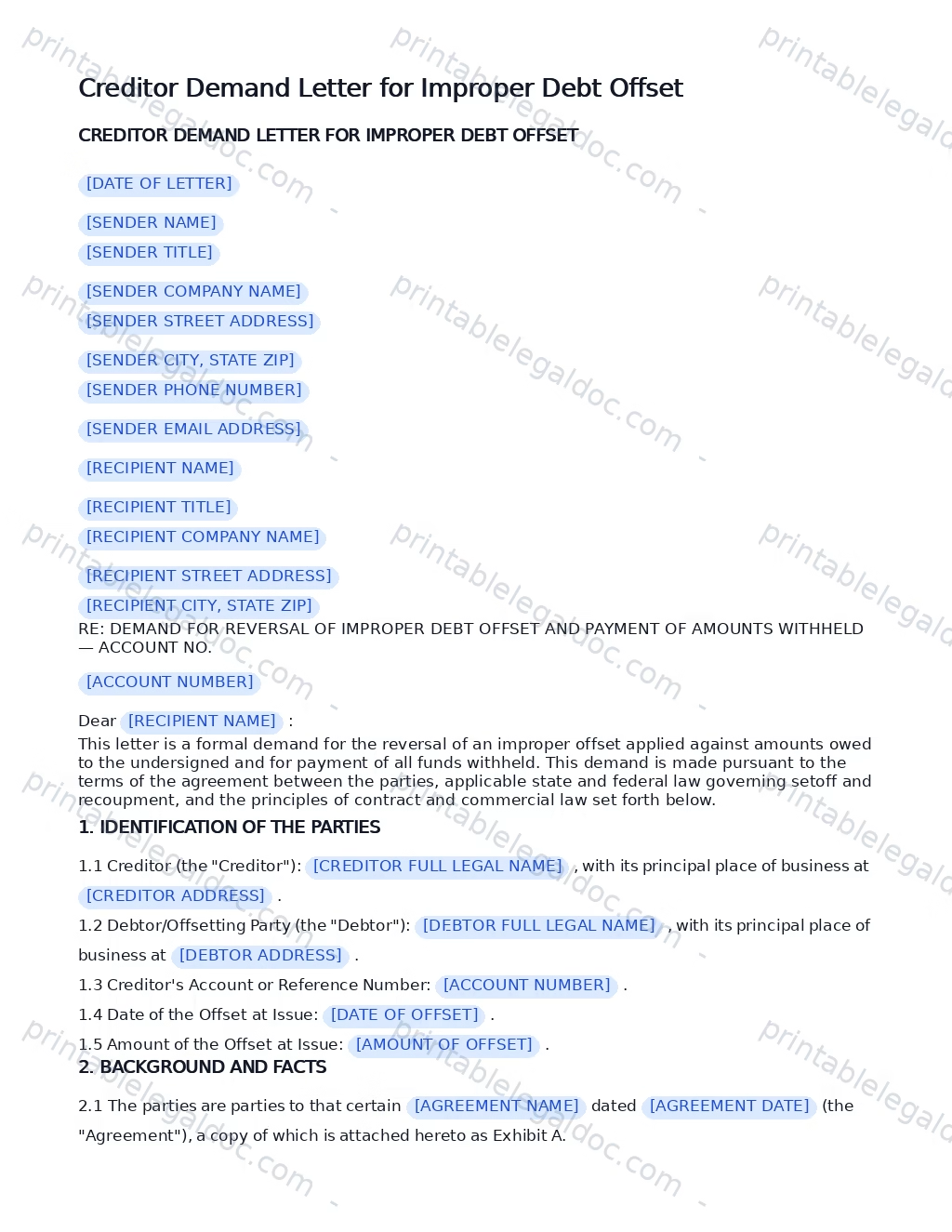
Creditor Demand Letter for Improper Debt Offset
A creditor demand letter for improper debt offset tells a collector to reverse a wrongful deduction. The creditor took money from your account or payment without legal right. This letter states the facts. It cites the law. It demands a full refund. Write it in clear language. Keep a firm tone. Attach proof of the offset and your account records. Set a deadline for repayment. Mention that further action may follow. A strong letter often resolves the matter fast. Use a simple template to save time. Fill in the details. Send it by certified mail. Keep a copy for your records.
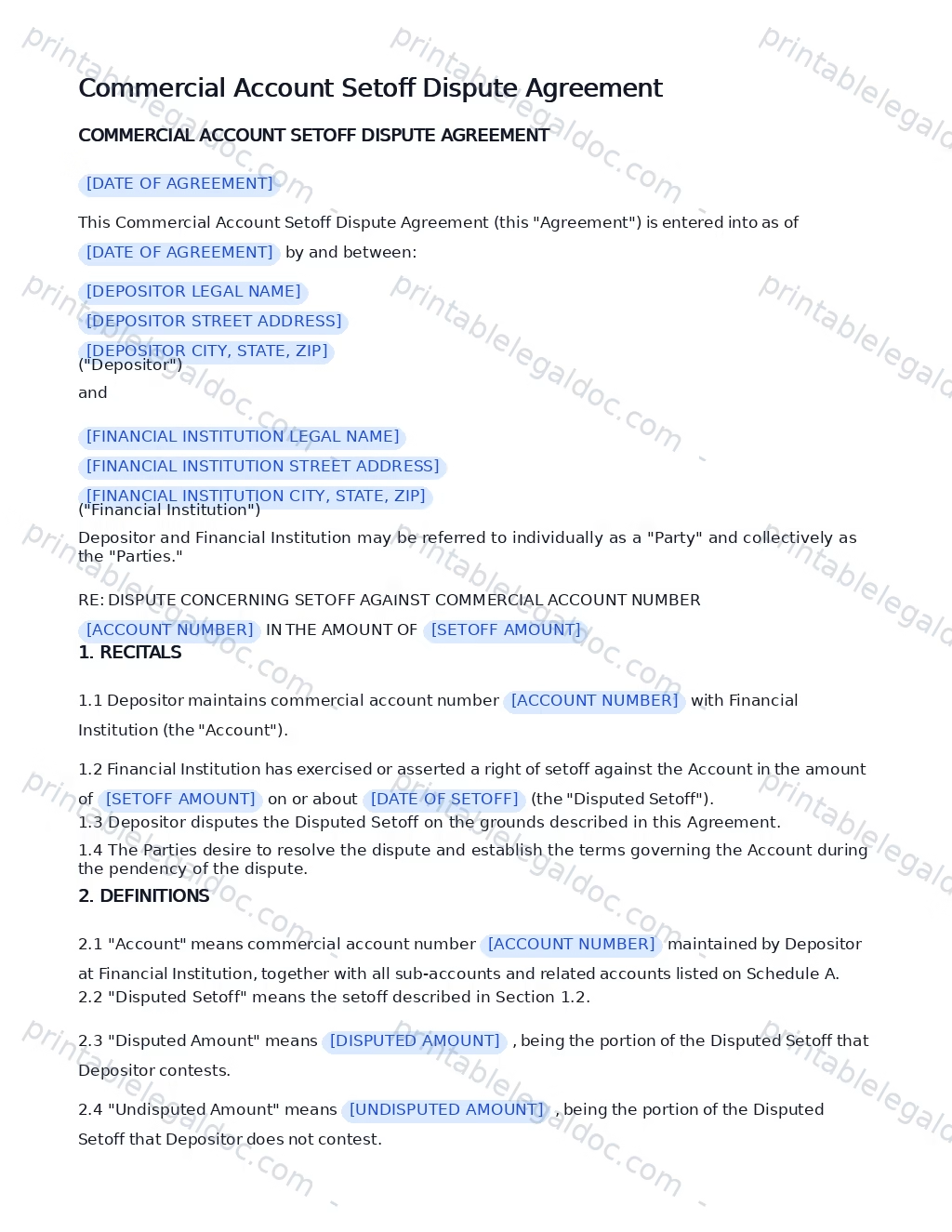
Commercial Account Setoff Dispute Agreement
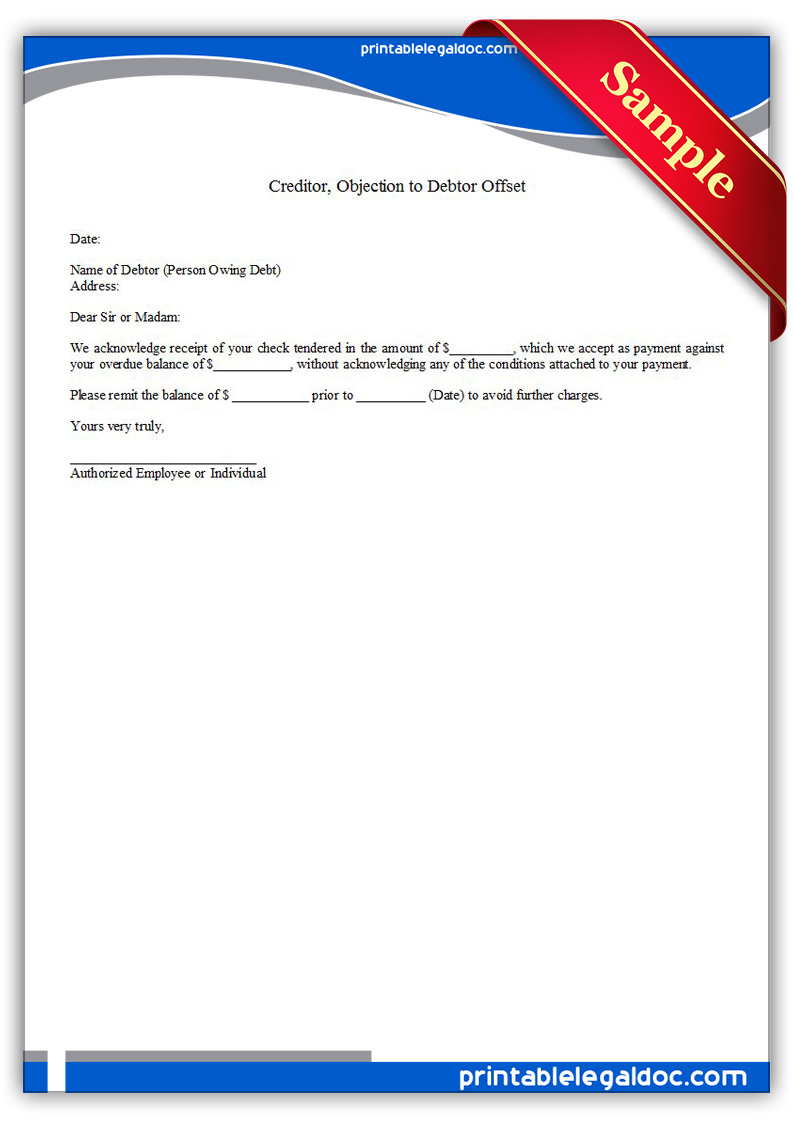
Creditor, Objection To Debtor Offset
Creditor, Objection to Debtor Offset
Date:Name of Debtor (Person Owing Debt)
Address:Dear Sir or Madam:
We acknowledge receipt of your check tendered in the amount of $_________, which we accept as payment against your overdue balance of $___________, without acknowledging any of the conditions attached to your payment.
Please remit the balance of $ ___________ prior to __________ (Date) to avoid further charges.
Yours very truly,
___________________________
Authorized Employee or IndividualCreditor, Objection to Debtor Offset
Review ListThis review list is provided to inform you about this document in question and assist you in its preparation. This letter is intended to object firmly to a notation, comment, or other written item on the face of a check objecting to the charges and stating unilaterally that this is in final settlement of the charges due.
To be effective, this kind of letter must be sent promptly and followed up clearly. If this is a unilateral offset by creditor, debtor should be able to collect as long as the debtor is solvent. If, however, the creditor discussed a payment with debtor, but did not in the end agree to one, the debtor has the potential to cloud the matter in court. If the creditor in fact made an offer as suggested by debtor, then the offer should be accepted and this letter not sent-though some creditors might be tempted to try to “get away” with it.
All of this is one reason why written correspondence of all kinds is better for both parties if they intend to meet their obligations. Oral conversations are best for defendants seeking wiggle room (e.g., “but he said….” and so on and so on). Be so advised about the business practicalities when engaging in this kind of transaction.
Having said this, a personal signature at the bottom of the letter is advised. You should also start a file on the debtor to anticipate further problems and have your records in order. This letter clearly puts the balance back into the “due” column and therefore should be attended to as if it were never objected to by debtor. Proceed accordingly.
Frequently Asked Questions
What is a creditor's objection to debtor offset?
A creditor's objection to debtor offset is a letter used by a creditor to formally reject any notation, comment, or written item on a check that objects to charges or unilaterally states the payment is in final settlement. The letter acknowledges receipt of the check as payment against the overdue balance but does not accept any conditions attached to it. It demands the remaining balance by a specified date to avoid further charges.
When should a creditor send an objection to debtor offset letter?
The letter must be sent promptly after receiving a check with a restrictive endorsement or notation. To be effective, it should be followed up clearly. The article emphasizes that promptness and clear follow-up are essential for the letter to serve its purpose.
What should be included in a creditor's objection to debtor offset letter?
The letter should include the date, the debtor's name and address, a salutation, acknowledgment of the check amount, the overdue balance, a statement that the payment is accepted without acknowledging any attached conditions, the remaining balance due, a deadline for payment, and a signature line for an authorized employee or individual. The article provides a template with these elements.
Can a creditor accept a check as payment without agreeing to the debtor's conditions?
Yes, the article states that the creditor can accept the check as payment against the overdue balance without acknowledging any of the conditions attached to the payment. This is done by explicitly stating in the letter that the acceptance is without acknowledging any conditions. The creditor then demands the remaining balance.
What happens if a debtor unilaterally offsets a debt?
If this is a unilateral offset by the creditor, the debtor should be able to collect as long as the debtor is solvent. The article notes that in such cases, the debtor has the ability to collect. However, if the creditor discussed a payment with the debtor but did not agree to one, the debtor has the potential to cloud the issue.
What is the purpose of the review list for a creditor's objection to debtor offset?
The review list is provided to inform the user about the document and assist in its preparation. It explains that the letter is intended to object firmly to a notation on a check that objects to charges or states it is in final settlement. It also highlights the need for promptness and clear follow-up.
How does a creditor object to a debtor's offset notation on a check?
A creditor objects by sending a letter that acknowledges receipt of the check as payment against the overdue balance but explicitly states that it does not acknowledge any conditions attached to the payment. The letter then demands the remaining balance by a certain date. This formal objection rejects the debtor's unilateral attempt to settle the debt for less.
What are the consequences of not responding to a debtor's offset notation?
The article does not explicitly state the consequences of not responding, but it emphasizes that the letter must be sent promptly and followed up clearly to be effective. This implies that failing to respond could weaken the creditor's position. The letter is intended to firmly object to the notation and prevent it from being considered accepted.
Is a creditor's objection to debtor offset legally binding?
The article does not provide legal advice or state whether the letter is legally binding. It describes the letter as a formal objection and a tool for creditors. For legal advice, one should consult a qualified professional.
What if the debtor is insolvent when a unilateral offset by creditor occurs?
The article states that if this is a unilateral offset by creditor, the debtor should be able to collect as long as the debtor is solvent. It does not address the scenario where the debtor is insolvent. Therefore, no specific guidance is provided for insolvent debtors in this context.


That is BRILLIANT!!! admin, you just made my year even more worth while for me!
Great .Thanks for sharing this wonderful document.
Your my savior! Going to download this editable document now.
This is so amazing, thanks for sharing this word document to us.
Thanks admin, you rock!
Thanks, Just read it awhile its look good that you don’t even need a lawyer to create one.
Just what i need.thanks you so so so much for this printable form.
This is so good that you gotta get it for free of charge.