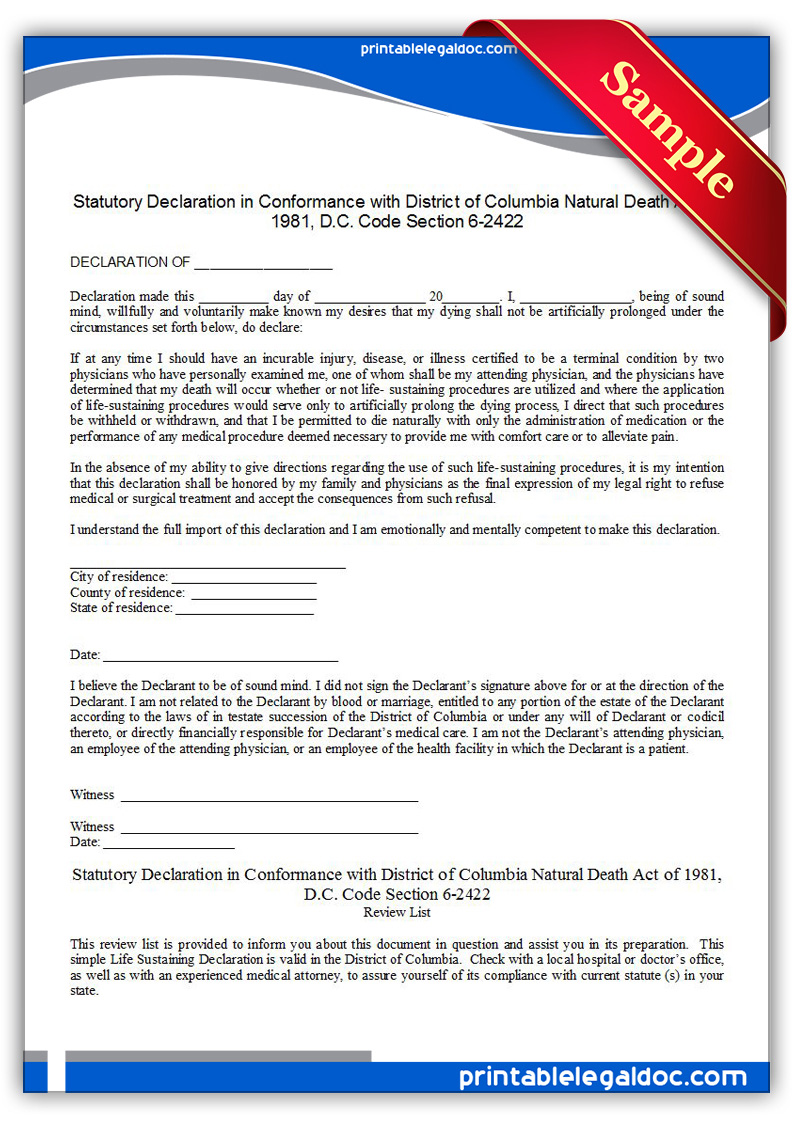
Life Sustaining Statute
A Life Sustaining Statute or a uniform living will is a legal document written by someone who is diagnosed with an illness that may be difficult to cure or has a chance to become a terminal illness. A life sustaining statute or uniform living will states the wishes of the person who is ill. It states what they would want to happen in the case that their illness does become terminal or that they pass the point of no return. This document states the types of medications he will be restricted to and from. It also states that if the person decided to prolong or shorten his or her life, that he or she did it willingly, of sound mind, has been informed of possible treatments and procedures, and understands all legal implications of his or her decisions. The document is generally written (this may vary among states) with the writer’s signature, City of residence, County of residence, State of residence, Social Security Number, the Date it was signed, and the names of the witnesses present during this event. It is then presented to a notary public for notarization and publishing. Finally, you are encouraged to keep multiple copies. Make sure that theses can be accessible with your doctor, lawyer, and family members.
A life sustaining statute is generally legal in most states and will generally be enforce and made in the presence of witnesses and a notary public. There is a general format when it come to life sustaining statutes but the details may differ depending on the state you are in.
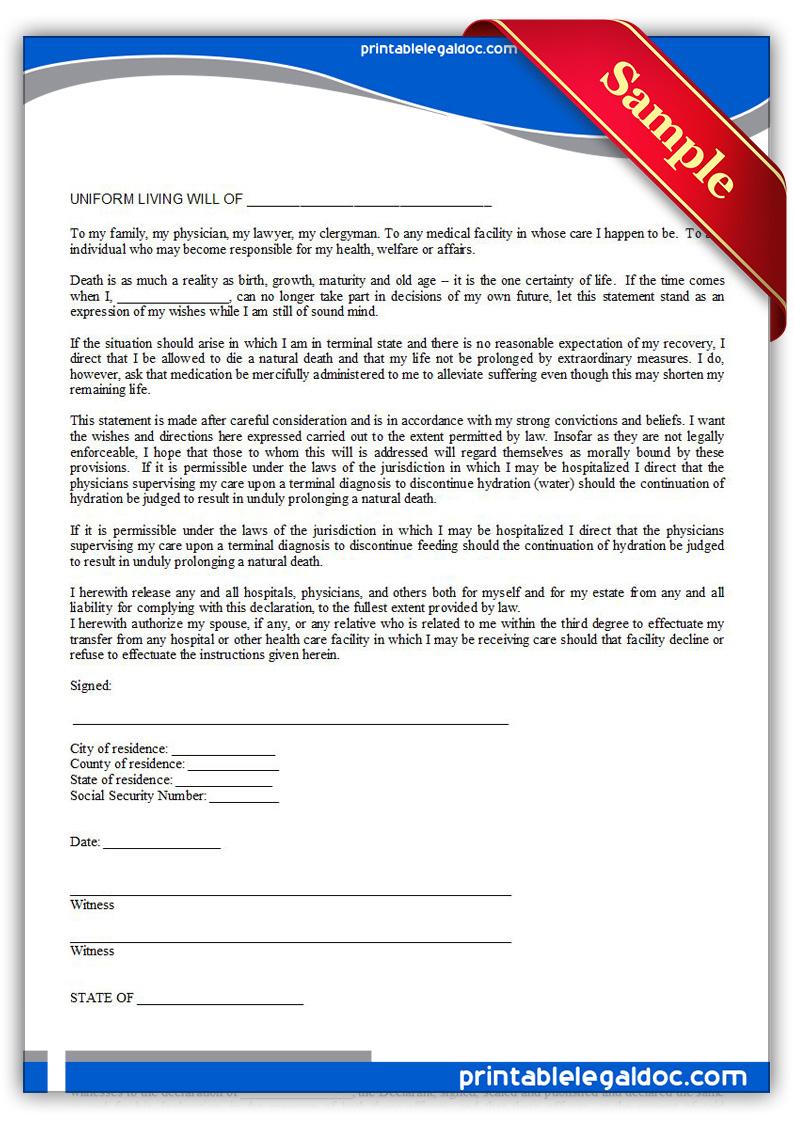
Life Sustaining Statute, General
UNIFORM LIVING WILL OF ________________________________
To my family, my physician, my lawyer, my clergyman. To any medical facility in whose care I happen to be. To any individual who may become responsible for my health, welfare or affairs.
Death is as much a reality as birth, growth, maturity and old age — it is the one certainty of life. If the time comes when I, ________________, can no longer take part in decisions of my own future, let this statement stand as an expression of my wishes while I am still of sound mind.
If the situation should arise in which I am in terminal state and there is no reasonable expectation of my recovery, I direct that I be allowed to die a natural death and that my life not be prolonged by extraordinary measures. I do, however, ask that medication be mercifully administered to me to alleviate suffering even though this may shorten my remaining life.
This statement is made after careful consideration and is in accordance with my strong convictions and beliefs. I want the wishes and directions here expressed carried out to the extent permitted by law. Insofar as they are not legally enforceable, I hope that those to whom this will is addressed will regard themselves as morally bound by these provisions. If it is permissible under the laws of the jurisdiction in which I may be hospitalized I direct that the physicians supervising my care upon a terminal diagnosis to discontinue hydration (water) should the continuation of hydration be judged to result in unduly prolonging a natural death.
If it is permissible under the laws of the jurisdiction in which I may be hospitalized I direct that the physicians supervising my care upon a terminal diagnosis to discontinue feeding should the continuation of hydration be judged to result in unduly prolonging a natural death.
I herewith release any and all hospitals, physicians, and others both for myself and for my estate from any and all liability for complying with this declaration, to the fullest extent provided by law.
I herewith authorize my spouse, if any, or any relative who is related to me within the third degree to effectuate my transfer from any hospital or other health care facility in which I may be receiving care should that facility decline or refuse to effectuate the instructions given herein.Signed:
_______________________________________________________________
City of residence: _______________
County of residence: _____________
State of residence: ______________
Social Security Number: __________Date: _________________
________________________________________________________________
Witness________________________________________________________________
Witness
STATE OF ________________________
COUNTY OF _______________________This day personally appeared before me, the undersigned authority, a Notary Public in and for ______________ County, ___________________________State, ______________________________ _______________________________(Witnesses) who, being first being duly sworn, say that they are the subscribing witnesses to the declaration of ________________, the Declarant, signed, sealed and published and declared the same as and for his declaration, in the presence of both these affiants; and that these affiants, at the request of said Declarant, in the presence of each other, and in the presence of said Declarant, all present at the same time, signed their names as attesting witnesses to said declaration.
Affiants further say that this affidavit is made at the request of ________________, Declarant, and in his presence, and that ________________ at the time the declaration was executed, in the opinion of the affiants, of sound mind and memory, and over the age of eighteen years.
Taken, subscribed and sworn to before me by _________________ (witness) and ____________________________ (witness) this _______ day of ____________________________, 20_____.My commission expires: __________________
___________________________________
Notary Public
Living Will
Review ListThis review list is provided to inform you about this document in question and assist you in its preparation. This simple Life Sustaining Declaration is valid in many states. It is a general format for those states without specific ones, though it will generally be enforced if done and properly witnessed, in most states. Check with a local hospital or doctor’s office, as well as with an experienced medical attorney, to assure yourself of its compliance with current statute (s) in your state.
1. Make multiple copies. Give one to your doctor (s), the local hospital, and have others available through your attorney and family. Remember, these kinds of documents are needed in emergency situations at worst and under stressful circumstances at best. So be sure they are available to the appropriate people easily, when needed.
Frequently Asked Questions
What is a living will?
A living will is a legal document that allows you to express your wishes regarding medical treatment if you become unable to make decisions for yourself. It typically addresses situations where you are in a terminal state with no reasonable expectation of recovery. The document directs that you be allowed to die a natural death and that your life not be prolonged by extraordinary measures.
What is the Uniform Living Will?
The Uniform Living Will is a standardized form of living will provided in the article. It is addressed to family, physicians, lawyers, clergymen, medical facilities, and any individuals responsible for your health, welfare, or affairs. It allows you to state your wishes while you are of sound mind.
When does a living will take effect?
A living will takes effect when you can no longer take part in decisions of your own future. Specifically, it applies if you are in a terminal state and there is no reasonable expectation of your recovery. At that point, the document serves as an expression of your wishes.
What does a living will direct regarding extraordinary measures?
A living will directs that you be allowed to die a natural death and that your life not be prolonged by extraordinary measures. This is based on the premise that death is a certainty of life. The document emphasizes that these wishes are made after careful consideration and in accordance with your strong convictions and beliefs.
Can medication be administered to alleviate suffering under a living will?
Yes, the Uniform Living Will explicitly requests that medication be mercifully administered to alleviate suffering, even if it may shorten your remaining life. This provision ensures comfort while respecting the directive to avoid extraordinary measures. It reflects a balance between allowing a natural death and providing palliative care.
Who should receive a copy of my living will?
According to the article, the living will is addressed to your family, your physician, your lawyer, your clergyman, any medical facility in whose care you happen to be, and any individual who may become responsible for your health, welfare, or affairs. Distributing copies to these parties helps ensure your wishes are known and followed. It is important that those who may be involved in your care have access to the document.
Is a living will legally enforceable?
The article states that you want the wishes and directions expressed in the living will to be carried out to the extent permitted by law. It acknowledges that some wishes may not be legally enforceable. In such cases, you hope that those to whom the will is addressed will still respect your wishes.
What is the purpose of a living will?
The purpose of a living will is to express your wishes regarding medical treatment if you can no longer make decisions for yourself. It allows you to direct that you be allowed to die a natural death and that your life not be prolonged by extraordinary measures. It also serves as a statement of your strong convictions and beliefs.
How does a living will address terminal illness?
A living will specifically addresses the situation where you are in a terminal state and there is no reasonable expectation of your recovery. In such cases, it directs that you be allowed to die a natural death and that your life not be prolonged by extraordinary measures. It also requests medication to alleviate suffering, even if it may shorten your remaining life.
What should I consider before making a living will?
Before making a living will, you should consider it carefully, as the document states it is made after careful consideration and in accordance with your strong convictions and beliefs. You should ensure it reflects your wishes regarding terminal illness and extraordinary measures. It is also important to discuss your wishes with family, physicians, and others who may be involved in your care.