
This review list is intended to educate you about the subject of this document and to aid you in its preparation. By their very nature, lie detector exams are very invasive and subjective in their outcomes. This gives anybody attempting to administer them in a work environment two strikes against them. The Company may be accused of being both “excessively” invasive and “excessively” subjective. The effect in court is determined by a plaintiff attorney’s ability to pile on with “too” this and “too that,” utilizing language and emotional appeals to accomplish this. These have the potential to be quite successful. Therefore, ensure that the game is worth the effort. We do not advocate doing this test unless you feel the results will be very beneficial to your business, which they can be in some situations.
Indeed, the mere rumor of a Lie Detector test being conducted in the future has been shown to reduce the behavior you are attempting to eradicate (e.g., shipping dock theft; gambling; drug selling; and the like). Our recommendation is to begin with the rumor strategy. It worked in one of my firms, and no tests or signing papers were ever required.
If you wish to proceed with the forms, please follow these steps:
- Instruct the employee or workers to sign in the presence of a peer who will act as a
witness. The witness should not be the company’s traditional “big boss.” You’ll notice that the word “Lie Detector” is used. This is not always the case, though. We recommend it since it appears to be more transparent and above board. Everyone is familiar with Lie Detector tests; however, not everyone is familiar with Polygraph tests. This puts you on a more secure foundation if you ever have to appear in court—about being candid and forthright, not dishonest, and so forth.
- Consult your attorney in advance for guidance on the case. They will be familiar with how
these instances are handled in their area, or they will be able to locate someone who is familiar with the procedure.
- Once again, you should have a compelling reason for turning to this method owing to the
legal hazards involved.

Polygraph Testing, Employee Consent
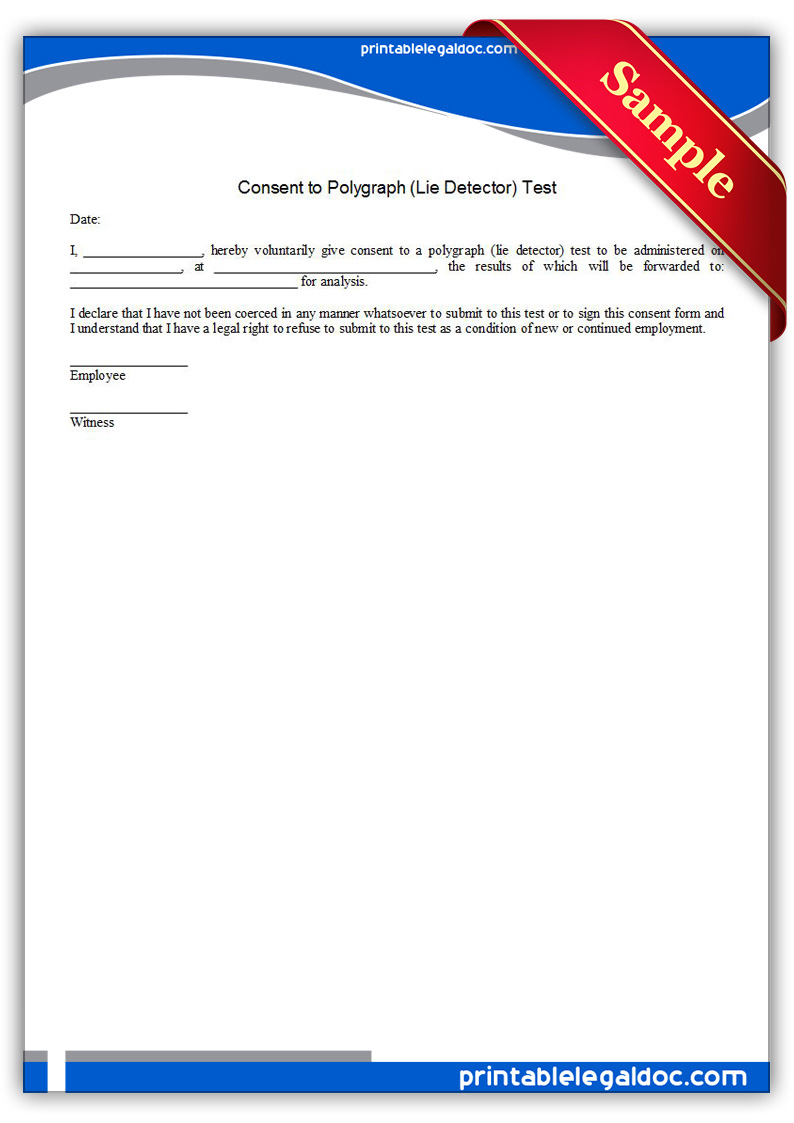
Consent to Polygraph (Lie Detector) Test
Date:
I, _________________, hereby voluntarily give consent to a polygraph (lie detector) test to be administered on ________________, at ________________________________, the results of which will be forwarded to: _________________________________ for analysis.
I declare that I have not been coerced in any manner whatsoever to submit to this test or to sign this consent form and I understand that I have a legal right to refuse to submit to this test as a condition of new or continued employment.
_________________
Employee_________________
Witness
Consent to Polygraph (Lie Detector) Test
Review ListThis review list is provided to inform you about this document in question and assist you in its preparation. Lie detector tests are, by their nature, very intrusive and subjective in their results. This provides two strikes against anyone seeking to administer them in an employment situation. The Company can be accused of being both “too” intrusive and “too” subjective. The impact in court relates to the ability of a plaintiff attorney to pile on with the “too” this and too that, using rhetoric and emotional appeals to do so. These can be very effective. So, be sure that the game is worth the trouble. We do not recommend use of this test unless you believe the results will substantially benefit your Company, which in some cases they can.
In fact, the very rumor in the air of a Lie Detector test being possibly administered in the future, can cut down on the behavior you are seeking to extinguish (e.g., shipping dock theft; gambling; drug selling; and the like). Our suggestion is to try the rumor approach first. It worked in one of my companies and no test was ever administered, or forms requested for signature.
If you want to proceed with the forms, do the following:
1. Have the employee or employees, sign in front of a peer, who is a witness. The witness should not be the proverbial “big boss” in the company. You will note the use of the phrase “Lie Detector.” This is not always done. We suggest it because it has the appearance of being more open and above board. Everyone knows what a Lie Detector test is; not everyone knows what a Polygraph test is. This puts you on firmer footing if you ever get to court-about being open and clear, not deceptive, and so on and so on.
2. Check with your attorney for their advice on the matter in advance. They will know how these cases go down locally, or can find someone who does know.
3. Again, you should have a substantial purpose in mind before resorting to this due to the legal risks involved.
Frequently Asked Questions
What is a polygraph test consent form?
A polygraph test consent form is a document that an employee signs to voluntarily agree to take a lie detector test. It includes details such as the date and location of the test, the person to whom results will be forwarded, and a declaration that consent was given without coercion. The form also acknowledges the employee's legal right to refuse the test as a condition of employment.
Can an employer require an employee to take a polygraph test?
According to the consent form, employees have a legal right to refuse to submit to a polygraph test as a condition of new or continued employment. Therefore, an employer cannot require an employee to take such a test without their voluntary consent. The form emphasizes that consent must be given freely and without coercion.
Is a polygraph test consent form legally binding?
The consent form is a legal document that records an employee's voluntary agreement to take a polygraph test. It includes a declaration that the employee was not coerced and understands their right to refuse. However, the article does not specify the legal enforceability of the form beyond indicating it is a consent document.
Why are polygraph tests considered intrusive in employment?
The article states that lie detector tests are, by their nature, very intrusive and subjective in their results. This intrusiveness can lead to accusations that the company is being 'too' intrusive, which may be used against them in court. The subjective nature also adds to the potential for legal challenges.
What are the legal risks of using polygraph tests in employment?
The article notes that polygraph tests provide two strikes against anyone seeking to administer them in an employment situation: they can be accused of being both 'too' intrusive and 'too' subjective. These factors can be exploited by a plaintiff attorney in court through rhetoric and emotional appeals. The impact in court relates to the ability to pile on with such arguments.
What should be included in a polygraph consent form?
A polygraph consent form should include the employee's name, the date and location of the test, and the person to whom results will be forwarded. It must also contain a declaration that the employee was not coerced and understands their legal right to refuse the test as a condition of employment. Additionally, a witness signature is typically included.
Can an employee refuse a polygraph test?
Yes, the consent form explicitly states that the employee has a legal right to refuse to submit to a polygraph test as a condition of new or continued employment. This right is acknowledged in the form, and consent must be given voluntarily. Therefore, an employee can refuse without facing consequences as a condition of employment.
What does voluntary consent mean in a polygraph test?
Voluntary consent means that the employee agrees to take the polygraph test without being coerced in any manner. The consent form includes a declaration that the employee has not been coerced to submit to the test or to sign the form. It also confirms that the employee understands their right to refuse.
How subjective are polygraph test results?
The article describes polygraph tests as very subjective in their results. This subjectivity is one of the reasons they are considered problematic in employment situations. It can lead to accusations that the company is being 'too' subjective, which may be used against them in court.
What is the purpose of a polygraph test review list?
The review list is provided to inform individuals about the polygraph consent document and assist in its preparation. It highlights that lie detector tests are intrusive and subjective, providing two strikes against their use in employment. The list also notes the potential impact in court, including the ability of a plaintiff attorney to use rhetoric and emotional appeals.