

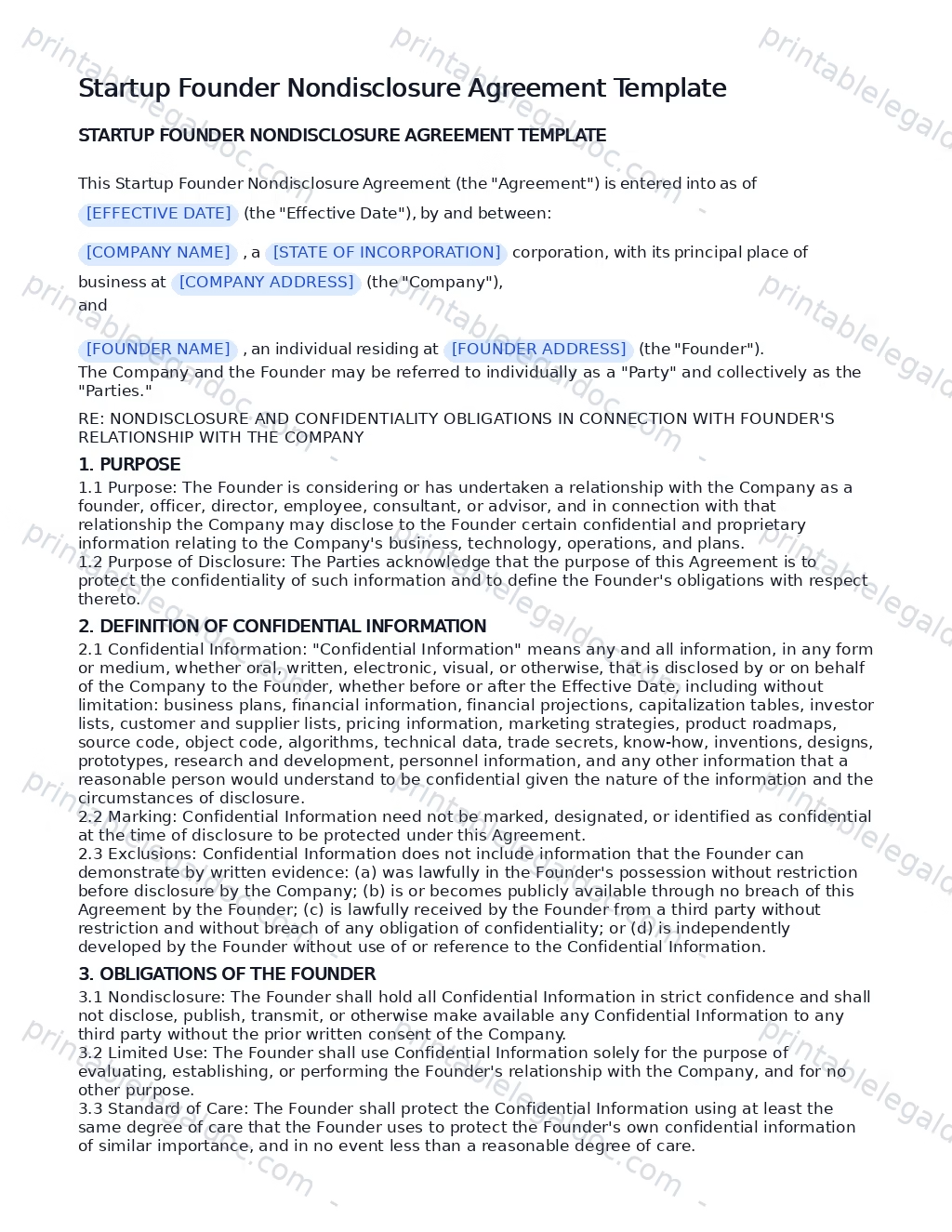
Startup Founder Nondisclosure Agreement Template
A startup founder nondisclosure agreement template protects your ideas before you share them. You need this document when talking to investors, developers, or partners. The template covers confidentiality terms, defined parties, and clear obligations. It sets rules for handling sensitive information. You get simple language that both sides understand. Fill in the blanks and you have a working contract. This saves legal fees during early stages. Use it to guard trade secrets, customer lists, and product plans. The template works for solo founders and small teams. Review it with a lawyer for complex deals. Grab the template and start conversations with confidence.
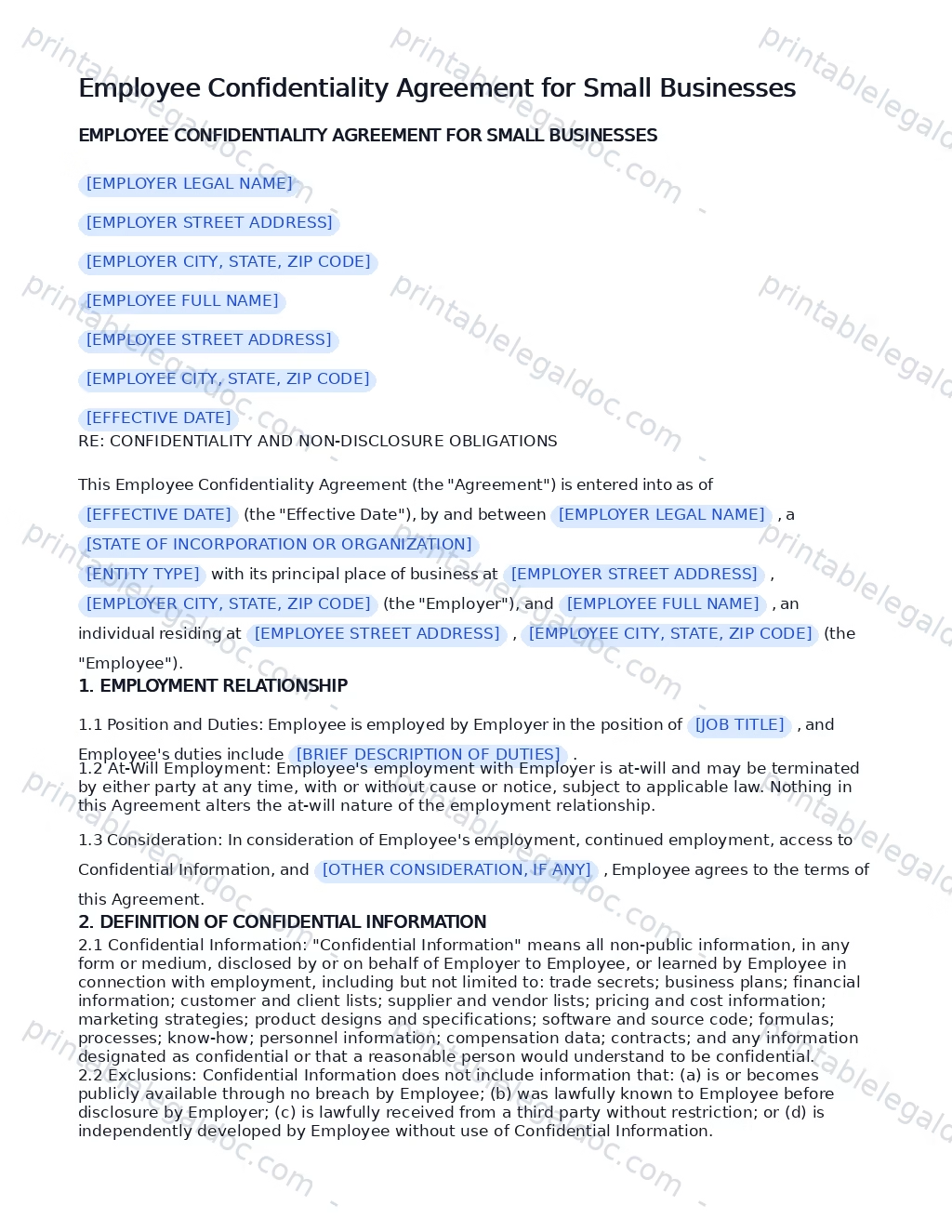
Employee Confidentiality Agreement for Small Businesses
An employee confidentiality agreement protects your small business secrets. It keeps your client lists, pricing, and trade secrets safe. This simple template makes expectations clear from day one. Your team knows what stays private. You gain peace of mind. The document covers confidential information, non disclosure terms, and basic obligations. It fits most small business needs. Easy to customize. No legal jargon overload. Use it for new hires or current staff. Clear rules reduce risk. A signed agreement shows you take privacy seriously. Get the template, fill in the blanks, and secure your business information today.
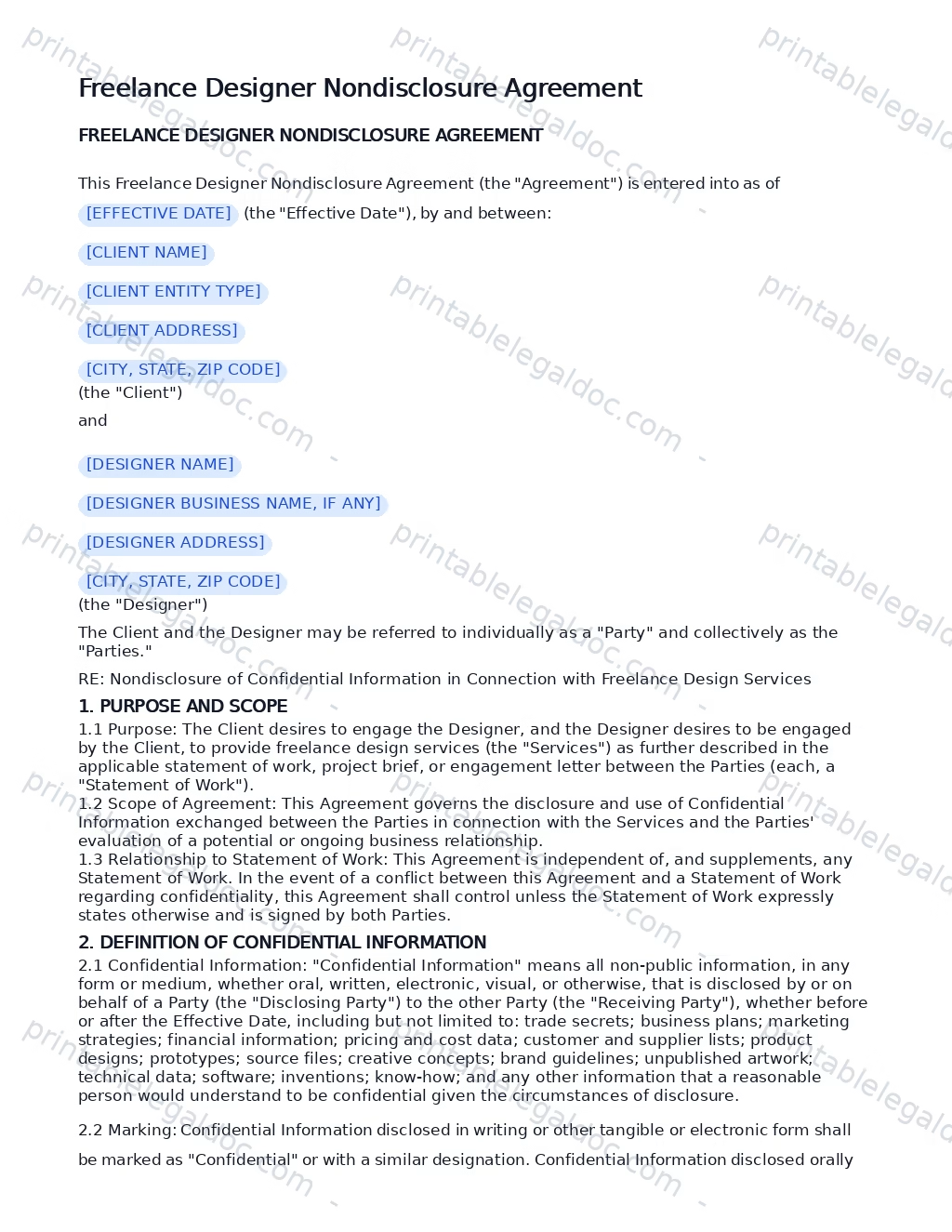
Freelance Designer Nondisclosure Agreement
A freelance designer nondisclosure agreement protects your creative work and client secrets. This simple template covers confidentiality terms both sides can trust. Use it before sharing project details or files. The document sets clear rules about private information. It defines what stays confidential and for how long. Your client signs it to show commitment. You sign it to show professionalism. The template includes standard clauses for design projects. Fill in names, dates, and project scope. Then both parties sign. Keep signed copies for your records. This agreement reduces risk and builds trust. It suits logo work, branding, web design, and more. Get clarity upfront and avoid disputes later. Download the template and adapt it to fit each client project.
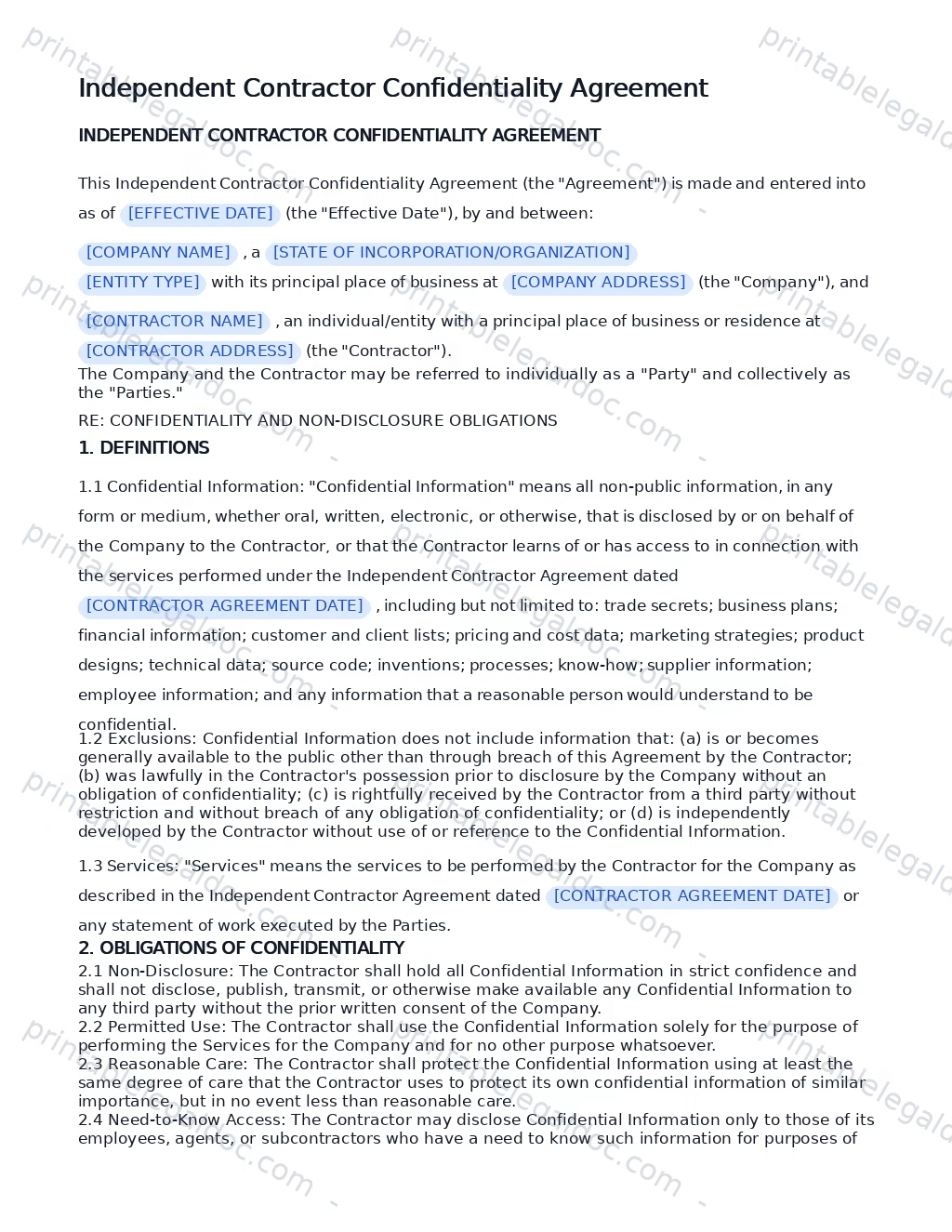
Independent Contractor Confidentiality Agreement
An independent contractor confidentiality agreement protects your business secrets when you hire outside help. This simple template sets clear rules from day one. It defines what counts as confidential information. It explains how the contractor must handle your data. The document also covers return of materials and outlines what happens if trust breaks down. You get plain language clauses that are easy to adjust. Add your project details. Set the time limits. Then both sides sign. Use this agreement before sharing client lists, pricing, or trade secrets with any freelancer. It gives you legal backup and peace of mind. Keep your sensitive information safe with a solid written contract.
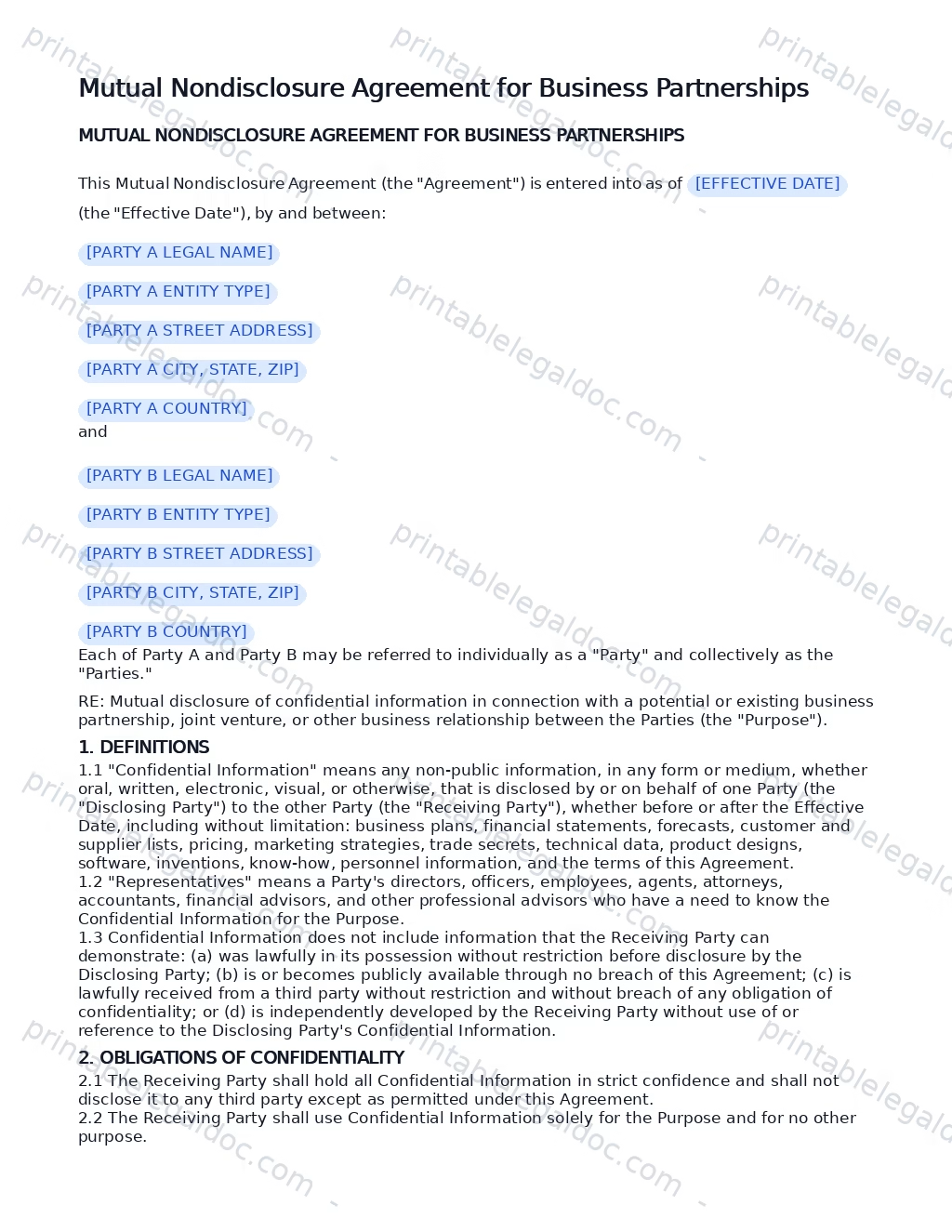
Mutual Nondisclosure Agreement for Business Partnerships
A mutual nondisclosure agreement protects both partners before talks begin. Each side shares sensitive details. Each side agrees to keep them private. Our template makes this simple. Fill in the blanks. Name the parties. Set the term. Define confidential information. Add the signature date. The layout stays clear and short. Busy founders can finish it fast. No legal jargon slows you down. Both partners sign the same document. That builds trust from day one. Use it for vendor talks, joint ventures, or product pilots. Keep your ideas, pricing, and client lists safe. Grab the template and start your partnership on solid ground.
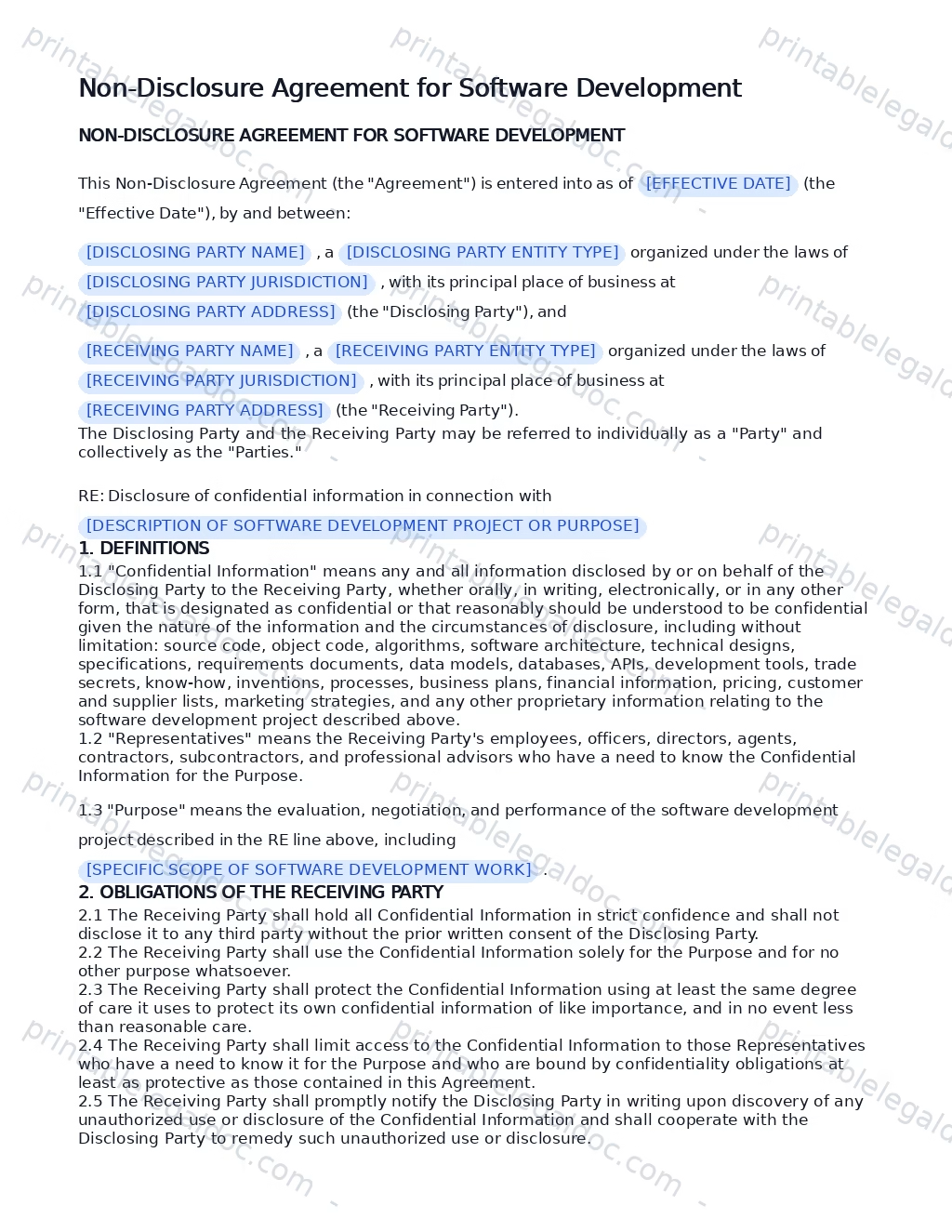
Non-Disclosure Agreement for Software Development
A non-disclosure agreement for software development protects your code, ideas, and business secrets. This template covers the key terms you need. It defines confidential information clearly. Both parties know what stays private. The agreement sets rules for handling source code, designs, and client data. It also spells out what happens if someone breaks the terms. You get clear language that holds up in real projects. Freelancers, agencies, and startups can use it with ease. The template saves you time and legal fees. Customize the details to match your project. Then sign it before work begins. Your intellectual property stays safe from the first meeting onward.
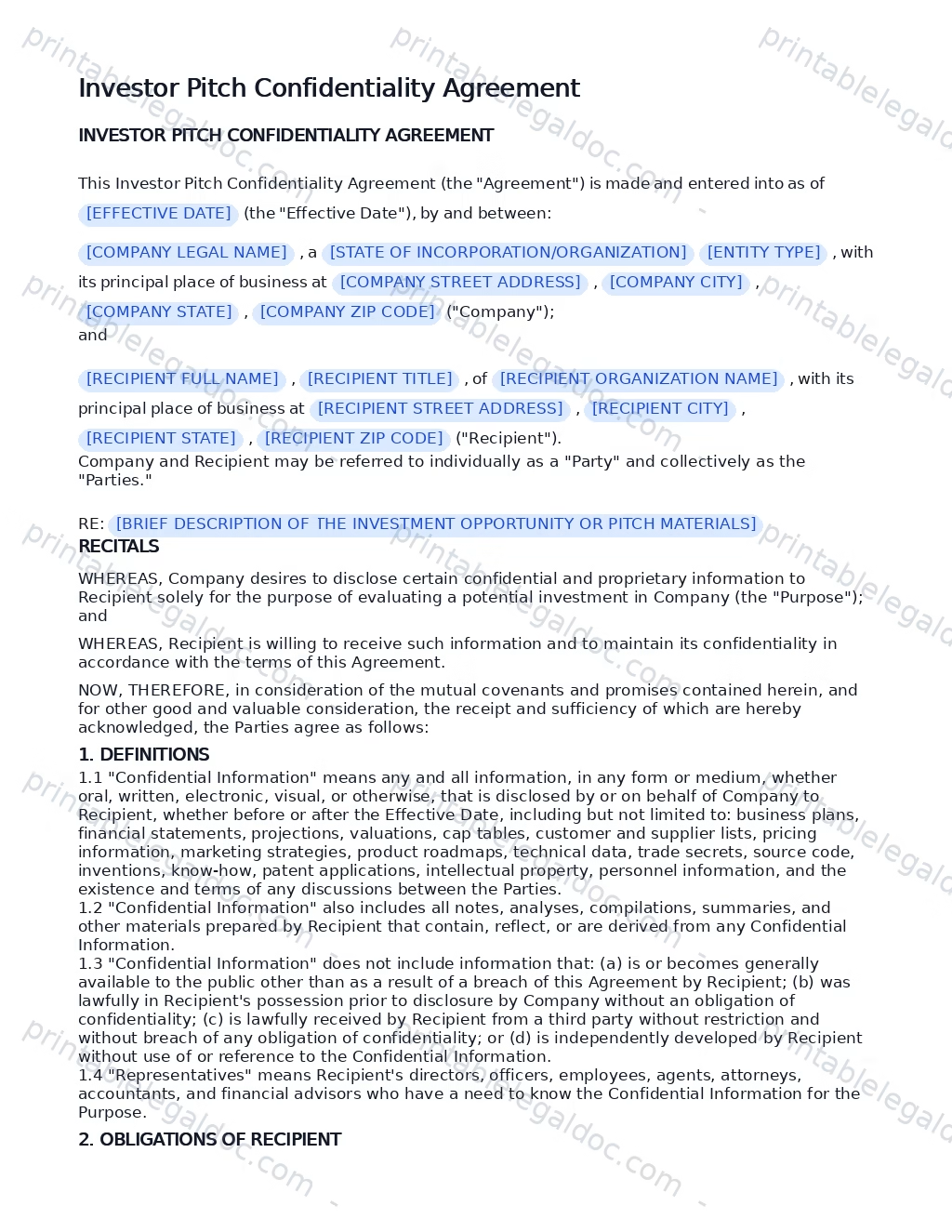
Investor Pitch Confidentiality Agreement
An investor pitch confidentiality agreement protects your ideas before you share them. This template gives you a clear legal shield. It keeps sensitive details private during pitch meetings. Founders use it to guard financial data, trade secrets, and product plans. The document sets rules for how investors handle your information. It also defines what counts as confidential. You get simple language and fill in the blanks fast. No legal jargon slows you down. Use it before every investor conversation. The agreement builds trust on both sides. It shows you take your business seriously. Grab this template and pitch with confidence. Your ideas stay yours.
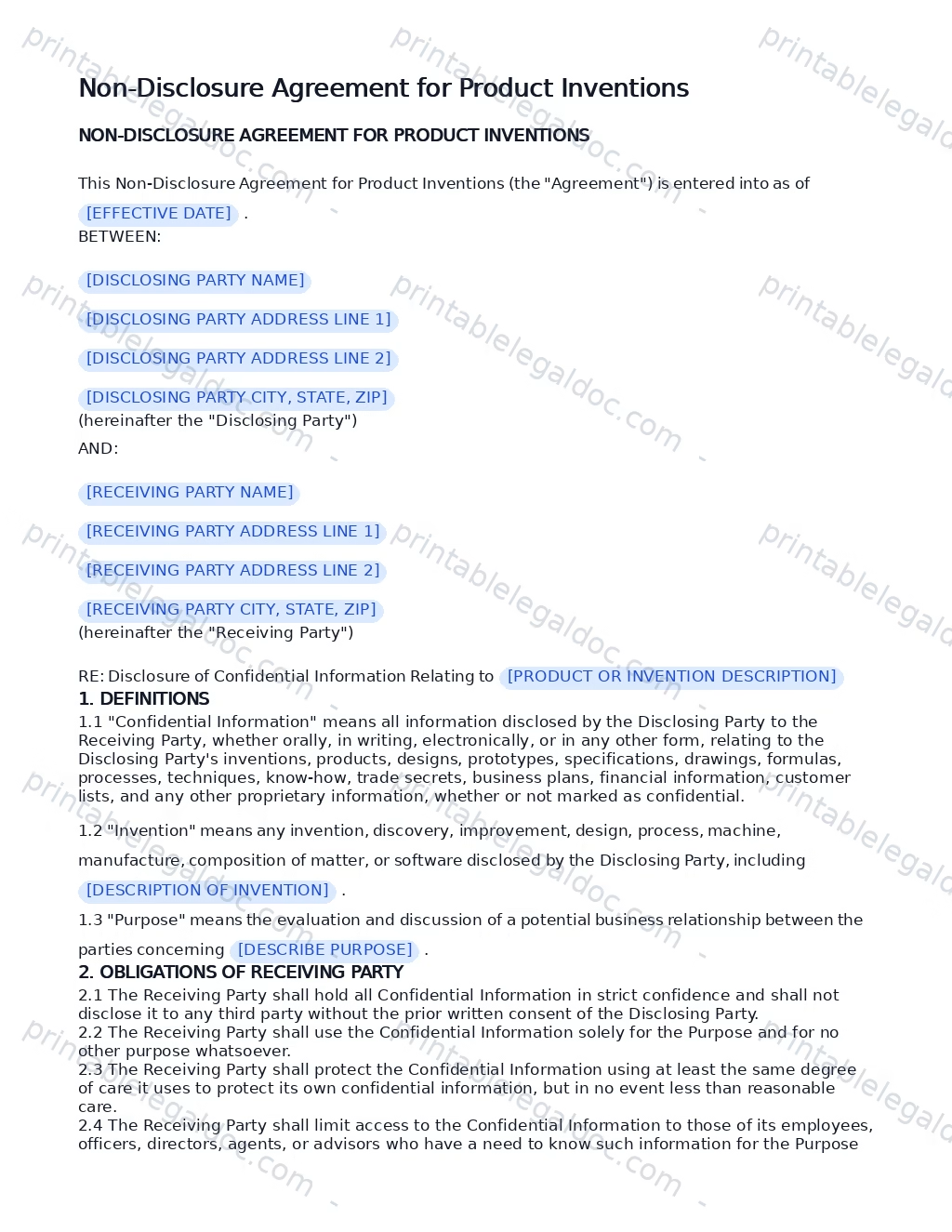
Non-Disclosure Agreement for Product Inventions
A non-disclosure agreement for product inventions protects your ideas before you share them. This template covers the key terms you need. It defines confidential information clearly. It sets rules for how others may use your invention details. Both parties sign before any discussion begins. The agreement limits disclosure to a need-to-know basis. It also sets a time limit on secrecy. You can adapt the template to fit your project. Use it when pitching to manufacturers, investors, or partners. Clear terms reduce risk and build trust. A signed NDA gives you legal ground if someone misuses your invention. Review the template with a legal professional before signing.
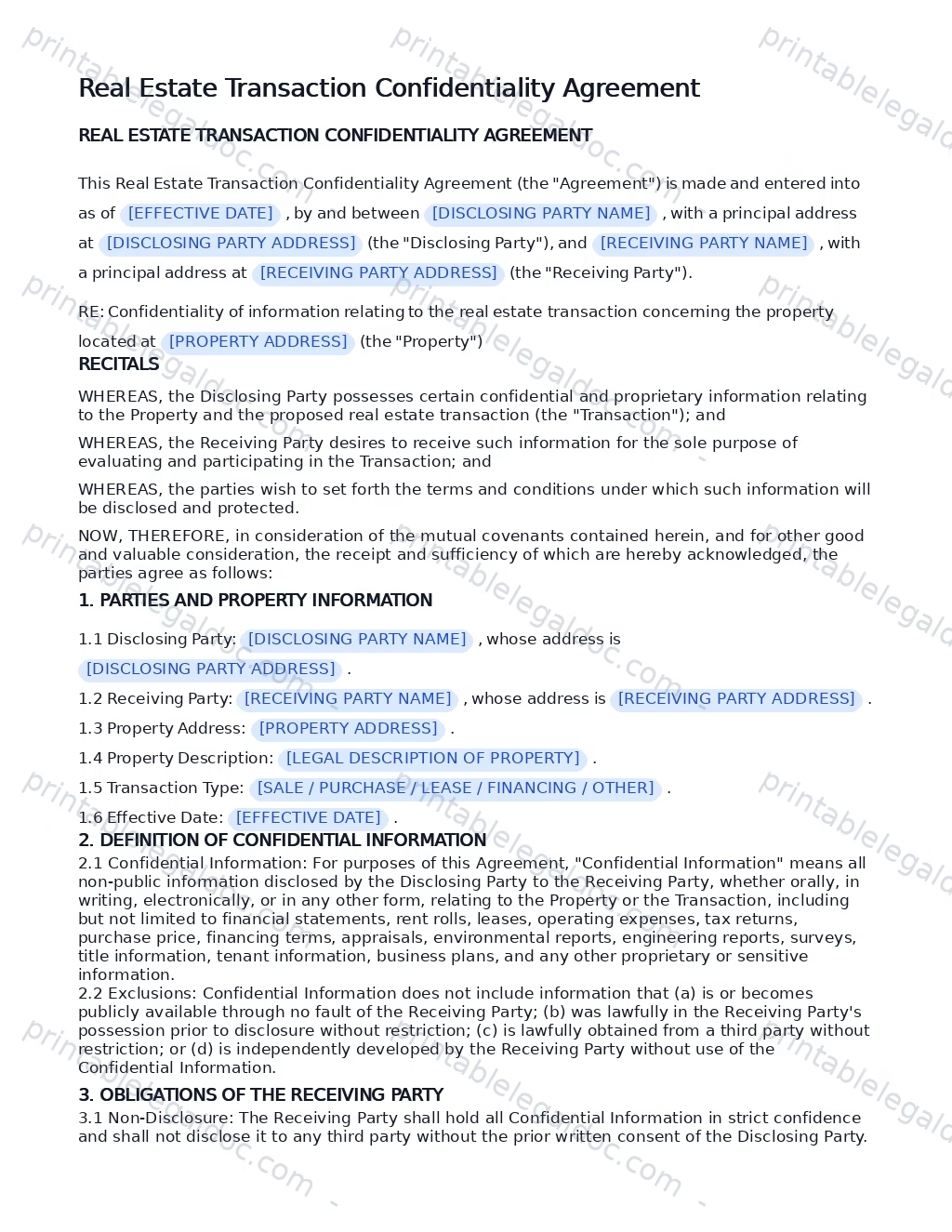
Real Estate Transaction Confidentiality Agreement
A real estate transaction confidentiality agreement keeps deal details private. It protects buyers, sellers, and agents from leaks. Our template covers key terms in plain language. You can fill in property details and party names fast. The form sets clear rules for sharing information. It also outlines what happens if someone breaks trust. Use it before talks begin. That way everyone stays on the same page. The template works for residential and commercial deals. Save time and reduce risk with a ready made form.
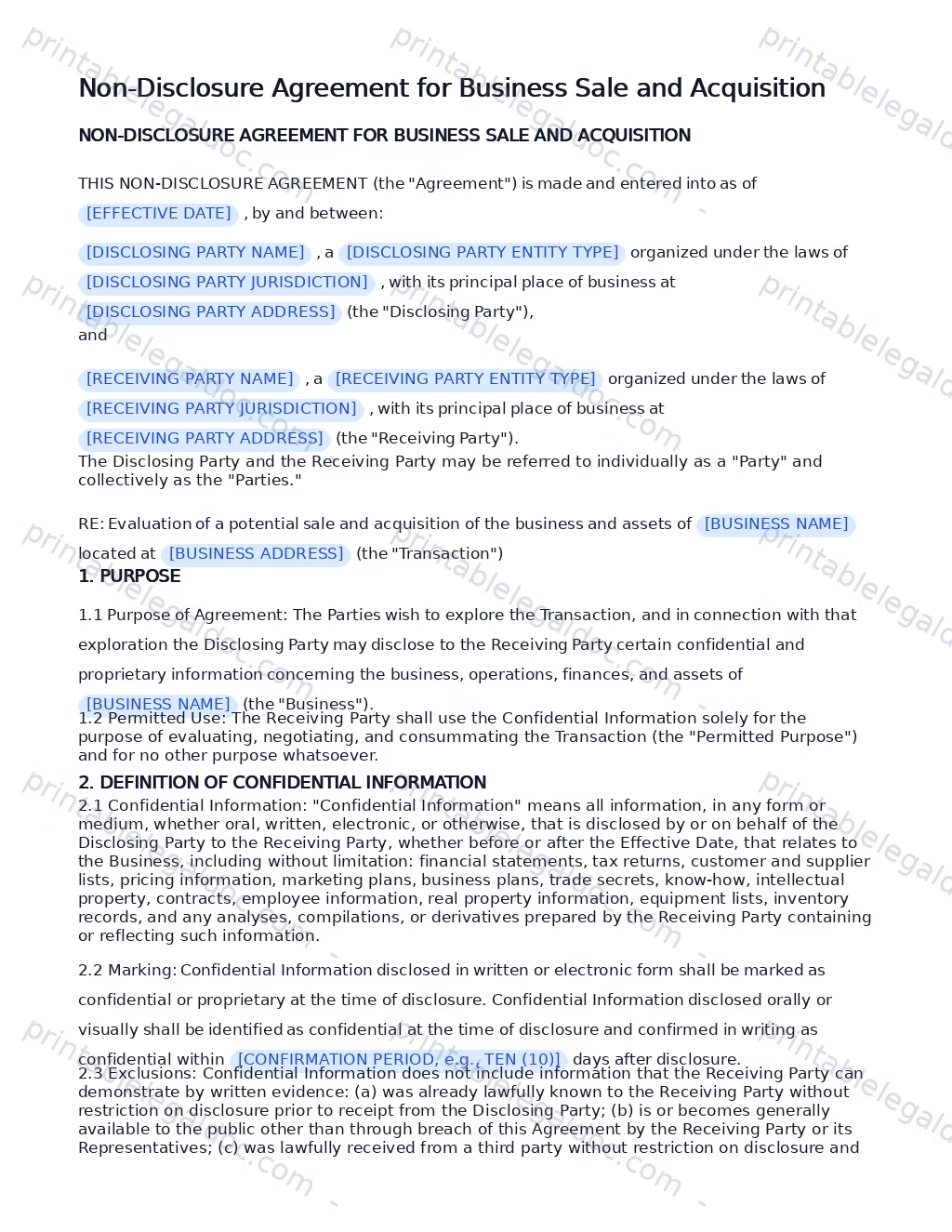
Non-Disclosure Agreement for Business Sale and Acquisition
A non-disclosure agreement protects your business sale. It keeps sensitive details private during talks. Buyers see financials, customer lists, and trade secrets. You need a signed NDA before sharing anything. This template covers both sides. It sets clear rules on confidential data. It limits how buyers use what they learn. And it spells out what happens if trust breaks. Use it early in acquisition talks. It guards your company value and your reputation. Simple language. Straightforward terms. Ready to customize for your deal.

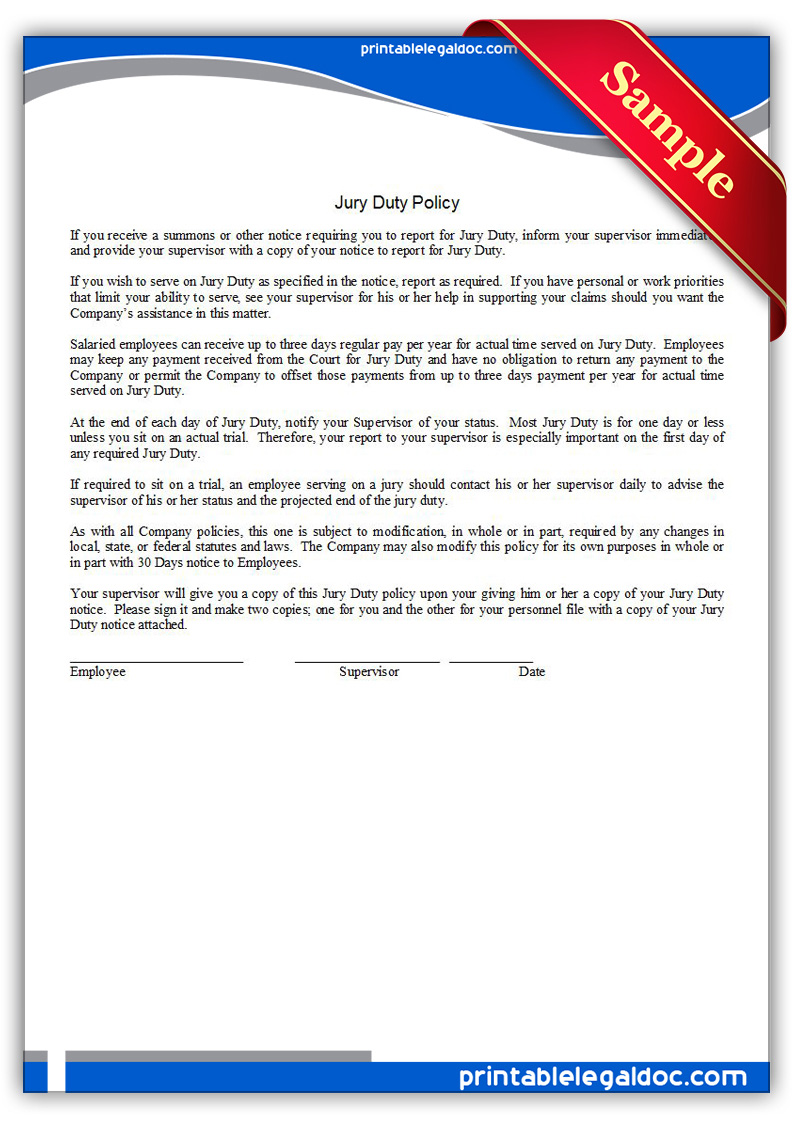
Nondisclosure Agreement
Non-Disclosure Agreement
_____________________, and _____________________, agree:
_____________________ and _____________________ may from time to time disclose to one another certain confidential information or trade secrets generally regarding ______________________.
_____________________ and _____________________ agrees that they shall not disclose the information so conveyed, unless in conformity with this agreement. Both parties shall limit disclosure to their officers and employees with a reasonable “need to know” the information, and shall protect the same from disclosure with reasonable diligence.
As to all information, which each party claims is confidential, they shall reduce the same to writing prior to disclosure and shall conspicuously mark the same as “confidential,” “not to be disclosed” or with other clear indication of its status. If the confidential information which is disclosed is not in written form, for example, a machine or device, the parties shall be required prior to or at the same time that the disclosure is made to provide written notice of the secrecy claimed by the party. The parties agree upon reasonable notice to return the confidential tangible material provided by the other party upon reasonable request.
The obligation of non-disclosure shall terminate when if any of the following occurs:
(a) The confidential information becomes known to the public without the fault of the party receiving disclosure, or;
(b) The information is disclosed publicly by the party disclosing, or;
(c) a period of __________ passes from the disclosure, or;
(d) the information loses its status as confidential through no fault of the party receiving disclosure.In any event, the obligation of non-disclosure shall not apply to information which was known to a party prior to the execution of this agreement.
Dated: _______________________________
________________________________________________
______________ By Company
_______________________________________________
______________ By Individual
Non-Disclosure Agreement
Review ListThis review list is provided to inform you about this document in question and assist you in its preparation. This Non-Disclosure agreement appears in a more complex form in other employment documents. The purpose of using this one is that it is narrow in scope and therefore both more enforceable and acceptable to prospective signers due to its limited nature.
1. Make multiple copies. Keep one in the individual’s file and another in a general non-disclosure file. Give one to the signer as well.
Frequently Asked Questions
What is a nondisclosure agreement?
A nondisclosure agreement is a contract in which parties agree not to disclose certain confidential information or trade secrets that they may disclose to one another. The agreement typically outlines the obligations of the parties to protect such information. It is used to safeguard sensitive information shared between parties.
What types of information are covered by a nondisclosure agreement?
A nondisclosure agreement covers confidential information or trade secrets that the parties may disclose to one another. The specific subject matter is generally identified in the agreement. The information must be marked as confidential or otherwise indicated as secret to be protected.
How should confidential information be marked under a nondisclosure agreement?
Confidential information must be reduced to writing prior to disclosure and conspicuously marked as 'confidential,' 'not to be disclosed,' or with another clear indication of its status. If the information is not in written form, such as a machine or device, the disclosing party must provide written notice of the claimed secrecy prior to or at the same time as the disclosure. This ensures that the receiving party is aware of the confidential nature of the information.
Who can confidential information be disclosed to under a nondisclosure agreement?
Disclosure is limited to officers and employees of the parties who have a reasonable 'need to know' the information. Both parties must protect the information from disclosure with reasonable diligence. This means that only those who require the information to perform their duties may access it.
What happens if confidential information is not in written form?
If confidential information is not in written form, such as a machine or device, the parties must provide written notice of the secrecy claimed by the party prior to or at the same time as the disclosure. This written notice ensures that the receiving party understands the information is confidential. The agreement requires this step to maintain protection.
What are the obligations of the parties regarding confidentiality?
The parties agree not to disclose the confidential information unless in conformity with the agreement. They must limit disclosure to officers and employees with a reasonable 'need to know' and protect the information with reasonable diligence. These obligations are central to the nondisclosure agreement.
What is meant by 'need to know' in a nondisclosure agreement?
In a nondisclosure agreement, 'need to know' refers to officers and employees who require access to the confidential information to perform their job responsibilities. Disclosure is restricted to such individuals. This limits the risk of unauthorized dissemination.
What is 'reasonable diligence' in protecting confidential information?
Reasonable diligence refers to the standard of care that the parties must exercise to protect confidential information from disclosure. It requires taking appropriate measures to prevent unauthorized access or release. The agreement does not specify exact actions but expects a reasonable level of effort.
What must be done with tangible confidential materials upon notice?
The parties agree upon reasonable notice to return the confidential tangible materials. This means that if requested, the receiving party must return any physical items containing confidential information. The agreement includes this provision to ensure the return of such materials.
Can confidential information be disclosed if required by law?
The agreement states that the parties shall not disclose the information unless in conformity with the agreement. It does not explicitly address disclosures required by law. Therefore, any such disclosure would need to be evaluated under the terms of the agreement.



Beautifully done. Im printing it know.
This is stunning!
Awesome. Well done sir.
So beautiful template
Wonderful work. I love the way you created the template its well written said my lawyer.
Nice!!!! I love it . My husband was so surprise. He tought i was the one created it. haha
It’s what i have been looking for this pass few days. Im glad i’ve visited your site.
Me gusta.I really need this one since im not that good in writing english.
OH MY GOD!! I WANT THIS Printable Form . Just what im looking for.
holy crap this is awesome!!! I don’t need to register or pay any registration just to have one.