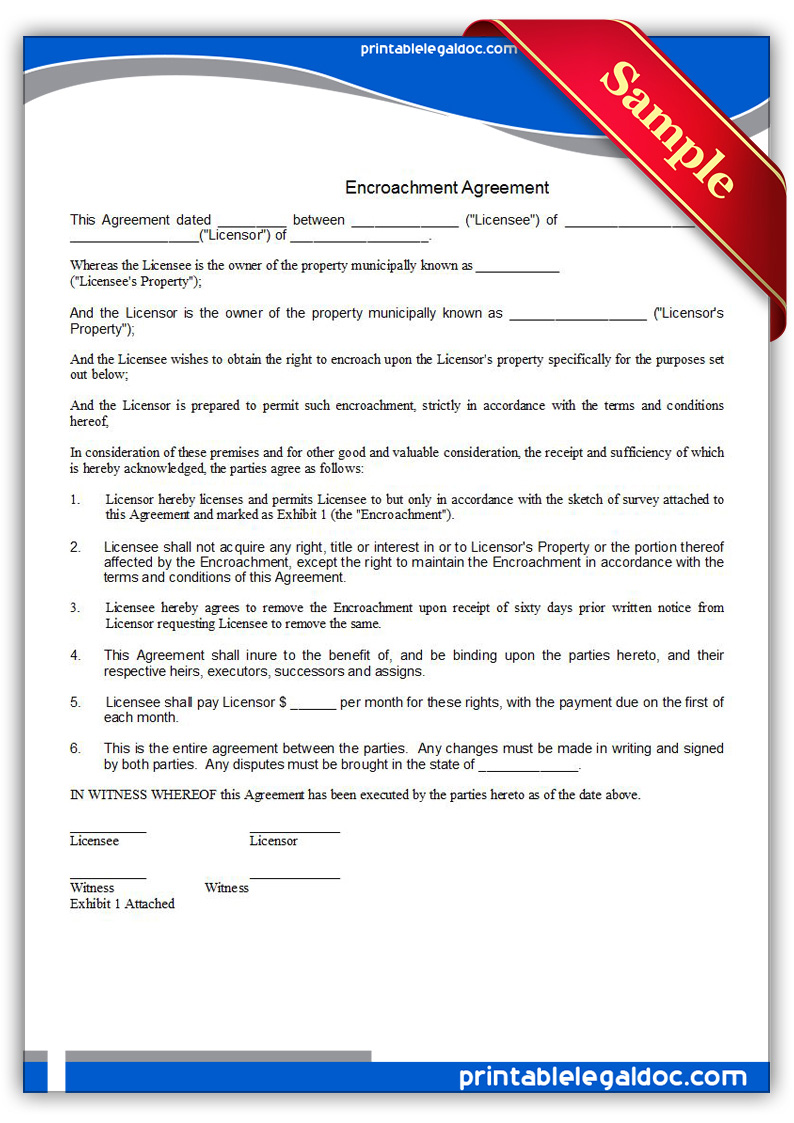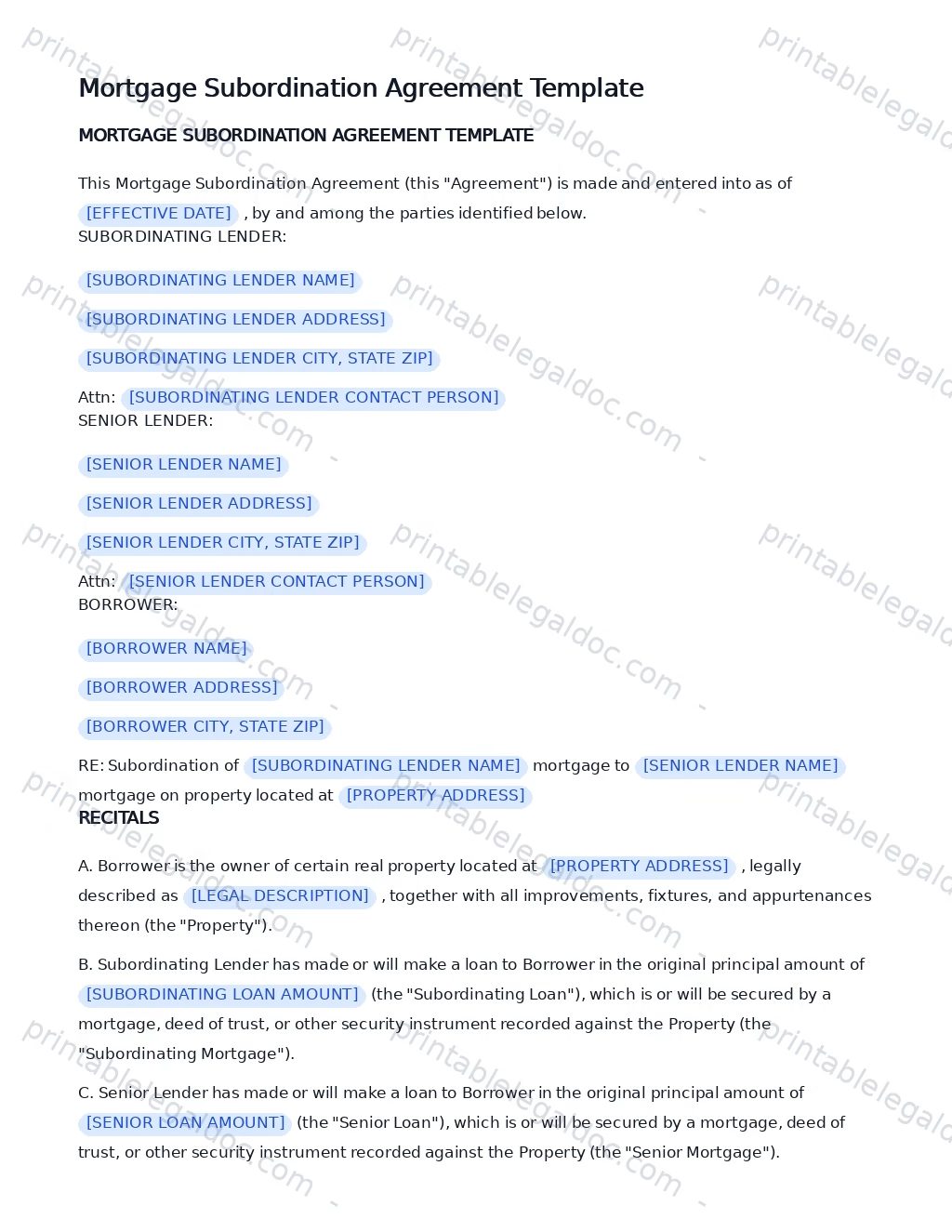
Mortgage Subordination Agreement Template
A mortgage subordination agreement template helps you put one loan behind another in priority. Lenders use this document when a refinance or second mortgage needs a senior position. The template spells out each party's rights, the loan terms, and the order of repayment. It protects the senior lender and keeps the junior lien valid. Fill in the blanks with borrower names, property details, and loan amounts. Review every clause with a legal professional before signing. This template saves time and reduces drafting errors. It gives all parties a clear record of the new lien priority. Use it for home equity loans, refinancing, or business property deals.
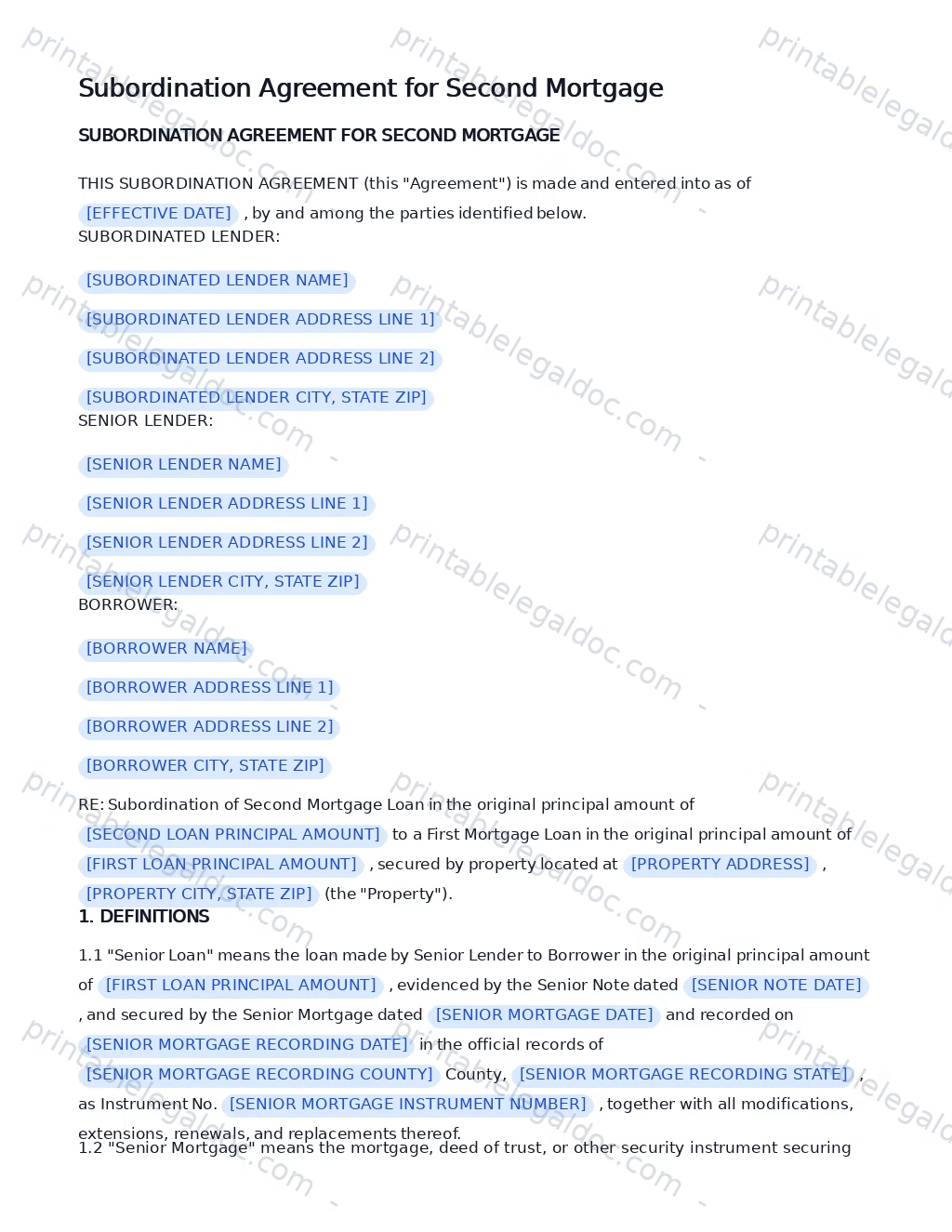
Subordination Agreement for Second Mortgage
A Subordination Agreement for a Second Mortgage changes the priority of liens on a property. The first mortgage holder stays in front. The second lender accepts a lower position. This simple template puts that deal in writing. Both parties sign. The senior loan keeps its place. The junior loan follows behind. Lenders use this form to reduce risk during refinancing. Borrowers use it to secure new financing. The document spells out each party's rights and limits. Clear terms prevent future disputes. Fill in the blanks with loan details and signatures. Review every clause before signing. This template offers a fast path to a proper legal record.
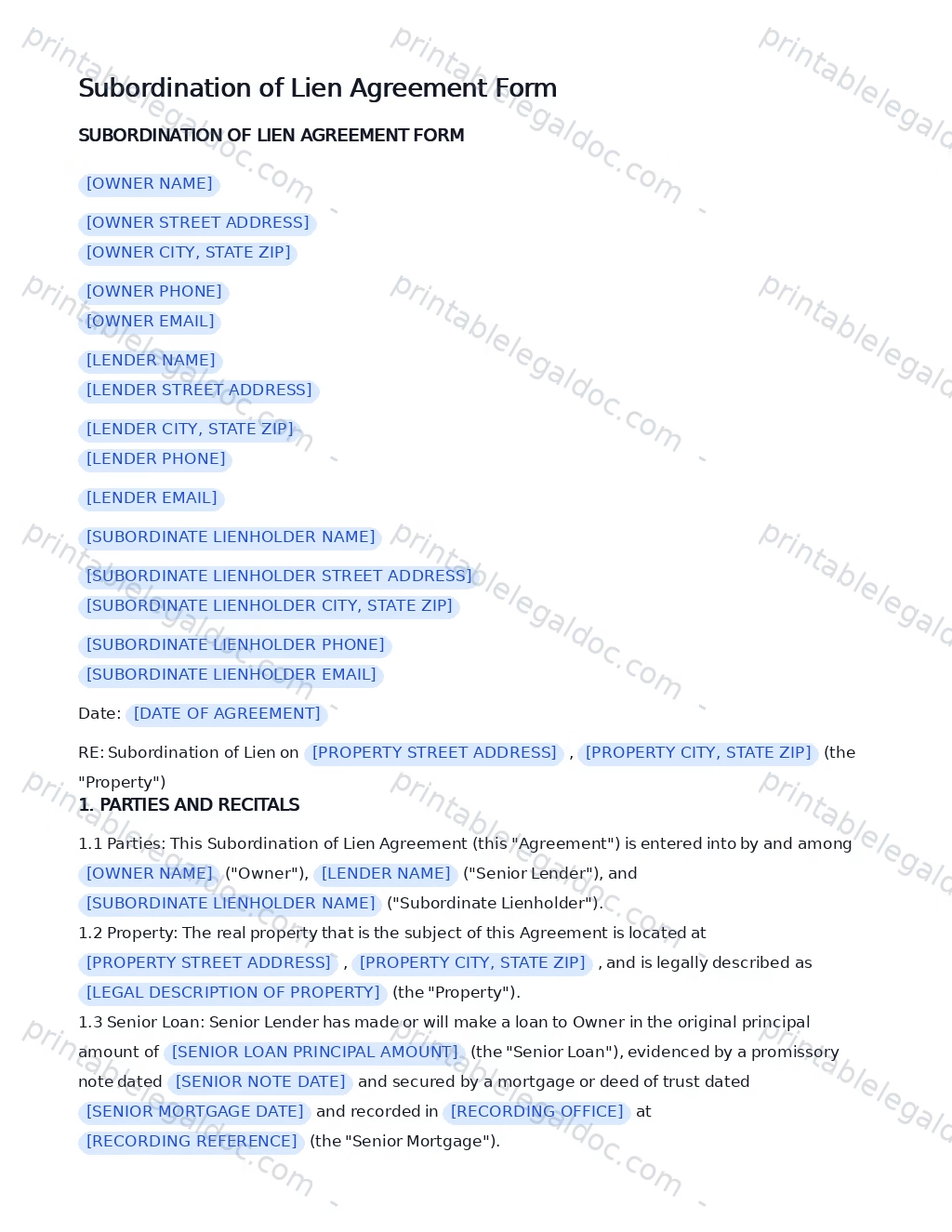
Subordination of Lien Agreement Form
A subordination of lien agreement form lets a lender move to the back of the line. The form records that one party accepts a lower priority claim on a property. Use it when a refinance or new loan needs a senior position. The document names the parties, the property, and the liens involved. It states clearly that the junior lien holder gives up first claim. Both sides sign to confirm the change. This short form protects lenders and keeps the record clear. It also helps title companies close a deal without delay. Keep the terms plain and specific. File the signed form with the county recorder. That step makes the new priority enforceable against later claims.
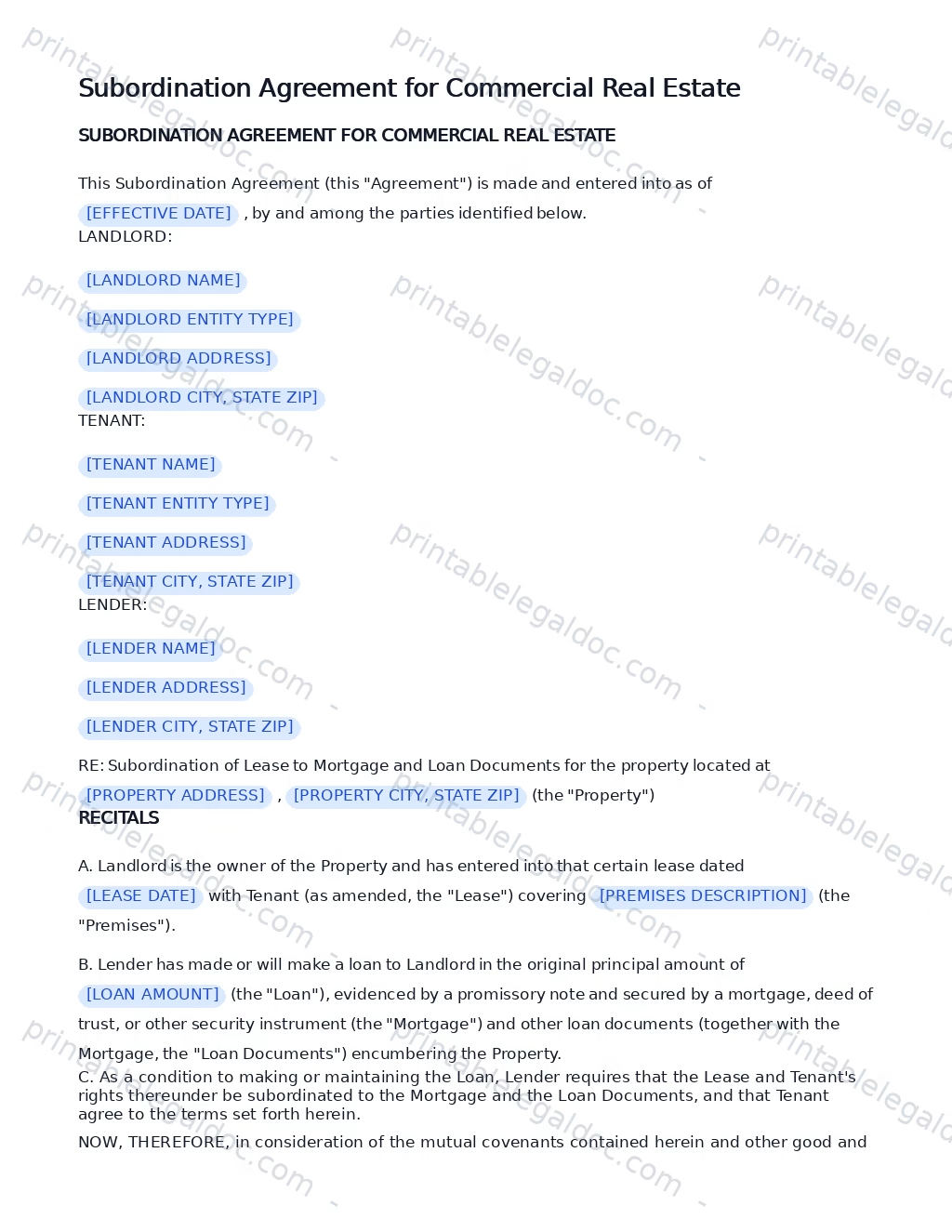
Subordination Agreement for Commercial Real Estate
A Subordination Agreement for Commercial Real Estate changes who gets paid first if a borrower defaults. Lenders use this document to set lien priority between a senior loan and a junior loan. The junior lender agrees to stand behind the senior lender during foreclosure or liquidation. This protects the primary lender and keeps refinancing options open for the property owner. Our template covers key terms like priority status, notice requirements, and payment conditions. You get clear language that both parties can review and sign without confusion. Every section follows standard commercial lending practice. Save time on drafting and reduce legal back and forth. Download the template today and secure your lending position with confidence.
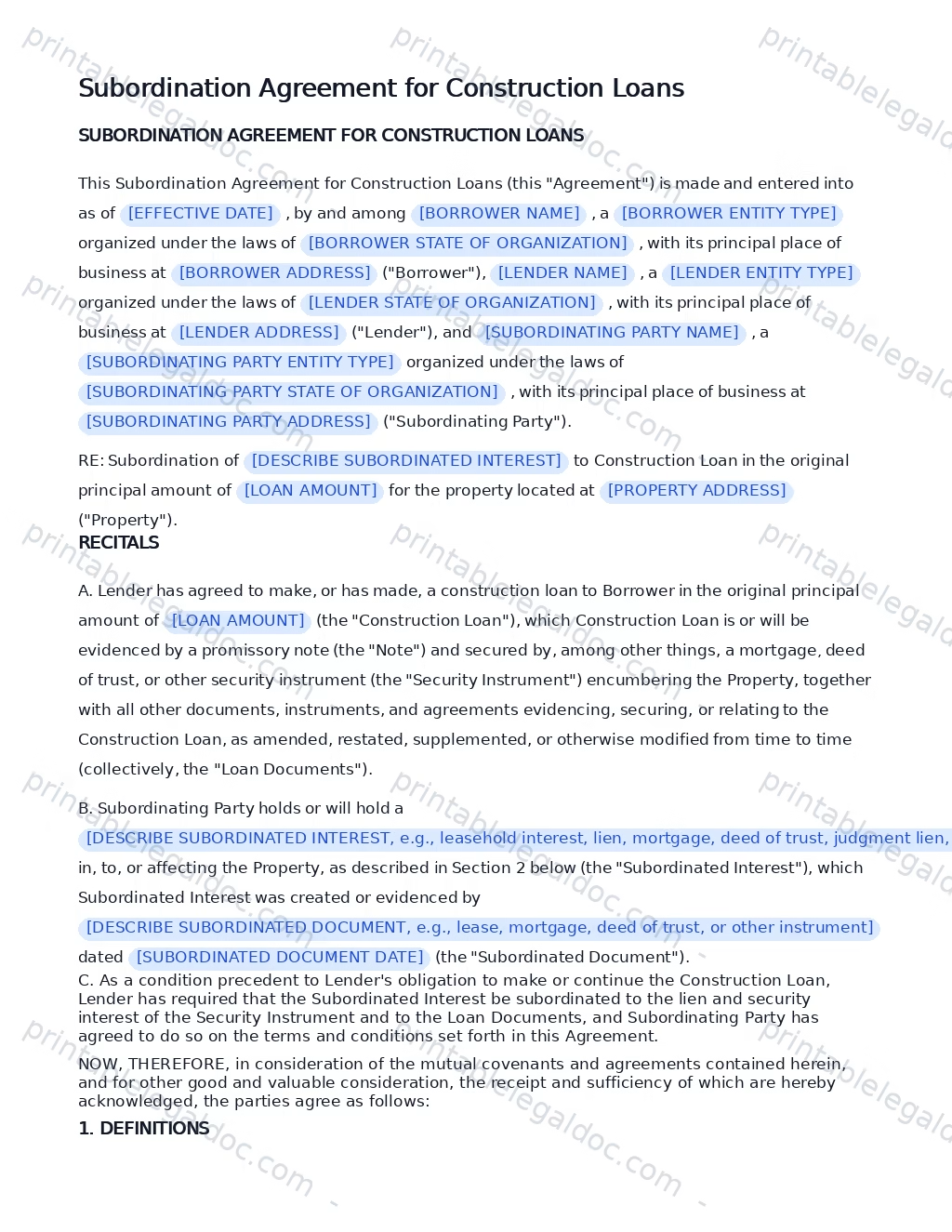
Subordination Agreement for Construction Loans
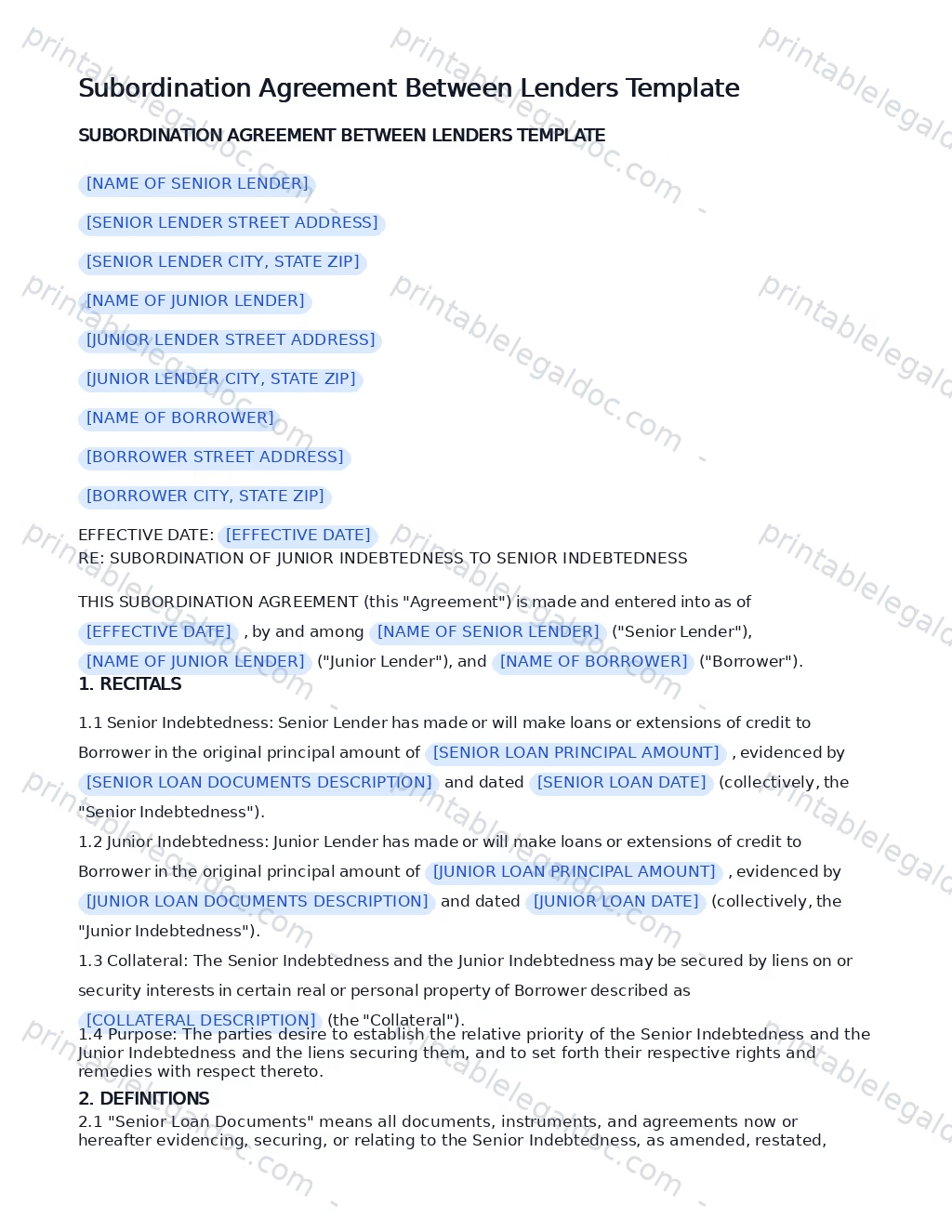
Subordination Agreement Between Lenders Template
Need a subordination agreement between lenders template? This document helps two lenders set clear payment priority. One lender agrees to stand behind the other. The template covers key terms like debt ranking, payment timing, and default notice. Use it when a borrower takes a second loan. It protects senior lenders and keeps junior lenders informed. Every clause is easy to edit. Fill in names, amounts, and dates. Review the final draft with legal counsel. The template saves time and reduces confusion. Grab it today and secure your lending terms.
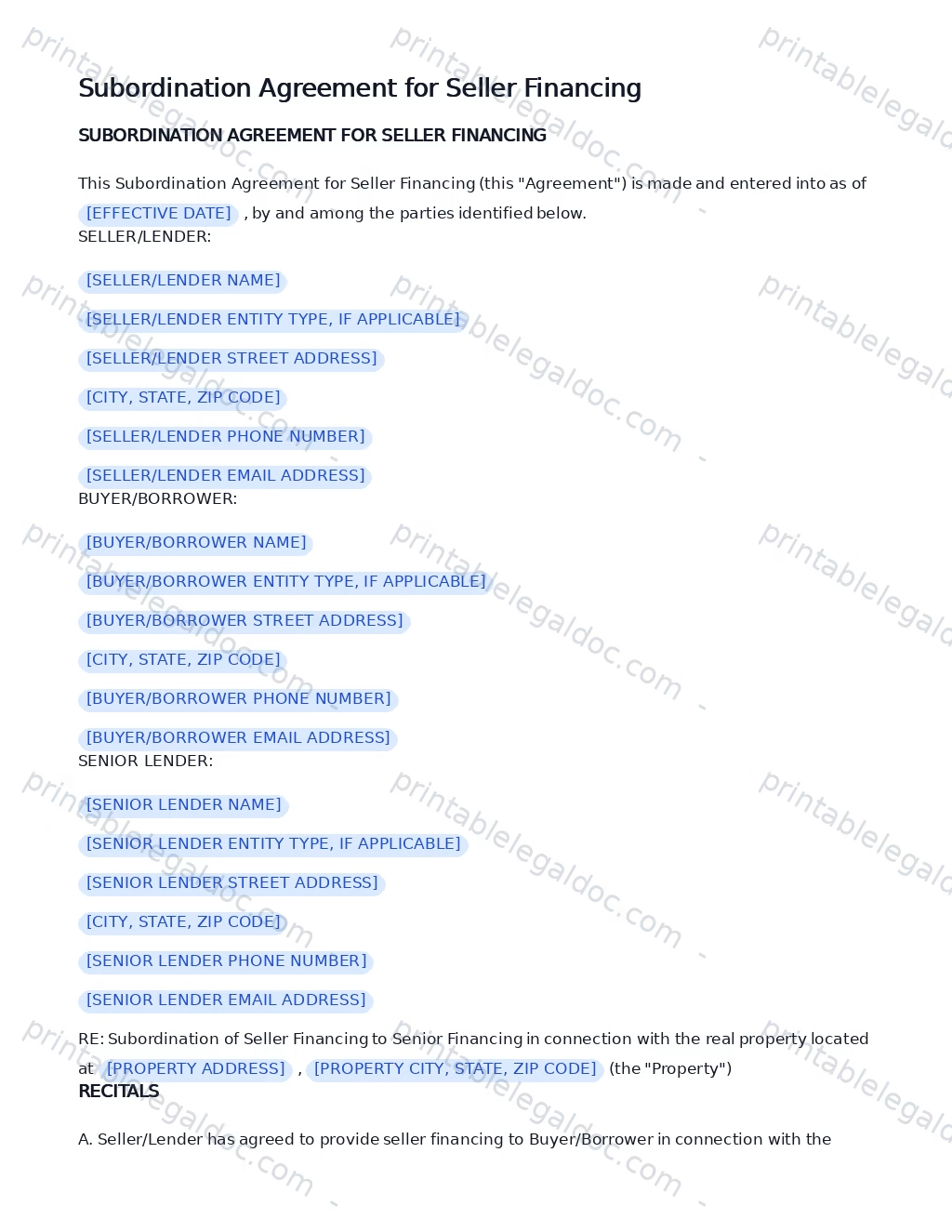
Subordination Agreement for Seller Financing
A subordination agreement for seller financing protects a buyer when another lender holds a senior lien on the property. This template lays out clear terms. It shows how the seller's loan moves behind the primary mortgage in priority. You get ready to use language for payment rights, default remedies, and lien position. The document helps both sides avoid confusion during closing. Sellers keep their security interest. Buyers gain room to finance the purchase. Every clause follows common lending standards. Fill in the blanks and adjust details to match your deal. Review the final terms with a real estate attorney before signing.
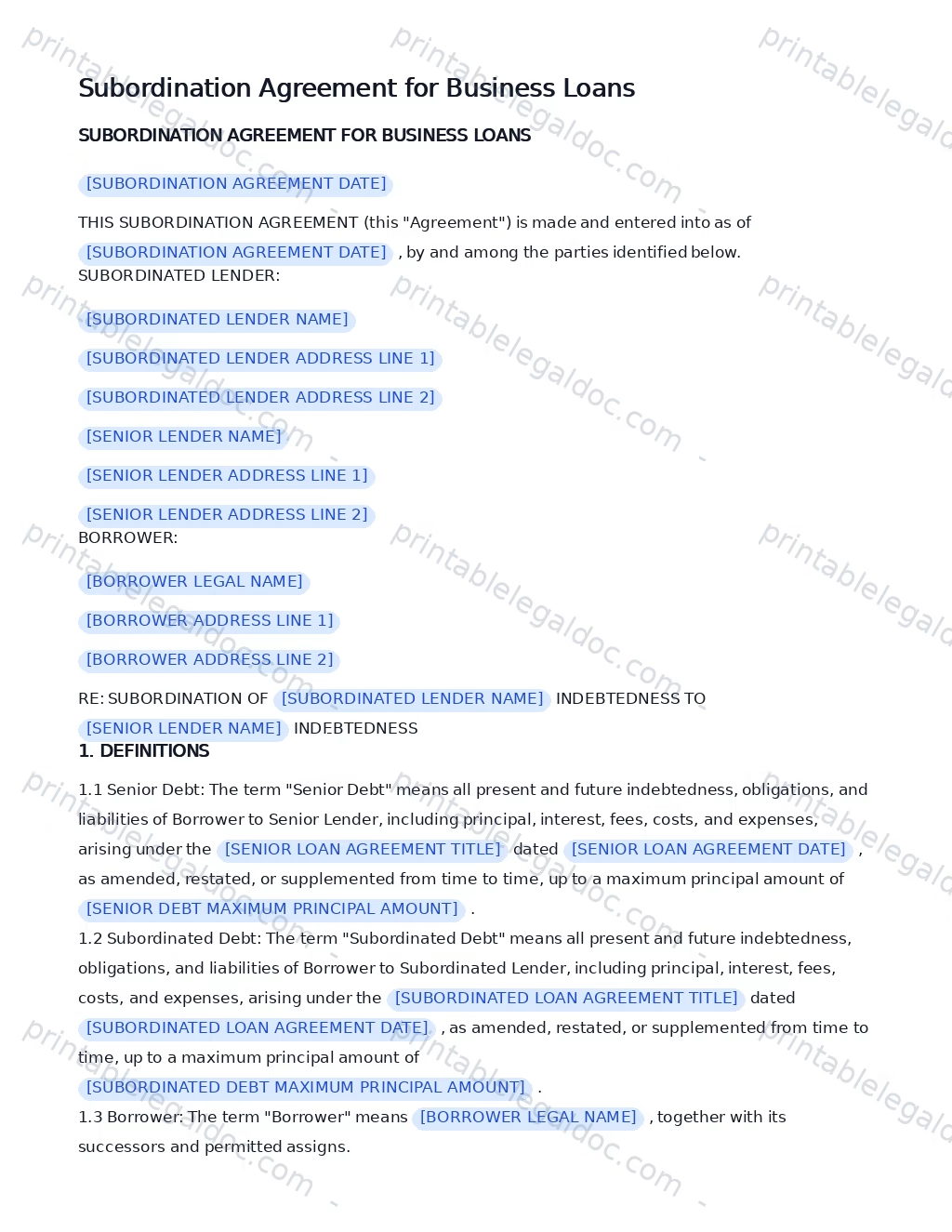
Subordination Agreement for Business Loans
A Subordination Agreement settles who gets paid first when a business loan goes sideways. One lender accepts a junior position. Another lender keeps priority claim on the borrower's assets. Our template lays out that ranking in clear terms. It defines payment order, default triggers, and the limits a junior lender must respect. You get ready-to-use language for two-party and multi-lender deals. Every clause is easy to adapt to your loan structure. Small business owners can use it too when negotiating with a bank or private investor. The document protects senior lenders and gives junior lenders defined rights. Download it, fill in the details, and move forward with confidence.
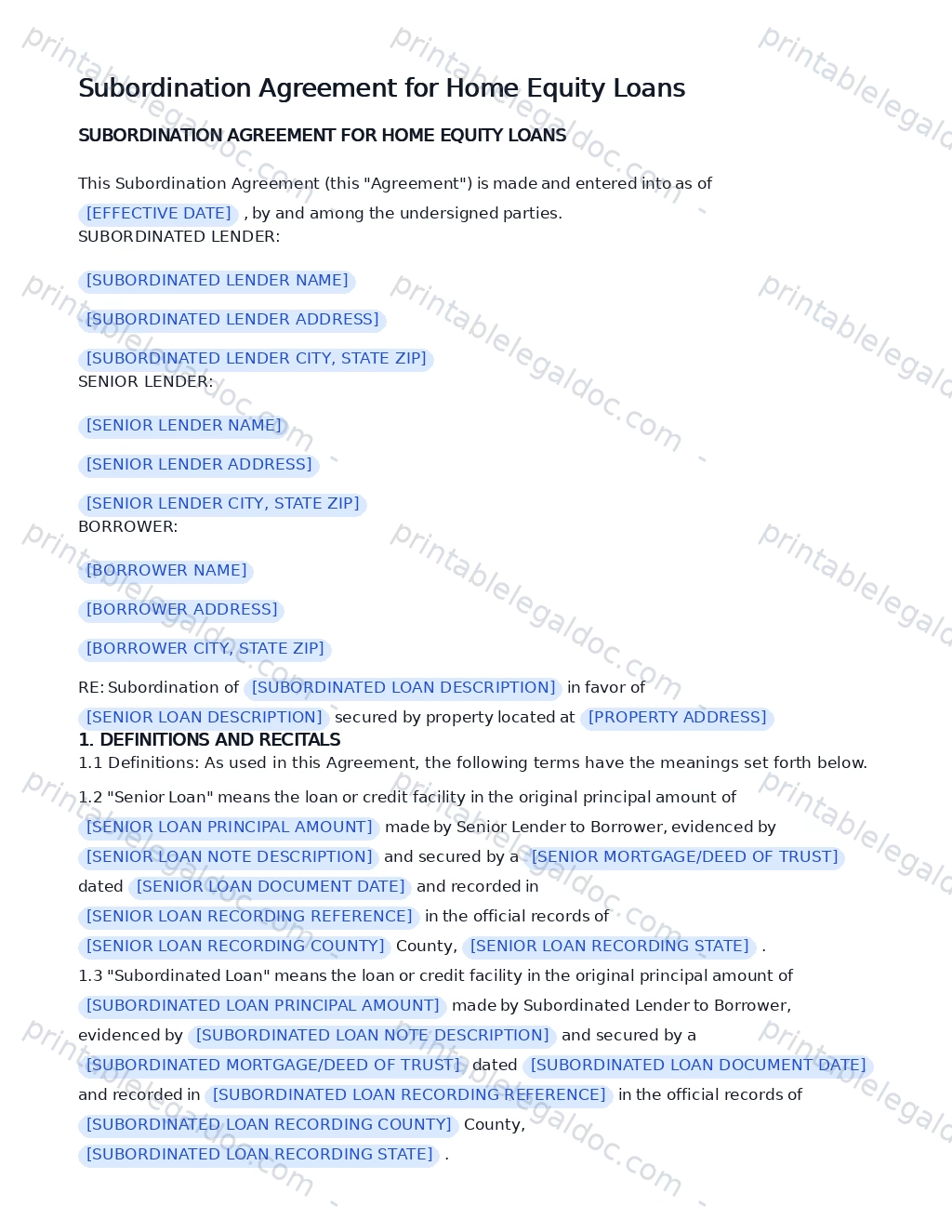
Subordination Agreement for Home Equity Loans
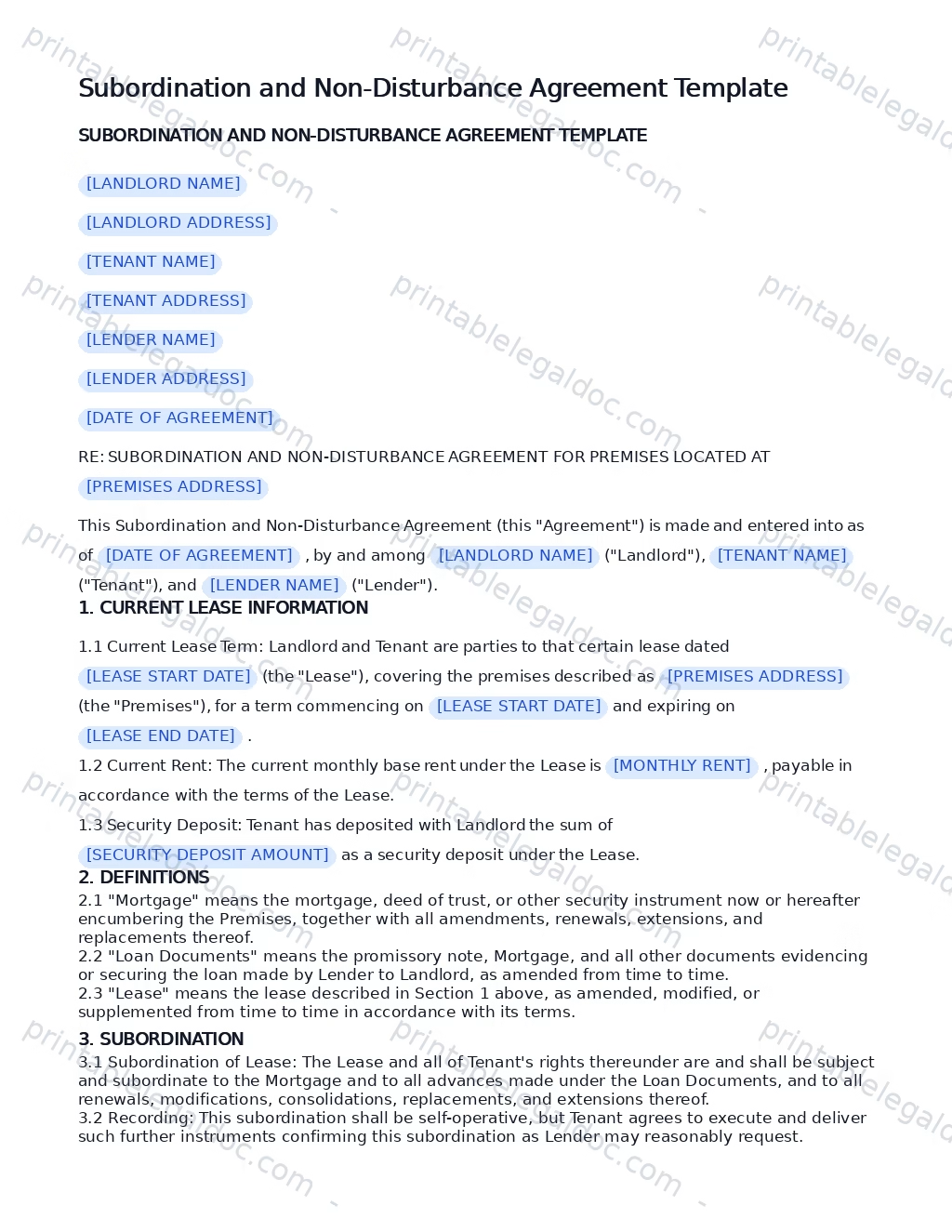
Subordination and Non-Disturbance Agreement Template
A subordination and non-disturbance agreement template gives you a ready made structure for a common real estate document. Lenders use it to set lien priority. Tenants use it to protect their lease rights. This template covers both sides in one clear form. Fill in the parties, the property details, and the lease terms. The layout keeps key clauses easy to find. You save time on drafting and reduce the risk of missing important language. Small landlords, property managers, and legal teams can all adapt it to fit a specific deal. Review the terms with a qualified professional before signing.

Subordination Agreement
Subordination Agreement
___________________________, referred to as SECURED PARTY, ___________________________, referred to as DEBTOR, and ___________________________, referred to as SENIOR CREDITOR, agree:
SECURED PARTY presently holds a security interest in the following property of the DEBTOR:
_______________________________________________________SECURED PARTY hereby agrees that its security interest in the above described goods shall be subordinated to, and of lesser dignity than the claim of SENIOR CREDITOR, provided however, that the total amount of such subordination shall not exceed $ ______ (_____________________ &___/100 dollars).
The parties hereto agree to execute and instruments reasonably requested by SECURED PARTY.
Dated: _____________________
____________________________________
Secured Party
____________________________________
Debtor
Subordination Agreement
Review ListThis review list is provided to inform you about this document in question and assist you in its preparation. Subordination agreements are called for in various legal situations.
1. Make multiple copies. Give one to each involved party. Keep copies in their related files.
____________________________________
Frequently Asked Questions
What is a subordination agreement?
A subordination agreement is a legal contract in which a secured party agrees that its security interest in a debtor's property will be subordinated to, and of lesser dignity than, the claim of a senior creditor. The agreement specifies the property subject to the subordination and the maximum amount of the subordination. It is used in various legal situations to establish the priority of claims.
Who are the parties to a subordination agreement?
The parties to a subordination agreement are the secured party, the debtor, and the senior creditor. The secured party holds a security interest in the debtor's property and agrees to subordinate that interest to the senior creditor's claim. The debtor is the party whose property is subject to the security interest.
What does it mean to subordinate a security interest?
To subordinate a security interest means that the secured party agrees its security interest will be of lesser dignity than the claim of the senior creditor. This affects the priority of claims, typically in the event of debtor default or bankruptcy. The subordination is limited to the amount specified in the agreement.
How much can a subordination agreement cover?
The total amount of the subordination is limited to the dollar amount specified in the agreement. The agreement states that the subordination shall not exceed that amount. This cap is written in both numerical and written form.
What property is subject to a subordination agreement?
The property subject to the subordination is the debtor's property in which the secured party holds a security interest. The agreement includes a description of this property. The secured party agrees to subordinate its security interest in those goods.
What are the obligations of the parties under a subordination agreement?
The parties agree to execute any instruments reasonably requested by the secured party. This ensures that the subordination is properly documented and enforceable. The agreement is dated and signed by the secured party and the debtor.
When are subordination agreements used?
Subordination agreements are called for in various legal situations. They are used to establish the priority of claims among creditors. The specific situations are not detailed in the document, but they are common in financing arrangements.
How should copies of a subordination agreement be handled?
The review list advises making multiple copies of the agreement. One copy should be given to each involved party. Copies should be kept in their related files.
What is the purpose of the review list in a subordination agreement?
The review list is provided to inform you about the document and assist in its preparation. It highlights key considerations, such as making multiple copies and distributing them to the parties. It serves as a practical guide for completing the agreement.
Is a subordination agreement legally binding?
Yes, a subordination agreement is a legal contract that binds the parties who sign it. It is dated and signed by the secured party and the debtor. The agreement outlines the subordination of the security interest and the obligations of the parties.