


Trust Declaration, Stocks
A Trust is a legal document containing a formal agreement between parties in which one party grants or vests the ownership rights (title) to one or more trustees for the purposes of conservation, protection, or preservation on behalf of the first party or beneficiary of the trust. This instrument normally and usually states: The reasons and purposes as to why the trust was established and the actions that will terminate the trust, a detailed record of what assets are placed and present in the trust, the authority and boundaries of the said trustees, the reporting requirements of the trustees, and other provisions associated to the trust. It may also state the compensation that the trustees will be receiving, if there are any.
A Declaration of a trust is an act in which a statement is made by a person who owns a piece of property (title holder). He declares that the property he has a title on is only being held for the benefit of another person. The declared property is then put in a trust which states the person who benefits from the property with a trustee overseeing the asset. In this case, the assets are stocks. The declaration states who the trust benefits, it states the person who has the power to amend or revoke the trust (in the case that it can be amended), the person serving as a trustee to the said trust, the abilities that the trustee possesses, and all the information regarding what happens in the event of the beneficiary wanting to receive distributions on the assets stated in the trust: stocks.
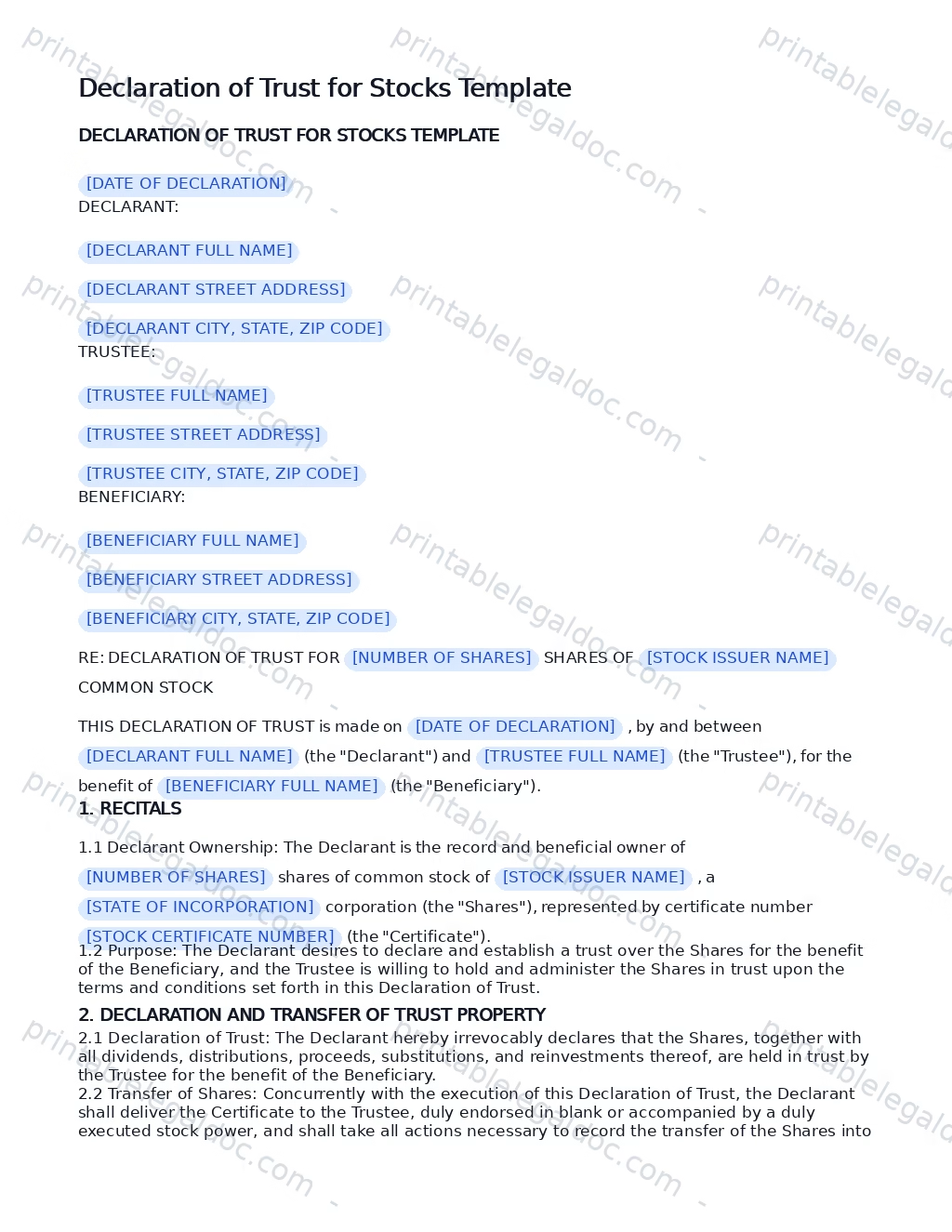
Declaration of Trust for Stocks Template
A Declaration of Trust for Stocks Template helps you document who truly owns shares held in another person's name. Use it to record the beneficial owner, the trustee, and the stock details in clear terms. The template covers key clauses like voting rights, dividend handling, and transfer instructions. It works well for family arrangements, estate planning, or shared investments. Fill in the blanks, sign it, and keep a copy for your records. This simple document protects everyone involved and reduces confusion later. Get the template today and put your share ownership in writing.
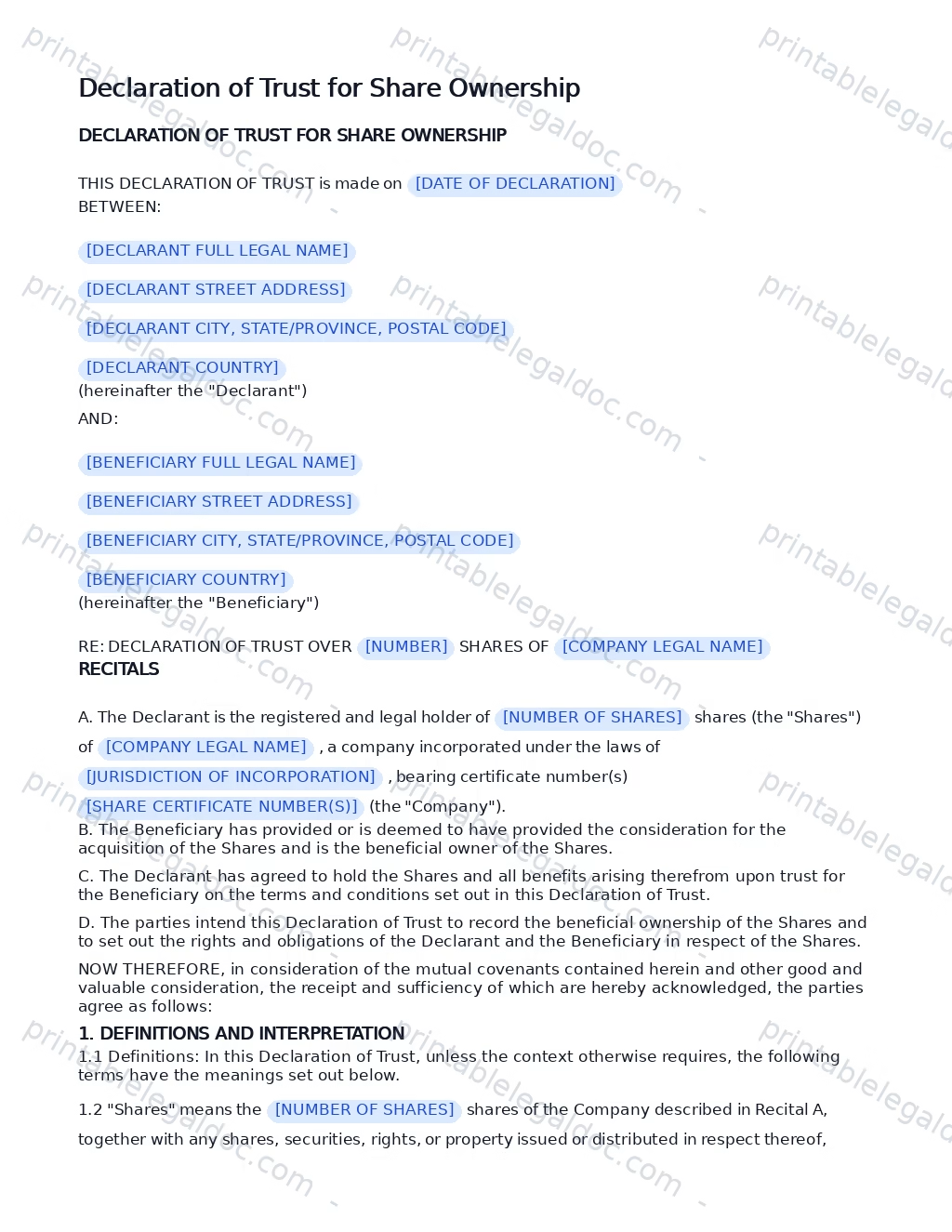
Declaration of Trust for Share Ownership
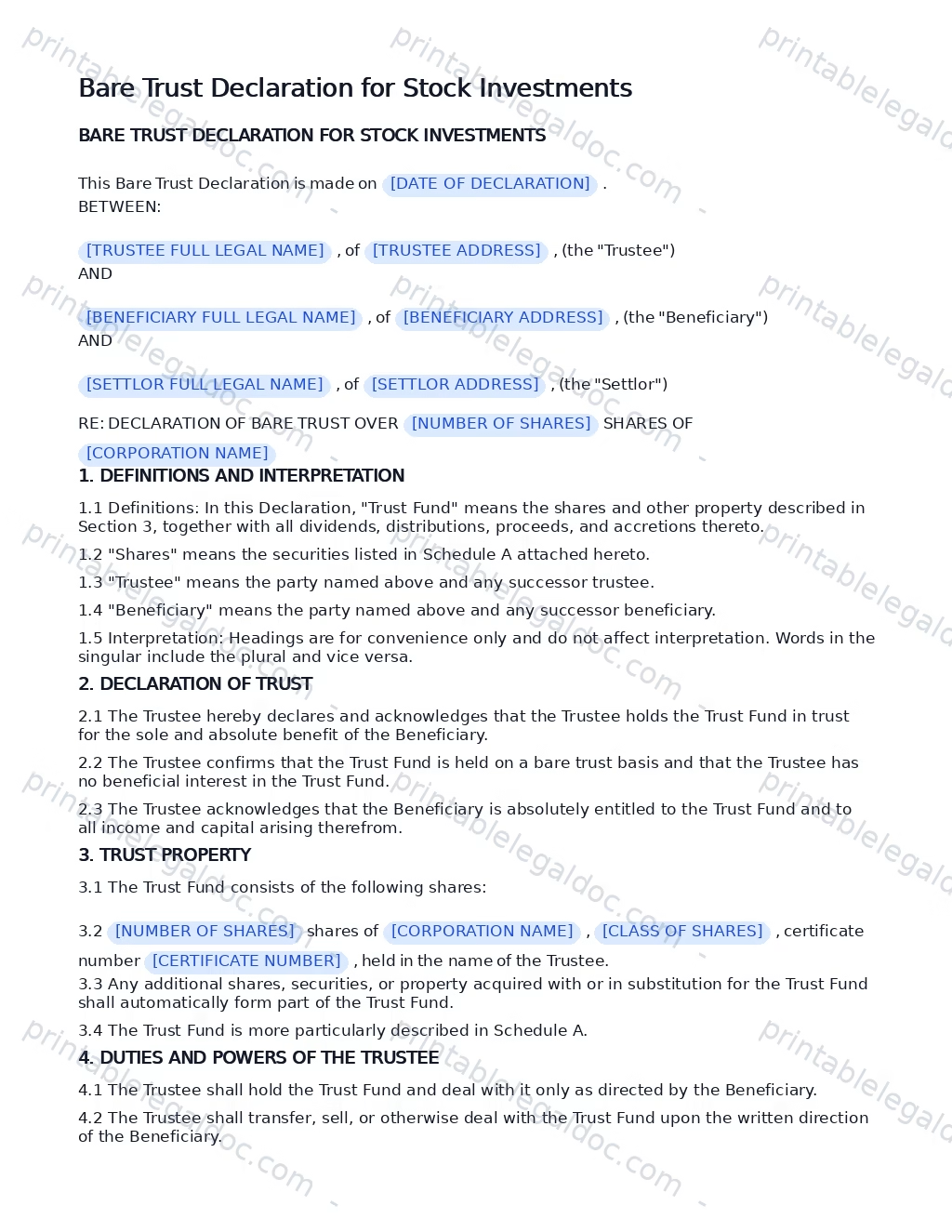
Bare Trust Declaration for Stock Investments
A bare trust declaration for stock investments is a simple document. It records who truly owns shares held in someone else's name. The trustee holds legal title. The beneficial owner keeps all rights to income and capital. Use this template when a nominee, parent, or advisor holds stock for another person. It sets out the parties, the shares involved, and the trustee's limited role. Clear wording reduces confusion and protects both sides. The form is short and easy to complete. Fill in names, dates, and share details. Sign it and keep copies for your records. This declaration gives you a clean paper trail for tax and legal purposes.
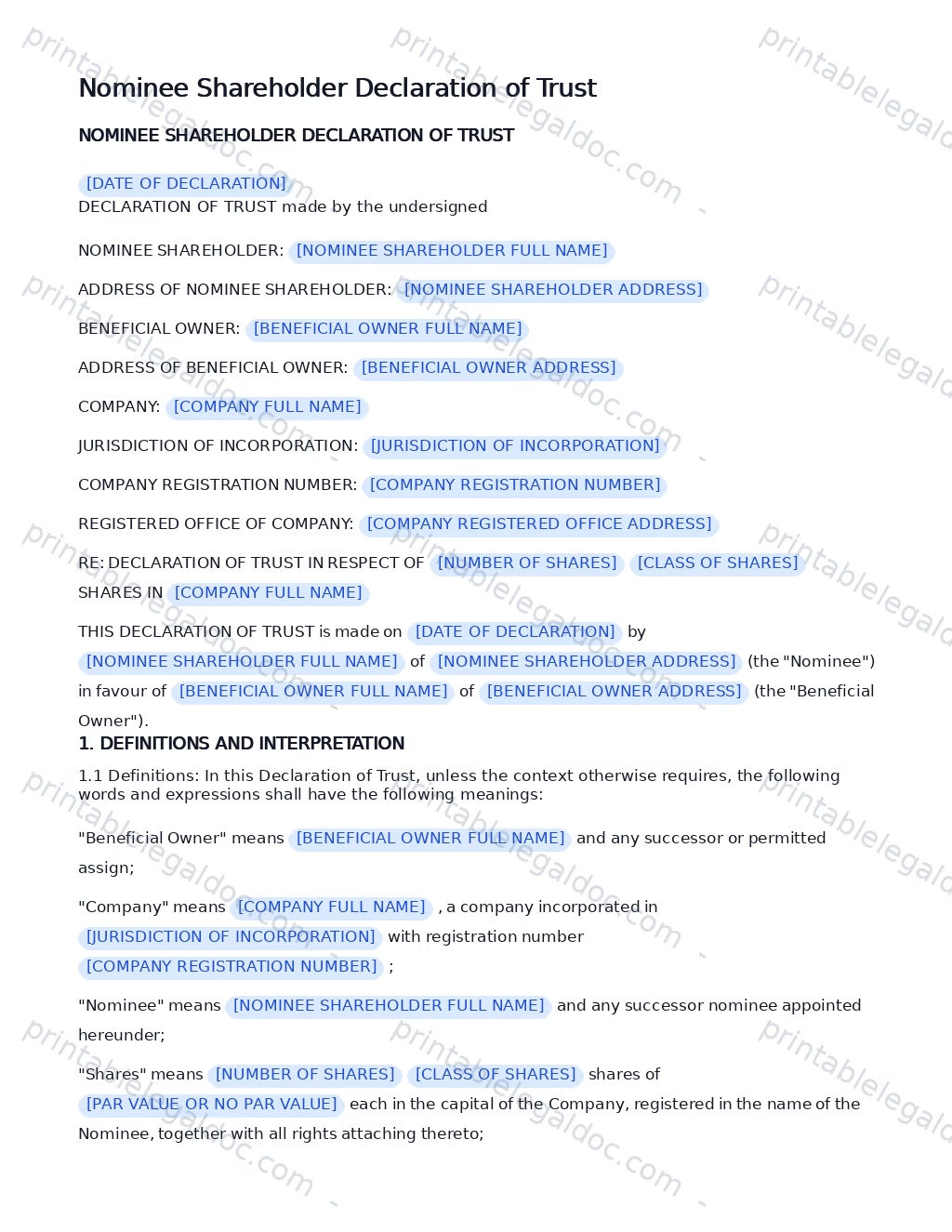
Nominee Shareholder Declaration of Trust
A Nominee Shareholder Declaration of Trust is a simple legal document. It records that one person holds shares on behalf of another. The nominee appears on the company register. The true owner keeps the real benefit. This template sets out both roles in clear terms. It confirms who owns the shares and who holds them. The document protects the true owner's rights. It also explains what the nominee can and cannot do. Use it when privacy matters or when setting up a company structure. Fill in the names, share details, and sign it. Keep the signed copy safe. This declaration gives both parties peace of mind and a clear record of the arrangement.
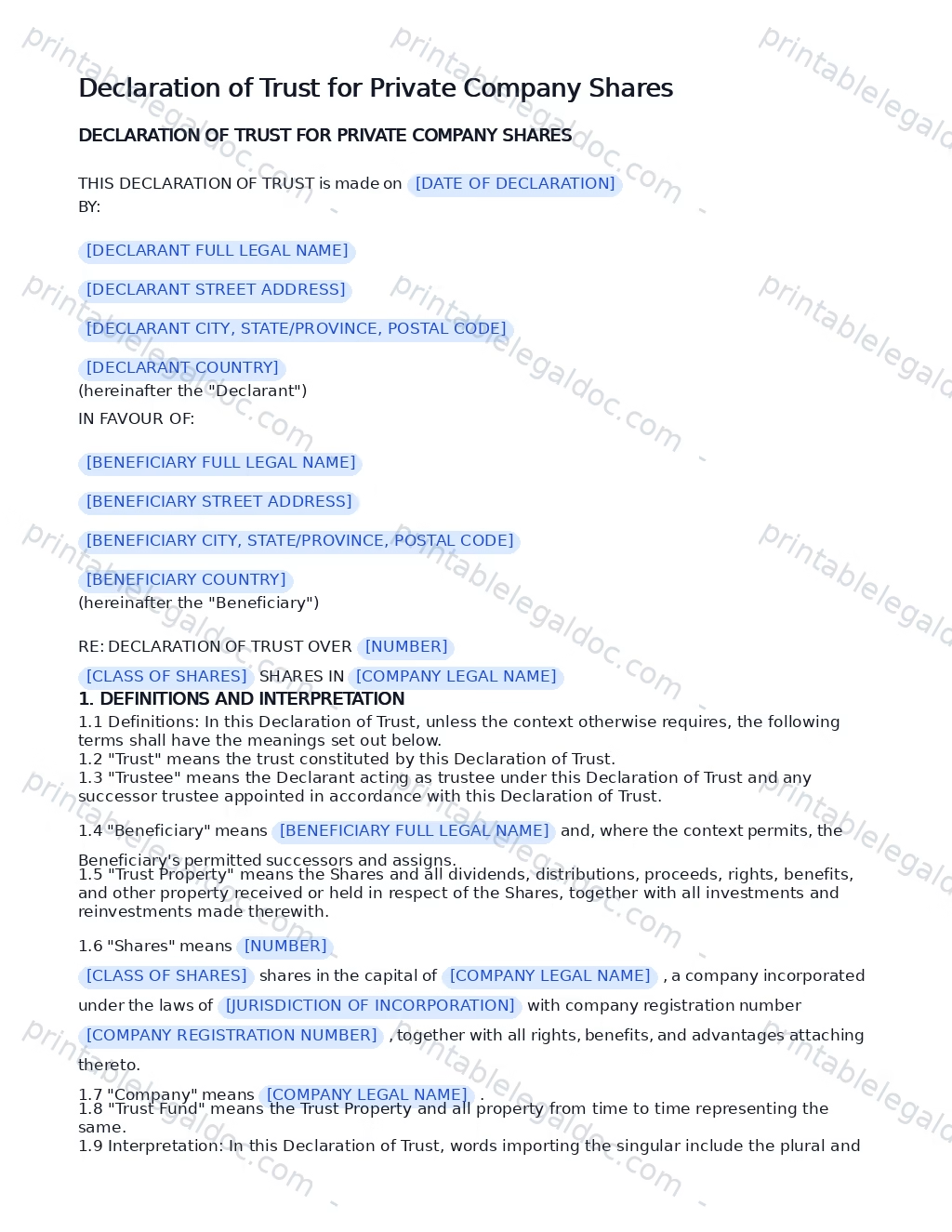
Declaration of Trust for Private Company Shares
A Declaration of Trust for private company shares lets you hold shares on someone else's behalf. The document names the legal owner and the true beneficial owner. It sets out voting rights, dividend handling and transfer rules. Our template covers the key clauses you need. Fill in the parties, share details and trust terms. Both sides sign. Keep it with your company records. This simple deed brings clarity to shared ownership. It protects everyone involved and avoids disputes later. Use it when shares are held for a family member, employee or investor. Clear terms now save trouble down the road.
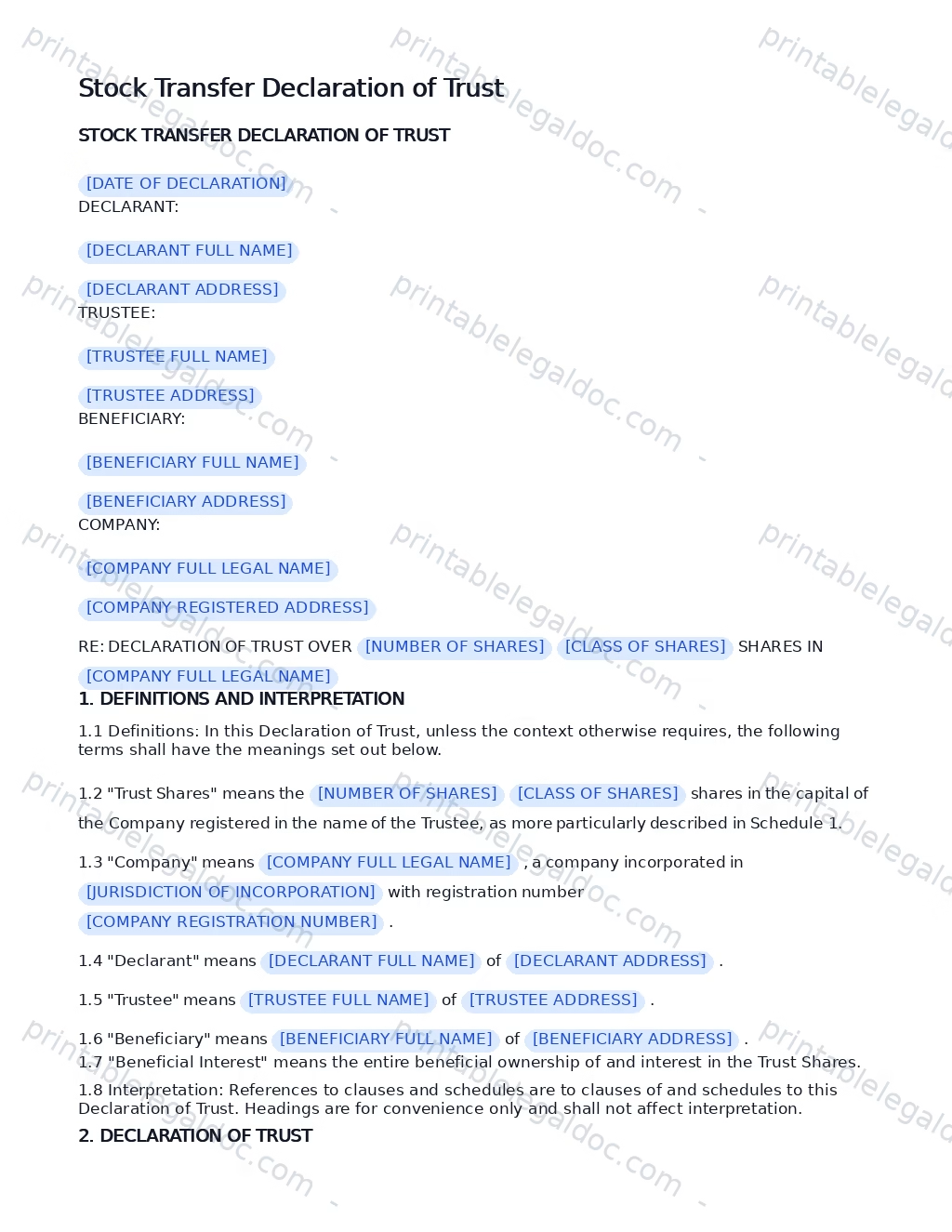
Stock Transfer Declaration of Trust
A Stock Transfer Declaration of Trust records who truly owns shares when the legal title sits with someone else. Use this template when a nominee holds stock on behalf of the real owner. It sets out the parties, the shares involved, and the terms of the arrangement. Clear wording protects both sides. It confirms the beneficial owner keeps all rights to dividends and sale proceeds. The nominee agrees to hold the shares as directed. Fill in the details, sign it, and keep a copy for your records. Simple to use and easy to adapt for private share transfers.
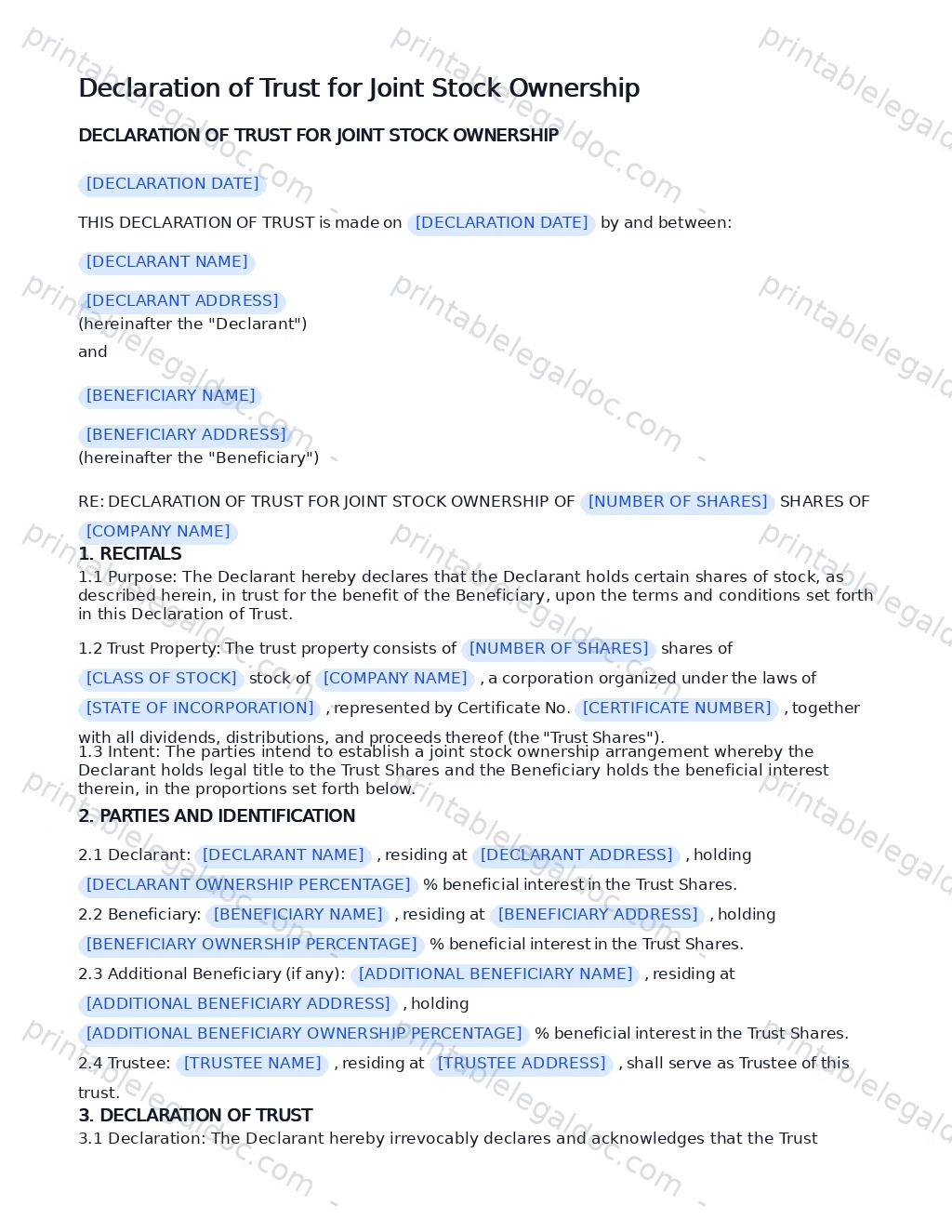
Declaration of Trust for Joint Stock Ownership
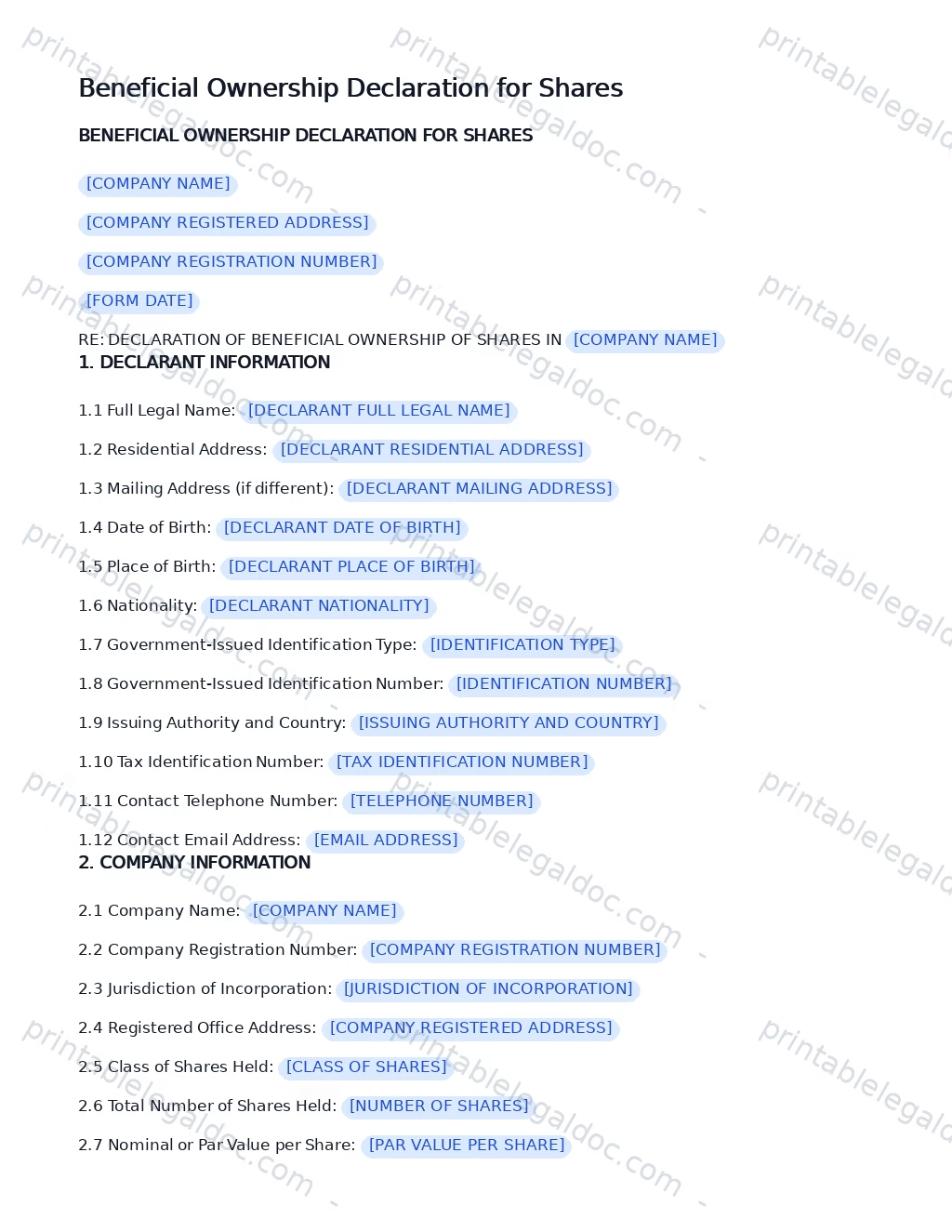
Beneficial Ownership Declaration for Shares
A Beneficial Ownership Declaration for Shares records who truly owns company shares. It goes beyond the registered name on paper. This simple template captures the real person behind the holding. Use it to meet transparency rules and reduce risk. The form asks for the owner's name, address, and the size of their stake. It also notes how control is held. Clear records help during audits and legal checks. Fill in each field with accurate details. Keep signed copies on file. This document protects the company and builds trust with regulators.
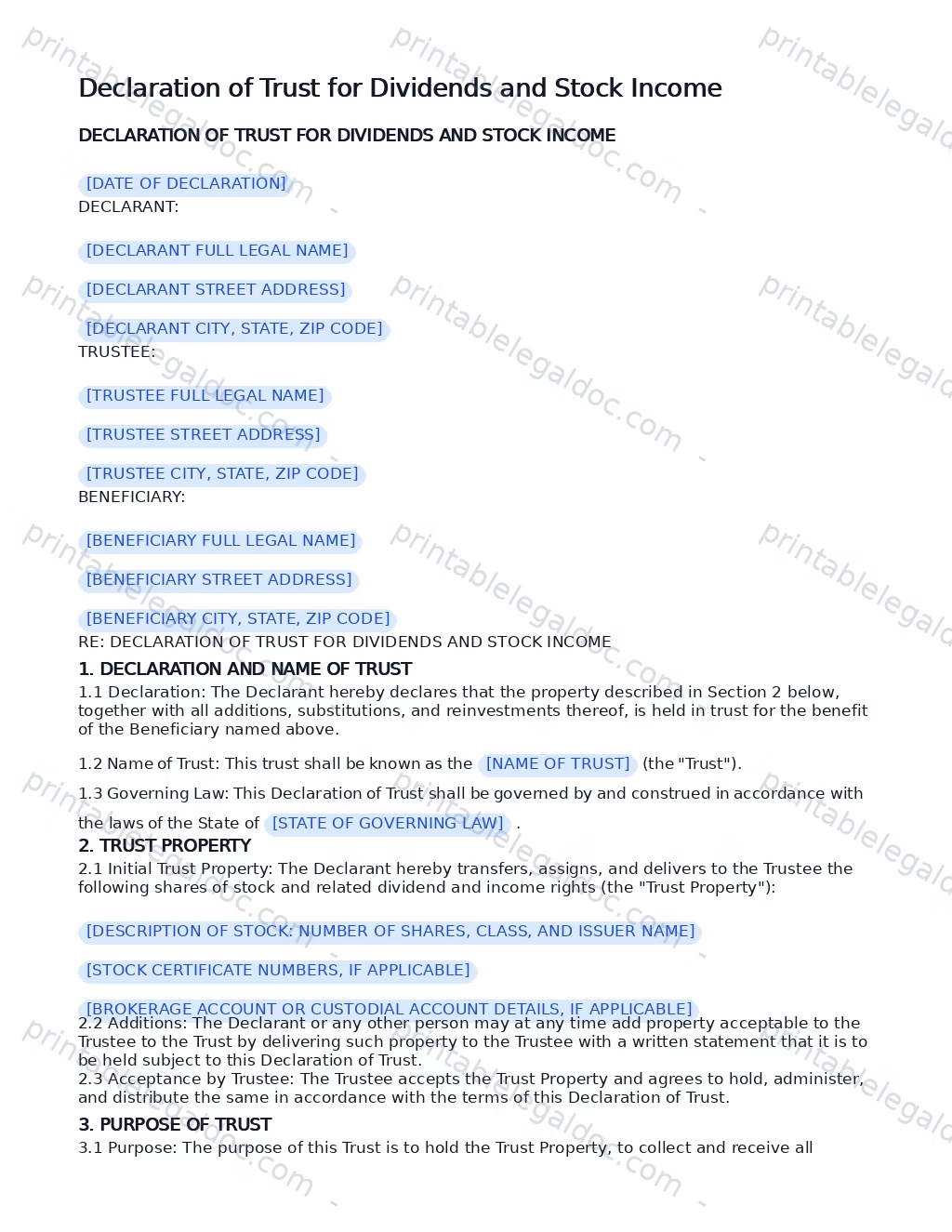
Declaration of Trust for Dividends and Stock Income
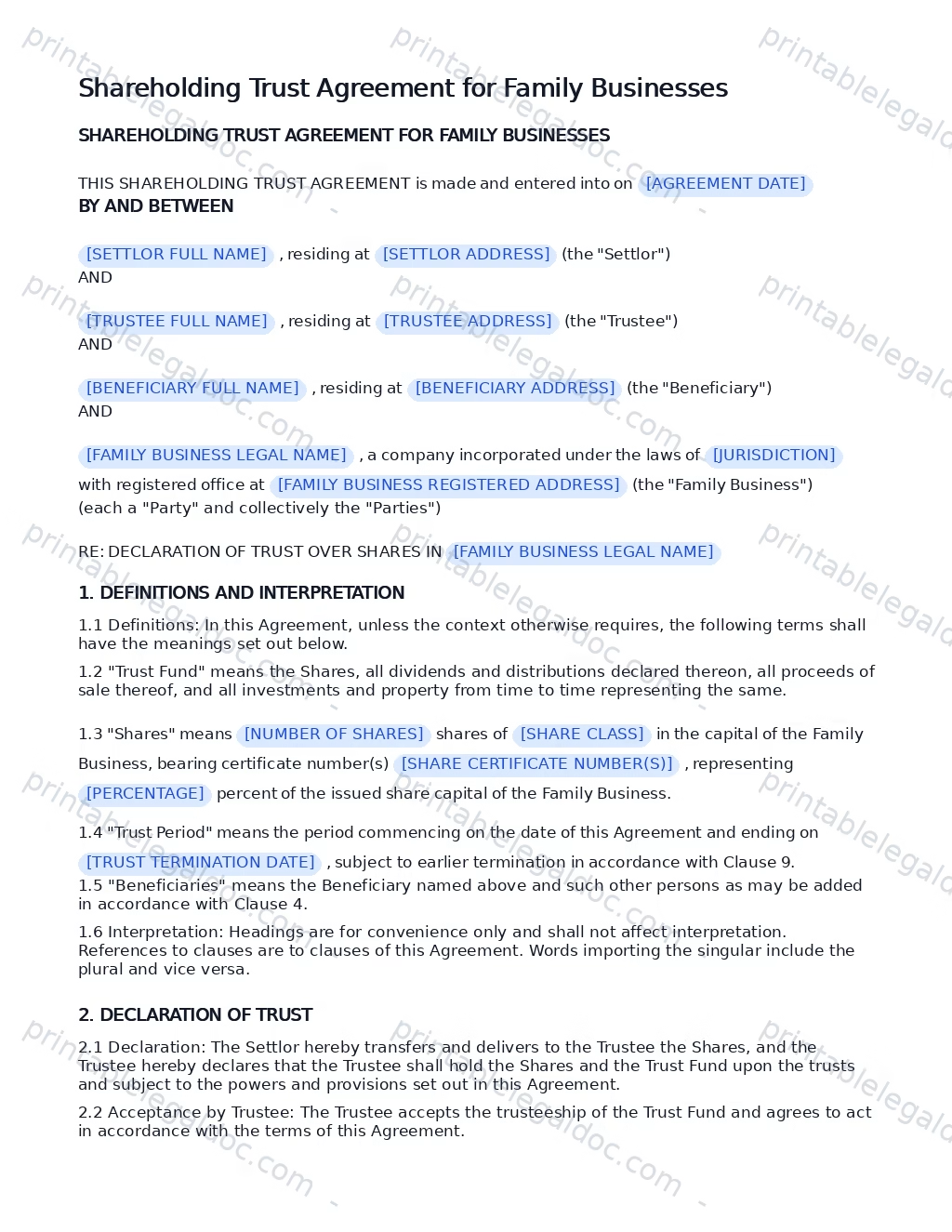
Shareholding Trust Agreement for Family Businesses

Trust Declaration, Stocks
Trust Declaration, Stocks
This Trust Declaration made as of ____________ (Date), by and between ___________ (“Trustee”) and ________________________ (“Beneficiary”).
Whereas the Trustee is the registered owner of ___________ shares (“Shares”) of the corporation (“Corporation”); and the Shares are to be held by the Trustee as trustee and nominee for the Beneficiary;
Therefore this Declaration of Trust witnesses as follows:
I. The Trustee hereby declares that he or she holds the Shares and all dividends and interest accrued or to be accrued upon the same upon trust for the Beneficiary and agrees to transfer the Shares as directed by the Beneficiary or otherwise deal with the Shares and the dividends and interest payable in respect of the same in such manner as the Beneficiary shall from time to time direct.
2. The Trustee covenants and agrees that he or she shall at all times, exercise all voting rights in connection with the Shares and otherwise deal with the Shares as nominee for the Beneficiary only and in accordance with the instructions of the Beneficiary.
3. The Trustee shall enter into, execute and deliver as nominee for the Beneficiary only, all such documents, instruments and other agreements as may from time to time be requested by the Beneficiary in connection with the Shares.
4. The Trustee shall, at the request and expense of the Beneficiary, account to the Beneficiary for all sums received with respect to the Shares.
5. The Trustee shall promptly transmit to the Beneficiary all notices, claims, demands or other communications which the Trustee receives relating to the Shares, including notices of shareholder meetings.
6. The Beneficiary hereby releases the Trustee from any and all liability that the Trustee may incur in respect of any action taken by the Trustee either pursuant to the authorization or direction of the Beneficiary or pursuant to the terms of this Declaration of Trust. The Beneficiary shall indemnify and hold the Trustee harmless from all liabilities of any kind and character that may arise out of any act or omission by the Trustee pursuant to the terms of this Declaration of Trust.
7. This Declaration of Trust shall be binding upon and inure to the benefit of the parties hereto and their respective heirs, executors, successors and assigns.
8. Notices.
Any notice required by this Agreement or given in connection with it, shall be in writing and shall be given to the appropriate party by personal delivery or a recognized over night delivery service such as FedEx.
If to the Trustee: _____________________________________________________.
If to the Beneficiary: ___________________________________________________.
9. No Waiver.
The waiver or failure of either party to exercise in any respect any right provided in this agreement shall not be deemed a waiver of any other right or remedy to which the party may be entitled.
10. Entirety of Agreement.
The terms and conditions set forth herein constitute the entire agreement between the parties and supersede any communications or previous agreements with respect to the subject matter of this Agreement. There are no written or oral understandings directly or indirectly related to this Agreement that are not set forth herein. No change can be made to this Agreement other than in writing and signed by both parties.
11. Governing Law.
This Agreement shall be construed and enforced according to the laws of the State of ____________________ and any dispute under this Agreement must be brought in this venue and no other.
12. Headings in this Agreement
The headings in this Agreement are for convenience only, confirm no rights or obligations in either party, and do not alter any terms of this Agreement.
13. Severability.
If any term of this Agreement is held by a court of competent jurisdiction to be invalid or unenforceable, then this Agreement, including all of the remaining terms, will remain in full force and effect as if such invalid or unenforceable term had never been included.
In Witness whereof, the parties have executed this Agreement as of the date first written above.
_________________________ _______________________
Trustee Beneficiary_________________________ _______________________
Witness One Witness Two, Preferably a
Notary
_________________________
Witness Three
_________________
Date
Trust Declaration, Stocks
Review ListThe review list is provided to inform you about the document in question and assist you in its preparation. Trust Declarations give you protection from the attachment of assets held personally in your name. They are useful both for this legal purpose and the financial one that it makes it all the tougher for an opposing attorney to pierce the trust veil, so to speak, if that is possible. Therefore, an opposing attorney is more apt to stop pursuit of you if your assets are held in trust and therefore harder, if not impossible, to attach with a judgment. Hence comes the term “Judgment Proof.” Sweet music to the ears of those of us who are not lawyers.
You should also obtain a resignation of trustee document, provided in the trust area as well, and have it signed should you have a falling out with your trustee at a later date. An ounce of prevention here can save the proverbial pound of cure. More than a few people, including myself, have been saved by this cautionary move. As the famous Mr. Dooley once said, “Trust everyone, but cut the cards.” Amen.
1. Make sure you have two witnesses and a third to be absolutely safe in the trust area. You should have the agreement notarized, to be on the safe side.
2. Make multiple copies and keep one with the specific transaction, another in your general financial agreements, and a third in your safe.
Frequently Asked Questions
What is a trust declaration for stocks?
A trust declaration for stocks is a legal document in which a trustee declares that they hold shares of a corporation as trustee and nominee for a beneficiary. The trustee agrees to manage the shares and any dividends or interest according to the beneficiary's directions. This arrangement separates legal ownership from beneficial ownership.
Who are the parties involved in a trust declaration for stocks?
The parties are the trustee, who is the registered owner of the shares, and the beneficiary, for whom the shares are held. The trustee acts as nominee and must follow the beneficiary's instructions regarding the shares. The corporation whose shares are held is also referenced but is not a party to the trust declaration.
What are the trustee's duties under a trust declaration for stocks?
The trustee must hold the shares and any accrued dividends or interest in trust for the beneficiary. They must transfer the shares or deal with them and the dividends as the beneficiary directs. Additionally, the trustee must exercise all voting rights and otherwise act as nominee only in accordance with the beneficiary's instructions.
How does the trustee exercise voting rights for the shares?
The trustee covenants to exercise all voting rights connected to the shares at all times as nominee for the beneficiary only. This means the trustee must vote in accordance with the beneficiary's instructions. The trustee cannot vote independently or in their own interest.
What happens to dividends and interest from the shares?
The trustee holds all dividends and interest accrued or to be accrued on the shares upon trust for the beneficiary. The trustee must deal with these payments as the beneficiary directs. The beneficiary is entitled to the economic benefits of the shares.
Can the beneficiary direct the trustee to transfer the shares?
Yes, the trustee agrees to transfer the shares as directed by the beneficiary. The trustee must also otherwise deal with the shares and any dividends or interest in the manner the beneficiary specifies from time to time. This ensures the beneficiary retains control over the shares.
What documents must the trustee execute as nominee?
The trustee shall enter into, execute, and deliver all such documents and instruments as nominee for the beneficiary only. This is done in accordance with the beneficiary's instructions. The trustee acts solely on the beneficiary's behalf in these matters.
Is the trustee the registered owner of the shares?
Yes, the trust declaration states that the trustee is the registered owner of the shares of the corporation. However, the shares are held by the trustee as trustee and nominee for the beneficiary. This means the trustee holds legal title while the beneficiary holds beneficial ownership.
What is the purpose of a trust declaration for stocks?
The purpose is to formally establish that the trustee holds the shares and related dividends and interest in trust for the beneficiary. It outlines the trustee's obligations to act as nominee and follow the beneficiary's directions. This provides a clear legal framework for the nominee relationship.
How does the trustee deal with the shares on an ongoing basis?
The trustee must at all times deal with the shares as nominee for the beneficiary only and in accordance with the beneficiary's instructions. This includes exercising voting rights and handling any dividends or interest. The trustee has no discretion to act contrary to the beneficiary's directions.


Thank you so much for sharing this sample template with us!
This is amazing! You did such a great job in writing the blank template
Thanks for sharing
very nice .. thank you
stunning dear ^^
Love your printable legal forms!
Its so awsome.Thank you for sharing your free printable templates.
Ah, very nice! I like your printable template.
Luv this and luv your blank word template! Thank you!
How do you print them? I can’t even figure out to do that???