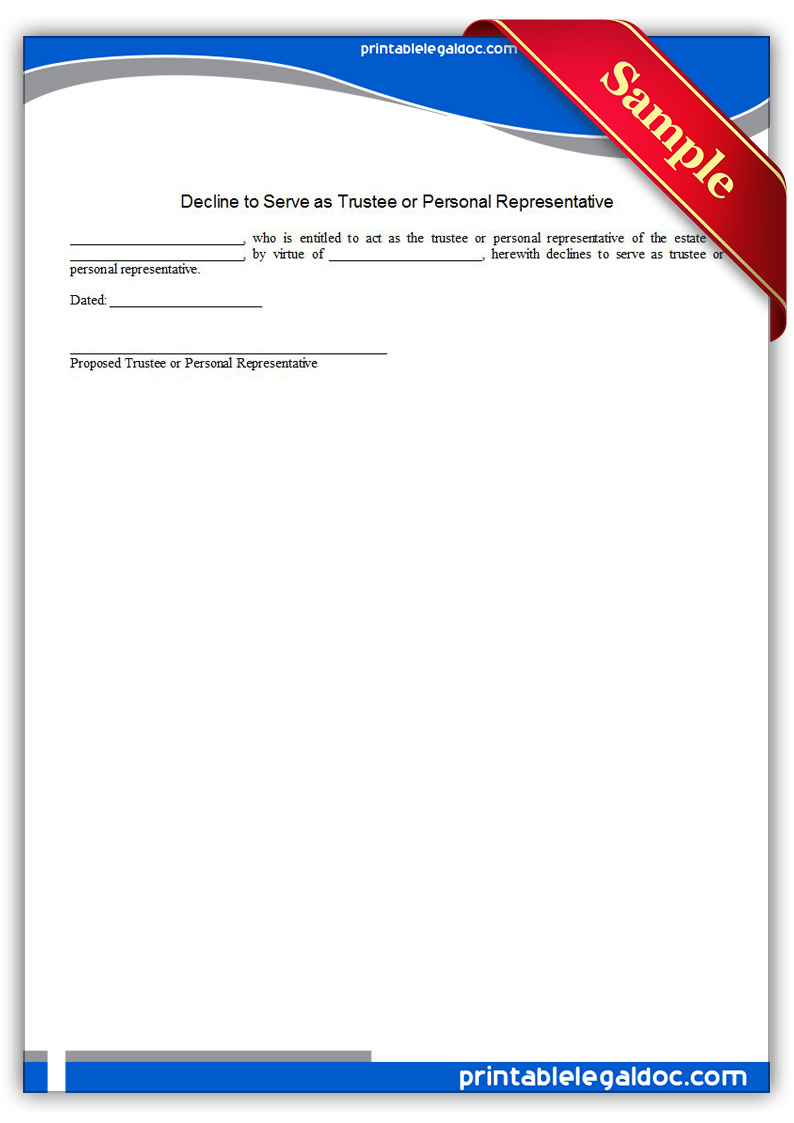
This review list is being supplied to you in order to inform you about the document in question and to guide you in preparing it for submission. This form is often used to get a loan or payment from a third-party source of funding.
1. Make numerous copies of the document. One should be kept with the transaction file. Give one to each person who will be signing the document
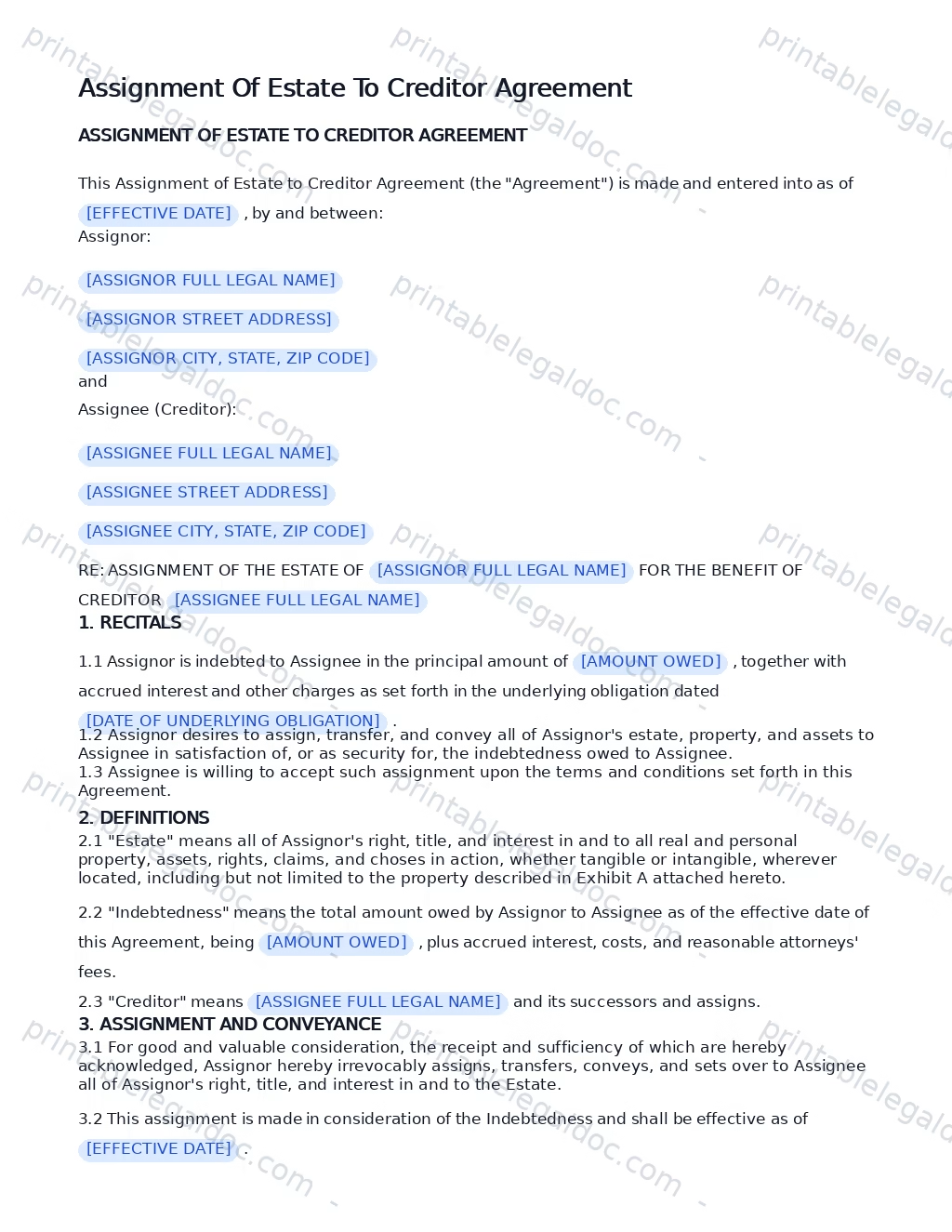
Assignment Of Estate To Creditor Agreement
An assignment of estate to creditor agreement transfers a debtor's assets to a creditor. The creditor then sells those assets to recover an unpaid debt. This legal document protects both sides. It creates a clear record of the transfer. Our template covers the key terms you need. It lists the parties, the debt amount, and the assets involved. You also get clauses for trustee duties and surplus funds. Every section is easy to edit. Fill in your details and the agreement is ready to sign. Use it when a debtor wants to settle a debt through property rather than cash. The template saves time and reduces confusion. It gives you a solid starting point for a fair, documented arrangement.
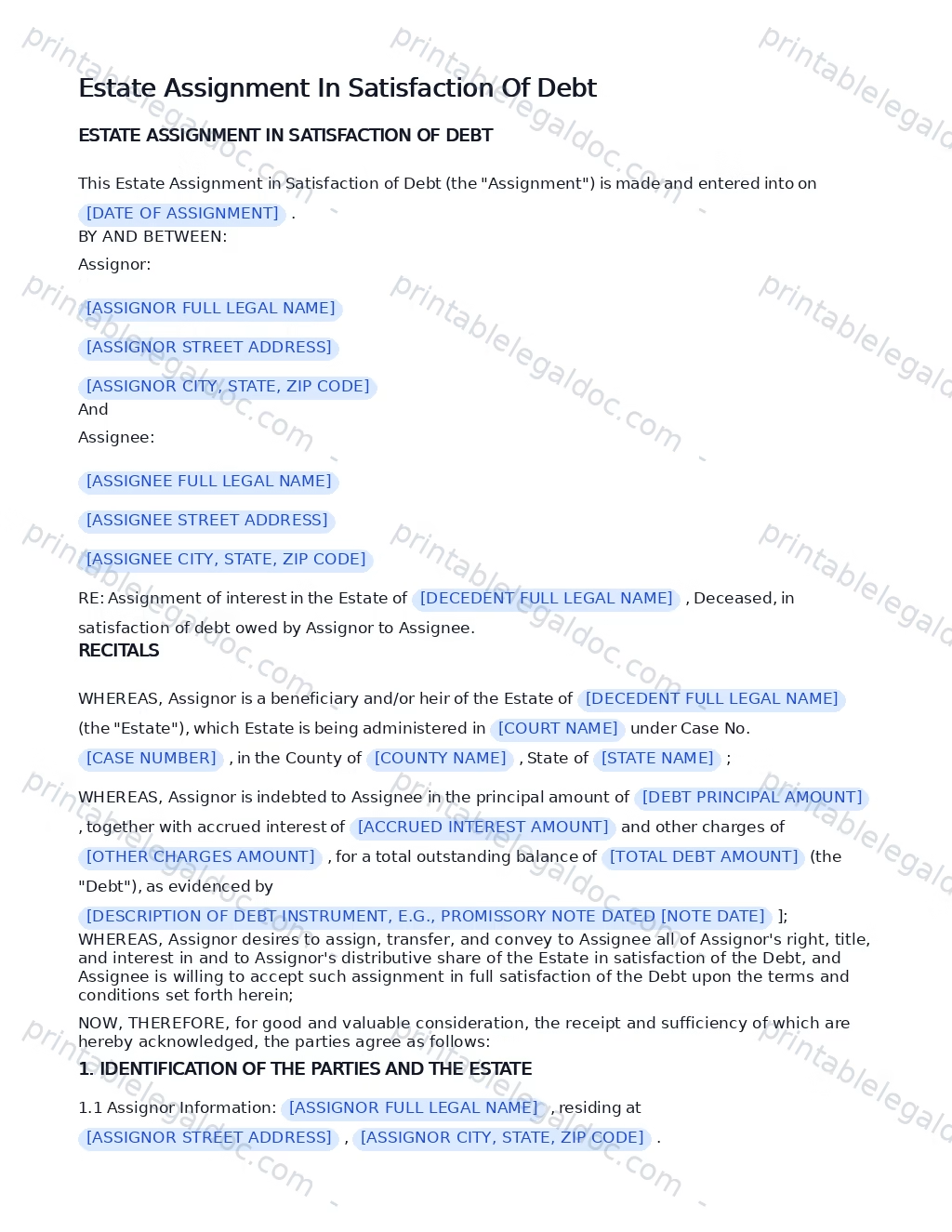
Estate Assignment In Satisfaction Of Debt
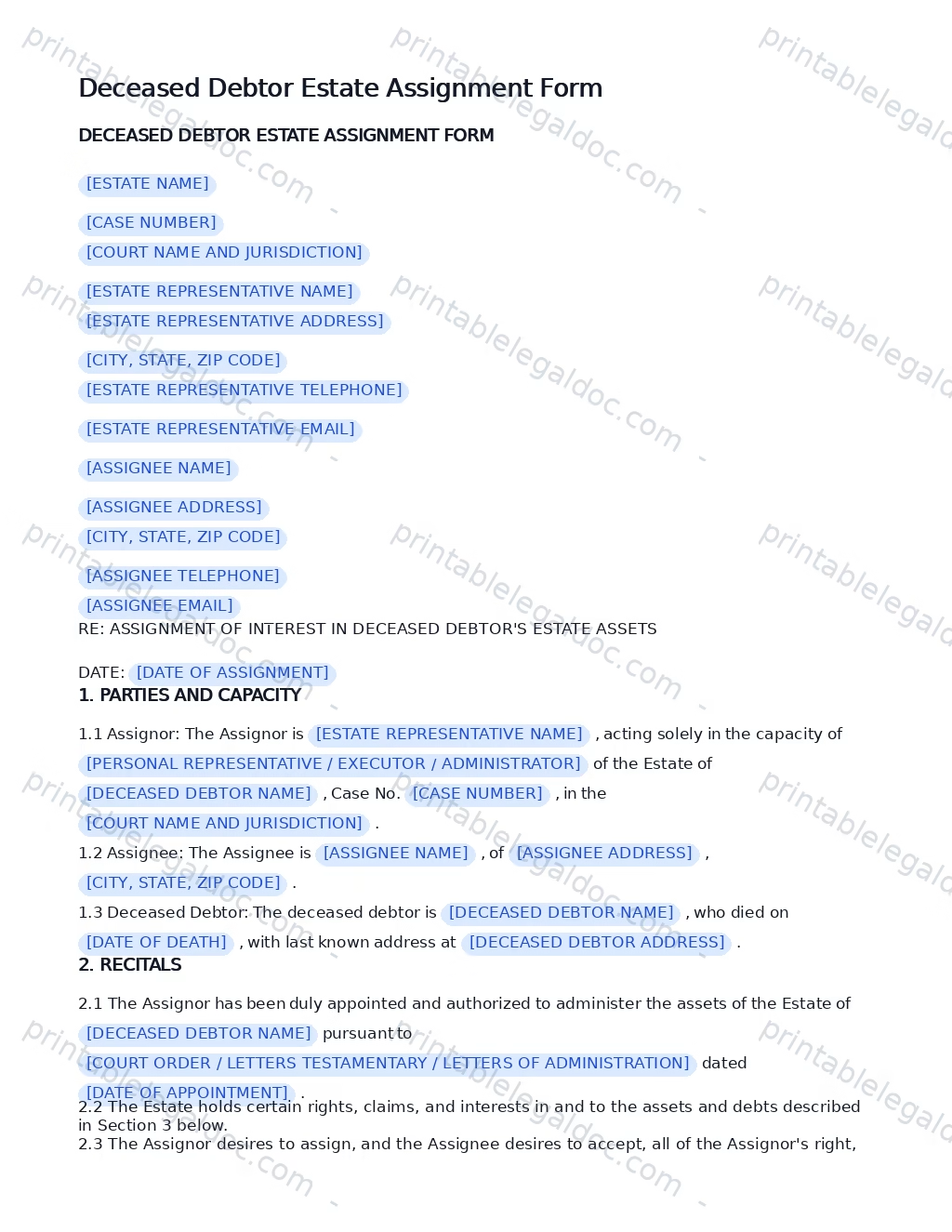
Deceased Debtor Estate Assignment Form
When someone dies with unpaid debts, the estate needs a clear legal path forward. Our Deceased Debtor Estate Assignment Form gives you a simple way to transfer rights and claims tied to that estate. You can record the assignment in writing. This protects everyone involved. The template covers key details like the debtor's name, the assigned debt, and the parties who agree to the transfer. It works for executors, administrators, and creditors alike. Fill in the blanks, sign it, and keep a copy for your records. This form saves time and reduces confusion during a hard period. Get the paperwork handled so you can focus on what matters.

Creditor Claim Against Estate Template
A creditor claim against an estate template gives you a clear path to demand payment. It helps you state your name, the debt amount, and the basis for your claim. You also list supporting documents. The form keeps your request organized and easy to review. Executors need this record to process debts fairly. Without a written claim, your payment request may get lost or delayed. A simple template saves time and reduces confusion. Fill it out with accurate details. Attach proof of the debt. Submit it before the deadline set by your state. This step protects your rights and keeps the estate process moving.
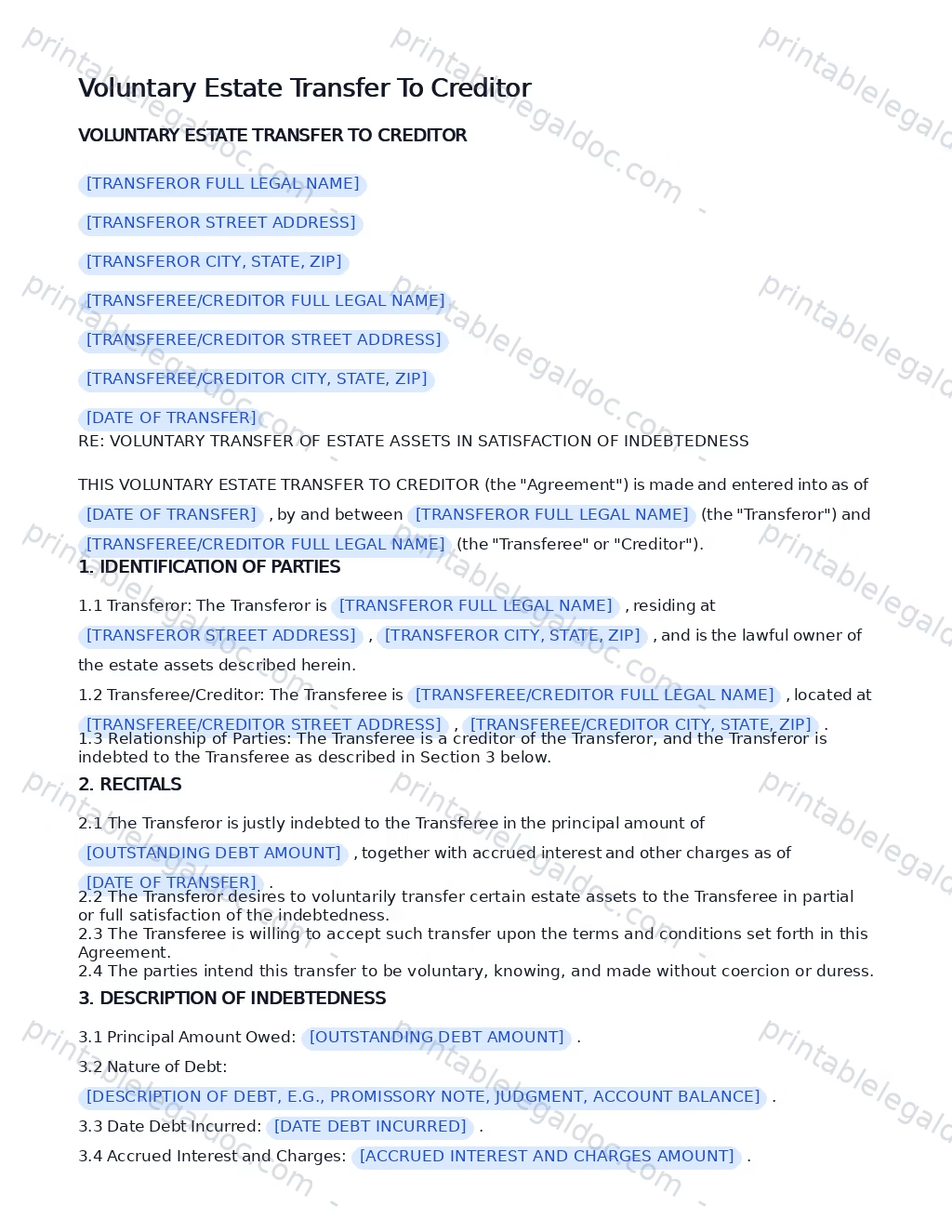
Voluntary Estate Transfer To Creditor
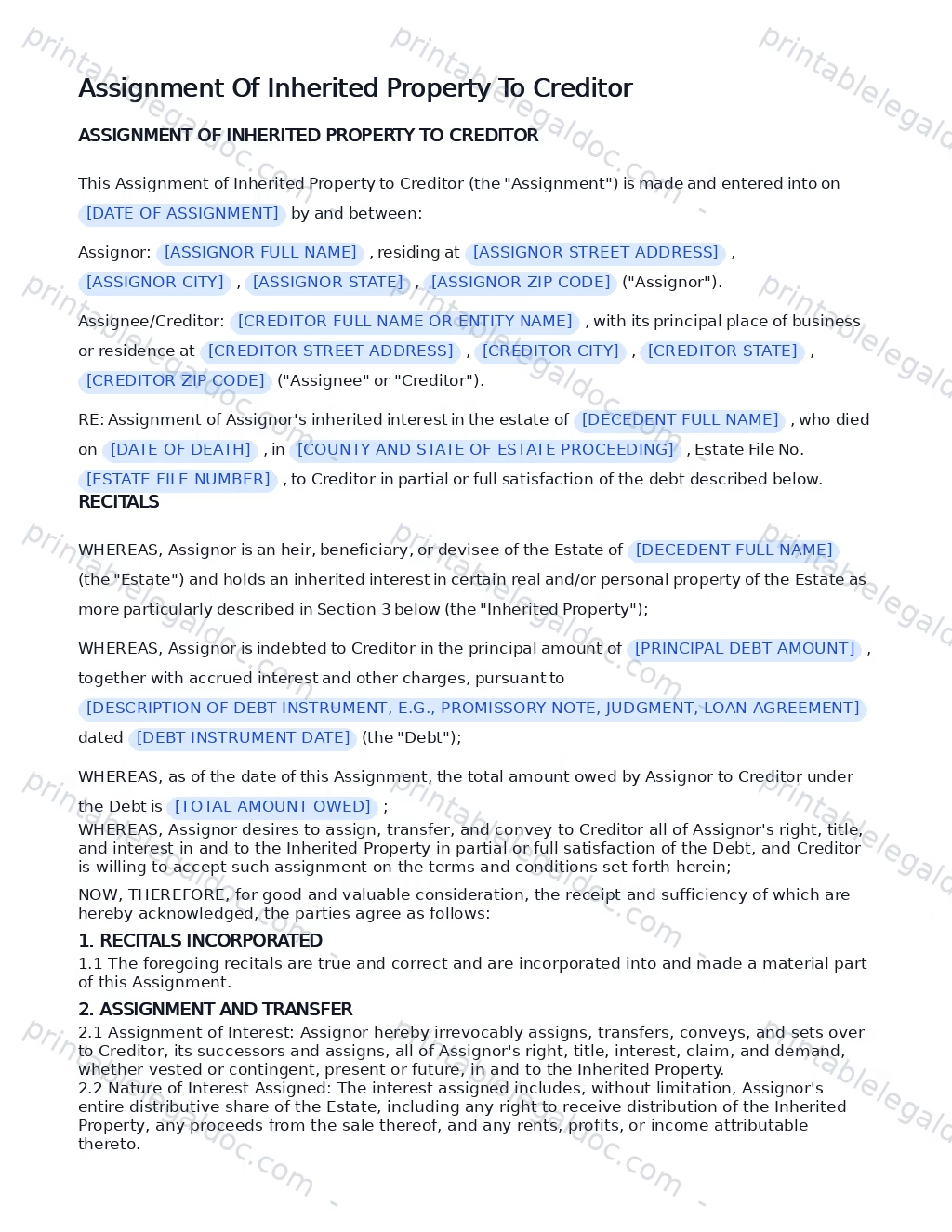
Assignment Of Inherited Property To Creditor
When someone dies with unpaid debts, creditors may claim a share of the estate. This includes inherited property. The assignment of inherited property to a creditor is a legal process. It lets a debtor transfer their inherited share to settle an outstanding obligation. The transfer must follow proper legal steps. Otherwise, it may be challenged by other heirs or beneficiaries. Courts often review such assignments to protect all parties involved. Creditors gain a legal right to the property or its value in some cases. Heirs should understand their options before agreeing to any transfer. Seek legal advice to confirm your rights and duties. Proper documentation protects everyone and prevents future disputes over the estate.

Estate Debt Settlement Agreement
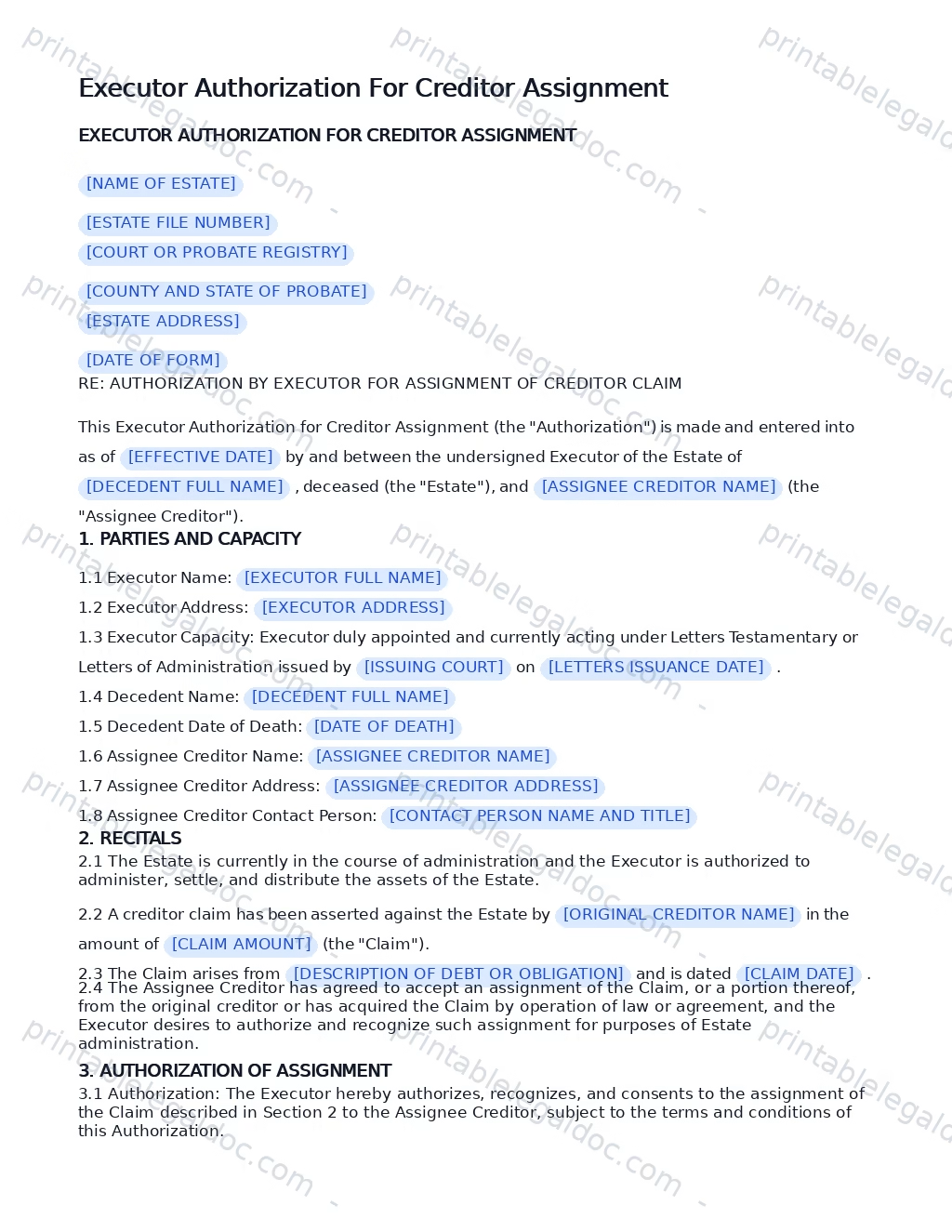
Executor Authorization For Creditor Assignment
Executor authorization for creditor assignment lets a deceased person's representative transfer a claim to another party. The executor reviews the debt, confirms it is valid, and approves the handover in writing. This step protects the estate from disputes and keeps records clear. Creditors gain a lawful path to collect what they are owed. Beneficiaries see an honest process with proper oversight. Courts expect this approval before any assignment moves forward. A signed authorization names the creditor, the amount, and the receiving party. It also states the executor's consent and the date. Without it, the transfer may face legal challenges. Good documentation saves time and reduces risk for everyone involved. The estate stays organized, and the creditor gains a secure legal position.
Assignment Of Estate Assets For Loan Repayment
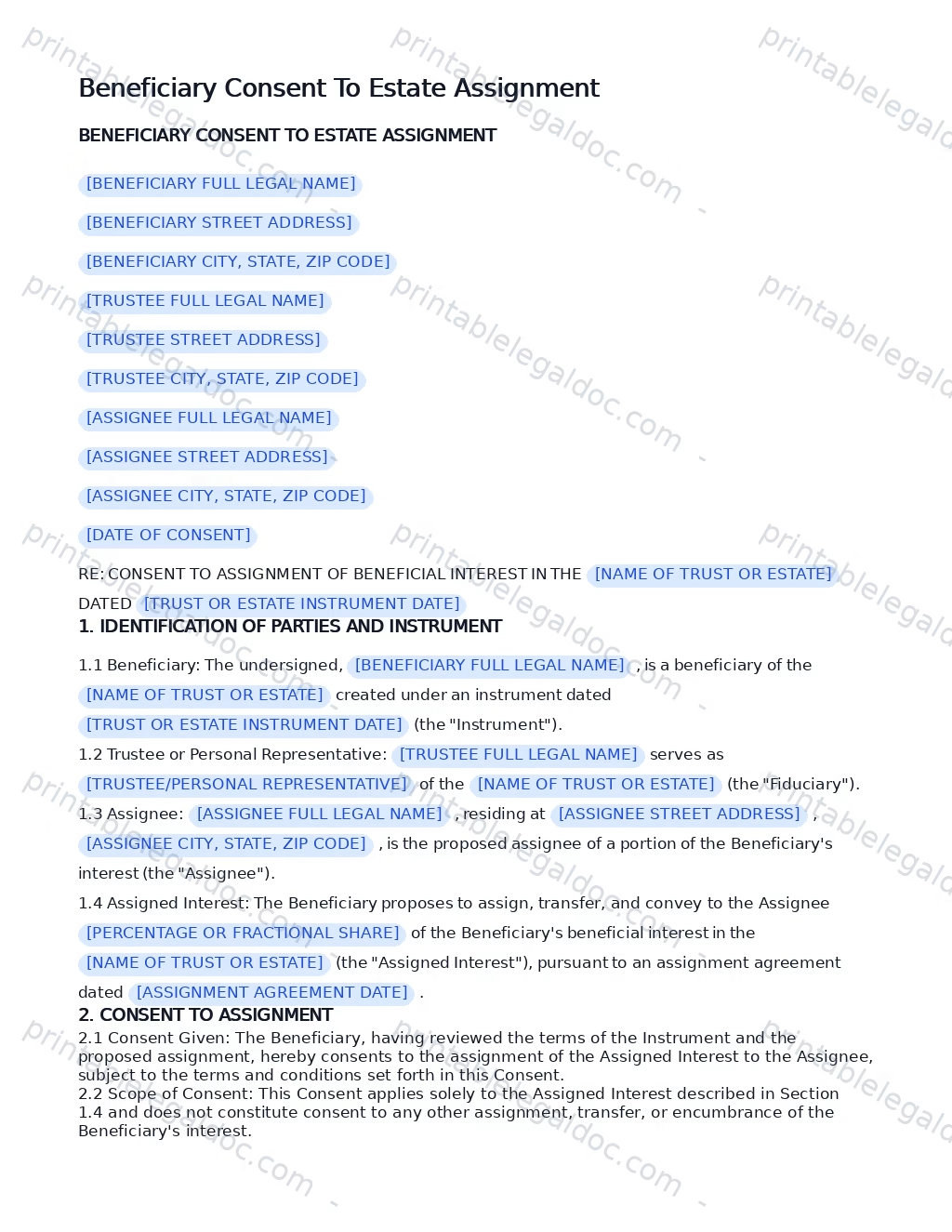
Beneficiary Consent To Estate Assignment
Beneficiary consent to estate assignment protects everyone involved in the transfer. One heir may want to sell or give away their share. That step requires clear approval from the other beneficiaries. Without consent, the assignment can face legal challenges later. A written agreement keeps the process transparent. Each party signs to confirm they understand the change. This record also prevents future disputes among family members. Courts often look for proof that everyone agreed. Consent forms should name the parties, the share involved, and the terms. Keep copies for your records and your attorney. Proper consent makes the assignment valid and enforceable.

Assignment Of Estate In Favor Of Creditor
Assignment of Estate in favor of Creditor
I, _________________________, referred to as DEBTOR, herewith unconditionally assigns all of my right, title and interest in an expectancy of to the estate of _________________________ to _________________________, referred to as CREDITOR, under the terms and conditions stated herein.
This assignment is to secure payment of _________________________, dated ________________________, in the original principal amount of $______ (________________ & ____/100 dollars) with a present total principal and interest balance of this date of $_____ (___________________________ & ________/100 dollars).
CREDITOR shall have the right to pursue any legal actions, file any notices or claims as may be necessary to secure CREDITOR’s full receipt of my expectancy.
I further agree to execute such other and further documents as may be requested by CREDITOR to perfect and secure this assignment. In the event of a dispute or litigation, I give the CREDITOR the sole and total authority to compromise or settle the dispute.
In the event that the amount received from the estate is insufficient to repay such debt, I will remain personally liable for the balance of the sums due to CREDITOR. In the event that there is any excess, CREDITOR shall be required to return the excess to the DEBTOR.
Dated: ___________________
For _________________________, Creditor:
________________________________________
________________________________________
Debtor
Assignment of Estate in Favor of Creditor
Review ListThis review list is provided to inform you about this document in question and assist you in its preparation. This form is typically used to acquire a loan or payment from another party.
1. Make multiple copies. Keep one with the transaction file. Give one to each signatory.
Frequently Asked Questions
What is an assignment of estate in favor of a creditor?
An assignment of estate in favor of a creditor is a legal document in which a debtor unconditionally assigns all of their right, title, and interest in an expectancy to an estate to a creditor. This assignment secures payment of a debt, as described in the document. The debtor remains personally liable for any balance if the amount received from the estate is insufficient to repay the debt.
What does it mean to assign an expectancy to an estate?
Assigning an expectancy to an estate means the debtor transfers their potential future interest in an estate to the creditor. This is done unconditionally, as stated in the document. The assignment is intended to secure payment of a debt.
What rights does the creditor have under this assignment?
The creditor has the right to pursue any legal actions and file any notices or claims necessary to secure full receipt of the debtor's expectancy. Additionally, in the event of a dispute or litigation, the creditor is given sole and total authority to compromise or settle the dispute. These rights are outlined in the assignment document.
Is the debtor still liable if the estate distribution is insufficient?
Yes, the document states that if the amount received from the estate is insufficient to repay the debt, the debtor will remain personally liable for the balance. This means the debtor is not released from the obligation even if the expectancy does not fully cover the debt. The assignment does not eliminate the debtor's personal liability.
What documents must the debtor sign to perfect the assignment?
The debtor agrees to execute such other and further documents as may be requested by the creditor to perfect and secure the assignment. The specific documents are not listed in the article, but the debtor is obligated to provide them upon request. This ensures the creditor's rights are fully protected.
Can the creditor settle a dispute without the debtor's consent?
Yes, the document grants the creditor sole and total authority to compromise or settle any dispute or litigation related to the assignment. This means the creditor can make decisions without needing the debtor's approval. The debtor gives up any say in such settlements.
What is the original principal amount mentioned in the assignment?
The original principal amount is a blank in the document, to be filled in with the specific amount of the debt. It is stated as $______ (________________ & ____/100 dollars). The article does not provide a specific figure.
What is the present total principal and interest balance?
The present total principal and interest balance is also a blank in the document, to be filled in with the current amount owed. It is stated as $_____ (___________________________ & ________/100 dollars). The article does not provide a specific figure.
What happens if there is litigation over the assignment?
In the event of a dispute or litigation, the creditor is given sole and total authority to compromise or settle the dispute. This means the creditor can handle the litigation as they see fit. The debtor agrees to this authority as part of the assignment.
Does this assignment transfer all of the debtor's rights in the estate?
Yes, the debtor unconditionally assigns all of their right, title, and interest in an expectancy to the estate to the creditor. This is a complete transfer of the debtor's interest. The assignment is made under the terms and conditions stated in the document.