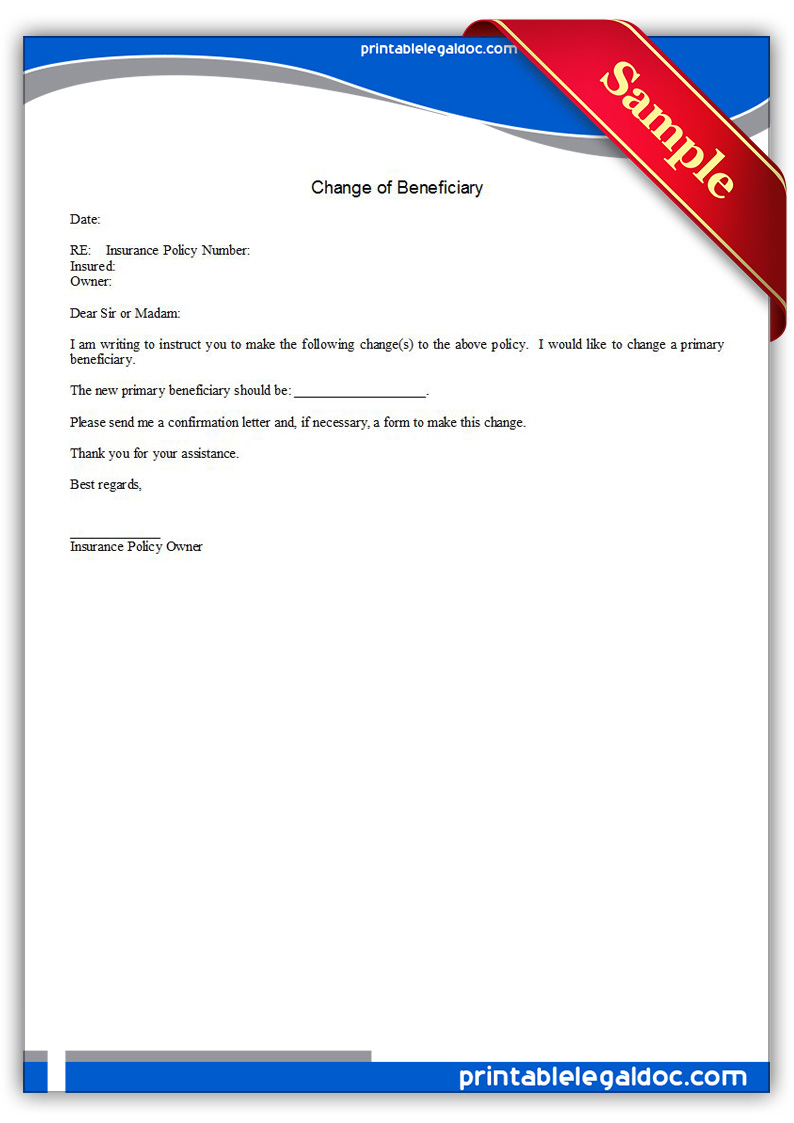
Pledge of Life Insurance Policy to A Creditor
A pledge is something that is given as security for the fulfillment of a contract or the payment of a debt. Once failed to accomplish or failure to abide by the terms stated in the pledge, it is liable for forfeiture, in this case, an insurance policy. On the other hand, insurance policies are offered by an insurance company to the policyholder that determines the claims that is legally required to pay by the insurer.
A pledge of life insurance policy to the creditor secures the creditor’s interest in the event of death or other unfortunate events by the principal. Thus, it is a legal document that ensures the amount/asset that is to be taken into account by the creditor.
The name of both the debtor and the creditor must be stated in the document so as to signify that both parties agreed on the terms and conditions that is also to be included in the text. It would also have to include the amount that was indebted to the creditor and along with it is the life insurance policy number of which the debtor assigned to the creditor. The amount of loans/charges against the policy must also be present as a declaration of collateral for the debt, to secure repayment of a loan. The pledge is then concluded by the debtor’s name and signature and the Insurance Policy Number right after the date the agreement was done. To follow is the authorization from the creditor’s side.
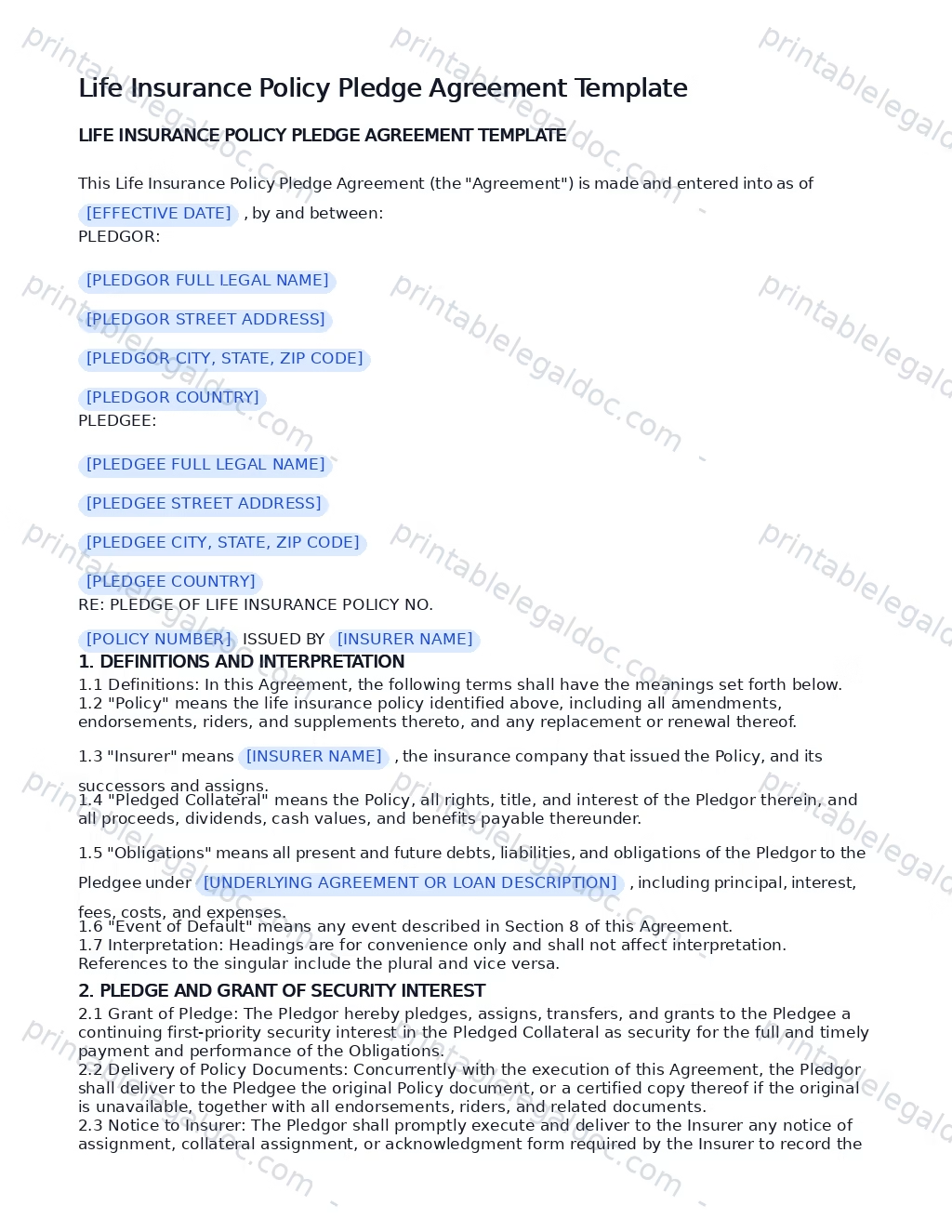
Life Insurance Policy Pledge Agreement Template
A life insurance policy pledge agreement template helps you use your policy as loan collateral. The document spells out the borrower, lender, and policy details. It also covers default terms and repayment rules. You get a clear written record that protects both sides. This template saves time and reduces legal risk. Fill in the blanks, review the terms, and sign. It works for personal loans and business financing. Keep a signed copy for your files. Always check local rules before you finalize the agreement.
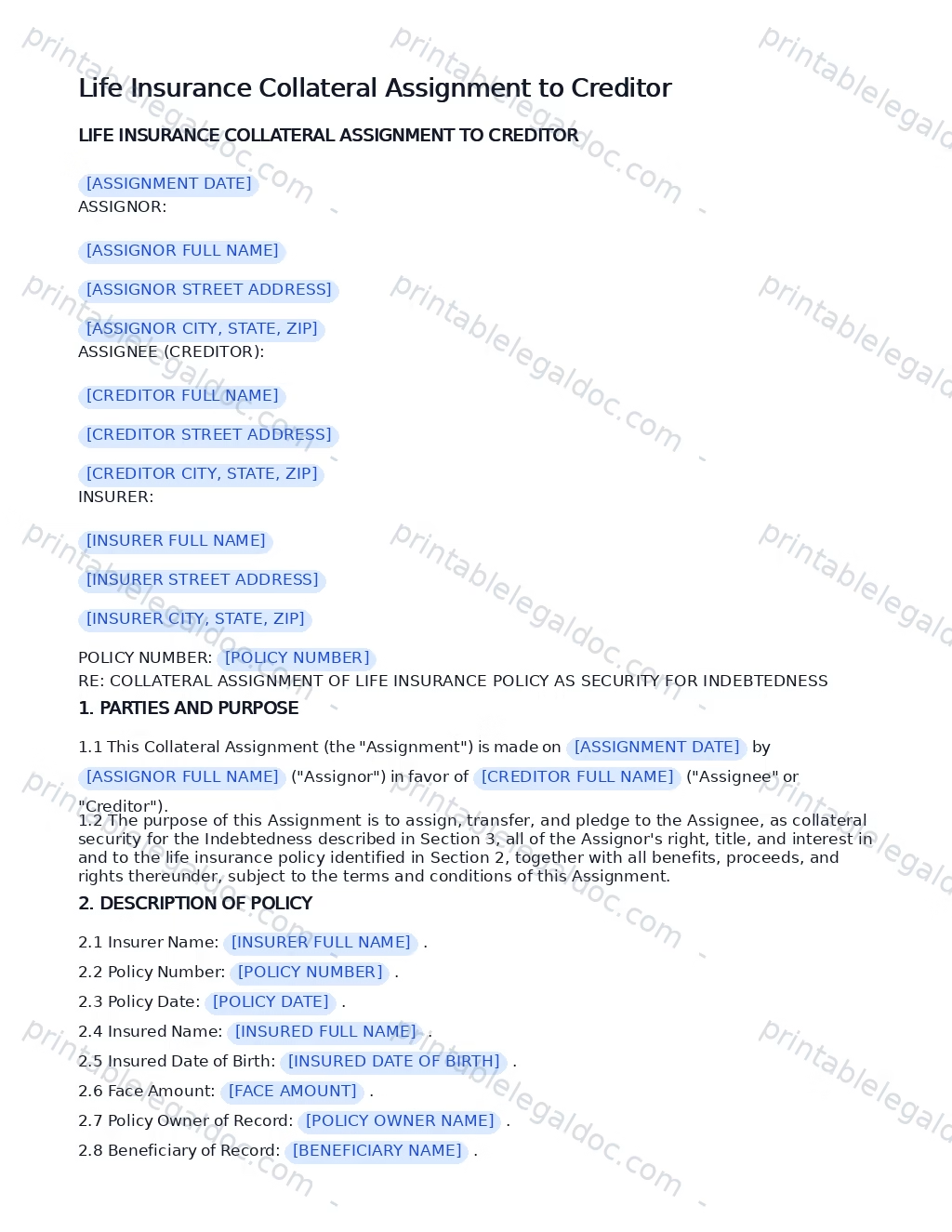
Life Insurance Collateral Assignment to Creditor
A collateral assignment lets you pledge a life insurance policy as security for a loan. The creditor gains a limited claim on the death benefit if you default. You keep ownership rights in most cases. The lender's interest usually equals the outstanding debt. Once you repay the loan, the assignment ends. Always review the agreement with a legal or tax advisor. Understand how this arrangement affects your beneficiaries. Clear terms protect everyone involved.
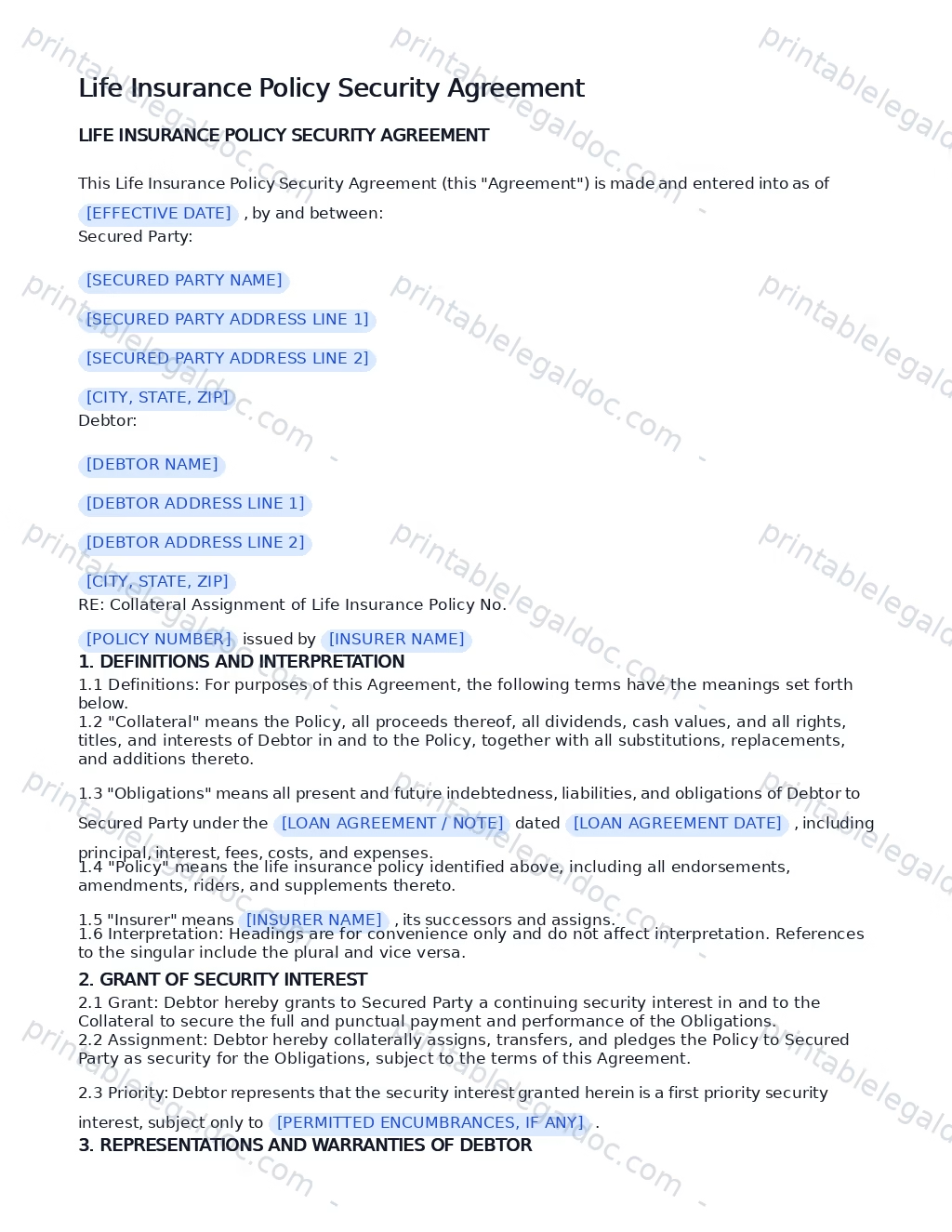
Life Insurance Policy Security Agreement
A life insurance policy security agreement lets you use your policy as collateral for a loan. The insurer assigns part of the death benefit to the lender. This protects the lender if you default. You keep your coverage active while the loan runs. The agreement spells out the terms in clear language. It names the lender as a collateral assignee. Your beneficiaries still receive any remaining benefit. Read every clause before you sign. Ask questions about fees and repayment rules. This step protects your family and your policy.
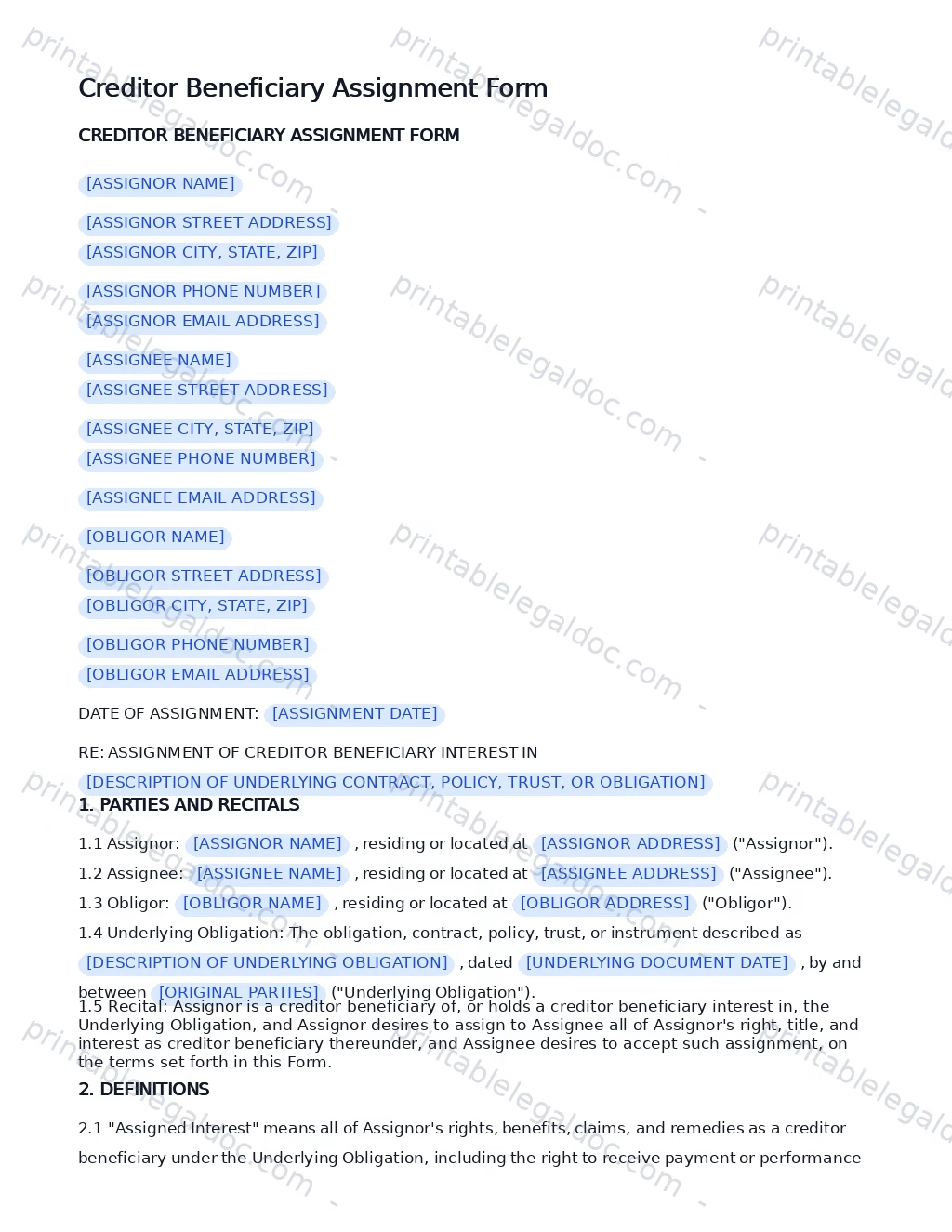
Creditor Beneficiary Assignment Form
A creditor beneficiary assignment form transfers your right to collect a debt to another party. The original creditor signs the document. The new beneficiary gains legal claim to the payment. Use this template when you sell receivables, settle estates, or restructure business debts. The form names both parties. It describes the debt. It states the assignment terms. Clear language keeps the record valid. Courts and banks often ask for this proof. Fill in each field with accurate details. Keep a signed copy for your files. This simple document protects everyone involved.
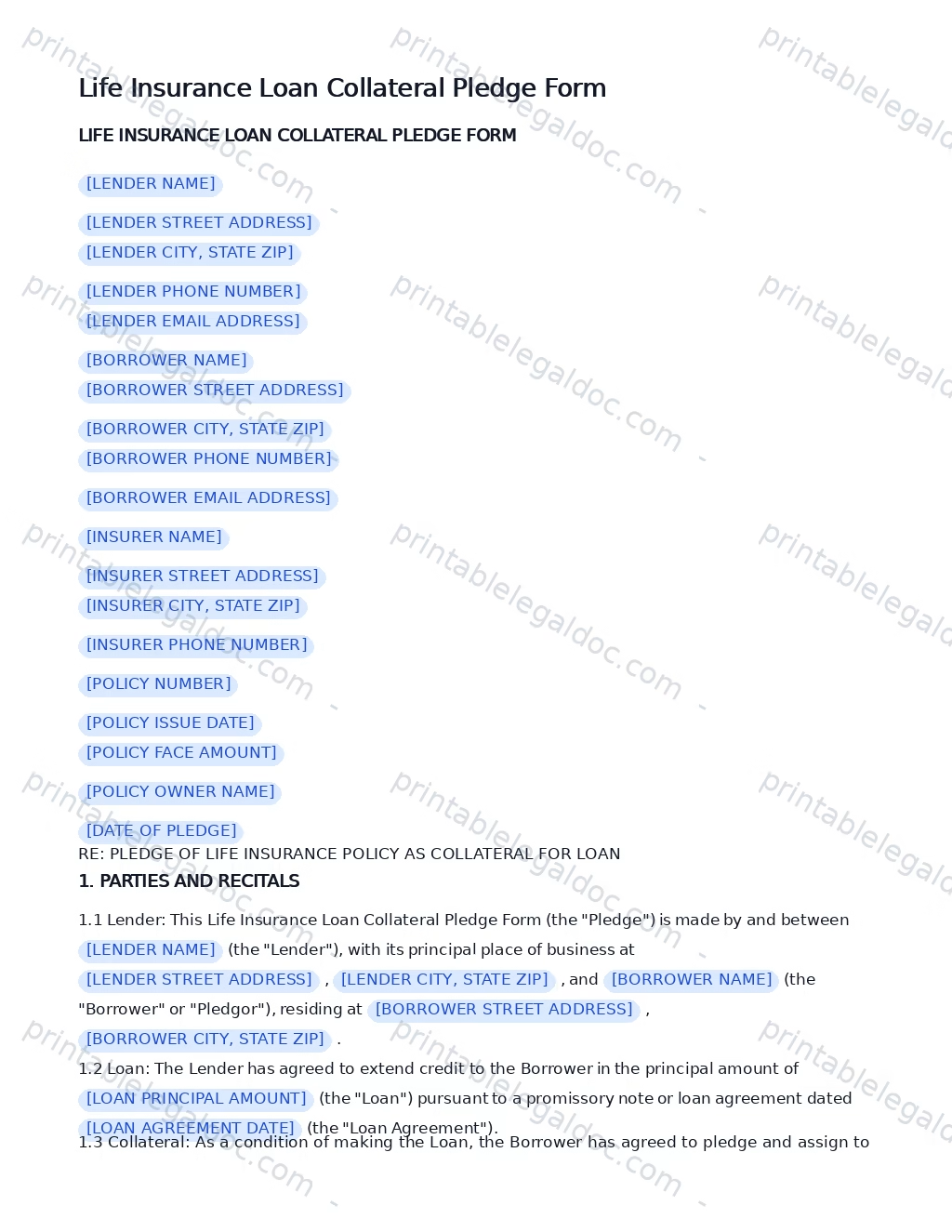
Life Insurance Loan Collateral Pledge Form
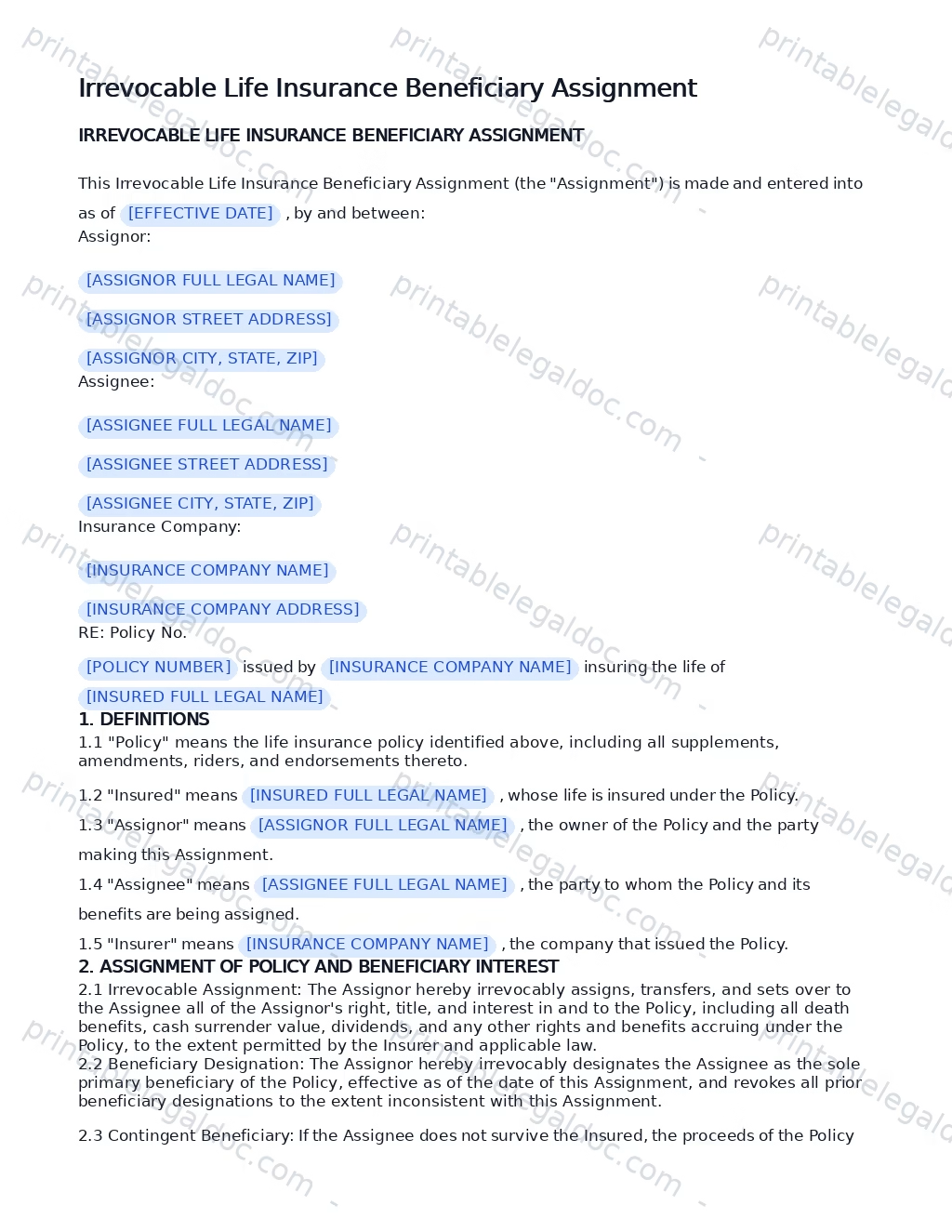
Irrevocable Life Insurance Beneficiary Assignment
An irrevocable life insurance beneficiary assignment transfers your policy rights to another person or trust. This move is permanent. You cannot undo it without the new owner's consent. People choose this path for estate tax planning or to fund a trust. The assignee gains control over the policy. That includes the right to change beneficiaries or borrow against cash value. You give up those rights. Think carefully before you sign. Once the assignment is complete, the policy no longer belongs to you in the eyes of the law. Your family may face delays if the paperwork is unclear. Work with a legal or tax advisor first. They can explain the risks and confirm this step fits your long term goals.
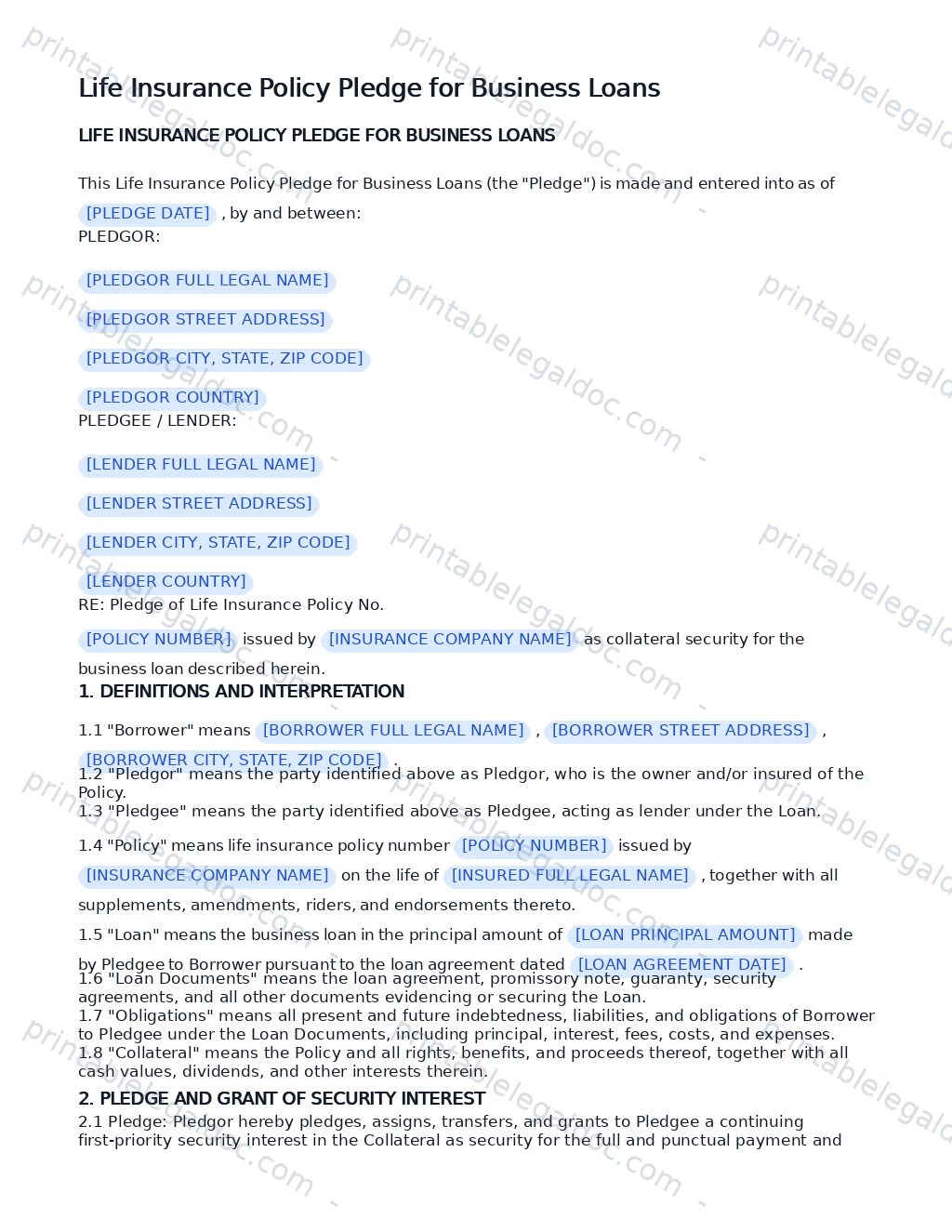
Life Insurance Policy Pledge for Business Loans
Pledge your life insurance policy to secure a business loan. This option helps owners access capital without selling assets. Your policy acts as collateral. The lender gains a safety net. You keep your coverage active. Cash value builds over time. That value supports your loan request. Banks often view this pledge as low risk. Approval can move faster. Rates may stay competitive. You retain ownership of the policy. The death benefit protects your family. A default could transfer benefits to the lender. Read every clause before signing. Talk to a financial advisor. Weigh the costs against your funding needs. This strategy suits owners with strong policies. It bridges short term gaps. Use it with clear repayment plans.
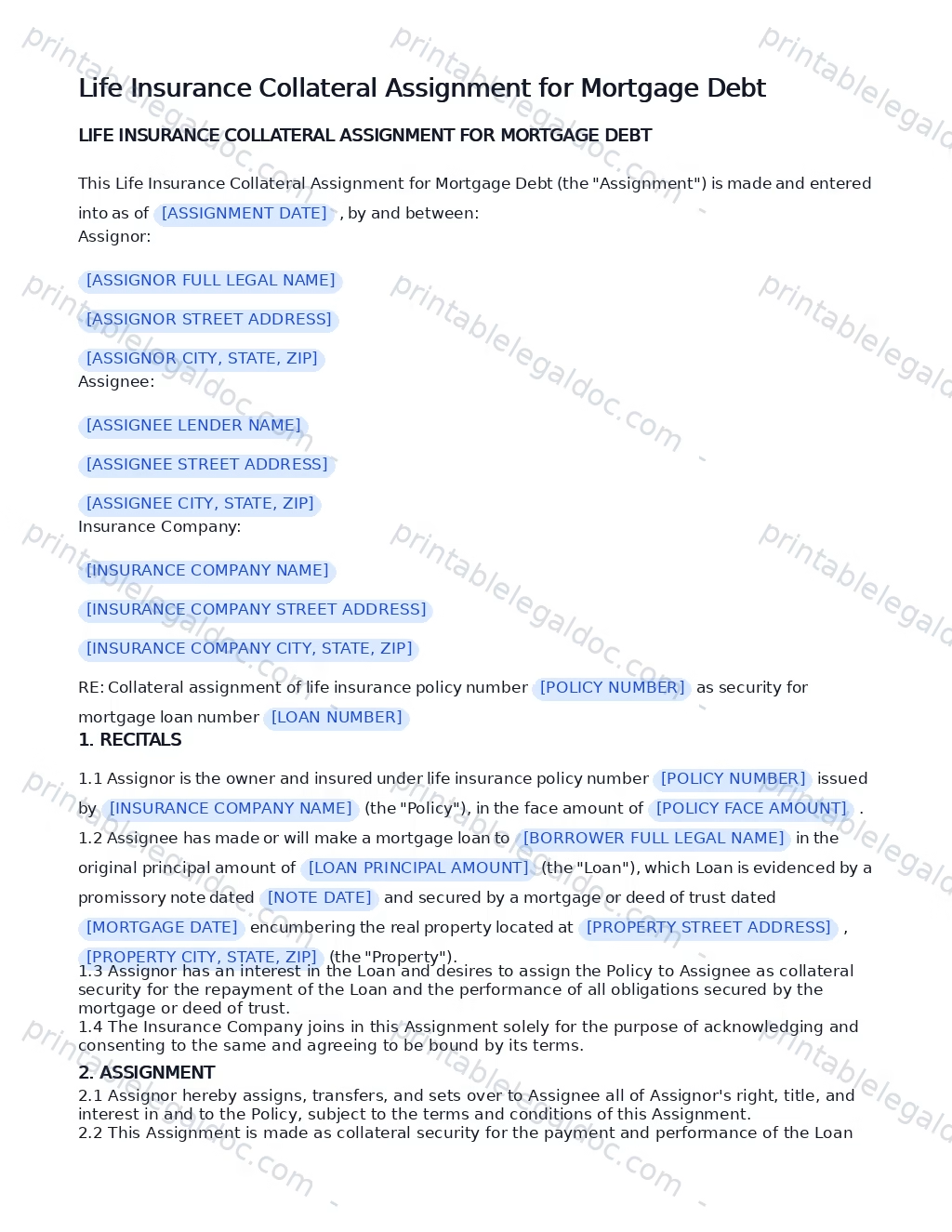
Life Insurance Collateral Assignment for Mortgage Debt
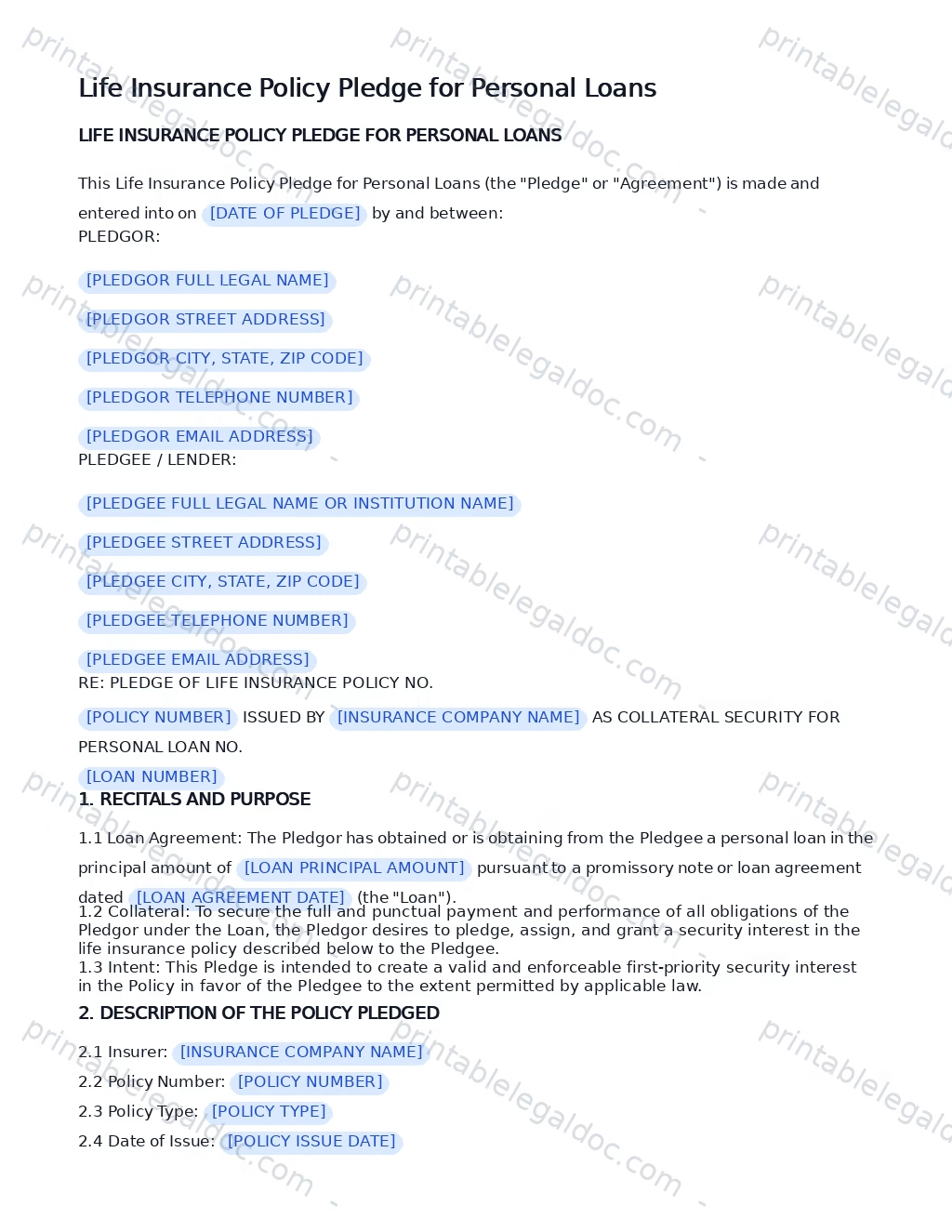
Life Insurance Policy Pledge for Personal Loans
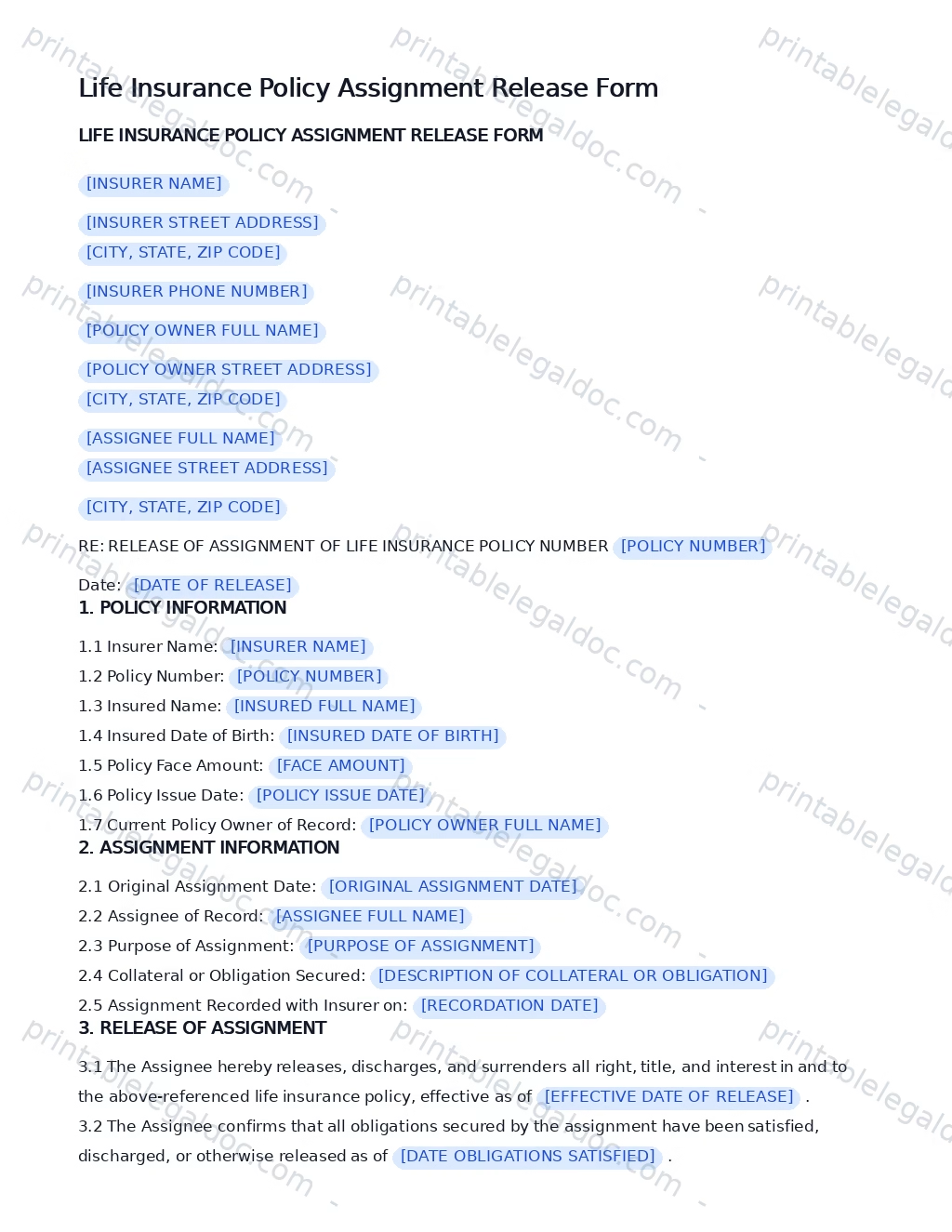
Life Insurance Policy Assignment Release Form
A life insurance policy assignment release form transfers ownership rights back to the original policyholder. Use this document when a lender, business partner, or family member no longer needs control of your coverage. The form identifies the policy, the assignee, and the release date. Both parties sign to confirm the change. Keep copies for your records and send one to your insurer. This simple step protects everyone involved. It clarifies who holds the policy rights going forward. Grab our ready-to-use template and complete your release without legal confusion.

Pledge Of Life Insurance Policy To A Creditor
Pledge of Life Insurance Policy to a Creditor
______________, referred to as DEBTOR, and __________, referred to as CREDITOR, agree:______________ is indebted to CREDITOR in the amount of $_____(_________________________&___/100 dollars) by virtue of _________________ dated ____________. DEBTOR assigns to CREDITOR the following policy of life insurance:
Policy number: _______________________________________
Face amount: $_____(_______________________&____/100 dollars)
Amount of loans/charges against policy: $_____(__________________&____/100 dollars)
as collateral for the debt.Any and all proceeds from the policy are assigned to the CREDITOR, to the extent of principal and interest due upon the debt, and any renewals and extensions thereof. The DEBTOR shall prepare any further instruments required to effect this pledge.
Dated: _________________________
____________________________________________
Debtor
Insurance Policy Number:_____________________________________________
___________________, by an authorized officer of Creditor
Pledge of Life Insurance Policy to a Creditor
Review ListThis review list is provided to inform you about this document in question and assist you in its preparation. A pledge of life insurance proceeds is a common request by major creditors including financial institutions buying stock from the Company. It secures their interest should a key principal die.
Frequently Asked Questions
What is a pledge of life insurance policy to a creditor?
A pledge of life insurance policy to a creditor is a legal agreement where a debtor assigns a life insurance policy to a creditor as collateral for a debt. The debtor remains the owner of the policy but grants the creditor rights to the policy proceeds up to the amount owed. This arrangement provides security for the creditor in case the debtor defaults on the loan.
How does assigning a life insurance policy as collateral work?
When a life insurance policy is assigned as collateral, the debtor transfers the right to collect proceeds to the creditor to the extent of the debt. The assignment is typically documented in a pledge agreement that specifies the policy details and the debt amount. The creditor can claim the proceeds only up to the principal and interest due on the debt.
What information is needed to pledge a life insurance policy?
To pledge a life insurance policy, you need the policy number, face amount, and any loans or charges against the policy. You also need details of the debt, such as the amount owed and the date of the original agreement. This information is included in the pledge agreement to clearly identify the collateral and the obligation.
Can a creditor claim all proceeds from a pledged life insurance policy?
No, the creditor can only claim proceeds up to the amount of principal and interest due on the debt. Any excess proceeds beyond the debt amount would typically go to the debtor's beneficiaries or estate. The pledge agreement specifies that the assignment is limited to the debt obligation.
What happens if the debtor defaults on the debt?
If the debtor defaults, the creditor can claim the life insurance policy proceeds to satisfy the outstanding debt. The creditor's claim is limited to the principal and interest owed. The specific process for claiming proceeds would be governed by the terms of the pledge agreement and applicable law.
Does the debtor need to do anything else after pledging the policy?
Yes, the debtor agrees to prepare any further instruments required to effect the pledge. This means the debtor must cooperate in completing any additional paperwork necessary to formalize the assignment. This ensures the creditor's rights are fully protected.
What is the role of the creditor in a life insurance pledge?
The creditor holds the assignment as collateral for the debt. The creditor is entitled to receive proceeds from the policy up to the amount owed if the debt is not repaid. The creditor may also need to sign the agreement, typically through an authorized officer.
Is a pledge of life insurance policy legally binding?
Yes, when properly executed, a pledge of life insurance policy is a legally binding contract between the debtor and creditor. It should be signed by both parties and may require additional instruments to be fully effective. The agreement outlines the rights and obligations of both parties.
What happens to the policy if the debt is repaid?
Once the debt is repaid, the creditor's claim on the policy proceeds ends. The debtor would then be entitled to have the assignment released, restoring full rights to the policy. The pledge agreement typically does not specify the release process, but it is implied that the collateral is no longer needed.
Can the debtor take out loans against the policy after pledging it?
The pledge agreement does not address whether the debtor can take out additional loans against the policy after pledging it. However, since the policy is assigned as collateral, any new loans or charges could affect the creditor's security. The debtor should consult with the creditor before taking any such actions.